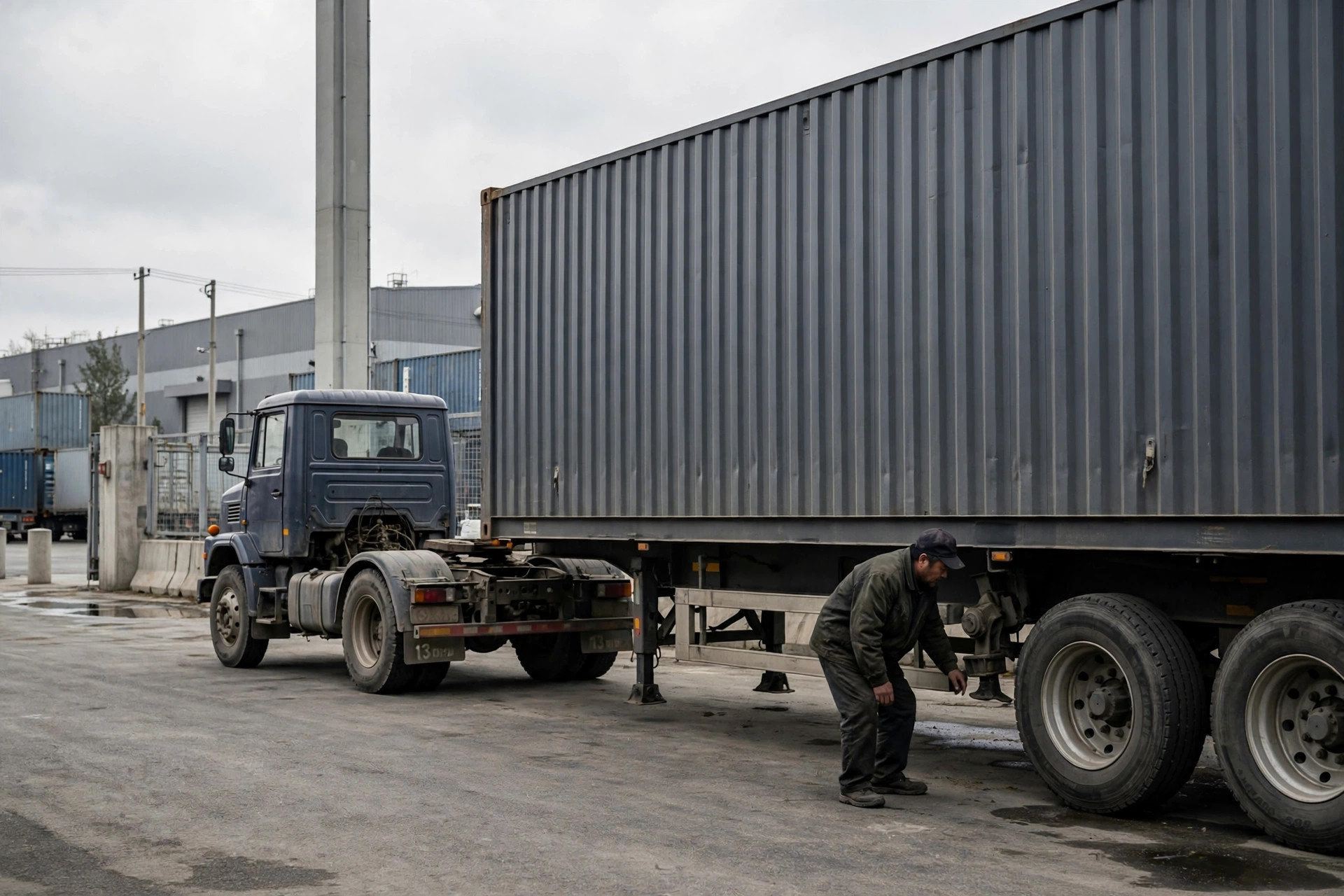
Here's my verdict up front: if your warehouse wave planning is sloppy, your pick zone bleeds one to two hours of labor every single day. I've done 30-plus WMS go-lives, and I've watched too many operations treat waving as "just hit release." The result is always one of two things: pickers jammed shoulder-to-shoulder in the aisles, or an entire wave missing the carrier cutoff with the truck gone and the freight still sitting on the packing bench.
Warehouse wave planning boils down to one sentence: release the right batch of orders at the right time so that pick capacity finishes the order pool just before cutoff — not too early, not one minute late. Sounds simple. The devil lives in the details.
Why Waves Blow Up Right Before Cutoff
The order pool is a living thing: orders flow in around the clock, while carrier trucks leave on a fixed schedule. Wave planning sits at the intersection of three departments — customer service promising delivery times up front, carriers enforcing cutoffs at the back, and the warehouse picking in the middle. When any one of those rhythms drifts, the warehouse takes the hit.
The three classic ways to die: cutoffs misaligned so the whole wave misses the truck; waves too big so the pick zone gridlocks; rush orders shoved into waves until the pack-out area collapses. I've seen each of these blow up at least three times. Let me walk you through them.
Splitting Waves: Three Hard Rules
Wave splitting isn't a vibe. It's three hard cuts:
Cut one: work backward from carrier cutoffs. This is non-negotiable. First, get every carrier's cutoff schedule in writing — every carrier, every service level. Verbal promises don't count. Then work backward: release time = cutoff − pick time − pack/verify time − buffer. We generally hold a 30-minute buffer as a rule of thumb, 45 minutes during peak season.
Cut two: separate by priority. Rush orders and standard orders never share a wave. Rush orders get their own small waves; standard orders run in the main waves. Mix them and you get the worst of both: rush orders dragged down by standard volume, standard flow constantly interrupted by rush inserts.
Cut three: split by zone or floor. A picker working continuously inside one zone walks the shortest distance and posts the highest UPH. A cross-zone wave looks impressive on paper — "big wave, big batch!" — but in practice everyone is just walking. One of our client sites runs it as policy: the second-floor smalls zone and the ground-floor bulk zone never merge into one wave. Ever.
Wave Size Math: Backing Into It From Pick Capacity
How big should a wave be? Don't guess — back into it from pick capacity. One formula:
Wave size = picker UPH × number of pickers × wave duration
Here's the sizing sheet from a 50,000-orders-per-day site we worked with. Every number below is that site's measured experience — your mileage will vary wildly, so don't copy it blindly:
| Parameter | Value | Notes |
|---|---|---|
| Daily volume | 50,000 orders | Peak season excluded |
| Pickers (morning shift) | 60 | Includes 10% flex labor |
| Picker UPH | 90 orders/hour | Smalls zone measured average, rule of thumb |
| Wave duration | 1 hour | Release interval |
| Theoretical wave size | 90 × 60 × 1 = 5,400 orders | Hard ceiling |
| Actual setting | 4,500 orders | 80% of theory, room for shorts and exceptions |
The last row is the one that matters: always discount the theoretical number. We generally take 80%, because the order pool always carries shorts, exceptions, and address problems. Release at 100% of capacity and the first exception drags the whole wave past cutoff.
Release intervals we generally set at 30–60 minutes (rule of thumb, depends on site size). Too frequent, and pack-out lives in permanent "waiting for the wave to close" mode while packers' time fragments. Too sparse, and orders pile up in the pool while your delivery promises quietly die.
Release Cadence: Rolling vs. Discrete Waves
Two release styles, no silver bullet:
| Discrete waves | Rolling release | |
|---|---|---|
| How it works | Release a wave on schedule; next wave after it's picked | Replenish pickers continuously as they free up |
| Upside | Clean rhythm, easy pack-out staffing | High utilization, zero idle time |
| Downside | Dead air between waves, some waste | Demands real-time systems; exceptions are hard to trace |
| Fits | Small/mid sites, stable order mix | Large sites, sharp peaks and valleys |
Now the contrarian take: vendor blogs love to sell rolling release as "advanced," but I've watched three mid-size sites get messier after adopting it. The system has to compute every picker's live workload, an exception order gets stranded between waves with no clear owner, and supervisors spend triple the time hunting problems. For sites under 10,000 orders a day, discrete waves on a fixed cadence are simply steadier. Advanced doesn't mean appropriate — that trade-off has to be settled the night before go-live, not after.
The Hot Wave: Rules for Rush Orders
Rush orders will happen. You can't stop them, so you govern them. Our hot wave mechanism runs on four red lines:
- When it opens: only three categories qualify — named VIP customers, backorder catch-ups, and rush orders inside the last hour before cutoff. "The customer is anxious" doesn't count without a priority flag in the system.
- How it runs: standalone mini-wave, never injected into the main wave queue. Pack-out reserves one station permanently for hot waves so main-wave packing never gets interrupted.
- The cap: max 3 hot waves per day, max 50 orders each (rule of thumb from our 50k-orders site). Anything beyond that rides the next main wave.
- Who can open it: only supervisors can hit hot-wave release in the WMS. Regular CSRs can't. Lock that permission down, or you'll see 17 hot waves in a day.
Three Real Disasters
Disaster one: cutoff misalignment, whole wave misses the truck. Peak season 2023, a 3PL site in eastern China, carrier cutoff 18:00. Operations got lazy and released one 3,000-order wave at 17:30. Pack and verify never stood a chance — over 2,000 orders missed cutoff and rolled to the next day. Customer complaints plus carrier penalties, and the warehouse manager took a 40-minute beating in the post-mortem. The fix: rebuild the release timetable with the backward-planning formula, split the 17:30 monster into 16:30 and 17:00 waves of 1,500 each, buffers intact. Zero misses the following peak season.
Disaster two: oversized wave gridlocks the pick zone. I've seen this exact failure three times. An e-commerce site in southern China, where the supervisor believed "bigger waves mean lower cost per order" and released 500 orders in one wave. Forty pick carts crammed into six aisles; picker UPH collapsed from 95 to 60 — the more they pushed, the slower it got. The fix: cap wave size by aisle capacity — we calculated max 8 carts per aisle simultaneously, which backed into a 240-order wave cap. UPH recovered past 90. Remember: the ceiling on wave size isn't labor capacity, it's physical space.
Disaster three: rush inserts collapse pack-out. An apparel site in northern China ran hot waves with no cap, and CSRs opened 17 rush waves in a single day. Packers got interrupted every 20 minutes, the main wave's pack rhythm fell apart, and the day's error rate tripled. The fix: all four hot-wave red lines went live, 17 waves compressed to 2, and the error rate returned to baseline within a week.
Go-Live Night Checklist
The night before wave planning goes live, check every box. Miss one, don't launch:
- Carrier cutoff schedules collected in writing — every carrier, every service level, posted on the wall
- Release timetable built backward: cutoff − pick − pack/verify − 30-minute buffer
- Wave size cap hard-coded in WMS parameters; over-limit releases auto-blocked
- Rush orders carry their own priority flag; they can't leak into main waves
- Hot-wave release permission restricted to supervisors; count and size caps configured
- Zone/floor split rules configured; tested with a real cross-zone order to verify the block logic
- Full chain walkthrough: order pool to trailer, stopwatch in hand, overtime steps flagged red
- Peak-season plan: shorter waves, 45-minute buffers, flex labor roster confirmed
One last honest warning: there is no set-and-forget warehouse wave planning. The moment your order mix shifts — say, a sudden surge of bulky orders — the splitting logic has to move with it. For the first month after every go-live, I review the wave attainment report weekly. If on-time release drops below 95%, the rules need tuning.
By Lin Xiao, WMS Implementation Consultant