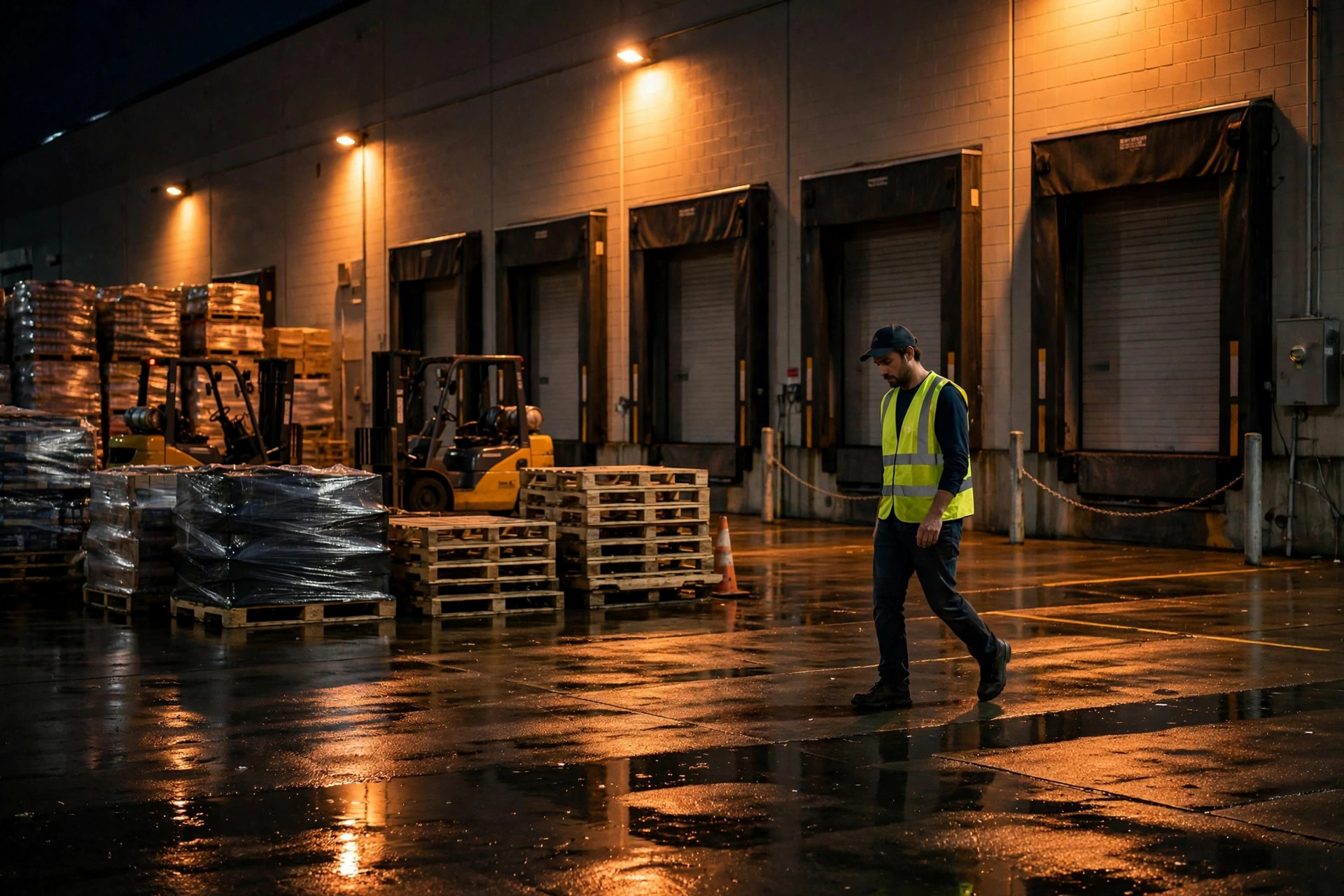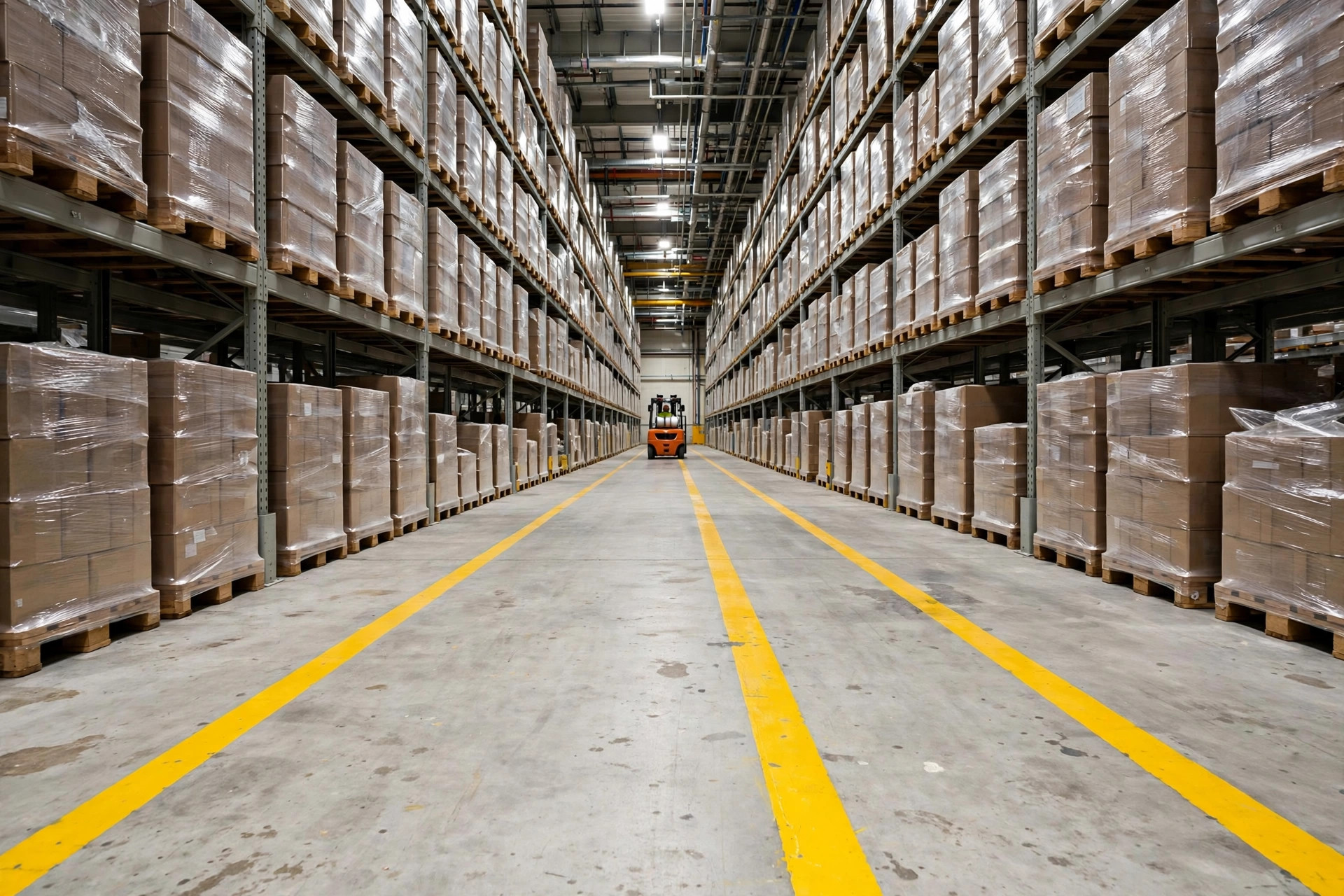
Last month I searched warehouse floor striping cost per square foot at midnight — my 32,000-square-foot warehouse had a customer audit in the morning, and the aisle lines had worn down to ghost lines.
The auditor pointed at a faint yellow smudge and asked: "Where are your aisle markings?" I pointed at the smudge and said: "Modern art."
That night I went home and ran the numbers on what repainting should actually cost. Here's what I learned: big companies have their way of spending this money, and small warehouses have ours.
Warehouse Floor Striping Cost Per Square Foot: Reading the Price Sheet
Striping contractors usually quote per linear foot, but the reference prices you'll find online are often normalized to area. Here are the three options, plainly, so you don't have to collect quotes one by one:
| Option | Reference price (USD per linear foot) | Lifespan | | Standard paint | 0.15-0.50 | 1-2 years | | Epoxy | 0.50-1.50 | 5-8 years | | Floor tape | Sold by the roll, tens of dollars each | Patch as it fails |
What does a full warehouse cost? The FAQ on warehouselines.com gives a reference: roughly $2,000-$8,000 to stripe a 100,000-square-foot facility. That's the vendor's reference range — actual pricing depends on floor condition and layout complexity, so get a real quote.
You might think: my 32,000-square-foot box should cost a couple thousand bucks, tops. Hold that thought — calculation two might make you want to tear up calculation one.
The Real Math: Annualized Cost Per Square Foot
Paint looks cheapest, but it's basically disposable. Forklifts grind over it dozens of times a day and it's gone in 1-2 years. Epoxy costs 3x more and lasts 5-8 years. Even a fifth-grader can do this division:
- Paint: $0.15-$0.50/ft over about 1.5 years = roughly $0.10-$0.33/ft/year
- Epoxy: $0.50-$1.50/ft over about 6 years = roughly $0.08-$0.25/ft/year
(Order-of-magnitude estimates — real lifespan depends on forklift traffic and floor condition. Don't take this table into a negotiation with your contractor.)
I stared at that for a while: annualized, epoxy is actually cheaper than paint. Big companies figured this out years ago, which is why new builds go straight to epoxy. My little warehouse repainted every year — we weren't buying paint, we were paying tuition.
Tape is the band-aid strategy: a roll costs tens of dollars, you patch what peels. Great for temporary changes — say, a peak-season sort lane you tear up after three months, clean and gone. Don't make it your main system, though: tape curls at forklift turning points within a week, and curled tape everywhere looks worse than no lines at all.
Don't Freestyle the Colors: OSHA and ANSI Have Rules
Painted lines in the wrong color are wasted lines. OSHA 29 CFR 1910.22 requires aisles and passageways to be clearly marked and kept clear; the color conventions come from ANSI standards (check the current versions on the OSHA and ANSI websites). The industry-standard mapping:
- Yellow: forklift aisles and pedestrian lane boundaries
- Red: fire equipment zones and hazard areas — keep clear, no exceptions
- White: work areas and staging boundaries
I've seen a small warehouse paint the entire floor in yellow to save a bucket of paint — including in front of the fire cabinet. The inspector wrote the citation first and ordered a repaint second. Saved one bucket, paid for two. There's a word for that: penny-wise.
DIY or Hire? A Small-Warehouse Decision Frame
Here's the decision I wish someone had handed me:
| Your situation | Do this | | Under about 50,000 sq ft, simple straight aisles | DIY with standard paint on a weekend; chalk-test first | | Over about 50,000 sq ft or complex layout (docks, staging, multi-color) | Get 3 contractor quotes; ask for per-linear-foot breakdown | | High forklift traffic + you own the building | Price epoxy seriously — the annualized math favors it | | Leased space, under 3 years left on the lease | Paint or tape; don't install epoxy in someone else's building |
The thresholds are my own rules of thumb from running a small warehouse, not industry standards — adjust them to your lease and traffic. The principle underneath is the point: match the striping investment to how long you'll actually use the floor.
The Counterintuitive Part: Rework Costs More Than Paint
In January 2026, a buddy of mine with a 20,000-square-foot warehouse in Ontario hired the cheapest striping crew he could find. They painted the main aisle six inches too narrow. Forklifts rode the line on every turn, and three months later the whole aisle had to be restriped. The rework labor cost more than the original materials.
That's the counterintuitive truth about floor striping: the cheapest option isn't the cheapest paint — it's getting it right the first time. Before the real paint goes down, spend half a day chalking the layout on the floor and have your forklift drivers run it twice. Chalk is free. Rework isn't. I want that sentence painted on my warehouse door.
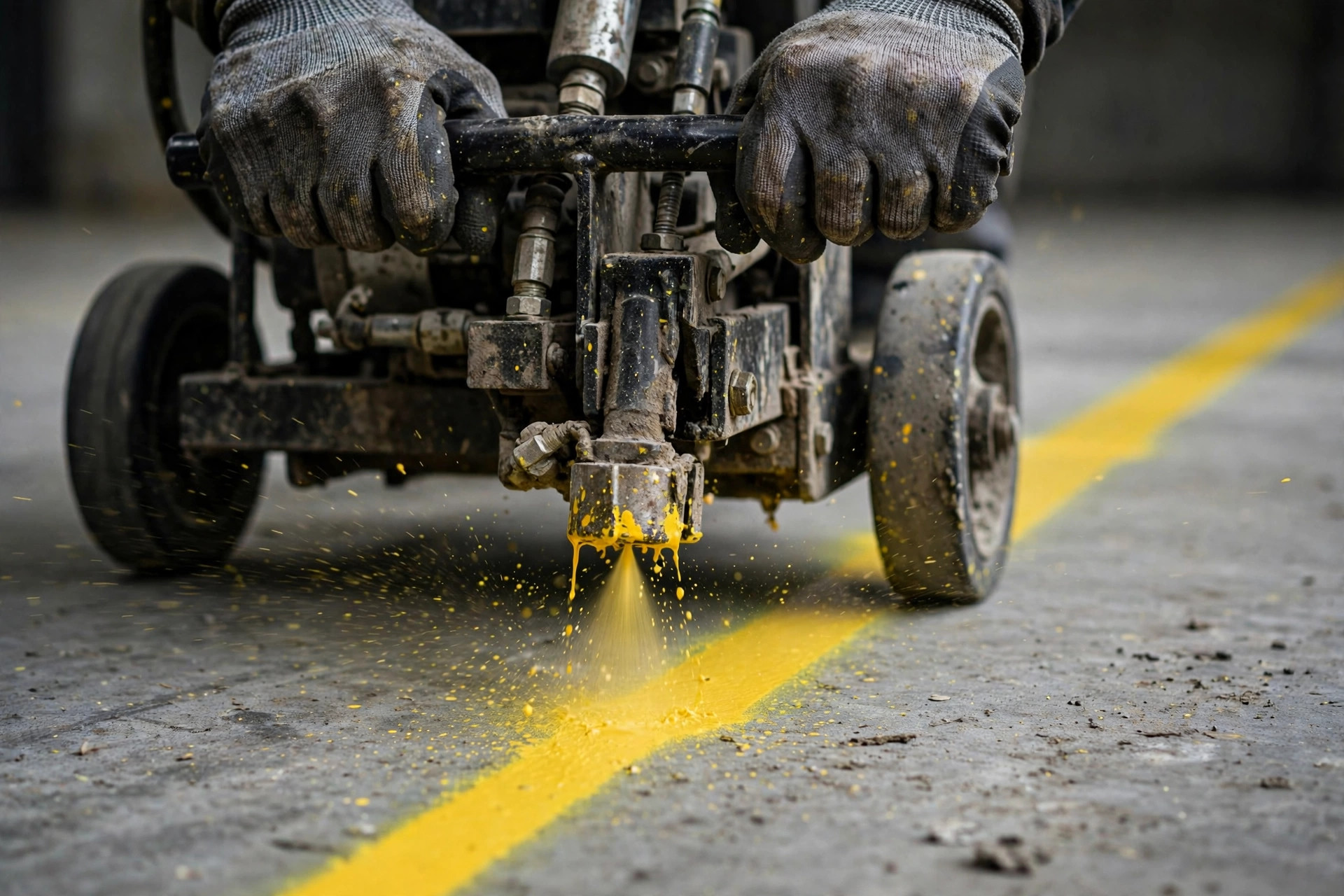
I did exactly that in my own warehouse in June 2025: Saturday morning, me and two guys, chalk layout, forklift test runs, real paint in the afternoon. Two days for the whole 3,000-square-meter floor, under $400 in materials (standard paint — prices vary by brand). A year later the lines are still crisp — because we figured out where the lines belonged before we painted them.
The Small-Warehouse Way
Big companies stripe on a five-year plan. We stripe on a "good this year, no rework next year" plan. Three rules: paint the aisles yourself with standard paint, follow the color rules, and chalk-test the layout with a forklift before the real thing. You can search warehouse floor striping cost per square foot a hundred times — or measure your floor once with a tape.
Small warehouses have their own way of surviving: spend money where it matters, and what matters is never doing it twice.
By Xiao Ma, Small Warehouse Owner