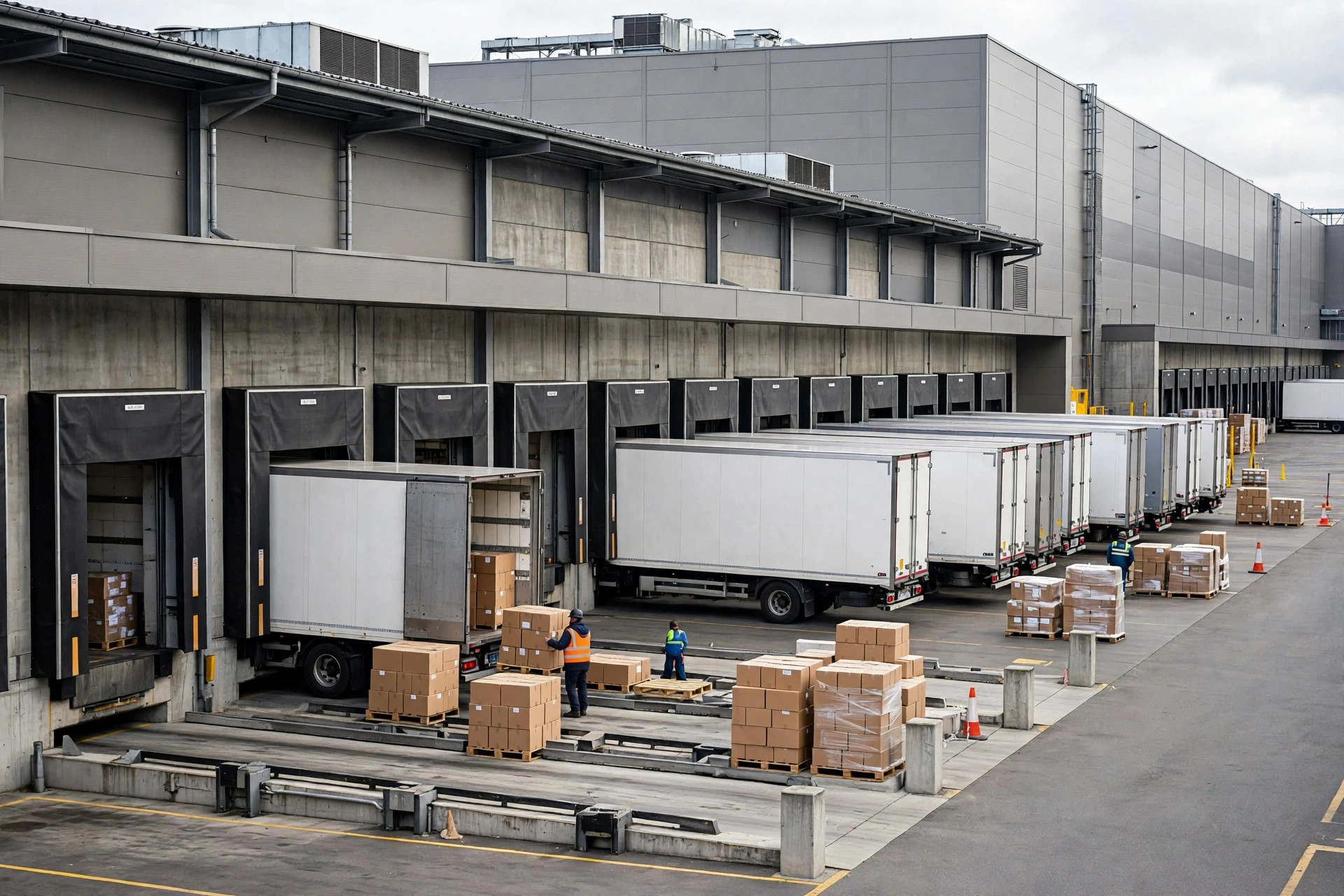
Corner damage is honestly the dumbest way to lose money in this business.
The product is fine. The cartons are fine. Just the four corners are wrecked — crushed by strapping, clipped by a forklift, rubbed by the next pallet over. Then come the photos, the claims, the bad reviews. The most infuriating part? The goods themselves were perfect. It was purely a "didn't protect the corners" problem. That kind of money hurts to pay.
I learned my lesson: four paper edge protectors on every pallet, one per corner, then stretch wrap. Cost? A few bucks per pallet. Since then, corner-damage disputes have dropped to almost nothing. Today I'm laying it all out — the most underrated item in pallet packaging, for real.
So What Exactly Is a Paper Edge Protector?
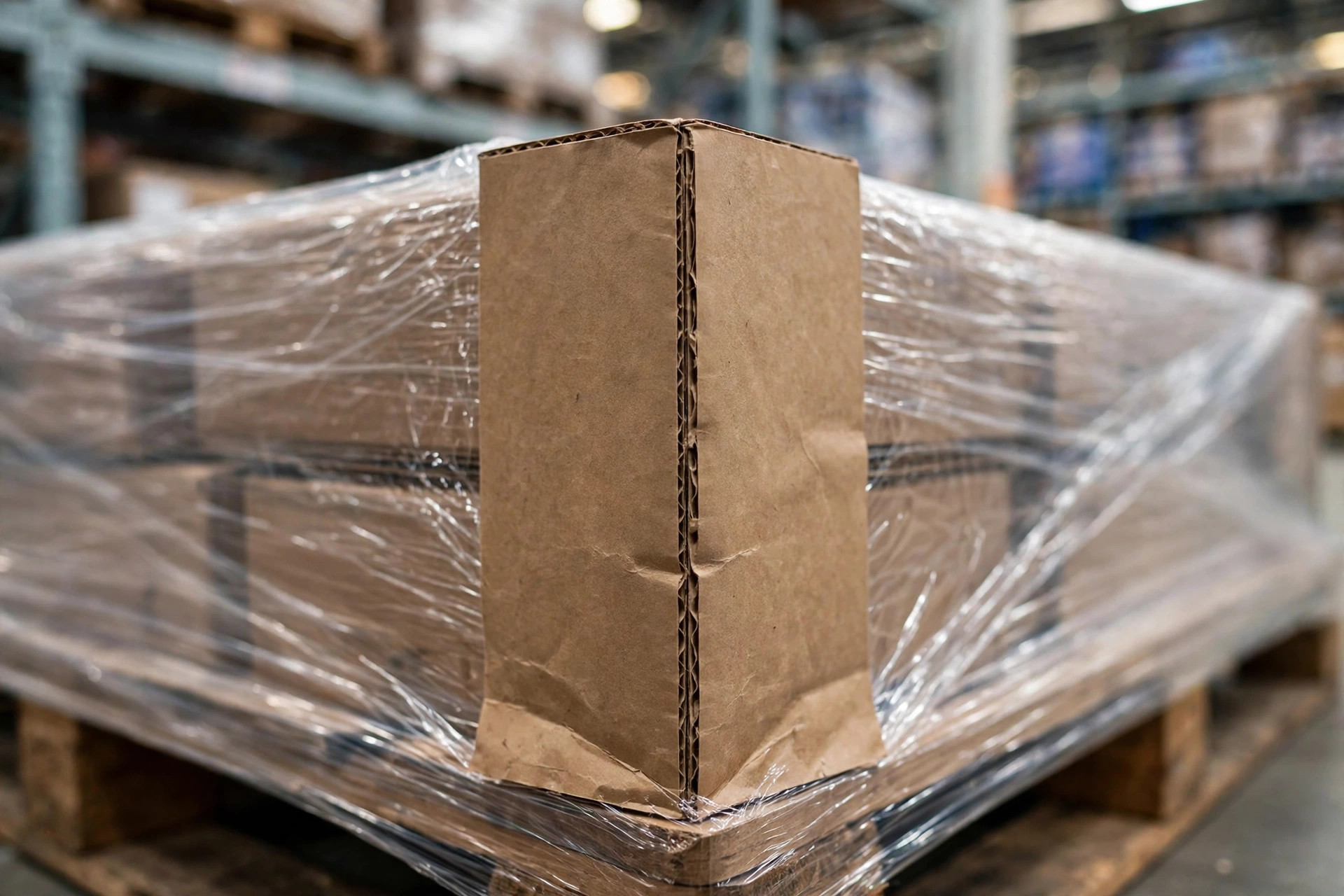
A paper edge protector (also called an edge board) is an L-shaped — sometimes U-shaped or flat — rigid strip made of laminated layers of kraft paperboard. You slip them onto the four vertical corners of a palletized load, then stretch-wrap or strap over them.
Don't let the word "paper" fool you. Once those kraft layers are laminated, you're looking at 3 to 7 millimeters of genuinely tough board. It does exactly two jobs:
First, it spreads the load. Strapping pulled straight across a carton corner concentrates all the force into one thin line — the corner collapses. With an edge protector underneath, that force spreads across the whole board. Corner saved.
Second, it frames the load. Four boards on four corners give the whole pallet a rigid skeleton. In transit, when things shift and bump, the protectors take the beating instead of your cartons.
The L-type is by far the most common. Lengths are cut to order — 48-inch and 60-inch boards are standard — and for heavy loads you go thicker (5mm and up).
Tested by Me: How Edge Protectors Killed Our Corner Damage
My own story. Mid-2024, I had a sea shipment going to an overseas warehouse — thirty-odd pallets. To save a little hassle, we skipped the edge protectors and just wrapped and strapped. On arrival, the last-mile leg went sideways: several pallets had crushed, scuffed corners. The warehouse rejected two pallets outright from the photos, then flagged a pile more corner damage on unboxing. Re-shipping, claims, re-labeling — the whole mess cost me enough to buy edge protectors for years.
After that shipment, we made it a warehouse rule: every full pallet gets four edge protectors, cut to load height, then a full pass of stretch wrap. My packer grumbled at first — two extra steps per pallet. I told him: one minute of your time putting on four boards, versus one afternoon of mine fighting a claim. These days he's more religious about it than I am.
The result? We used to have a few corner-damage disputes every single month. Now they're basically gone. This trick genuinely works — I've tested it myself, and anyone who tries it will see.
Let's Do the Math: A Few Bucks Per Pallet, Worth It?
The best thing about paper edge protectors is how cheap they are. Let's run the numbers.
| Source | Reference spec | Price per board |
|---|---|---|
| Uline US (retail) | 2×2" × 48", ~4mm thick | ~$1.60 (carton of 80 for $128) |
| Uline US (retail) | 2×2" × 24" | ~$0.94 (carton of 160 for $150) |
| China wholesale | Standard L-type | A few cents to ~$0.15 each |
Four boards per pallet: sourcing domestically in China, that's a couple of yuan per pallet. Buying retail in the US, about $6.40 per pallet. Now compare: one corner-damage re-shipment easily runs tens of dollars, and the hours burned on a claim are priceless.
A few bucks buys you a get-out-of-jail card for corner disputes. You can do this math yourself.
Bonus: they're 100% paper and recyclable. If your customers care about sustainable packaging, paper edge protectors are an easier sell than plastic corner guards.
Quick selection cheat sheet, all from my own trial and error: standard 3–4mm boards handle normal e-commerce cartons fine; heavy or tall pallet loads get the 5mm-plus thick boards — don't cheap out on the difference; and if your cartons themselves are flimsy (cheap cartons always are), you need protectors even more. They act like an exoskeleton for weak corners. Cut the length to your load height. Done.
The Traps: Edge Protectors Aren't Magic — Four Rules
Cheap doesn't mean foolproof. Used wrong, they're wasted. Four traps, all stepped in by me or people I know:
One: they hate moisture. Tough as they are, they're still paper. In humid ocean freight or cold-chain environments, standard boards go soft and lose strength fast. For those lanes, either get moisture-resistant boards or don't count on the protector as structure — just wrap tighter.
Two: don't cheap out with two. I've seen people put boards on only two diagonal corners to save material. Useless. The load hits all four corners. Four boards per pallet is the floor — don't economize here.
Three: length matters. Boards should run the full load height or close to it, covering the carton's corner stress zones. Too short and the exposed top and bottom collapse anyway.
Four: they don't replace good palletizing. If the base layer is sloppy and the center of gravity is off, nothing on top will save it. Edge protectors are corner insurance, not whole-pallet insurance. The fundamentals of stacking still count.
The One-Line Takeaway
Five years in e-commerce, and the most expensive lessons I've paid for were all the "I could've fixed this for a few bucks but chose to save" kind. Paper edge protectors are the most underrated item in packaging: the cheapest thing on the pallet, solving the most expensive disputes. Corner damage doesn't just cost you the goods — it costs you the customer's trust. Not worth it.
Before tomorrow's shipments go out, check your packing station: are edge protectors stocked? If not, order a carton right now. This trick genuinely works — I've tested it myself.
By Ah K, E-commerce Seller (5 yrs)