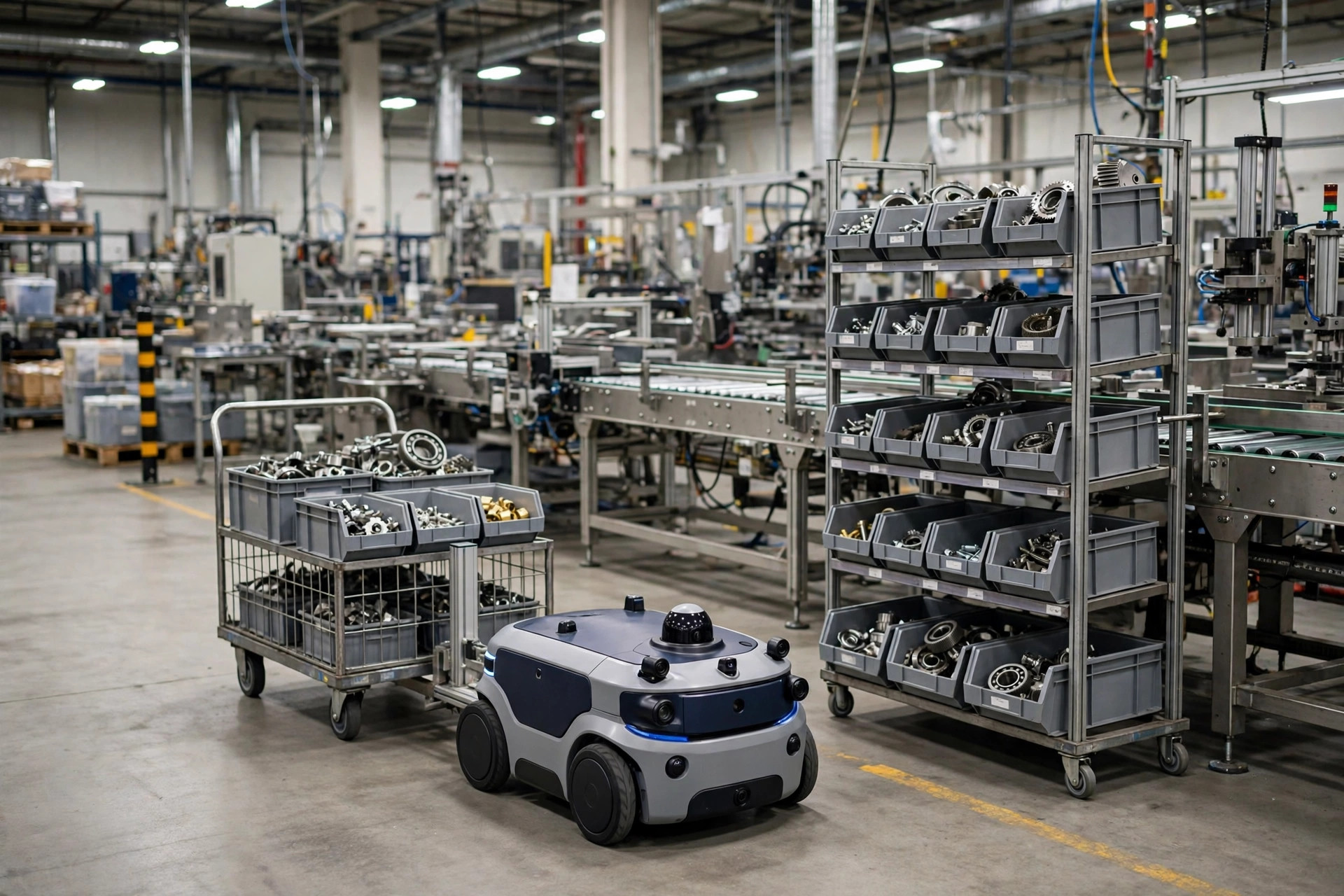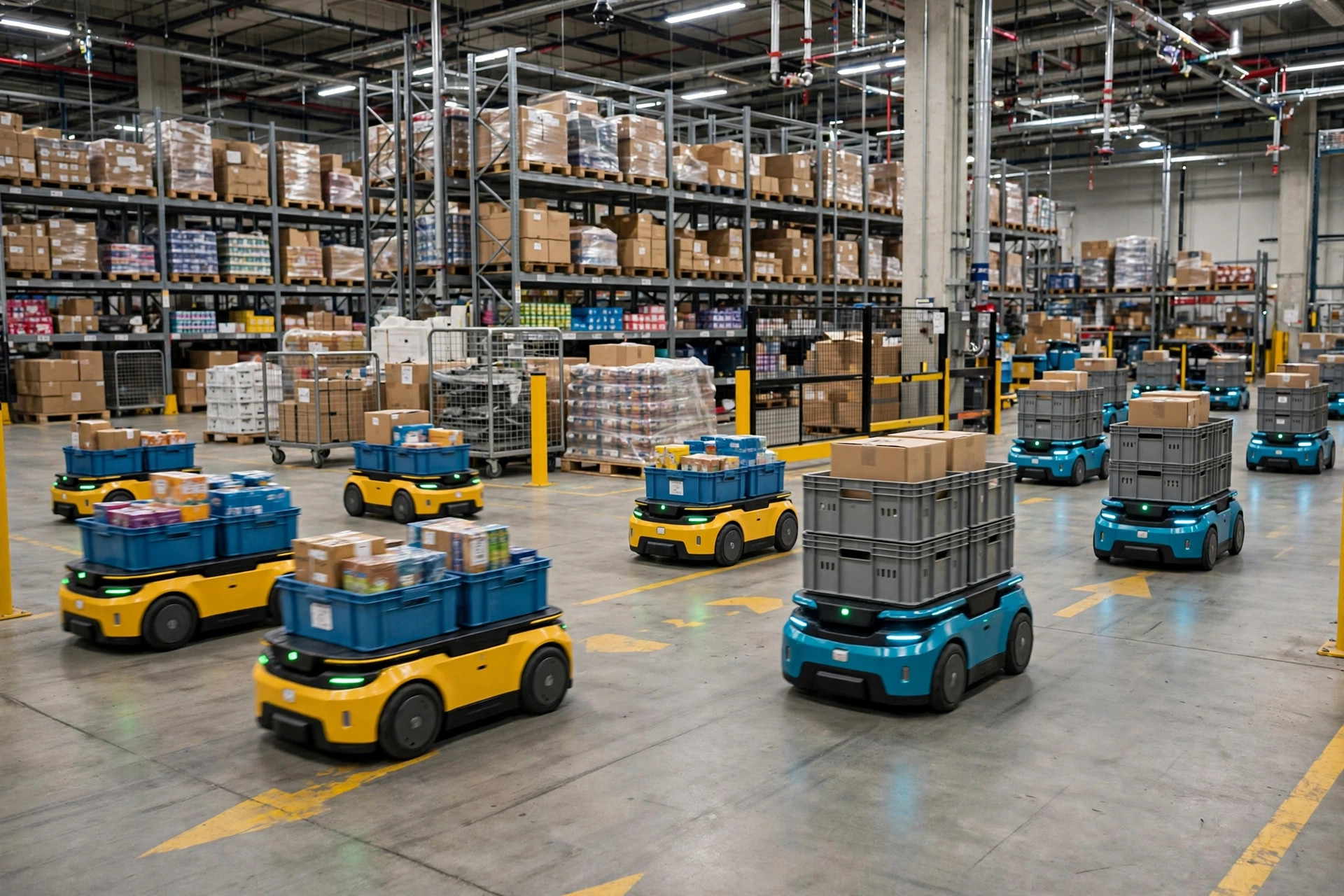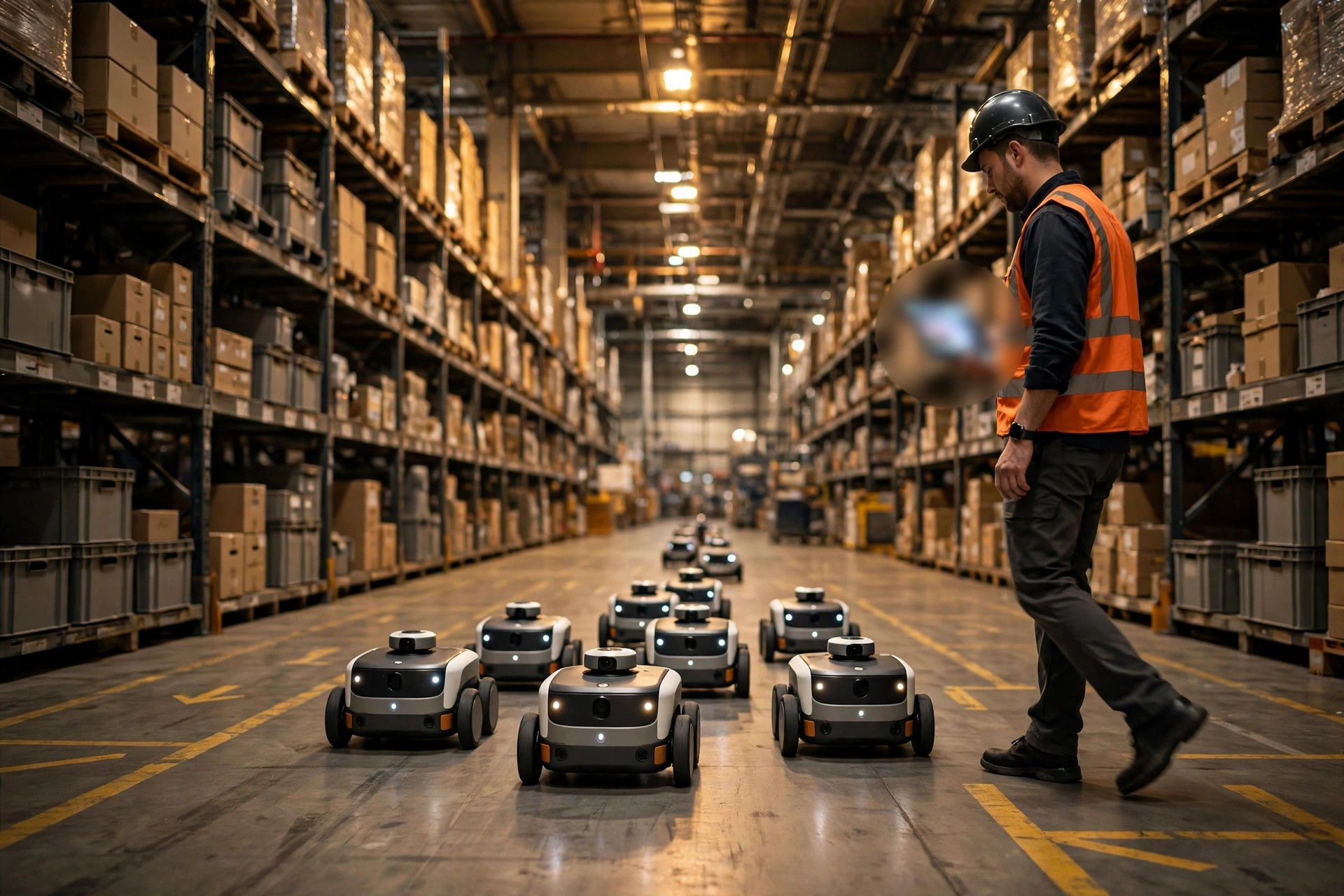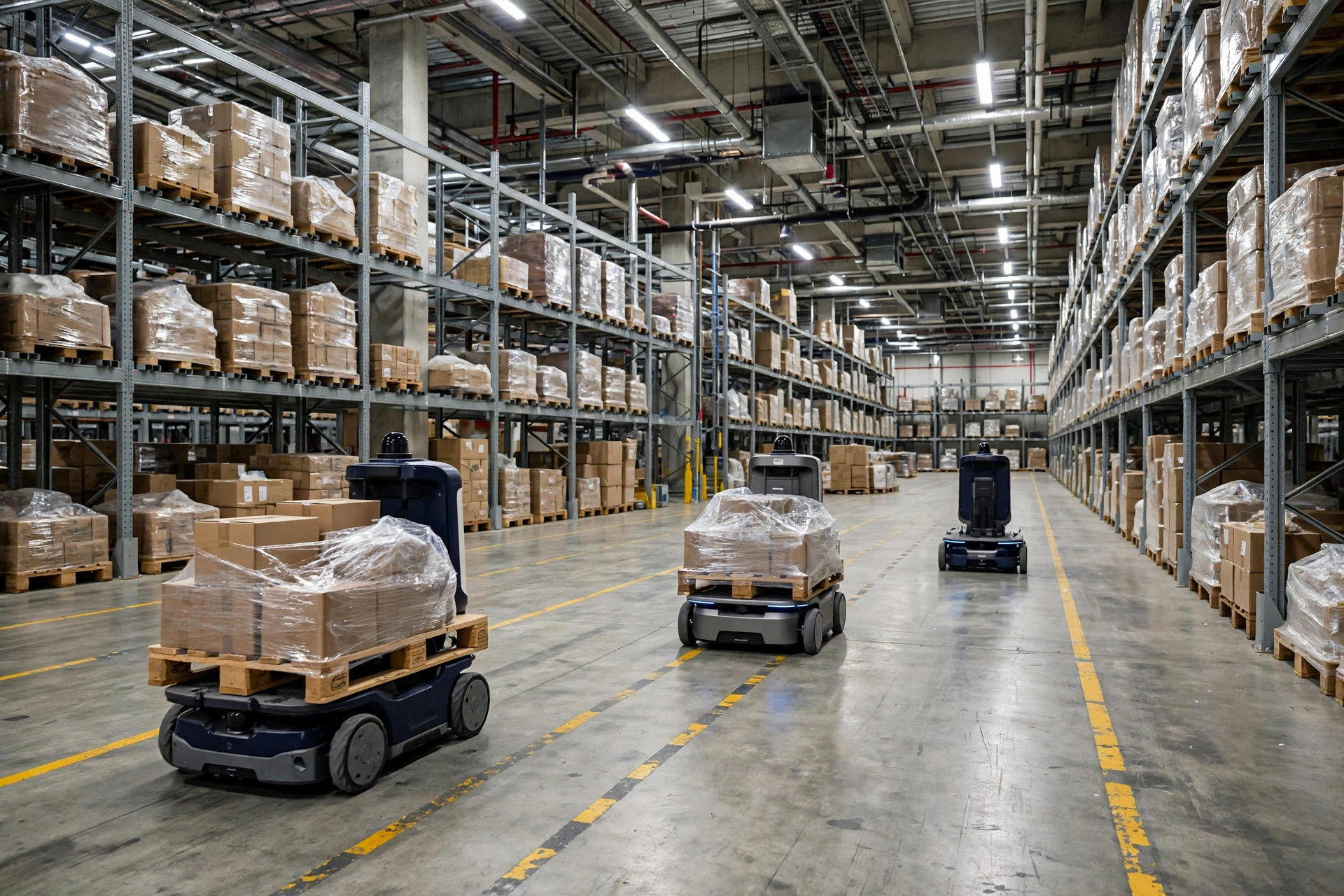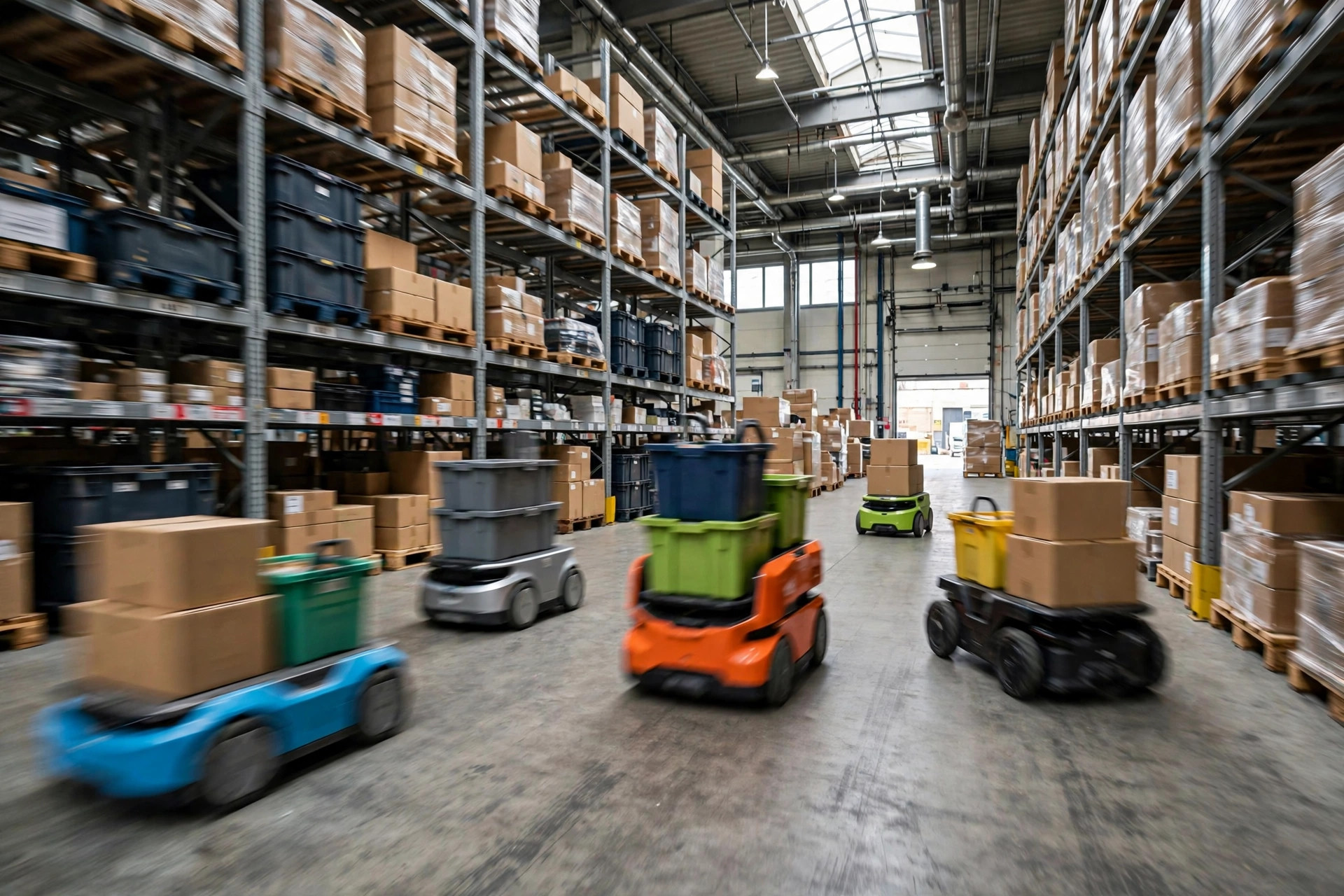
Over the past two years I have walked the floors of more than a dozen warehouses running autonomous mobile robots, and one pattern keeps repeating: robots from two, sometimes three, different brands sharing the same floor. In 2024, at an e-commerce fulfillment campus in eastern China, Brand C's under-ride AMRs and Brand D's forklift-style AMRs shared a single main aisle, each answering to its own fleet manager. During the first month after go-live, two robots from different brands were dispatched to the same storage location — a dispatch collision — more than 30 times a day. Talking to systems integrators, I hear the same story with growing frequency: mixed-brand fleets were rare before 2021 and have become noticeably common since 2023. The causes, interestingly, are highly convergent, and they cluster into three.
How mixed fleets get assembled
The first cause is mergers and acquisitions. When one 3PL acquires another, the equipment of warehouse A and warehouse B ends up under the same roof, and the brands naturally do not match. The second is phase-two expansion switching vendors: the pilot ran on a premium brand, then a competitor undercut the bid by 20 to 30 percent, the CFO signed happily, and the integration headache arrived months later. The third is the most common and the most unfair: the pilot purchase and the scale-up purchase were made by different decision-makers who never talked to each other, and by the time both batches of robots rolled in, everyone realized they spoke two different languages.
All three point to the same conclusion: mixed fleets are rarely planned; they get assembled. And because they are not planned, the scheduling layer is usually the last thing anyone thinks about — even though it is the hardest part to get right.
Three pits, each deeper than the last
The first pit is the protocol. VDA5050, the open communication protocol jointly driven by Germany's automotive industry association (VDA) and the mechanical engineering federation (VDMA), was designed precisely so that AMRs from different brands could be orchestrated by one master controller. In practice, vendor support is uneven: some implement only a basic function subset while traffic management and task preemption still run on proprietary protocols; others claim support on paper but withhold key data fields at delivery, and their status updates arrive too slowly for real-time scheduling. The result is that a neutral scheduling layer trying to conduct the orchestra is handed a censored score.
The second pit is right-of-way. Each brand's RCS (robot control system) only knows its own robots, plans its own paths, and assumes it has the right of way. In 2023 I visited an automotive-parts 3PL in the American Midwest running 40 under-ride AMRs from Brand A alongside 12 counterbalance forklift AMRs from Brand B inherited through an acquisition, all sharing one main-aisle intersection. The two schedulers were blind to each other's vehicles; the intersection deadlocked 17 times a day on average in the first month, each requiring a human to walk over and move a robot, at 8 to 12 minutes per incident. After a neutral scheduling layer took over unified traffic control, deadlocks fell to one or two per week. The navigation and obstacle avoidance of the individual robots were never the problem. What was missing was a traffic cop.
The third pit is the most insidious: priority conflicts. An urgent outbound task lands in Brand A's queue while a routine replenishment task sits in Brand B's queue, and neither scheduler can see the other's task pool — urgency and routine are queued in separate worlds. Then there is the data problem: Brand A defines utilization by task hours, Brand B by distance traveled, so management receives two KPI reports whose numbers cannot be reconciled, and the review meeting becomes two monologues.
Replace the robots or replace the scheduler: the math
A mixed fleet ultimately faces two exits: rip everything out for a single brand, or add a neutral scheduling layer that governs all brands. Using a mid-size site with 60 robots as an illustrative model (figures are indicative only; actual project quotes govern):
| Cost item | Option A: single brand | Option B: neutral scheduling layer |
|---|---|---|
| Old fleet disposal | Residual recovery, roughly 20-30% of original price depending on condition and age | None; keep using them |
| New robot purchase | Full fleet repurchase; the big ticket | None |
| Scheduling software | Vendor RCS, often bundled or separately licensed | Neutral scheduler license, per-robot or per-site |
| Integration work | One WMS integration | One protocol adapter per brand |
| Cutover downtime | Whole-site switchover, large downtime window | Phased cutover possible |
| Long-term leverage | Locked into one vendor | Multi-brand bargaining power preserved |
In magnitude, Option A costs roughly 3 to 5 times Option B. But Option A has a hidden benefit: single-vendor maintenance pricing, common spare parts, and an operations team that only needs to master one system. Option B's hidden benefit is strategic — no vendor lock-in, so future expansions can still be competitively bid.
Four questions can guide the choice: does the fleet exceed 30 robots; do the operating zones heavily overlap; is there merger or expansion pressure in the next three years; is the old fleet near the end of its depreciation? If the first three answers are yes, a neutral scheduling layer is usually the better economics. If the fleet is small, zones are independent, and the old robots were due for replacement anyway, short-term pain beats long-term pain: unify once and be done.
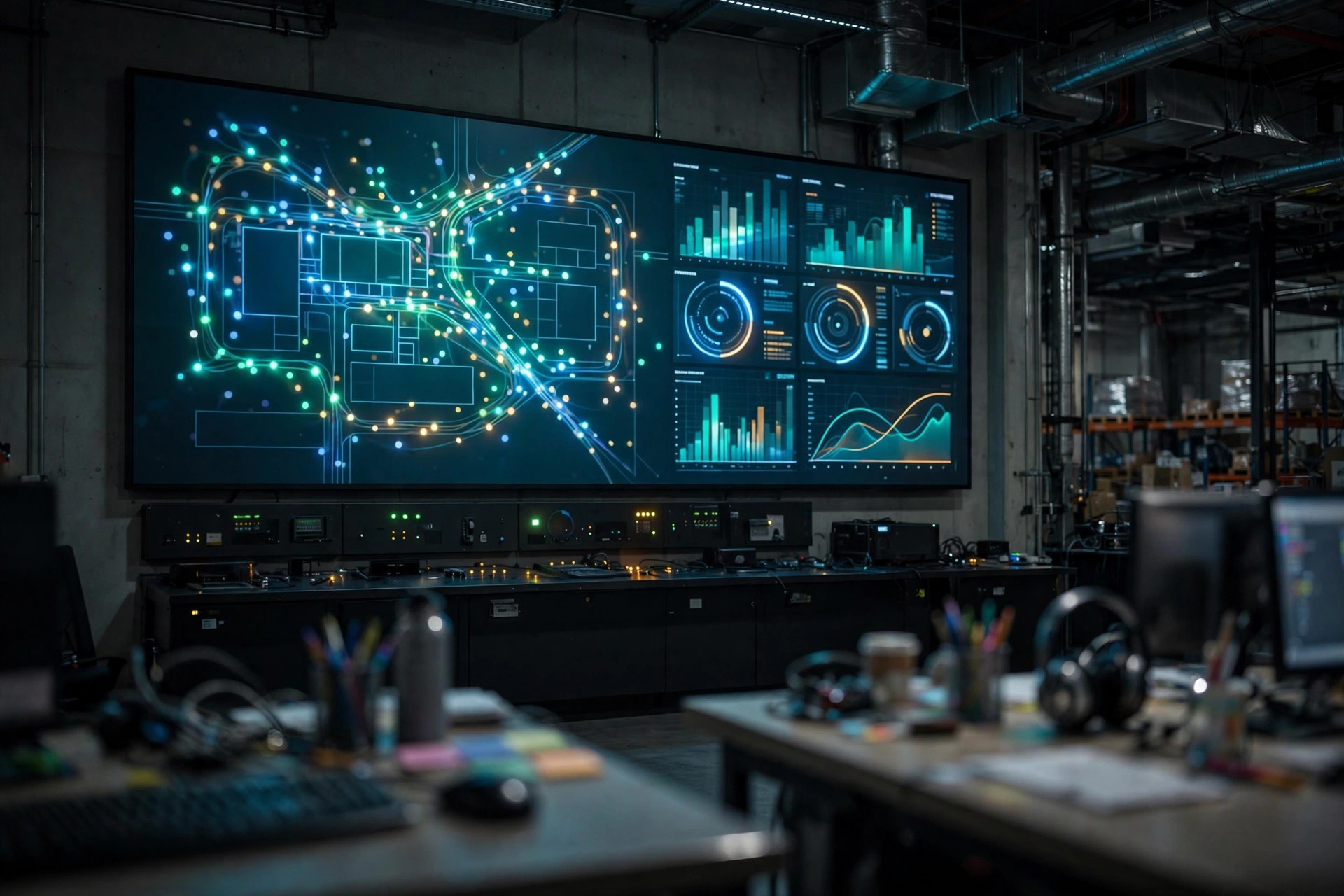
The contrarian read is this: when mixed-fleet projects fail, the root cause is almost never the robots — it is who holds power at the scheduling layer. Whoever owns the master scheduler allocates right-of-way, adjudicates priority, and defines the data standard. Vendors dragging their feet on protocol openness looks like a technical issue; it is really a power struggle — once a neutral layer takes command, the robots are demoted to actuators. So during vendor selection, do not just compare robot specs. Ask one more question: in your proprietary protocol, are the traffic-control and task-preemption fields actually open? That single question avoids half the pitfalls.
On the trend side, VDA5050 is shifting from a nice-to-have to a must-have in European automotive logistics projects, and the neutral-scheduler vendors supporting it are maturing fast. The open question worth sitting with: once the scheduling layer truly becomes independent — a cross-brand standard component — what gets commoditized next? Will the robot itself follow, until AMRs compete the way forklifts do today, on price and reliability alone, with all the intelligence converged into the scheduling layer? There is no answer yet, but the direction is clear.
By Dr. Chen, Supply Chain Researcher