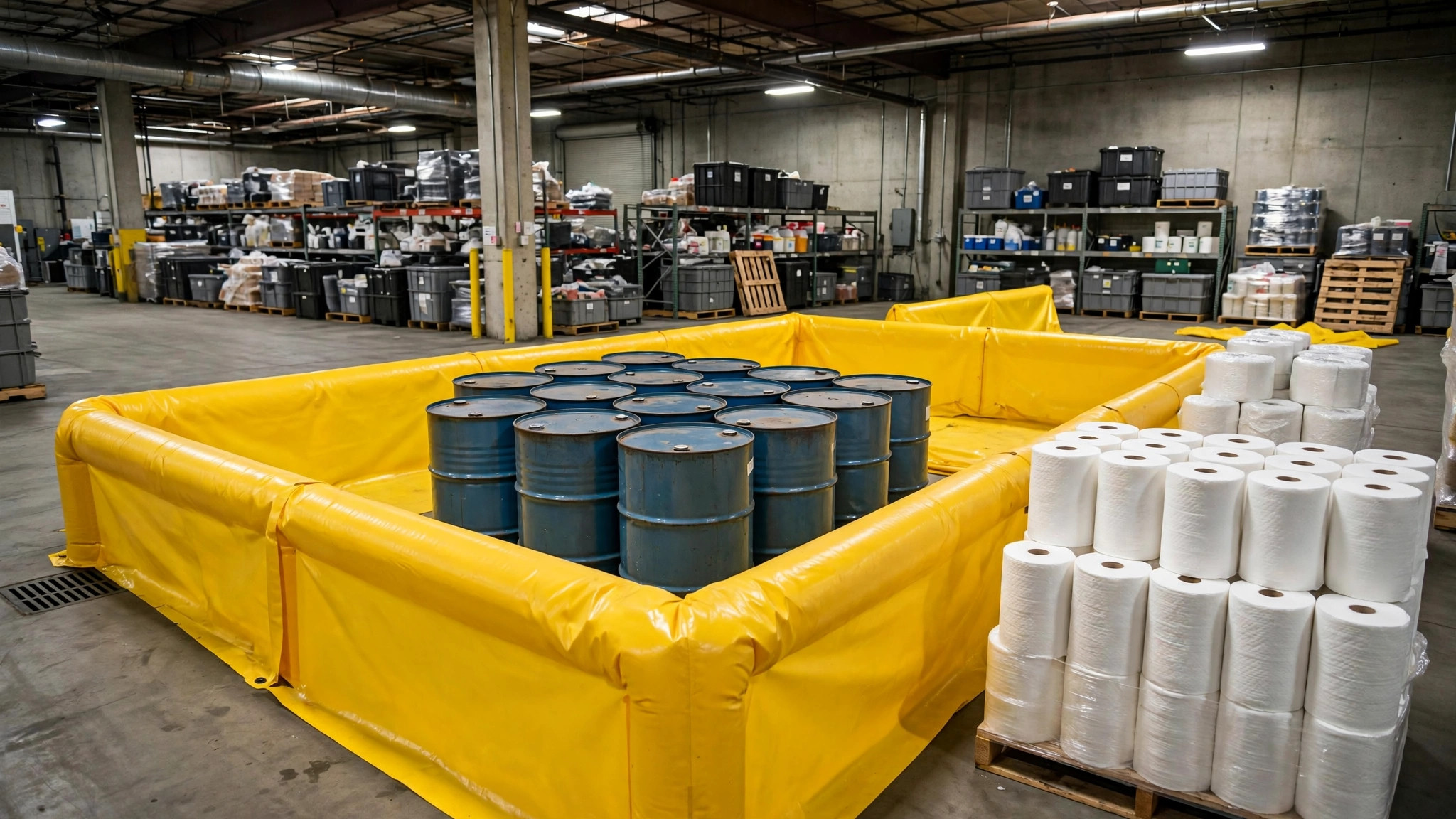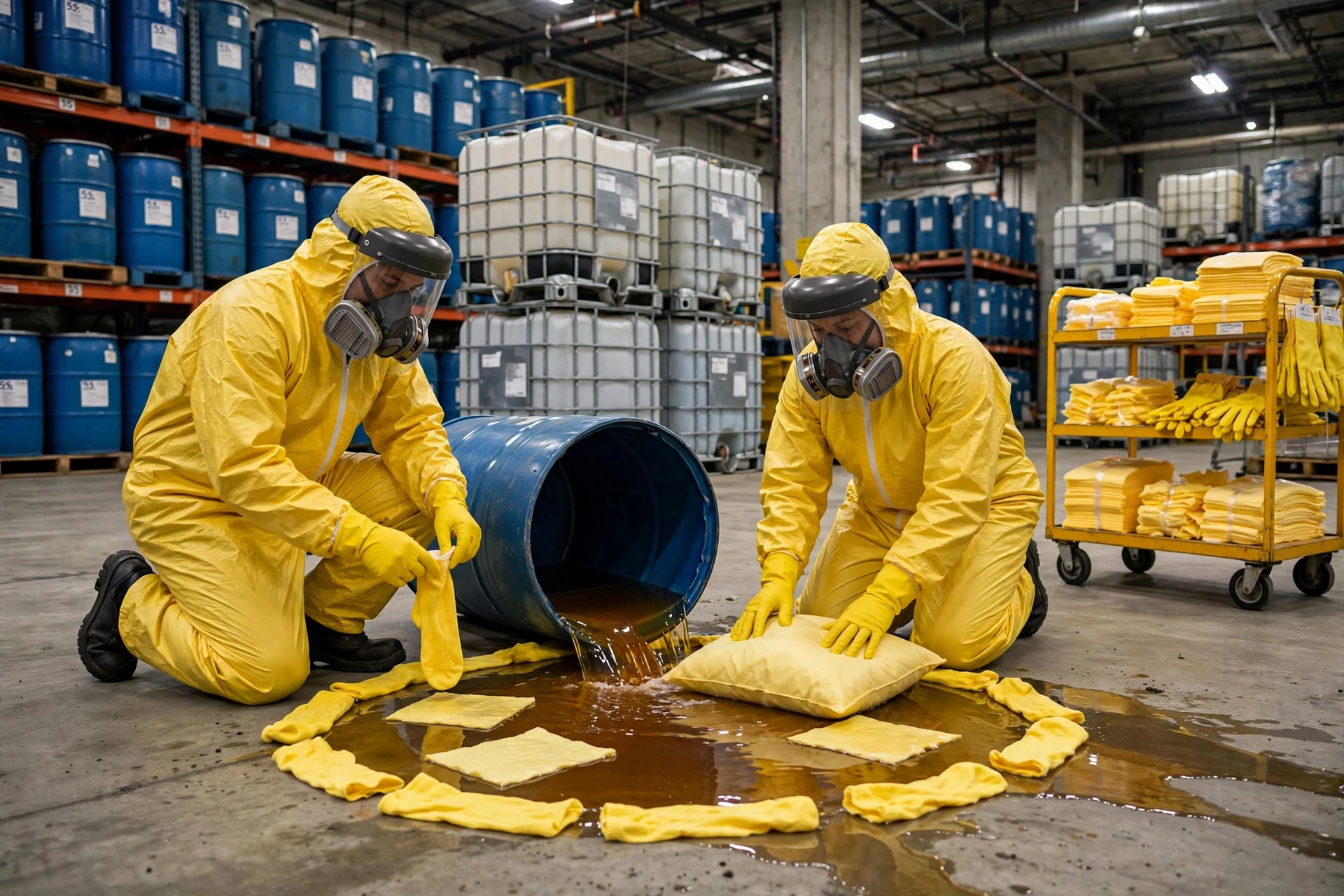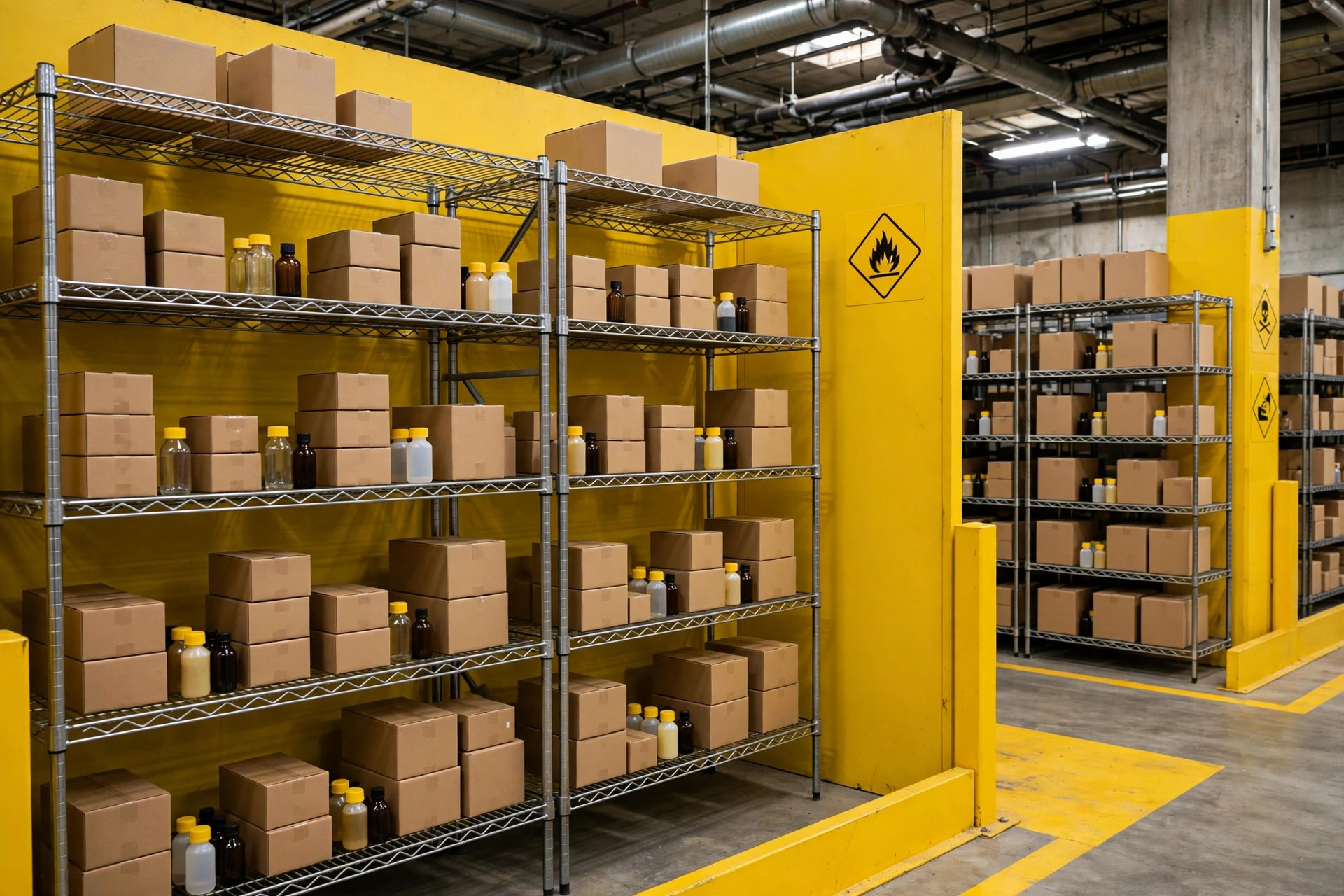
Bottom line up front: if each inner packaging meets DOT's limited quantity thresholds (commonly 1L or less for liquids, 500g or less for solids per receptacle — limits vary by hazard class, always check the current 49 CFR), most small-format hazmat — sample bottles, aerosols, household cleaners — can move under the limited quantity exception and shed most of the paperwork, packaging, and training cost. But LQ is not "no rules." It is a different set of rules: combination packaging, the diamond LQ mark, segregated storage, and pack-out verification are all still mandatory, and a mis-marked box still earns a fine.
I'm Lin Xiao, a WMS implementation consultant with 30+ go-lives under my belt. I keep seeing the same pattern: the moment a warehouse hears "hazmat," the owner's first instinct is "too expensive, too much trouble, pass." In 2023, a 3PL in New Jersey that fulfilled e-commerce orders nearly turned down a home-cleaner line for exactly that reason. I walked the floor: 500ml spray bottles, 250g stain-remover powder — a textbook limited quantity scenario. We ran it as LQ, cut documentation and packaging costs by roughly 70% (field estimate), and went over a year with zero incidents. Here is the playbook, step by step.
Limited quantity vs. fully regulated: the cost comparison
Same shipment, two regulatory paths — the burden differs by an order of magnitude:
| Limited quantity (ground) | Fully regulated | |
|---|---|---|
| Shipping paper | Usually not required for highway | Required with every shipment |
| Packaging | Sturdy combination packaging | UN specification packaging with test reports |
| Outer marking | Diamond LQ mark | Hazard diamond label + UN number |
| Vehicle placarding | Usually not required | Required at threshold quantities |
| Employee training | DOT basic hazmat training still required | Full dangerous-goods training, double the hours |
| Per-shipment effort | Low: mark, segregate, verify | High: papers, certified packaging, tracking |
Read the training row twice — that is the first trap. LQ relieves shipping papers, packaging certification, and placarding. It does not relieve training. The 49 CFR 172.704 training requirement applies to LQ just the same: anyone who touches LQ freight needs basic hazmat training in week one. If the plan is "small quantity, skip training," a roadside inspector's first question will be about training records.
Which products qualify: read the 49 CFR 172.101 table
Step one, and the most important one. LQ eligibility is not a judgment call — you look it up:
- Pull the product's SDS and find its UN number and hazard class (e.g., UN1993, flammable liquid).
- Open the 49 CFR 172.101 Hazardous Materials Table, find the UN row, and read column 8A, "Exceptions."
- Column 8A points to the rule in Part 173 (e.g., 173.150 for flammable liquids, 173.154 for corrosives — verify against the current edition), which states the inner-packaging limit and packaging requirements in plain text.
- Copy that inner limit into your WMS item master. Everything downstream — receiving, verification — keys off this number.
Two cautions. High-hazard materials like poisons by inhalation often have no LQ eligibility at all — if column 8A is blank, don't force it. And air transport runs a stricter, separate LQ regime (IATA "Y" packing instructions). This playbook covers DOT ground only; freight going on a plane needs its own process.
A California e-commerce warehouse learned the "don't eyeball it" lesson in 2022. They repackaged a 4L drum of industrial cleaner into 1.2L bottles, figuring "small bottles, LQ should be fine." The LQ inner limit for that class was 1L (per the 49 CFR edition in force). At 1.2L the eligibility was void, the carrier rejected the batch at the terminal, and they ate the freight plus two weeks of demurrage. LQ eligibility is per inner packaging, not per shipment. Measure the bottle before you repackage.
The three packaging requirements
Once the table confirms eligibility, all three must hold — miss one and you're out of compliance:
- Inner packaging limits: actual capacity of each bottle or can must not exceed the table limit. Actual, not nominal — a bottle labeled 500ml that physically holds 550ml is over.
- Sturdy outer packaging: inner receptacles go into a strong combination outer with dividers and cushioning. "Sturdy" is an operating standard: after sealing, shake the box — nothing inside should shift or clack.
- The diamond LQ mark: the outer must carry the limited quantity diamond per 49 CFR 172.315 (black-and-white diamond, minimum size, with a reduced variant for small packages — check the current edition), on a visible face, oriented correctly. A standard hazmat diamond label is not a substitute — the wrong mark counts as no mark.
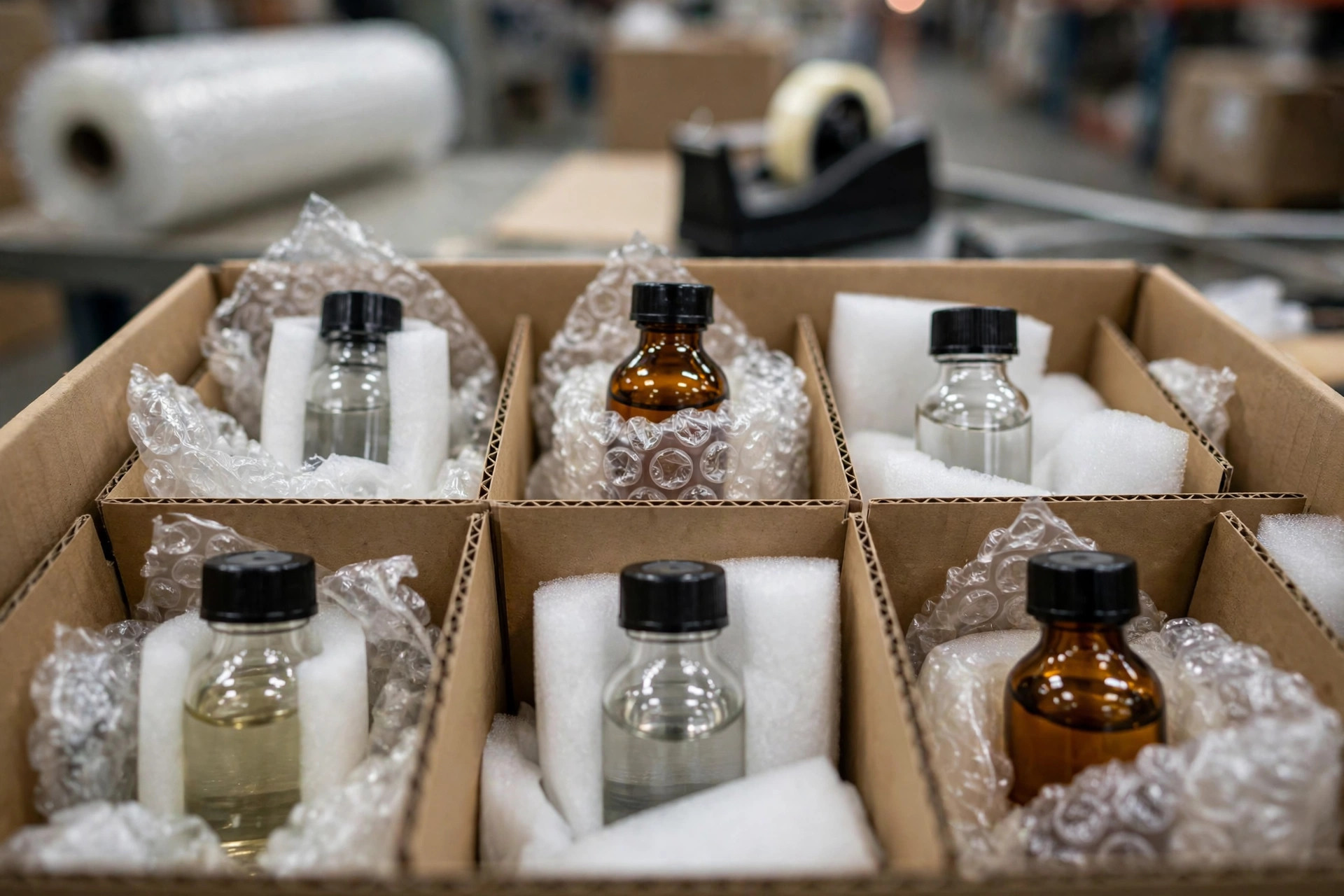
The mistake I've seen three times: the mark, applied wrong. The classic was that New Jersey 3PL — one month after going live, a DOT roadside inspection pulled a load with an undersized, crooked LQ diamond. Fine: north of $20,000 (about $23,000, field estimate). Afterward we switched to pre-printed marks issued only at the verification station — no handwriting, no ad-hoc printing on the floor.
Running LQ in the warehouse: the WMS playbook
This is my home turf. Four controls in the WMS; skipping any one will bite you on the floor:
- Item master: every LQ SKU gets a hazmat flag, UN number, hazard class, limited quantity flag, LQ inner-packaging limit (with unit), and segregation group. Make the flag mandatory. A field that can stay blank will be treated as "general freight" by someone on the floor — that's a law of nature.
- Three-step receiving: check the SDS against the supplier's LQ mark (wrong mark, refuse the delivery); spot-check actual inner capacity against the system limit (over the limit, quarantine the lot); carry the LQ attributes onto the inventory lot in the WMS, so the system knows from dock arrival that this is LQ freight.
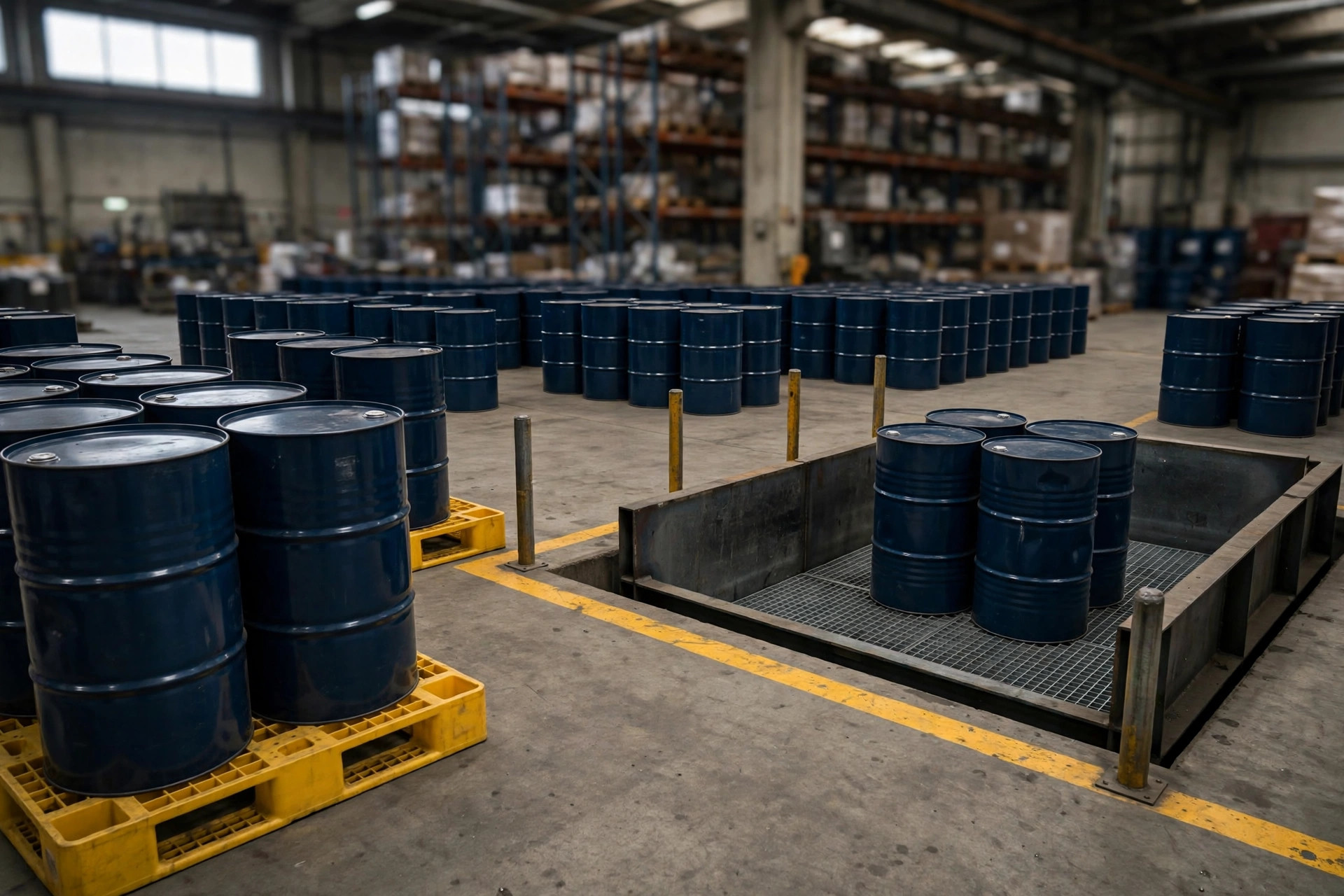
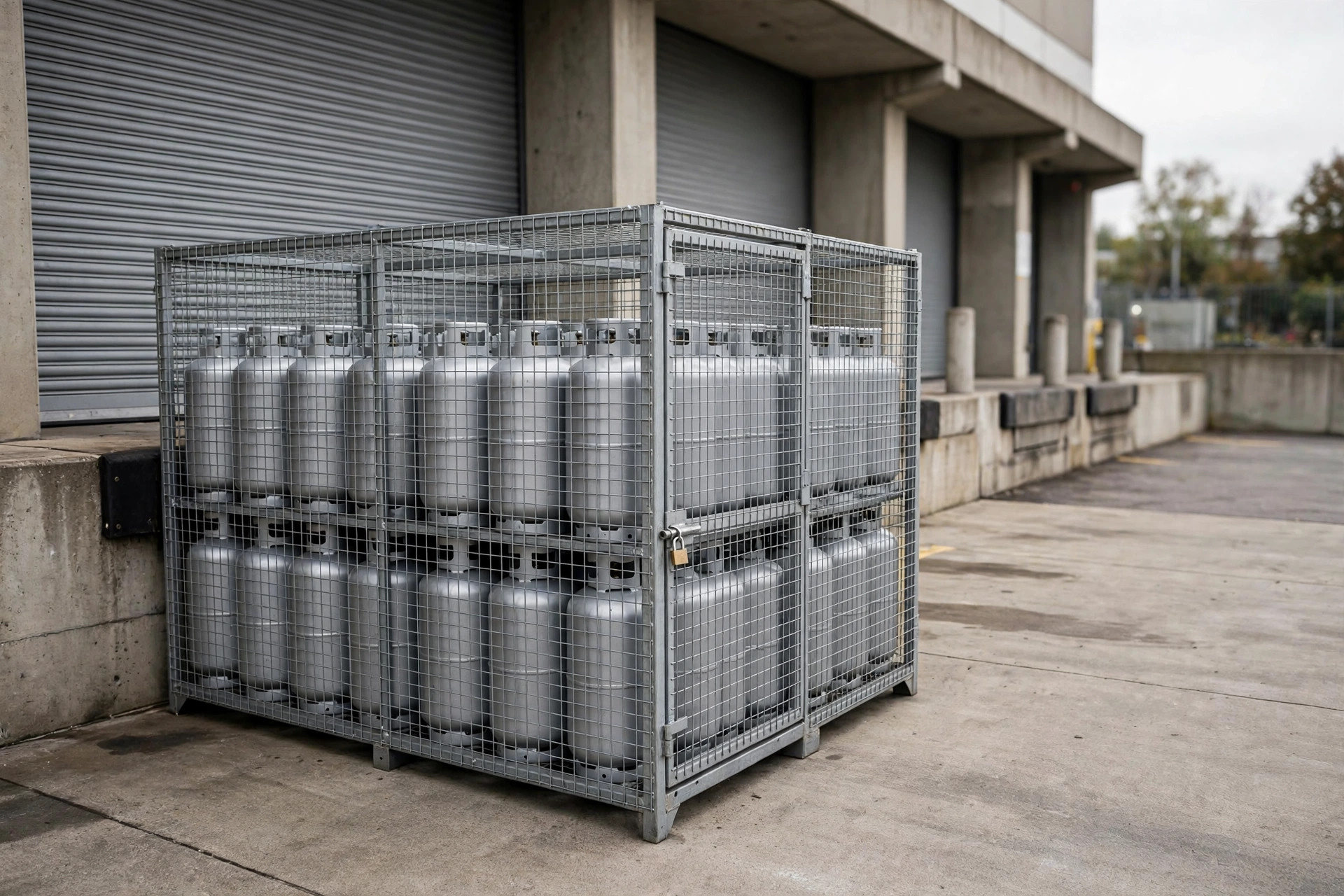
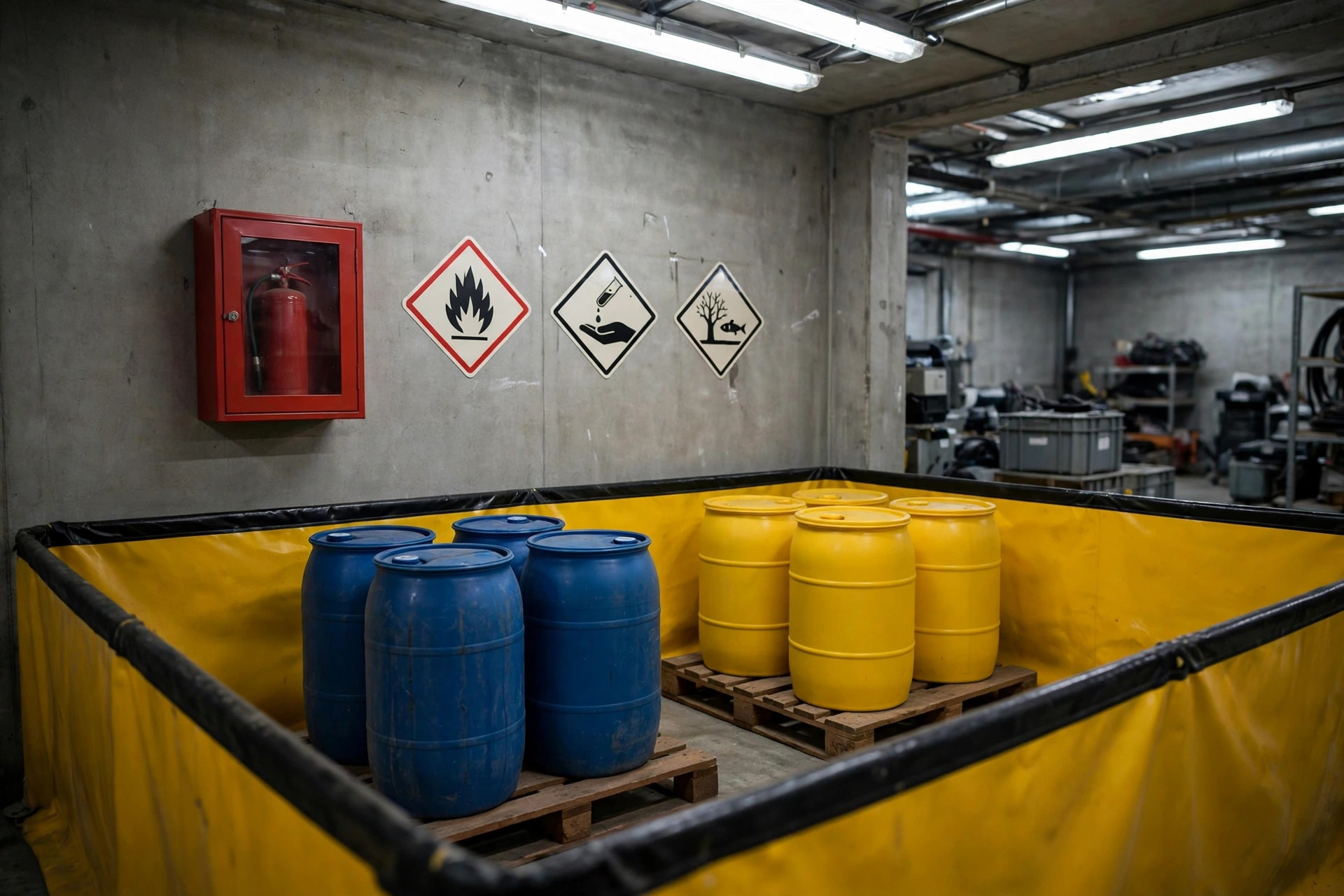
- Hard-coded putaway: LQ freight goes only into the hazmat cage or LQ zone. Incompatibles (acids, bases, oxidizers, flammables) are stored apart per the segregation matrix, and the rule is locked — LQ-flagged SKUs are excluded from general-freight locations. The system won't suggest them, and nobody can override it.
- Pack-out verification checklist: when the verification station scans the order, the LQ checklist pops and the box can't seal until every item is ticked — inner count × unit capacity within the limit? Diamond applied and oriented right? Any incompatibles in the same box? Full pass or no release.
Here's the counter-intuitive part: the hardest thing in running LQ is not creating the hazardous flag. It's keeping LQ cartons out of general-freight waves at verification. Once an LQ carton slides into a general wave, nobody applies the mark, the carrier hauls it as ordinary freight, and a roadside check turns it into a whole-shipment problem — with the fine landing on the shipper. I've watched a warehouse share one verification bench between LQ and general freight; in a rush, operators tossed LQ cartons onto the general cart three times in a month. The fix is low-tech: separate waves, separate bench for LQ. Physical separation beats system checks.
One zero-cost trick: ground LQ usually needs no shipping paper, but write "Limited Quantity" in the bill-of-lading remarks anyway. Most carrier systems recognize the field, and it proves you disclosed if anything goes wrong en route.
Four failure modes: the mistake I've seen three times
Tape this next to the verification bench:
- Over-limit repackaging: decanting from drums into bottles without measuring. That 1.2L bottle in California in 2022 is how a whole batch dies.
- Wrong marking: undersized diamond, crooked placement, or a hazmat label substituted for the LQ mark. The New Jersey fine north of $20,000 bought that lesson.
- Incompatible mixing: LQ relieves paperwork and packaging class — not chemical incompatibility. In 2021, a Texas warehouse stored LQ acids and LQ bases in the same bay; cap seepage let the two meet, generated heat, and burned through the outer box. Small quantity is not harmless — the segregation matrix applies to LQ all the same.
- Skipped segregation: treating LQ as general freight on ordinary racking. The sneakiest failure — the goods look innocent, the system carries no hazardous flag, and when something happens you can't even prove it was hazmat.
Three straight-talking reminders for fellow practitioners. First, LQ eligibility is per inner packaging — measure the bottle before repackaging, never eyeball it. Second, don't skip training: 49 CFR 172.704 covers LQ, so teach it in week one rather than letting an inspector teach it for you. Third, make the limited quantity flag mandatory in the WMS and validate it at receiving, putaway, and verification — whatever the system enforces, the floor won't miss.
By Lin Xiao, WMS Implementation Consultant