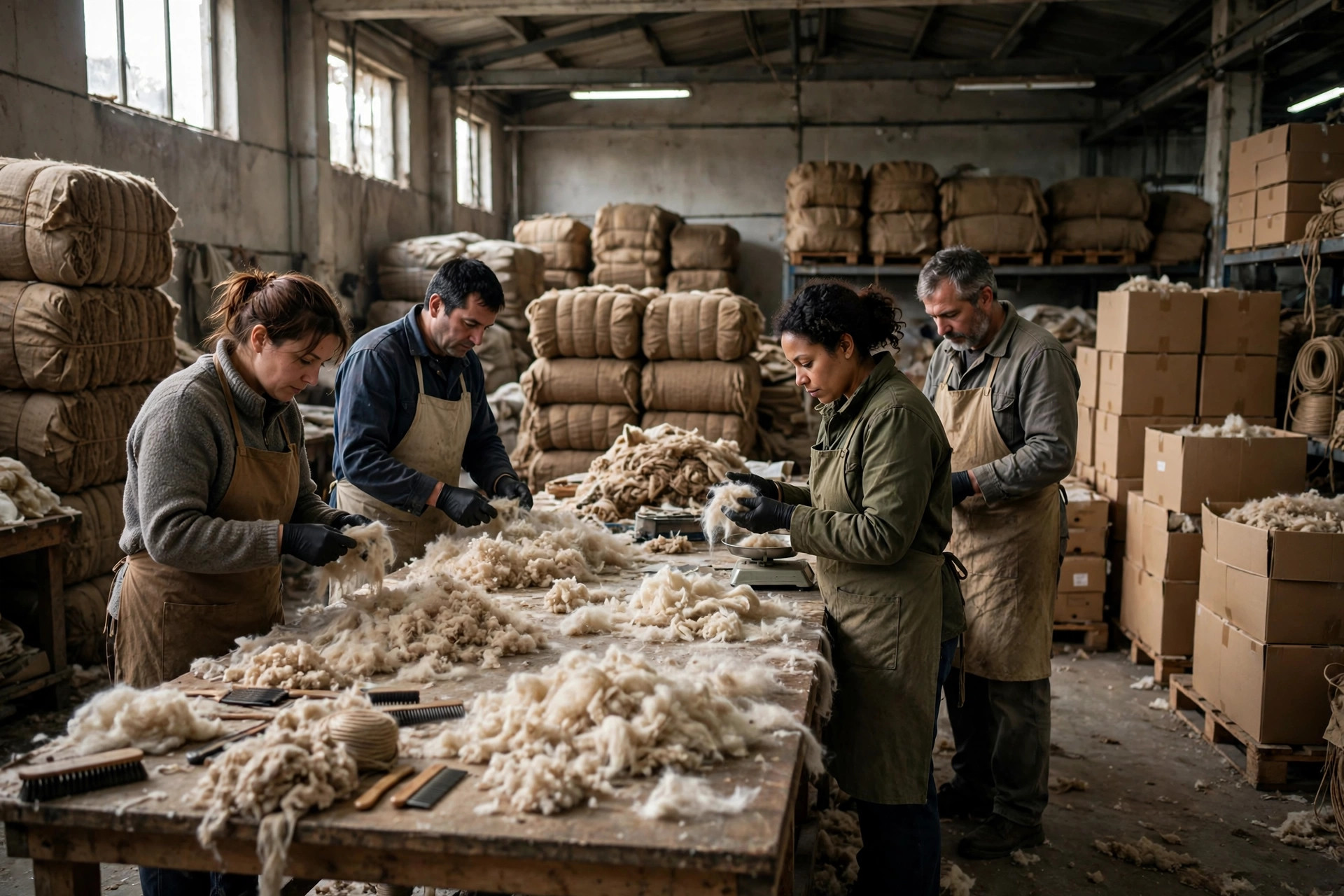
Let me gripe. The most annoying thing about selling cotton is not price negotiation. It is the buyer opening a bale at the port, calling it damp, dirty, or mixed with another lot, and discounting the whole shipment. Benin cotton export warehouse storage is a bill you settle before the bales enter the warehouse, not after they leave it. Once bales are stacked and moisture control failed and contamination was not managed, nobody can save them.
I learned this the hard way on my first Benin cotton lot. As an example: bales came out of the gin looking tight and solid, and we stacked them three high against the wall. When the rains arrived, damp crept up the wall, and the bottom row along that wall showed a ring of moisture. Opened up, they already had mold spots. When the buyer inspected, it opened exactly that wall row, and the grade of the entire lot came under suspicion. After that I learned the rule: when cotton bales enter, the first job is not stacking high. It is inspecting, separating, and recording.
Benin Cotton Export Warehouse Storage: Three Receiving Checks
Do not fear trouble. Check one: look at the bale. Are the straps tight? Is the wrapping torn? Are there mud spots or oil stains? Torn or dirty bales get pulled out and stored separately, never mixed with good bales. Check two: sample-weigh a proportion of bales across the lot, and record any bale whose weight is way off on its own. Do not wait until container loading to discover a shortage. Check three: record the lot. Date in, gin name, lot number on a card hung in front of the stack. Once lots mix, nobody can say which lot a problem bale came from.
This trick works — I have tested it myself: half a day more at receiving saves three days of arguing at loading. Plenty of sellers think bale inspection is warehouse trouble-making. In fact inspection protects your price. What buyers fear most is not a half-day delay. It is a seller who cannot even say which lot it shipped.
Another trap: do not pack bales too tight. Cotton bales need air. Stacked tight, middle bales stay stuffy and moisture cannot escape. Leave inspection aisles for a person to look and a forklift to pull a bale out. A warehouse packed so full that nobody can enter saves floor space and loses the whole lot.
Stacking has its own rules too. Never put bales straight on the floor — use pallets and leave a gap from the wall, because the bottom bales take moisture first. Do not get greedy on height either. Stack too high and the bottom straps snap under pressure, the wrapping splits, and cotton spills out and picks up dirt. As an example, one warehouse stacked five high to save space, two bottom straps snapped, and the crew spent a full day cleaning up and re-baling. Three layers or five layers depends on strap strength and floor loading, not on gut feeling.
Pest control matters as well. Cotton warehouses fear mice chewing wrapping and insects getting into seams. Door guards, drain covers, and vent screens must be complete, with a weekly check for damage. A bale with mouse damage gets isolated, photographed, and recorded by lot, never shipped mixed with good bales. When a buyer opens a bale and sees mouse damage, it assumes the whole lot's warehouse management is poor, and the price drops on the spot.
The Two Things Benin Cotton Export Warehouse Storage Fears Most: Moisture and Dirt
Moisture is the number one killer. Cotton absorbs moisture quietly. The surface can look dry while the inside is already over the line. As an example, one warehouse had a small roof leak dripping onto the top of one row of bales. It did not look like much, and the duty crew ignored it. Two weeks later, that whole row showed mold on top. The lot had to be downgraded, and the loss would have paid for ten roof repairs. The rule is simple: roof, drains, and wall bases get checked every week, and a leak gets fixed the same day, not next month.
Dirt is the number two killer. Mud, dust, oil, foreign matter — once they stick, they do not wash off. Keep the road into the warehouse clean, clean the mud off forklift tires, and never store oil drums or chemicals near bale stacks. Workers change dirty gloves instead of wearing one pair from unloading to loading. Each of these sounds small. Together they are the buyer's first impression when a bale is opened.
| Check | How | What happens if you skip it |
|---|---|---|
| Bale appearance | Check every bale for tears, mud, oil | A bad bale mixed in puts the whole lot under suspicion |
| Sample weighing | Weigh a proportion; record odd bales separately | Shortages surface at loading, with no evidence |
| Lot cards | In date, gin, lot number on display | Mixed lots cannot be traced when problems appear |
| Stack spacing | Aisles for inspection; gap from walls | Trapped moisture spreads mold across a row |
| Roof, drains, walls | Weekly check; fix leaks the same day | A small leak becomes a downgraded lot |
Here is the counter-intuitive judgment: the driest-looking bale is not necessarily the driest. A surface-dry, damp-inside bale is the most dangerous kind, because inspectors miss it at first glance and discover it only when the bale is opened. Sampling cannot look only at the surface. Sample middle bales, bottom bales, and wall bales. Inspecting only good-looking surface bales is the same as not inspecting at all.
Site drainage deserves an early look too. Is the site low-lying? Does water pool at the entrance? Are the drains clear? Check all of it before the rainy season. As an example, one warehouse had a blocked entrance drain, one heavy rain flooded three meters in, and a dozen bales near the door soaked at the base. After that we set a rule: clear drains before the rains, keep sandbags at the entrance, and put humidity cards at the lowest point, checked at every handover. If a card changes color, find the source at once — do not wait for mold spots.
Lot traceability feels like hassle until it saves you. When a buyer flags a problem bale, you must be able to say at once when it came in, which gin it came from, how many bales are in that lot, and where they sit. If you cannot, the buyer expands inspection to the whole lot, and time and cost land on you. One line recorded in advance saves three days of trouble. That arithmetic always works out.
Loading Out: The Final Check Before Cotonou
Before loading, do not skip the last check. Load by lot, first in first out — do not push newly arrived bales to the front for convenience. The container must be clean and dry, door seals intact, and after loading, photograph everything: container number, lots, bale count, seal number, all on one sheet. When the buyer asks, you produce the evidence at once. That is bargaining power.
Container moisture needs attention too. A container sits in port sun and crosses the sea, and day-night temperature swings condense water on the walls. Before loading, check the roof and walls for damage and rust holes, and use desiccants as specified for the container type and voyage — not by feel. As an example, one seller skipped a worn door seal, moisture got in during the voyage, and two rows of bales by the door soaked through. The claim argument dragged on for two months with no result. Two minutes checking a seal before loading saves two months of arguing.
Transport from gin to warehouse must not break the chain either. Bales travel covered, never open in rain, and the truck bed must be free of standing water and oil. As an example, one lot caught a rainstorm on the road, the wrapping looked fine, but a layer inside had soaked, and it was only found at warehouse receiving — three more days lost to re-drying. Write rain and contamination protection into the transport contract, check the transport leg first at receiving, then check the bales themselves. Both gates passed, the bill is clean.
This trick works — I have tested it myself: three receiving checks, aisles left for inspection, weekly leak checks, and photos kept at loading. Get those four things right and benin cotton export warehouse storage runs smoothly. Bales not damp, not dirty, lots clear — buyers open bales without frowning, and prices can be negotiated. Small sellers cannot beat big factories on volume. We beat them on this: every bale accounted for, every bill clear.
By Ah K, E-commerce Seller (5 yrs)