Principles first, money second. Think of AS/RS as a bundle: racking + robots + software, sold as one engineered package. Asking how much does asrs cost is like asking "how much does a building cost" — depends whether you want a shed or a skyscraper. The four configurations below cover 90% of real projects.
Four Configurations, Four Price Bands
Tier 1: Vertical lift modules / compact automated storage, USD 100,000-500,000+ per unit.
Think of it as an "automated filing cabinet." It stores small parts, tools, and maintenance inventory — not pallets. A few hundred thousand per unit, ideal for high-SKU, high-value-piece scenarios (auto parts, electronics). Don't compare its cost against pallet ASRS; different species.
Tier 2: Miniload (tote-based), USD 500,000-2 million+.
Tote storage, the workhorse of e-commerce piece picking. Priced per aisle — several hundred thousand per aisle is typical. A 4-aisle miniload project around USD 1.5 million is common (verify against current integrator quotes).
Tier 3: Shuttle-based pallet systems, USD 750,000-5 million+.
High-density pallet storage with four-way shuttles and lifts. Per-pallet-position cost, to give you an order of magnitude: USD 200-400 per pallet position (racking, shuttles, lifts, software included; civil works and fire protection excluded — verify against current integrator quotes). A 10,000-pallet project runs USD 2-4 million in equipment.
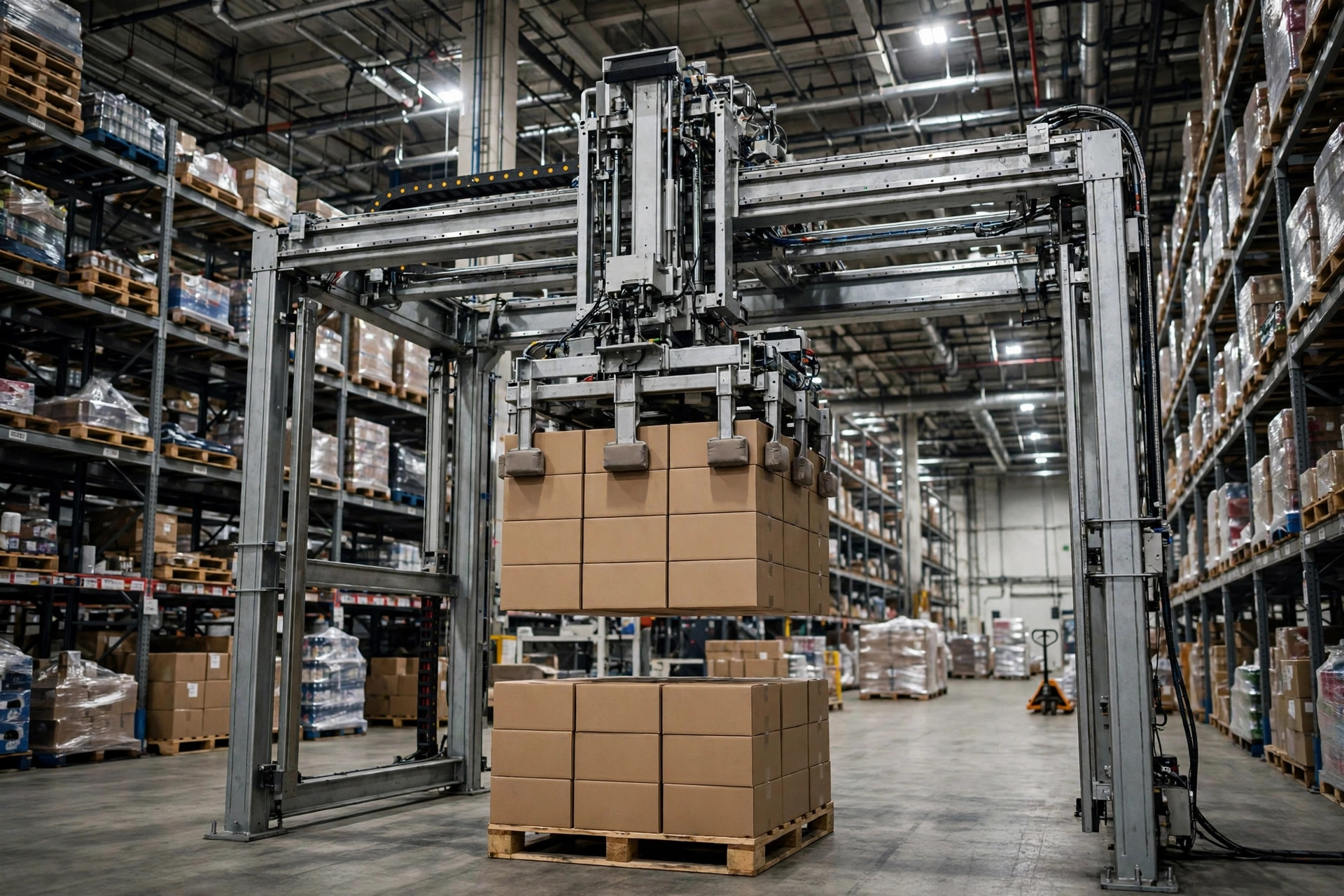
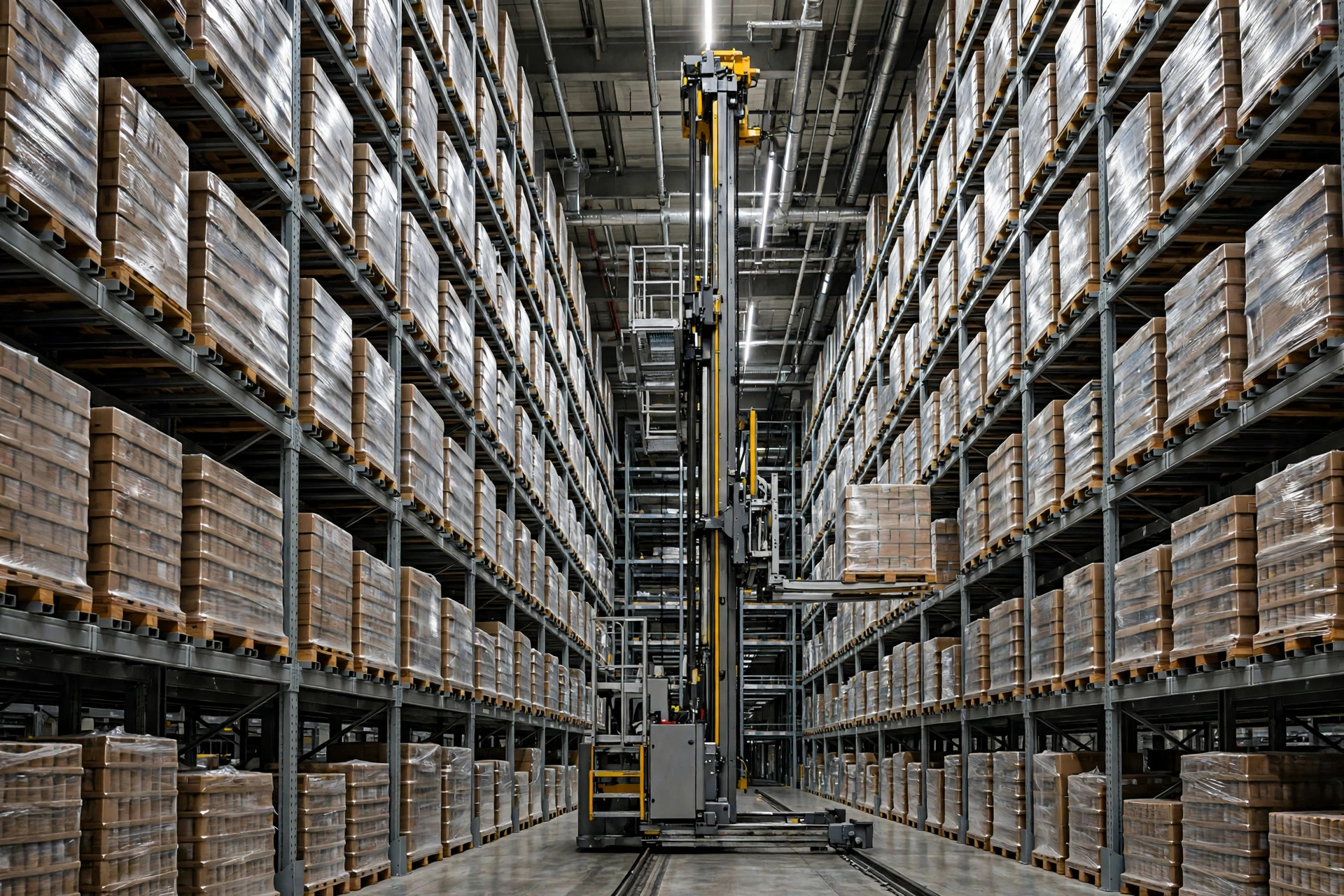
Tier 4: Unit-load crane ASRS, USD 1.5 million-10 million+.
The big ones — 20+ meter high-bay. USD 300-600 per pallet position. A 20,000-pallet high-bay runs USD 6-12 million in equipment plus racking, and with civil works, fire protection, and conveyor connections, the total package easily passes USD 15 million.
For perspective: conventional selective pallet racking costs USD 50-500 per pallet position (racking only, no forklifts). ASRS equipment runs 5-10x that. What are you buying? Density, labor savings, accuracy.
Cost Anatomy: Where the Money Goes
Take a typical shuttle project (10,000 pallets, USD 3 million in equipment):
| Component | Share | Notes |
|---|---|---|
| Racking structure | 25-30% | High-precision racking, 2-3x conventional cost |
| Shuttles / lifts | 30-35% | Core equipment; four-way shuttles run tens of thousands each |
| WCS/WMS software | 10-15% | Don't underestimate — bad software cripples good hardware |
| Electrical / network | 5-10% | Power, comms, fire-system integration |
| Installation & commissioning | 10-15% | Millimeter precision requirements justify the price |
Note: civil works and fire protection are NOT included. ASRS demands extreme floor specs (super-flat floors under crane rails), plus in-rack sprinklers. Budget at least 20-30% more for these two. I've seen too many projects where the equipment price was agreed and the civil quote caused heart attacks.
Two Costs Missing from Every ROI Slide
The equipment price is only the visible half. Two costs never make it into the vendor's ROI presentation, and they decide whether the project is a hero story or a cautionary tale.
One: integration and testing time. The crane can be mechanically complete in month 10 and still not hit nameplate throughput until month 16. The gap is always the same three things: the WCS-to-WMS handshake (your WMS has quirks the vendor's lab doesn't), the fire-system interlocks (the inspector's interpretation, not the drawing's), and the conveyor handoff tuning. Budget 2-3 months of testing with YOUR real SKUs — not the vendor's demo totes, which are all the same weight and perfectly square. If your payback math assumed full speed from day one, add a year to it. I've never seen a project that didn't.
Two: the spare-parts strategy and the first-year learning curve. Shuttles break. Batteries degrade. Rails need re-leveling. Negotiate the spares package upfront — one spare shuttle per group, critical boards on your shelf — because buying spares after go-live costs 20-30% more, and every day waiting for a part is a day of manual fallback. Annual maintenance runs 3-5% of equipment value; budget it from year one, not when the warranty expires. And plan for year-one throughput at 60-70% of nameplate while your team learns the system. Honest ROI math uses year-two numbers, not the brochure.
One more practical move: design for the full build, buy in phases. If the long-term plan is four shuttle aisles, engineer the steel, power, and network for four — but install two. Expanding into pre-built infrastructure costs far less than retrofitting, and you only carry the capital you need today. The vendors who push "build it all now for the discount" are selling you their cash flow, not yours.
The Payback Math: Three Numbers
Whether the money is well spent comes down to three numbers:
1. Labor saved. A 10,000-pallet conventional warehouse needs roughly 15-20 forklift operators and checkers; a shuttle-based one needs 5-8. At USD 60,000 fully loaded per US warehouse worker per year, that's USD 600,000-700,000 in annual labor savings.
2. Space saved. ASRS density is 2-3x conventional racking. 10,000 pallets need 80,000 sq ft conventionally vs 30,000-40,000 with ASRS. At California warehouse rents of USD 12-15/sq ft/year (verify current local rates), that's USD 500,000-700,000 a year in rent avoided.
3. Flexibility lost. This is a cost — don't forget it. Once built, changing SKU profiles or processes is enormously expensive. Warehouses whose business changes yearly must discount this "flexibility loss" into the math.
Payback period = total investment ÷ (annual labor savings + annual rent savings − flexibility loss). Healthy projects land at 4-7 years. Beyond 8 years, it's usually fake demand.
Fake-Demand Warning: Three Warehouses That Should Never Touch ASRS
I'm blunt about fake demand:
One: warehouses whose SKUs change faster than pages turn. 3C today, apparel tomorrow, cosmetics next month. ASRS is designed for stable business; with unstable business, it's a premium prison.
Two: warehouses without the volume. ASRS economics rest on "high density + high throughput." A few hundred orders a day? Pickers and flow racks beat everything. Small warehouses, don't touch it — iron rule.
Three: warehouses that can buy the equipment but not maintain it. Annual ASRS maintenance runs 3-5% of equipment value — shuttle batteries, rails, software upgrades, all cost money. If you can buy but not feed it, don't buy.
One more time: whether the money is well spent comes down to a single number — your annual inventory turns per pallet position. Above 6 turns a year, ASRS probably pays. Below 3, master your racking and forklifts first. Do your ABC classification before talking automation.
By Da Liu, Automation Engineer