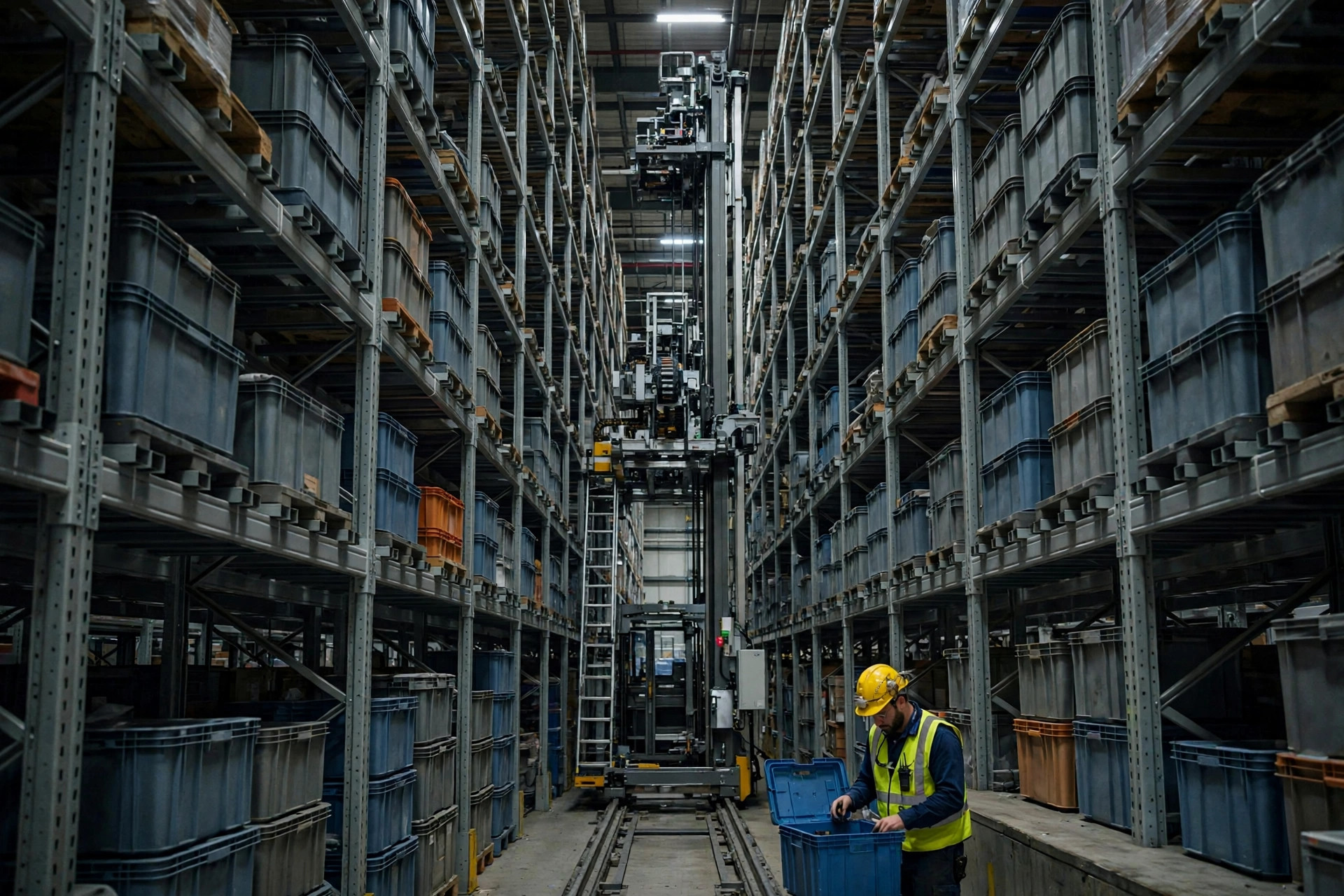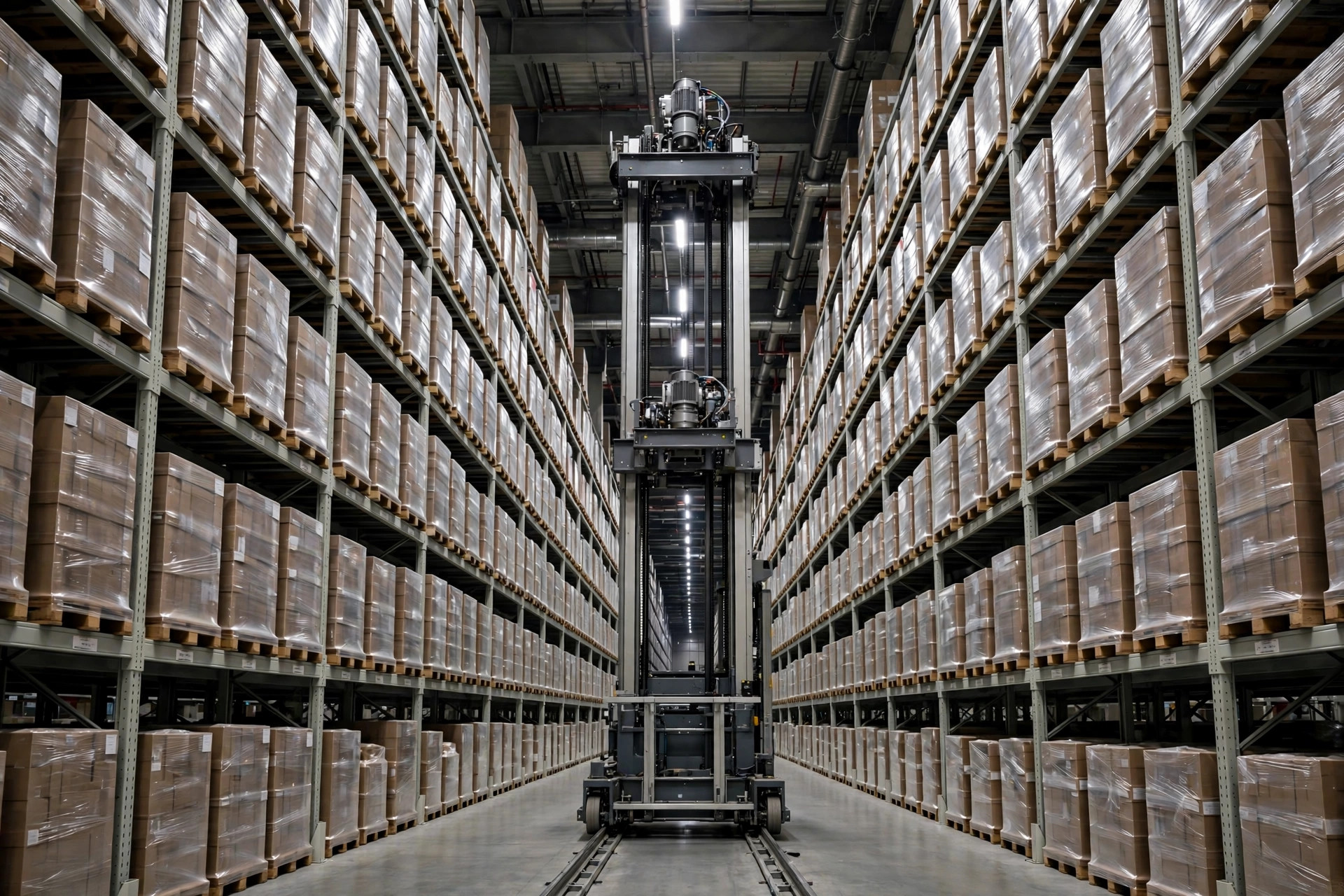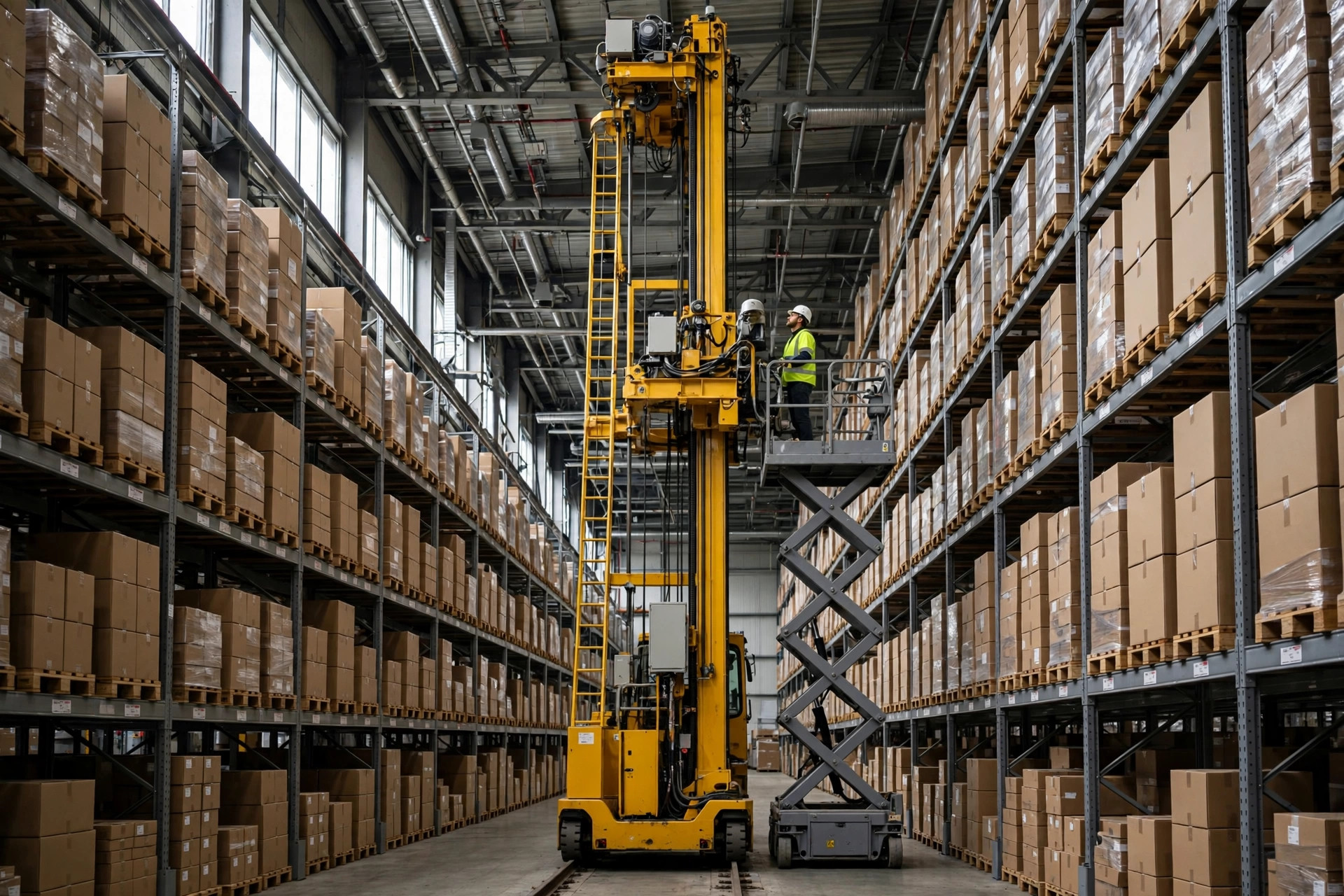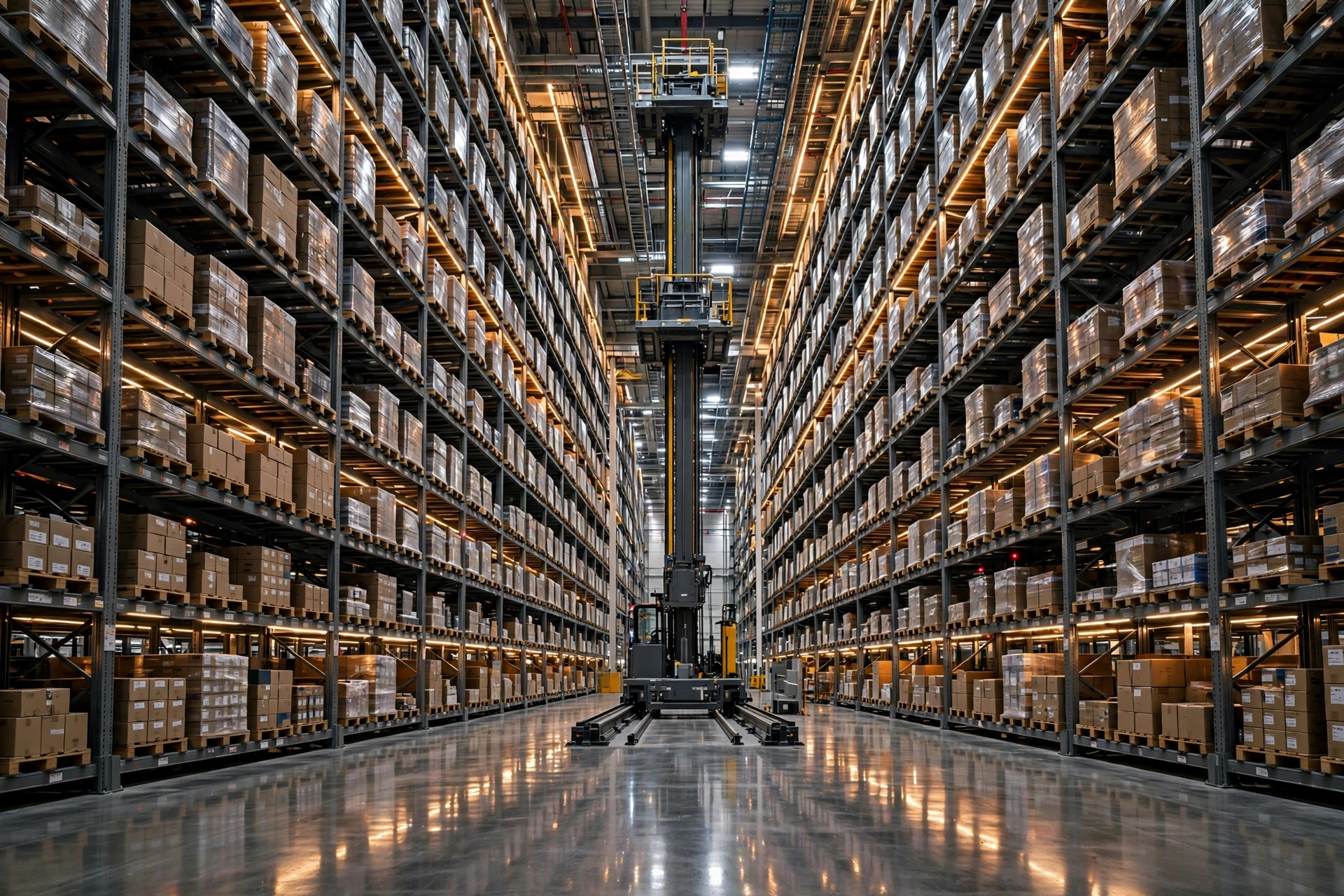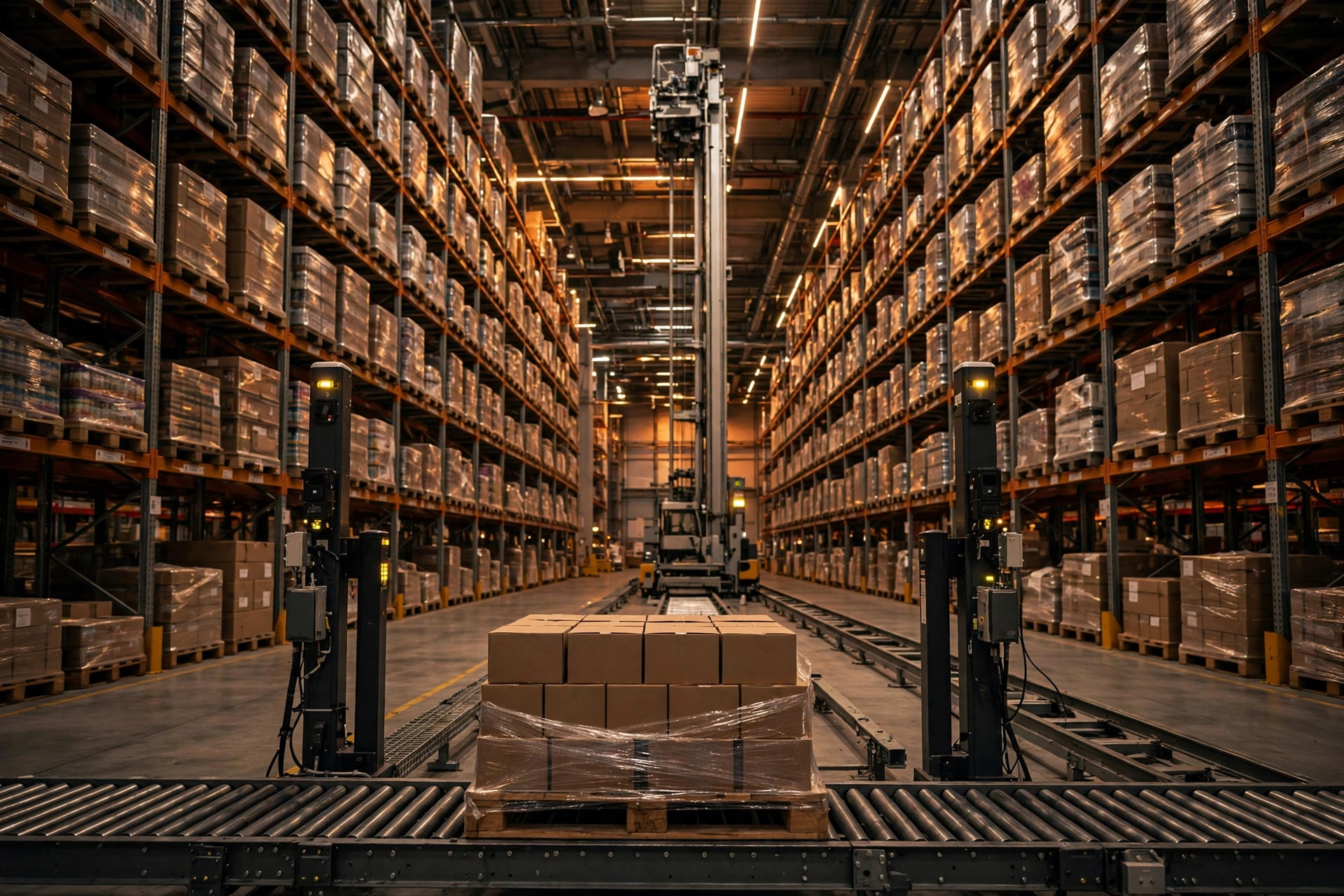
A pallet trips the red light at the ASRS inbound gate. From alarm to rework to back on the line: twenty-five minutes. What did those twenty-five minutes cost you? On paper, thirty to fifty dollars. In reality, several times that — and almost nobody tracks the real number. That's why I keep telling people the most underrated piece of equipment in any ASRS project is the unglamorous inspection gate at inbound. A pallet rejected for dimensional non-conformance feels like a small thing, right up until the day it jams your entire conveyor line in peak season.
What the gate is actually checking
Think of the inbound inspection gate as the carry-on sizer at an airport security line: if it doesn't fit the frame, it doesn't fly. Except here a machine makes the call, and there is no human discretion to negotiate with.
After a pallet hits the conveyor, it passes through a portal of light curtains and laser profile scanners. In a few seconds the system builds a 3D envelope of the whole unit load and checks five things: length, width, and height of the envelope, load overhang beyond the pallet footprint, whether the top profile is flat, whether the pallet itself is damaged or missing boards — plus a checkweigher for overload. Fail any one of them and the WCS rejects the pallet, diverts it to the rework spur, and the stacker crane in the aisle never even sees it.
Every check has a tolerance, and the exact numbers live in your equipment spec — go by the manufacturer's documentation. Here's the engineering logic that matters: tolerances aren't negotiated, they're dictated by the downstream hardware. The clearances between rack beams and the fork entry gaps on a stacker crane are millimeter-fit. Loosen the gate by one centimeter and you risk wedging a six-figure crane inside the aisle. Anyone who has done integration work has done this math.
And then there's the pallet itself. The workhorse in the US is the GMA pallet at 48 by 40 inches (1219 by 1016 mm) — but "common" doesn't mean "consistent." Wood pallets warp with moisture, nails work loose, a cracked bottom board can be invisible at a glance. Pallets from the same purchase order measure differently after three months versus three years in circulation. Every day, the gate faces a population of pallets that are standard in name and drifting in reality.
Two real failures: the one that got rejected, and the one that got through
Fall 2024, a 3PL in California's Inland Empire. Procurement switched pallet suppliers ahead of peak season to save a little over a dollar per pallet. The new pallets ran two to three centimeters wide. The inbound gate rejected more than forty pallets on day one. The rework area filled up, forklifts ran back and forth, and the night shift spent hours re-squaring loads until 2 a.m. But labor wasn't the worst of it — the rejected pallets blocked the inspection position and the conveyor behind them, so dozens of good pallets couldn't get in, and the day's outbound waves slipped. They nearly tripped customer SLA penalties. The postmortem found that procurement had looked only at unit price; nobody told the automation team, and tolerances were never re-baselined. A dollar saved per pallet, and the entire peak-season inbound rhythm fell apart.
The second failure was more expensive, and it got through the gate. At a food distribution center, a wood pallet with a broken bottom board passed every dimensional check — length, width, height all fine — so the gate cleared it. Then the stacker crane lifted it toward a slot a dozen meters up, and the pallet collapsed on the forks. Half a load wedged in the aisle. Clearing it took most of a day, that aisle sat dead, and the inbound plan went out the window. Remember this: a rejection is good news. The one that slips through is the disaster. The gate catches dimensions; it can't catch structural integrity. That's its hard limit, and it's why "it passed the gate" is never the same as "it's fine."

The cost breakdown: visible and hidden
Here's the itemized math, modeled on a Southern California 3PL in peak season. Treat the figures as an illustrative example — plug in your own labor rates and crane cycle times, the order of magnitude will hold:
| Cost item | What it is | Example |
|---|---|---|
| Rework labor | Two people, ~20 minutes: re-stacking, re-wrapping | ~$20 |
| Forklift moves | Round trip from gate to rework spur, including waiting | ~$8 |
| Exception handling | WCS alarm acknowledgment, relabeling, data write-back | ~$5 |
| Throughput loss | Rejected pallet occupies the inspection position while good pallets queue; at 30–60 pallet moves per hour per aisle, a 10-minute blockage costs roughly 5–10 moves of lost throughput | ~$15–30 equivalent |
| Peak-season cascade | Delayed outbound waves, overtime, SLA exposure | Hard to price — doubles in peak |
The visible total lands around $30–50 per rejection. Now the counter-intuitive part: stop asking "what does one rejection cost" and start asking "what's our rejection rate." A 0.5% rejection rate and a 3% rejection rate are two completely different operations. The first is the normal cost of a quality gate. The second means your inbound quality is out of control, and the hidden costs — lost crane cycles, queued conveyors — multiply the visible ones several times over. Forty rejects a day versus four isn't ten times the labor; it's the difference between keeping your inbound rhythm and losing it.
Tighter or looser tolerances? Draw the line first.
Whenever rejection rates climb, someone proposes loosening the gate tolerances. I'll be blunt: that's treating the symptom. Widen the gate by two centimeters and a single crane jam in the aisle will cost you more in recovery and downtime than a full year of rejection rework. Tolerances are set by the physical limits of the downstream equipment. They're not up for negotiation.
The other pseudo-solution I hear constantly is "just buy an automatic pallet squarer and be done with it." A squarer only squares. It can't fix a broken board, it can't fix overweight, and it certainly can't fix a supplier that changes pallet specs every quarter. Equipment solves execution problems; it can't solve inbound quality problems. The dividing line is clear: pull your WCS rejection log. If more than 70% of rejects are squarable — overhang, loose wrap, uneven tops — then auto-squaring plus a second scan pass will pay back on a calculable timeline. If more than half are pallet-body defects — warping, broken boards, spec chaos — that money belongs in a supplier pallet standard, not in new equipment.
Here's the analogy I use: the gate is a medical checkup. Abnormal readings mean something's wrong with the patient. You don't cure the patient by recalibrating the checkup — and the stricter the checkup, the sooner you learn to go fix your suppliers.
Three moves that actually drive the rejection rate down
First, put the pallet standard in the supplier contract. Spec, damage-rate ceiling, moisture and warp acceptance criteria — in writing. The WCS already logs every rejection; pull it into a monthly scorecard. Data beats arguments.
Second, don't just watch the red light. Pull a weekly distribution of rejection causes: is it overhang or overheight, and does it cluster by supplier or by shift? The data will tell you where to act; gut-feel fixes are wasted money.
Third, run a "pallet physical" before peak season. Sample the dimensional distribution of pallets in circulation and catch the drift early. Pallets are consumables, not fixed assets — get that mindset right first.
So was the money well spent? It comes down to one number: rejects per thousand pallets. Get it under five and the gate is the most loyal goalkeeper you'll ever hire. If it sits above twenty for weeks, stop tuning the equipment and go tune your suppliers. What automation fears most was never a machine that's too strict — it's inbound material that's too casual.
By Da Liu, Automation Engineer