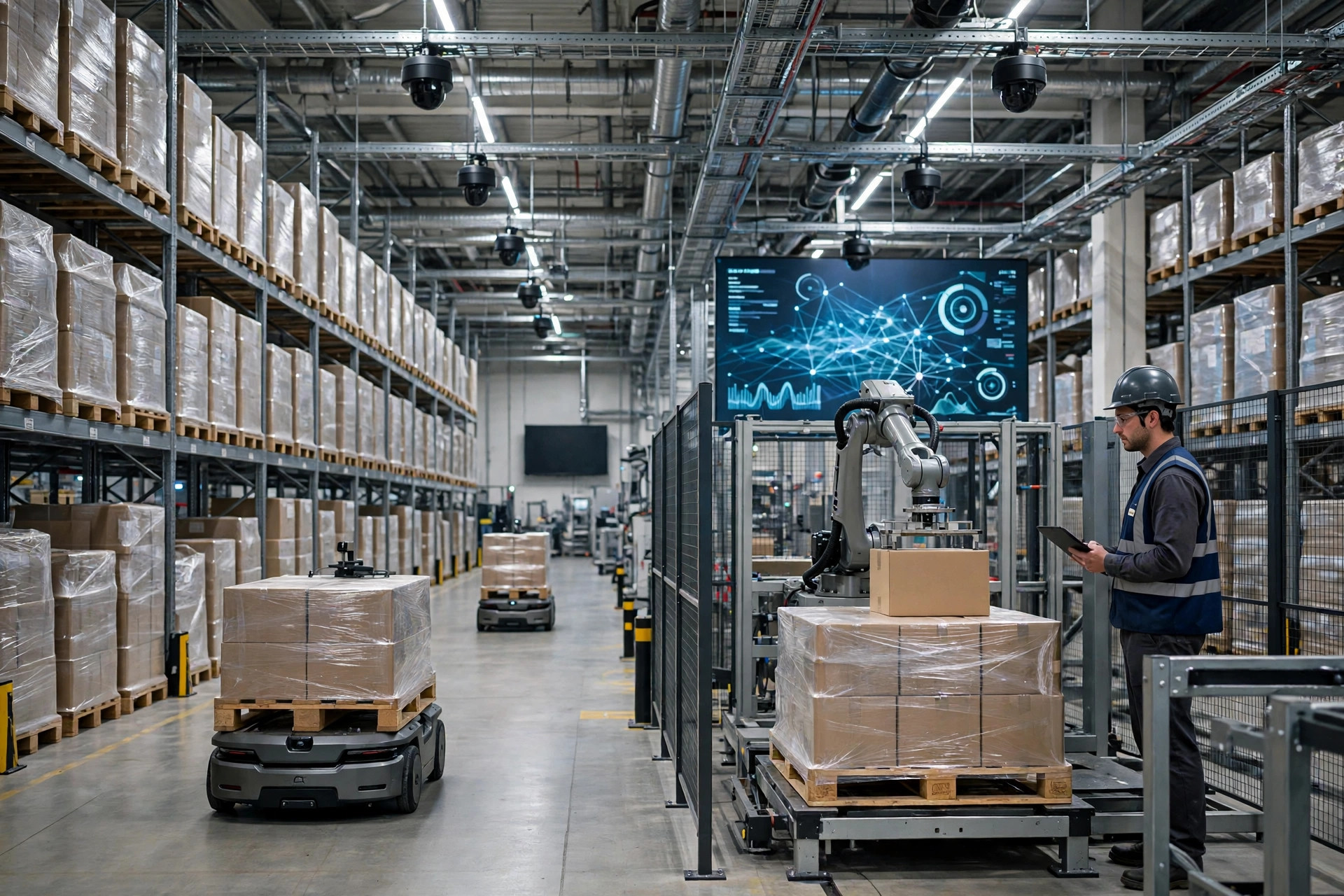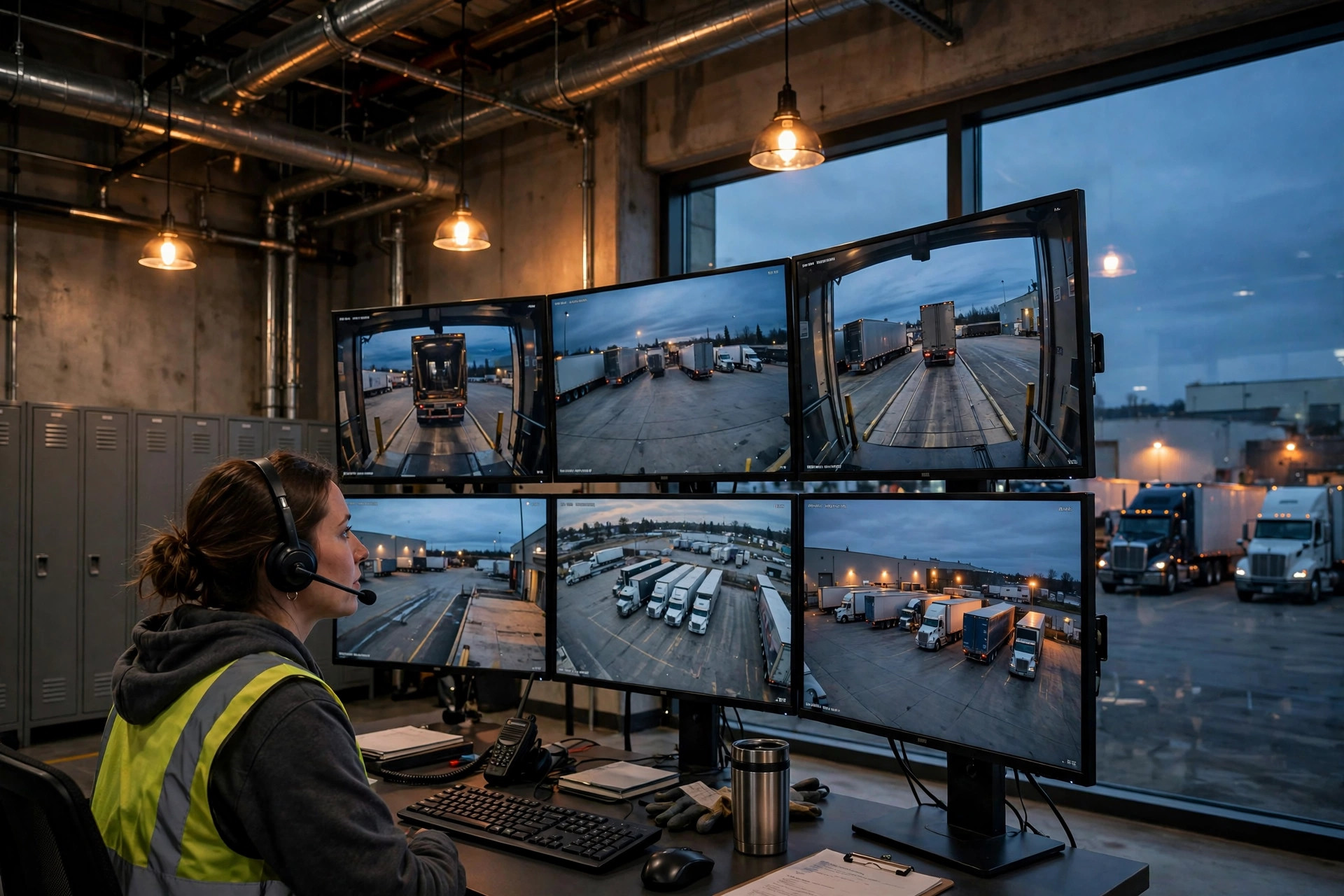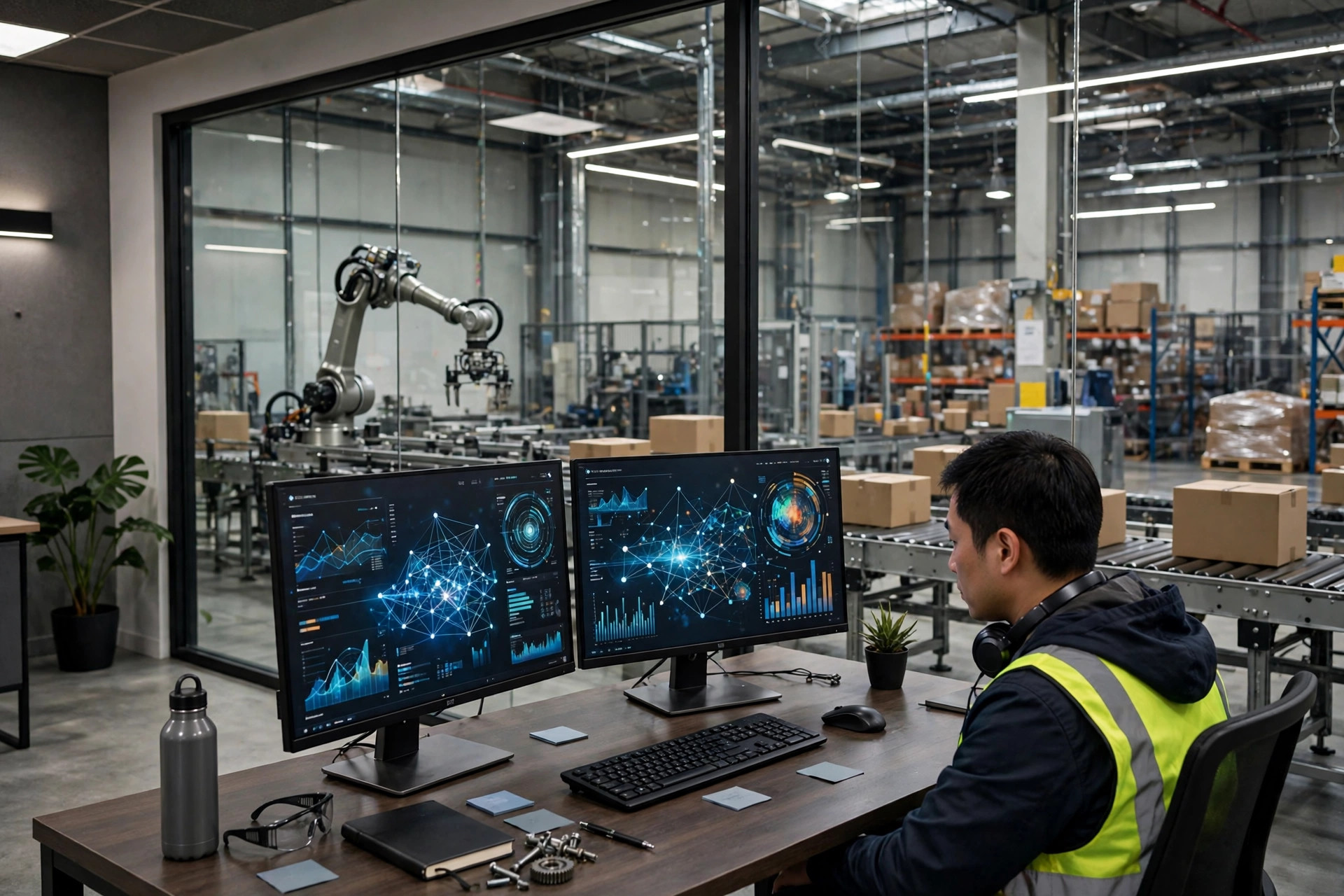
Consider an observation first: for a decade, every "robots take jobs" conversation in warehousing pointed its camera at the warehouse floor — would AGVs replace pickers, would robotic arms replace packers. Yet the real displacement of the past two years happened somewhere else: the warehouse office. Replenishment planning, wave scheduling, documentation, exception reconciliation — the work done in front of computers — is being absorbed by AI far faster than anything on the floor.
According to the U.S. Bureau of Labor Statistics' 2025–2035 employment projections, office and administrative support occupations face the steepest projected decline of any major occupational group — roughly 4 percent, or about 752,100 jobs — with the Labor Department explicitly attributing it to the "continued integration of automation tools, including those powered by AI." A McKinsey analysis estimated that around 12 million U.S. workers may need to change occupations by 2030 due to AI and automation, with office support and administrative roles absorbing the heaviest losses. These figures describe not an industry anomaly but a cross-industry trend line — and warehouse office roles happen to sit on its steepest segment.
Why the office first, rather than the floor? The attribution starts with the nature of the work. A planner's or documentation specialist's day is essentially the movement and judgment of structured data: moving orders, inventory, and in-transit figures into a plan; moving invoices, packing lists, and bills of lading into compliant documents. The former is rule-dense work; the latter is language-dense work — and both are precisely what generative AI does best: drafting, summarizing, classifying, checking, responding. Floor work like picking and moving, by contrast, lives in the unstructured physical world, where every item has a different shape and robots must handle each one. The technical difficulty and cost are an order of magnitude higher. So the real sequence of the past two years has been: software ate the office's repetitive labor first, while hardware climbs the floor slowly. That is not coincidence; it is the inevitable shape of the technology maturity curve.
Two Displacements Already Underway
Start with planners. A 3PL serving apparel brands in East China was still running replenishment in 2024 with three planners working Excel by hand: checking inventory levels, in-transit stock, and promotion calendars, setting replenishment quantities SKU by SKU. In 2025 they deployed an AI-assisted replenishment module — nothing mysterious in the logic: historical sales, seasonality coefficients, and promotion flags go in, and the system outputs recommended quantities and inbound cadence. The change arrived quietly. None of the three planners left, but their work changed. They no longer fill rows by hand; instead, each day they handle only what the system flags red: a SKU whose forecast has drifted far from actuals, a supplier whose lead time suddenly stretched, a promotion whose stocking logic needs a human call. As their operations director put it, "we used to spend 80 percent of our time making tables and 20 percent making judgments; now it is the reverse."
Now documentation staff. A cross-border parcel consolidator used to run a six-person documentation team: converting client invoices and packing lists into each country's required formats, verifying HS codes, responding to inspection queries. After introducing document AI, format conversion and first-pass verification became largely automatic; six people became three. The three who remain do only two things: the difficult classification calls the AI cannot resolve, and assembling rebuttal materials when customs challenges a filing. The role did not disappear, but its bar moved up — from "can produce documents" to "can handle the 10 percent the AI cannot."
The common thread: what got displaced was not the job title but 70 to 80 percent of the repetitive tasks inside the title. Those who remain have shifted from execution to backstop and judgment.
A Framework: How Exposed Is Your Role?
To locate yourself over the next three years, a simple two-axis framework helps. The horizontal axis is task structuredness: the more rule-based and digitizable, the higher the exposure. The vertical axis is the irreplaceability of judgment: work that requires cross-functional negotiation, accountability, and genuine ambiguity has lower exposure.
In the high-structure, low-judgment quadrant sit the first to be compressed: data entry, format conversion, routine reconciliation, standard reports, shift scheduling. The "compute replenishment by formula" portion of a planner's job and the "produce documents from templates" portion of documentation work both live here.
In the high-structure, high-judgment quadrant lies the direction of travel: exception handling, forecast-deviation analysis, supplier negotiation, inspection appeals. The data is structured (AI can help prepare it), but the final call requires a human to sign off and take responsibility. Over the next three years, the way planners and documentation staff survive is by moving from the first quadrant to the second.
There is one more dimension, easily overlooked: accountability. AI can generate a replenishment plan, but when that plan causes a stockout, who takes the blame? As long as a natural person must own the responsibility, judgment roles that carry accountability will not be fully automated. That is why the title "planner" may survive while its job description gets rewritten.
2027–2029: Three Trend Judgments
Based on this attribution, I offer three judgments for the next three years, each with a timeline.
First, by 2027, AI-assisted planning and documentation tools will be standard issue at 3PLs and brand warehouses above roughly 50 people — not a question of whether to adopt, but of which vendor. The driver is not technological brilliance but competitive pressure: once peers adopt, the cost disadvantage of manual table-making becomes visible fast.
Second, headcount contracts while the remaining roles appreciate. The BLS direction of travel is clear — office support as a category shrinks — but the planners and documentation specialists who remain may gain bargaining power, because their work shifts from replaceable execution to hard-to-replace judgment. Every automation wave in history has followed this script: typists disappeared, but people who could master word processing became more valuable.
Third, new titles will emerge: automation process administrator, AI exception handler, data quality owner. This is not the grand narrative of "AI creating new job categories" but functions growing naturally inside the office — someone must own AI output quality, someone must set the rules, someone must translate between the AI and the business. These seats will preferentially go to veteran planners and documentation staff who understand the business, not to an "AI expert" hired from outside. Business understanding is the scarce asset; tool operation takes three months to learn, ten years of floor intuition cannot be taught.
Here is one counterintuitive judgment worth isolating: over the next three years, the safest place in the warehouse may not be the office at all, but the floor. Picking, checking, and equipment maintenance — work that needs hands and on-site judgment — are being penetrated by automation far more slowly than office software. The old ranking of "office work is more respectable than floor work" is being quietly rewritten by the technology curve — at least on the axis of AI displacement risk.
Three Suggestions for Planners and Documentation Staff
First, list your daily tasks and mark which ones are "repeated by fixed rules," then hand those to tools yourself. Do not wait for the company to push you — the person who adopts the tool first becomes the person who teaches it later.
Second, move toward exceptions and judgment. Deliberately take the cases the AI flags red and the system cannot handle. Every one you resolve thickens your irreplaceability by one layer. Judgment is trained, not waited for.
Third, learn a little data language — not much. Being able to read a forecasting model's inputs and outputs, and to explain requirements clearly to IT, is hard currency in the warehouse office for the next three years: bilingual in business and data.
One open question to close: if AI can do planning and documentation to a 90-point standard, is the human planner's value the final 10 points — or the very qualification of being accountable for all 100? The answer may decide where everyone in the office stands over the next three years. And the answer itself may only become clear looking back from 2029.
By Dr. Chen, Supply Chain Researcher