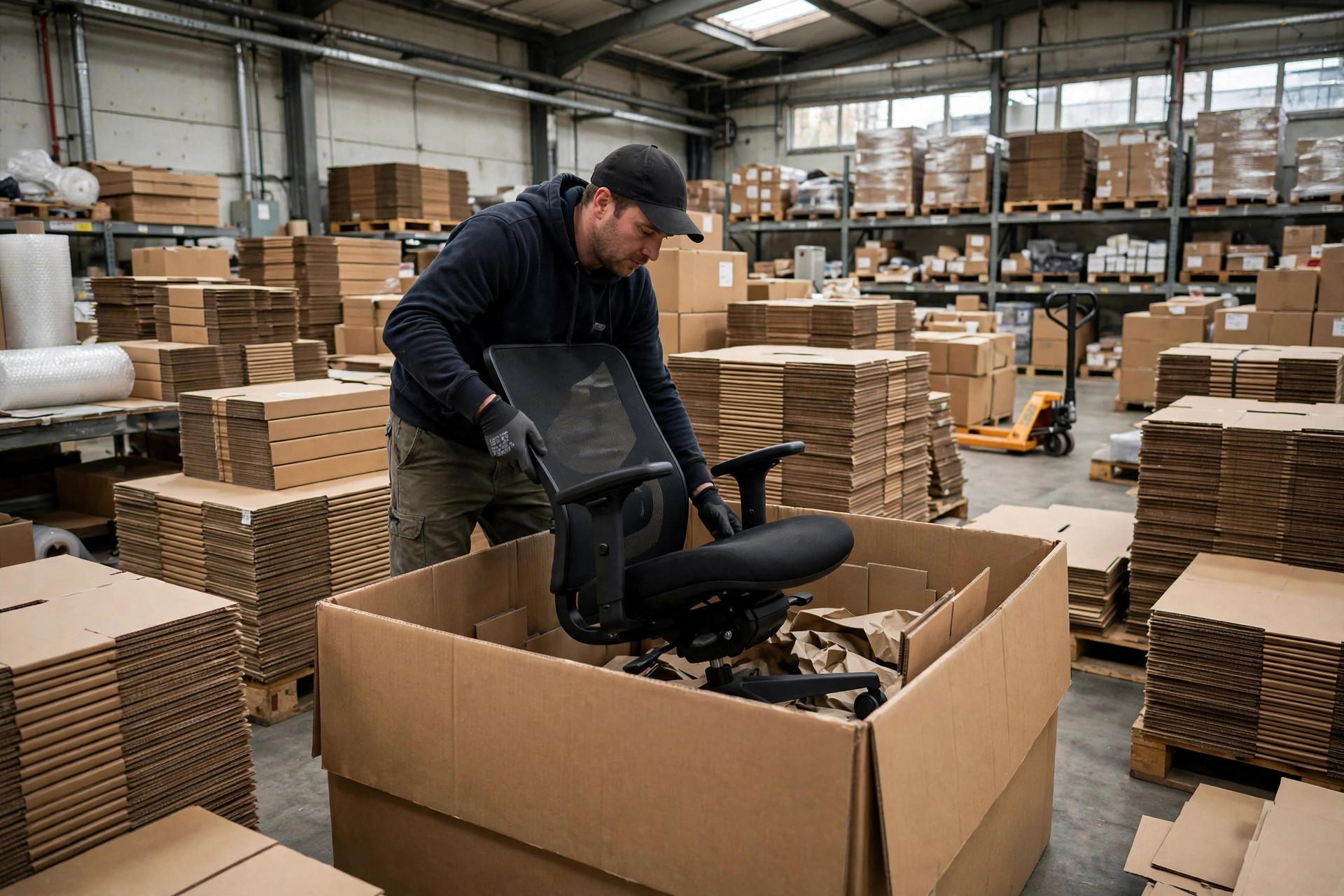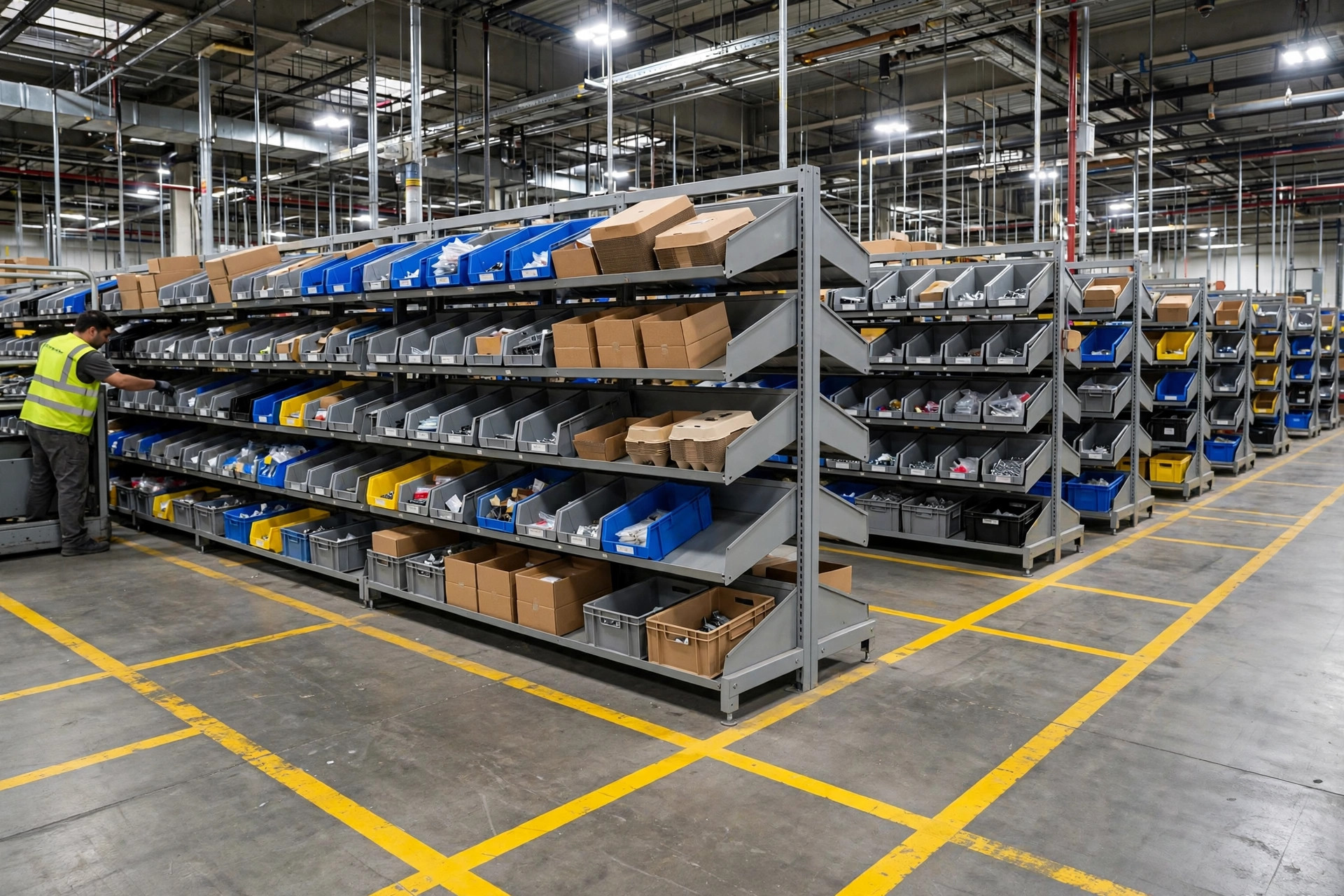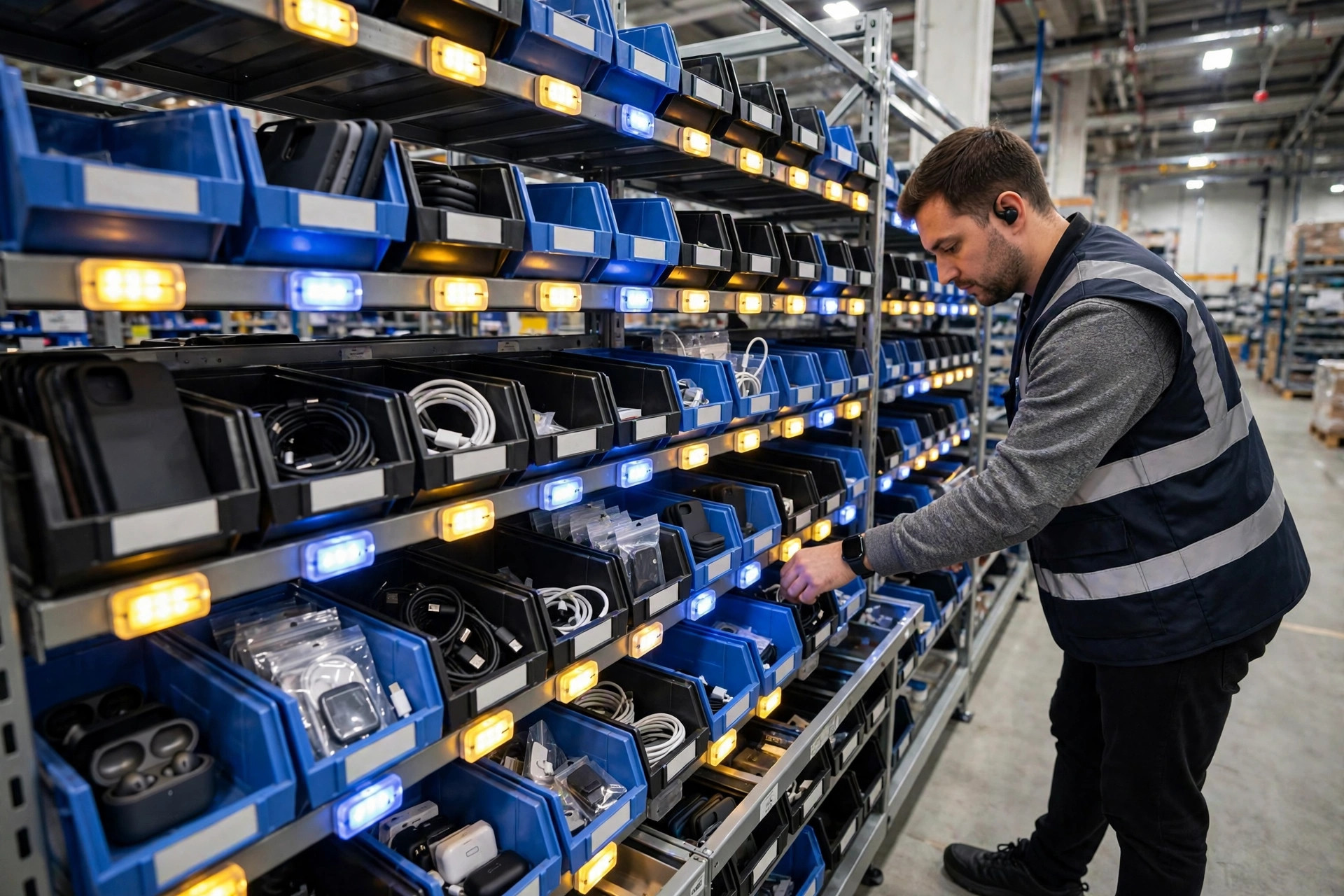
It was 6 a.m. the week before Black Friday, still dark outside, and I was already on the floor of our warehouse in Ontario, California. If you've done 3C electronics warehouse fulfillment for a few years, you know mornings like this one: the lights come up over the small-parts zone and it's just shelves as far as you can see — phone cases, charging cables, earbuds, power banks. That day we had 14,000+ active SKUs in the system and 27,000 orders on the board. The night-shift lead, Lao Ma, caught my eye. Neither of us said a word. We were both thinking the same thing: just don't let it blow up today.
Let me be straight with you, folks. 3C accessories look like easy money and turn into a minefield. Tiny items, thousands of SKUs, huge order volume, mountains of returns — and every now and then, a few expensive ones walk away. Today I'll tell you about the holes we've stepped in over the years and what we actually do now. No big theories. Just how our warehouse runs it today.
The First Wall in 3C Electronics Warehouse Fulfillment: 10,000 SKUs, Slots in Chaos
Here's how the problem showed up.
In 2022 we took on this 3C client with about 4,000 SKUs. Put stuff anywhere, find it anywhere. Six months later we were past 12,000 SKUs and it was pure chaos. Pickers wandering the aisles with their scanners, ten minutes to find one phone case. Worse, mis-slotting: a Model A case shoved into Model B's cubby, wrong picks, wrong shipments, a pile of customer complaints.
We tried zoning by brand. We tried zoning by category. Didn't work. SKUs grew faster than any zoning plan could keep up.
What we settled on — three rules:
First, every SKU gets a fixed home. The system assigns the slot at receiving. Pickers follow the slot, not the product. With 10,000+ SKUs, no fixed slots means disaster. This one is ironclad — nobody gets to "just set it down for a second."
Second, slot by velocity, ABC style. A-items are the bestsellers, a hundred-plus picks a day — they live in the golden zone, waist height, arm's reach. B-items go mid-shelf. C-items, the long tail, go up high or in the back. We re-run the numbers monthly and promote or demote. Our A-items are under 8% of SKUs but drive over 60% of pick lines. Take care of that 8% and your throughput holds.
Third, standard bins with oversized labels. Sounds trivial. It isn't. Loose storage meant constant mispicks. Now it's one SKU per bin, the last four digits of the SKU printed big on the front. New hires pick independently in three days — it used to take two weeks of shadowing.
ESD: The Hidden Cost Line in 3C Electronics Fulfillment
In this business, electrostatic discharge is the thing most warehouses ignore — right up until it costs them real money.
March 2024. One of our Bluetooth earbud SKUs started racking up complaints: wouldn't charge, one side dead. We checked the product, checked the batch, everything clean. The trail ended at the pack stations — a new batch of packers skipping their ESD wrist straps because they were "annoying." Dry winter air, static zapping components on the boards. That month the return rate on the SKU jumped from around 2% to nearly 9%. The client almost fired us.
Straight talk: you can't see ESD, but the invoice is very real.
What we do now:
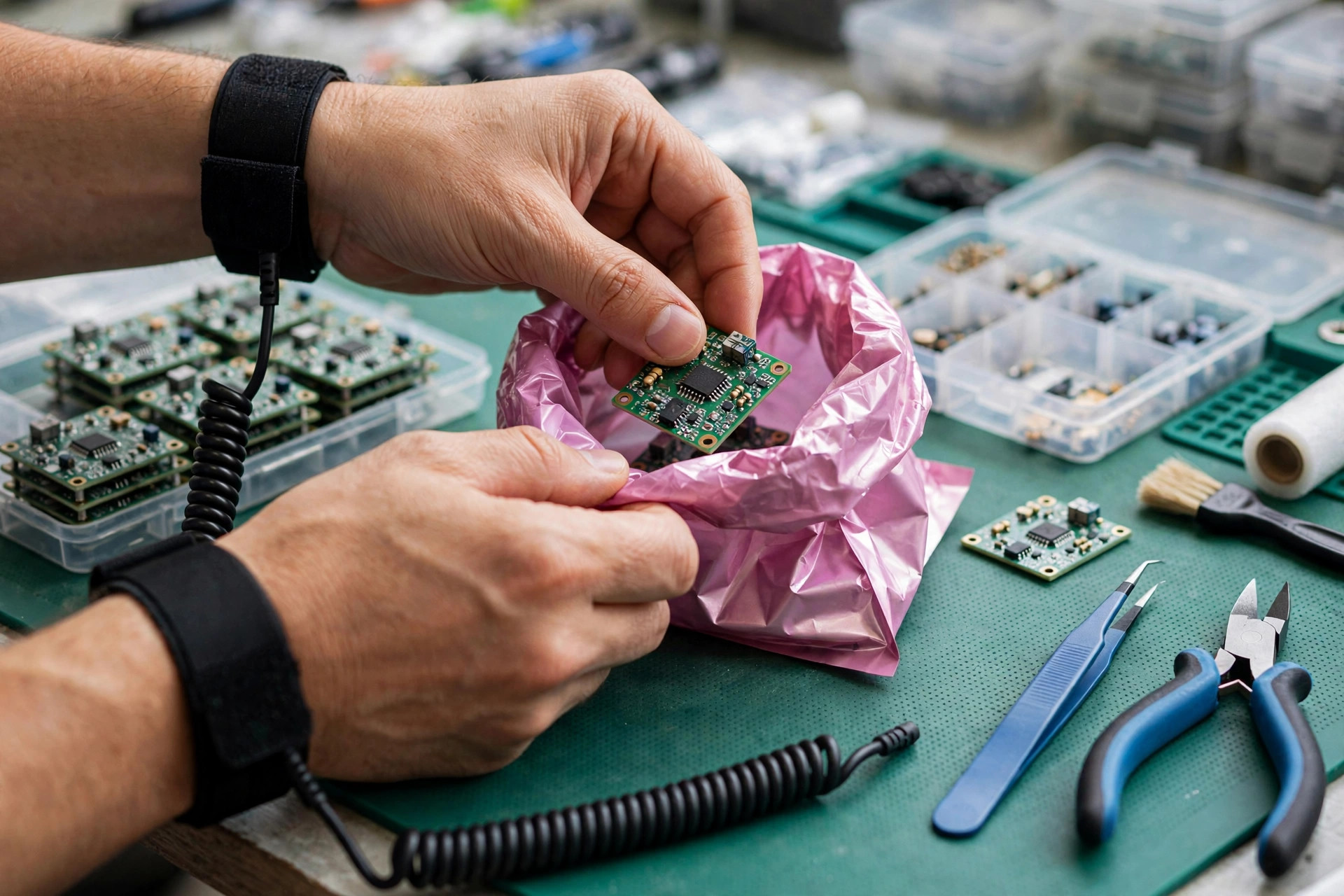
Every pack station has a grounded ESD mat. One wrist strap per person, on before the shift starts, and the supervisor spot-checks at clock-in. This isn't theater — we've paid for the lesson.
Earbuds, power banks, anything with a board ships in metallic shield bags from receiving. Regular poly bags are banned for these items.
Humidity control in winter. Below about 35% relative humidity in the small-parts zone, static gets nasty. We put hygrometers around and fire up the humidifiers when it drops. Cheap. Works.
Stopping Theft of High-Value Small Items: Cameras Record, Cycle Counts Prevent
A few missing phone cases, nobody cares. But true wireless earbuds, noise-canceling headsets — tens to a hundred bucks a unit — that hurts.
Holiday season 2023. One earbud SKU kept coming up short on cycle counts, two months straight, a dozen or two units gone each month. We scrubbed the camera footage over and over. Nothing. What finally caught it was count frequency: we moved that SKU to weekly counts and the shrinkage stopped cold. Straight talk: small-item theft prevention isn't about cameras, it's about count frequency. Cameras only show you the past. Counts prevent the future.
How we run high-value small items now:
Locked zone. Expensive smalls live in locked cages or cabinets. Only the shift supervisor holds the key.
Weekly cycle counts. High-value SKUs get counted every week, no exceptions. A variance over 3 units gets investigated to the bottom.
Returns get special handling. And here's the uncomfortable part — returns is where the biggest hole is. Returned earbuds get opened, inspected, logged, and re-slotted, always two people. We used to pile returns in a corner. Stuff vanished and nobody could say when.
Picking Speed: Why We Landed on a Put Wall
Discrete pick-and-pack is too slow for small items. One or two units per order, 20,000+ orders a day — pickers would drop dead.
We tried three approaches and ran the numbers:
| Method | Daily volume fit | Lines/hour | Equipment cost |
|---|---|---|---|
| Discrete pick & pack | a few thousand orders | about 120 | near zero |
| Batch pick + put wall | 10k–30k orders/day | about 260 | a few thousand dollars per wall |
| Pick-to-light | 50k+ orders/day | 400+ | six figures and up |
Pick-to-light is fast, but the investment doesn't pencil out at our volume. Discrete picking blows up every peak season. So we took the middle road: batch picking plus a put wall.
How it works: the system batches orders (say, every half hour), pickers pull everything in one pass, then sort at the put wall by order cubby. Light on means the order's complete — straight to pack. A wall with a couple hundred cubbies, two people sorting, and our throughput more than doubled.
One more trick: sort while you pick. Hang sort bags right on the pick cart and separate by order as you go — back at the pack station, it goes straight into the box. Killer for high order counts with small line counts. Eliminates a whole sort step.
The Uncomfortable Truth: It's Never the SKU Count, It's the Discipline
Years of 3C electronics warehouse fulfillment taught me one thing: 10,000 SKUs or 20,000, that's never the real problem. The problem is always people without rules — slotting by feel, grabbing without scanning, skipping the wrist strap, skipping the counts. You can add equipment later. The rules have to be there on day one.
My reminder to fellow operators: if you're taking on 3C fulfillment, don't rush to buy equipment. Get three things right first — a fixed slot for every SKU, weekly cycle counts on high-value items, and full ESD setup at every pack station. Nail those three and peak season won't scare you.
By Chen Feng, Warehouse Operations Manager