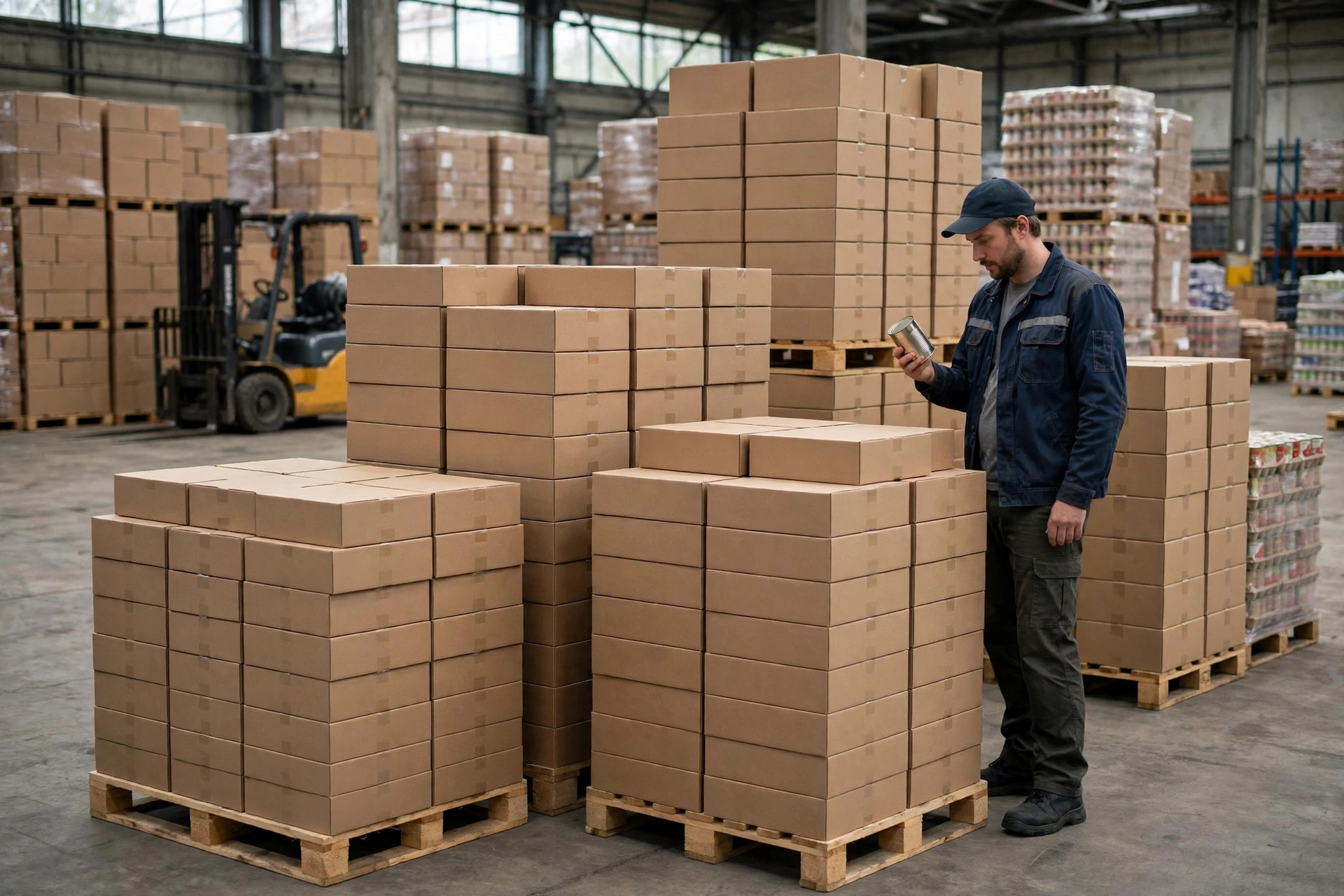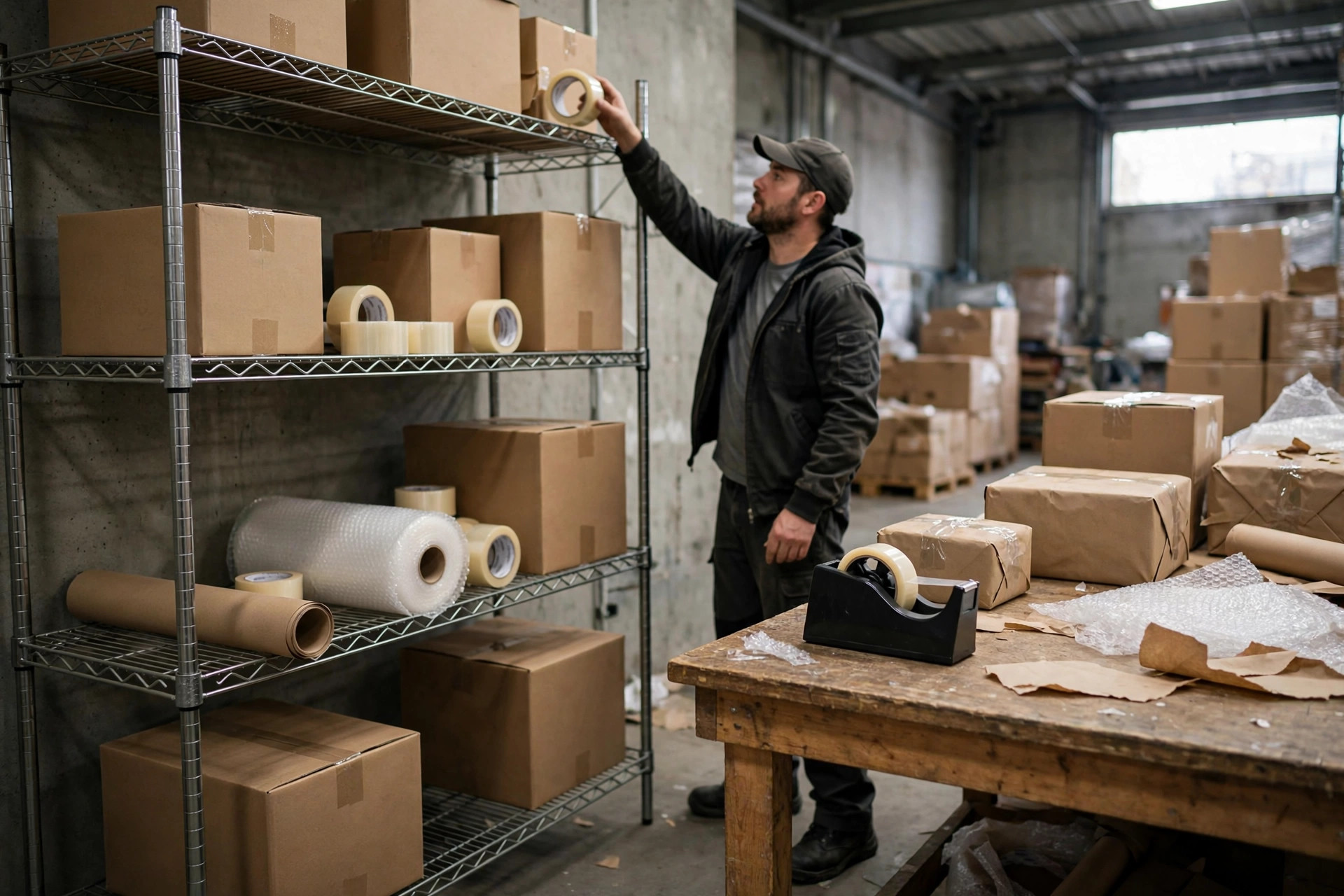
Surplus unrecorded stock first hit me on a Tuesday morning. Three of us were counting a small 3,000-square-meter warehouse, and when we reached the household goods aisle, the system said we had 12 cartons of dish soap left. The shelf said 54. My first reaction was not delight. It was a cold feeling in the stomach: whose 42 extra cartons were these, where did they come from, and what would I say if the client came asking? We are a small warehouse. We cannot afford to burn money like that. One carton is nothing, but losing a client's trust closes a warehouse like ours.
Here is the counterintuitive part: finding extra stock at count time is worse than finding a shortage. A shortage is an obvious loss. A surplus looks like a gift, but every unrecorded carton hides an unsettled account. Either the supplier over-delivered, or a return never got booked in, or an outbound shipment was scanned short. Whichever it is, if you do not chase it down, it can come back three months later as a claim email. So my rule is simple: not one extra carton goes quietly into our own pocket.
Where Surplus Unrecorded Stock Actually Comes From
The most common source is over-delivery. That 54-versus-12 case took us two days to untangle. The delivery note said 60 cartons. Our receiving guy counted cartons in bulk without breaking them down, and the truck had actually brought 72. The system booked 60, so 12 extra cartons were baked in from day one. The other 30 were stranger: a month earlier, a client had returned 30 cartons of the same soap. The truck arrived, the goods were unloaded into the pending area, but the driver left in a hurry and the return note never got signed. It sat in an office drawer ever since, which meant the system thought those cartons had never come back. Two sloppy records stacked on top of each other, and 12 on paper versus 54 on the shelf suddenly made sense.
The second source is outbound scanning misses. Once we counted 96 extra small-appliance parts, and the trail led to a combined shipment from the month before: the worker scanned the big outer carton, but the small items packed inside it were never scanned one by one. The system deducted the full carton, the shipment only took part of it, and the remaining 96 pieces sat on a corner pallet gathering dust. Small warehouses are especially prone to this, because one person often handles both receiving and shipping, and when things get busy, a beep of the scanner starts to feel like a job done.
The third source is easy to miss: the client changed packaging, or shipped the wrong goods themselves. A client switches to new packaging, the old-packaged stock is still on the shelf, the old code is retired in the system, and the new code never gets set up properly. Paper and shelf drift apart and never meet again. Big companies catch this with system validation. We do not have that kind of system, so we catch it the human way.
Handling Surplus Unrecorded Stock Without Getting Blamed
We cannot afford an audit team, and we certainly cannot afford a six-figure software system, so our routine has three steps. It is written on the wall, and whoever counts follows it.
Step one, quarantine. The day you find extra stock, move it to a dedicated pending area, stick a red tag on it with the count date, product name, quantity, and the name of the counter, and take a photo. This step matters most: once surplus goods melt back into normal stock, you can never explain them again. Quarantine is not confiscation. It is self-protection. If the owner comes to claim the goods, the goods are still there and the record is clean.
Step two, trace it. Check three things in order: delivery notes, return notes, and outbound records from the last three months. Then check whether any packaging or barcode change notices came in. Finally, ask everyone who handled receiving and shipping whether any handover happened verbally without paperwork. That is how we solved the soap case in two days. If you cannot trace it, do not guess. Move to step three.
Step three, book it properly or escalate it. If the source is clear, complete the paperwork and then book it in: confirm over-deliveries with the supplier, file the missing return note, correct the outbound record. If the source is unclear, write a short incident note, attach the photos and the count sheet, and send it to the client or your manager, then wait for written confirmation before doing anything. The bottom line for handling surplus unrecorded stock is one sentence: if it is not written down, it did not happen.
One more detail we learned the hard way: photograph the quarantine area every week. Once, surplus goods sat there for nearly a month, and someone quietly took a few cartons to cover a normal shortage. The mess started all over again. Since then, weekly photos go into a phone album by date, and anyone who touches the area leaves a visible trail. It costs nothing, just a few taps of the camera, but it turns quarantine from a slogan into evidence.
Now, is all this effort worth it? Look at the trade-off the way we posted it on our wall.
| Approach | What you save today | What it can cost later |
|---|---|---|
| Quietly sell it as normal stock | No tracing, no reporting, cleared today | A client claim, a lost account, enough to cover half a year of rent |
| Quarantine, trace, then book it properly | Nothing, it takes a day or two of paperwork | Mostly labor cost, and clean books |
| Pretend you never saw it | Even the quarantine step is skipped | The surplus grows at the next count until nobody can explain it |
The laziest option is the most expensive one. We cannot afford to burn money like that, so we would rather spend two days up front than lose a client later.
Three Tips for Warehouses Like Ours
First, add a column to your count sheet: who owns the surplus follow-up. Our old sheets only had quantities, and counting ended when counting ended. Now every surplus line names a person and a deadline, so loose ends stop rolling from one month to the next.
Second, spot-check your fastest-moving products once a month. Not a full count, just twenty or thirty high-turnover items, with delivery notes, return notes, and outbound records matched once. Half a day of work buys books that stay clean all month. That is a good trade for a small team.
Third, do not be afraid to tell the client about the ugly part. Once we told a client we had found extra goods and were tracing the source, and the client trusted us more, not less, and later gave us another product line. Hiding things makes you look guilty. Saying it out loud makes you look reliable.
Small warehouses have their own way of surviving. We do not have big-company systems or teams, but we have something they do not always have: the goods are right in front of us, the books are within reach, and the people are on site. Surplus unrecorded stock is not scary. Pretending you never saw it is. Quarantine the goods, trace the paperwork, complete the documents, and wait for written confirmation. The routine costs no money, only attention, and attention is the one thing a small warehouse is never short of.
By Xiao Ma, Small Warehouse Owner