Fifteen years behind the wheel, and if there's one thing I've learned about drayage spot vs contract rates, it's this: the rate you pay has less to do with the market and more to do with when you decided to talk about it.
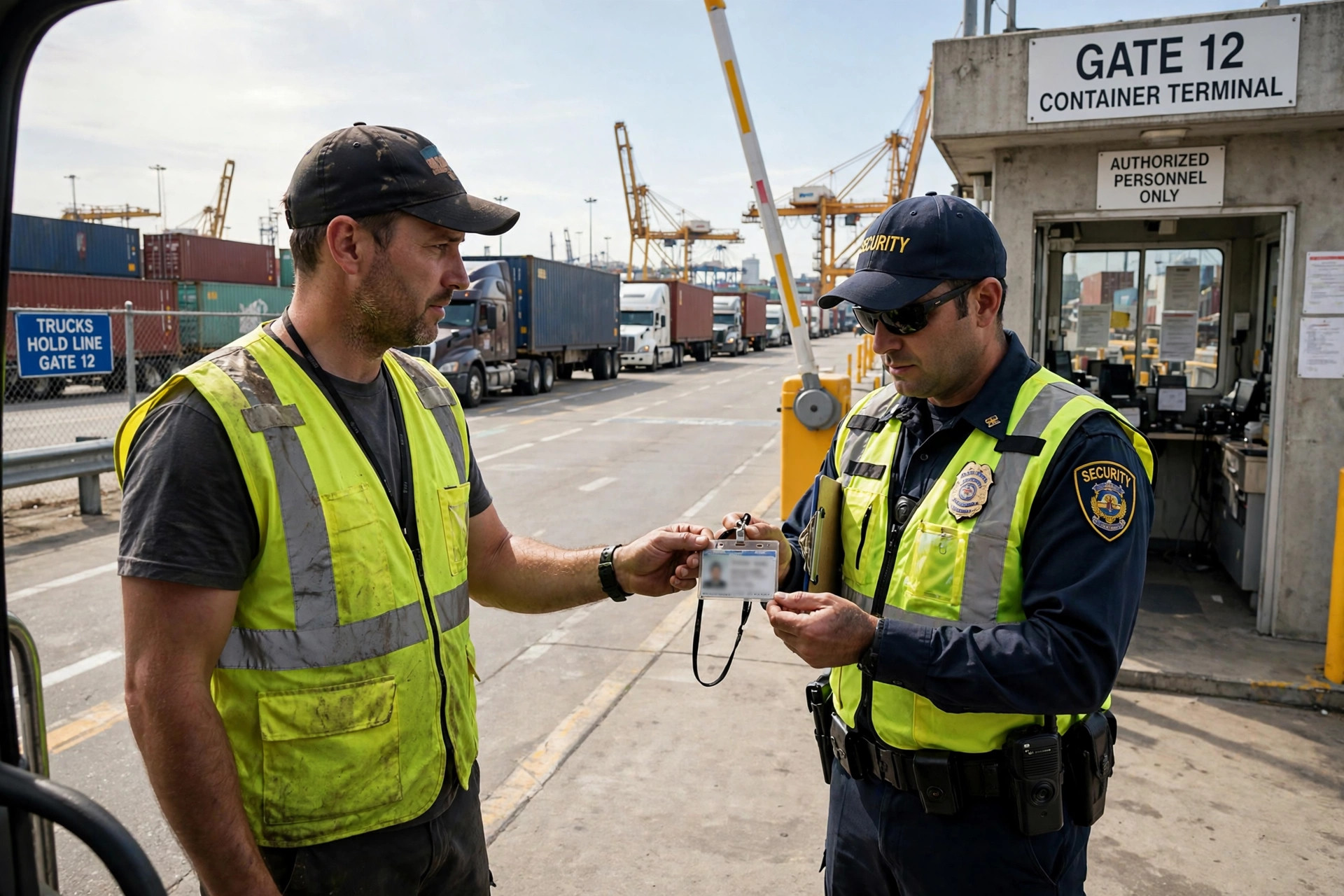
Last fall I was sitting in the queue outside the LA/Long Beach port complex, waiting on a box, when the driver ahead of me got on the phone with his dispatcher. The whole line could hear it. "Nine-fifty for one box? Last month this lane was barely six hundred!" The dispatcher's answer was short: "Peak season. That's the spot rate. Take it or leave it — there are three more trucks behind you."
That's the spot market. Prices like a farmers' market — depends on the weather that day. A box you moved for five hundred in February costs nine hundred in October, and there's nobody to complain to.
Spot vs Contract: What's Actually Different
Let me put it plainly so nobody gets snowed.
A spot rate is what you get when you call a carrier with one box and ask, "what'll it cost today?" Flexible, no commitments. The downside: the price moves with the market. Peak season, a labor action, a port backup — spot is the first thing to jump.
A contract rate is a handshake with paperwork: you commit to roughly X boxes a month on a lane, for 3 to 12 months, and the carrier locks in a base rate. Stable pricing, capacity when it counts. The trade-off: you owe them volume. Miss your numbers and they'll have words.
There's an old rule in this business: run 80 to 90 percent of your volume on contract, keep 10 to 20 percent on spot. Contract is the ballast, spot is the fresh water. I didn't invent that — it's just how the people who survive do it.
The Line in the Sand: How Many Boxes Before a Contract Makes Sense
This is the question shippers ask me most. Here's the honest answer: whether a carrier wants your contract comes down to whether your volume is worth dedicating trucks to.
The rule of thumb going around the industry is this: at a steady 20 boxes a month or more, you can negotiate a real contract rate, usually somewhere around 10 to 15 percent below spot. But let me be straight with you — that "10 to 15 percent" is shop talk I've picked up from shippers and carriers over the years, not an official index. When you sit down to negotiate, go by the written quote the carrier gives you, not by a number you read in an article. They won't honor my sentence at the bargaining table.
What if you're small — three, five boxes a month? A carrier has little reason to sign you, and even if they do, that "contract rate" is mostly decoration. When peak season hits, their trucks go to the big accounts first, and your box waits like everyone else's. Better to stay on spot and keep two or three carriers competing for your business. That's more honest money.
So the dividing line isn't price — it's volume:
| Your monthly volume | My advice |
|---|---|
| 20+ boxes, steady lanes | Negotiate a contract. Lock the rate and the capacity. |
| 10–20 boxes, choppy | Mix it: contract your core lanes, spot the rest. |
| Under 10 boxes | Skip the contract dance. Shop the spot market hard. |
Sign in the Off-Season, Ship in the Peak
When do you negotiate? In the slow months. The sharpest shipper I know finishes next year's contracts in Q1, when carriers are hungry and reasonable. Try it in August or September and you'll hear "well, in this market..." — and you'll have nothing to say back.
And don't fixate on the base rate number. In drayage, the base rate is just the cover charge. The real money hides in the accessorials. Ask about every single one and get it in writing:
- Fuel surcharge: tied to diesel prices, usually adjusted weekly off the official index. Your contract needs an explicit formula. No formula, no signature.
- Detention: the driver gets one to two free hours at your dock; after that it's commonly $75–$100 an hour (typical industry range). If your warehouse unloads slow, you're burning money.
- Demurrage: the box sits at the port past free time (usually 3–5 days) and it's $150–$300 a day to start, escalating from there.
- Chassis fees: if the carrier doesn't bring their own chassis, it's a daily charge.
- Pre-pull: yank the box early to dodge demurrage and park it at the carrier's yard — that'll run you a hundred or two.
Those ranges come from industry rate guides, not from any single carrier's tariff — your actual numbers come from your carrier's quote. I've watched a shipper celebrate beating another bid by $50 on the base rate, then pay tens of thousands more in accessorials by year-end. A lower base rate does not mean a lower total cost. Tattoo that on your forehead.
The Uncomfortable Truth: The Cheapest Contract Isn't the Best Contract
Here's something that'll ruffle feathers: some shippers grind the contract rate down to the bone and think they've won. Let me tell you what happens in October. When trucks are scarce, dispatchers protect the customers who pay a fair rate and have been around for years. Your bone-bottom contract box? It sunbathes in the yard for two extra days. Nobody's the villain here — it's just business.
My take: a contract buys you a relationship plus a price, not the lowest price on earth. Get the rate into a fair range, then spend your energy on the terms that actually matter: peak-season capacity commitments in writing, what happens if you miss your volume, and whether accessorial increases have a cap. Those three clauses are worth more than another $20 off the base.
Three Sentences for Shippers
One: don't bother with a contract until you're moving around 20 boxes a month. Below that, it's theater.
Two: negotiate in the slow season, ship in the peak. Question every accessorial. Put it in the contract.
Three: don't starve the carrier. Leave them some margin, and your boxes will move when it matters.
Fifteen years on the road taught me this: the rate saves you money on paper, but capacity saves your shipments. The cheapest math in the world means nothing if your box doesn't move in peak season.
By Shifu Zhao, Trucking Veteran (15 yrs)