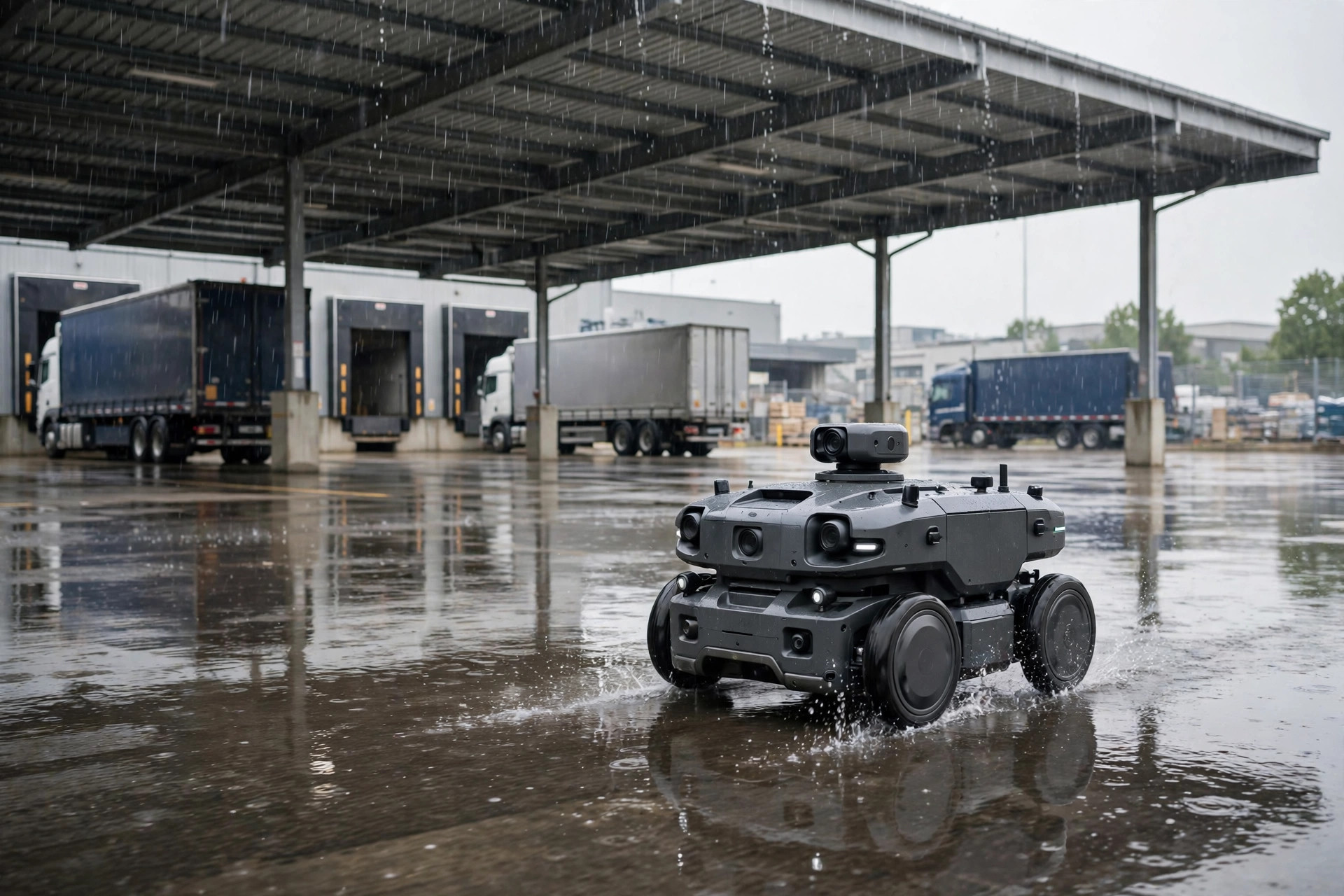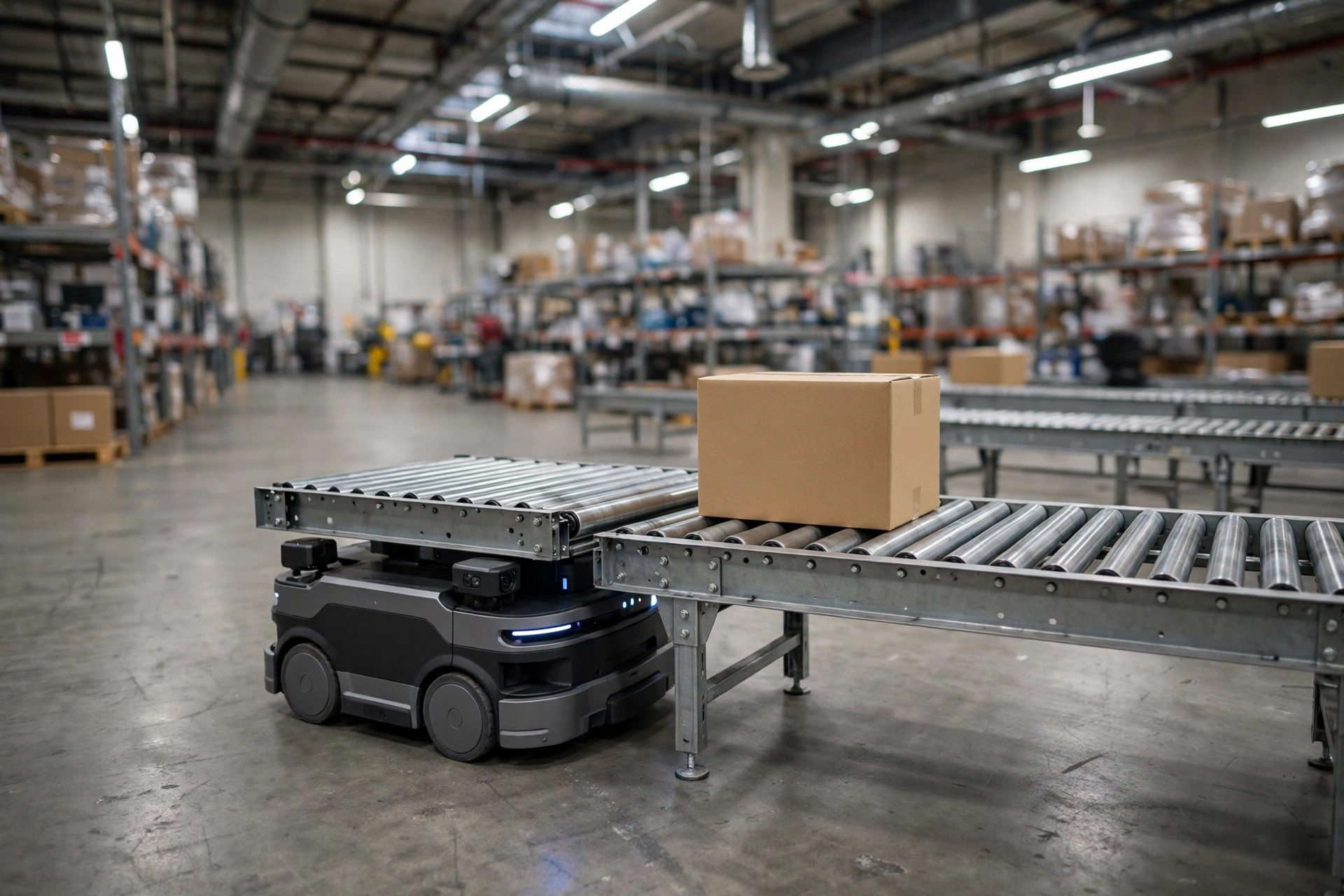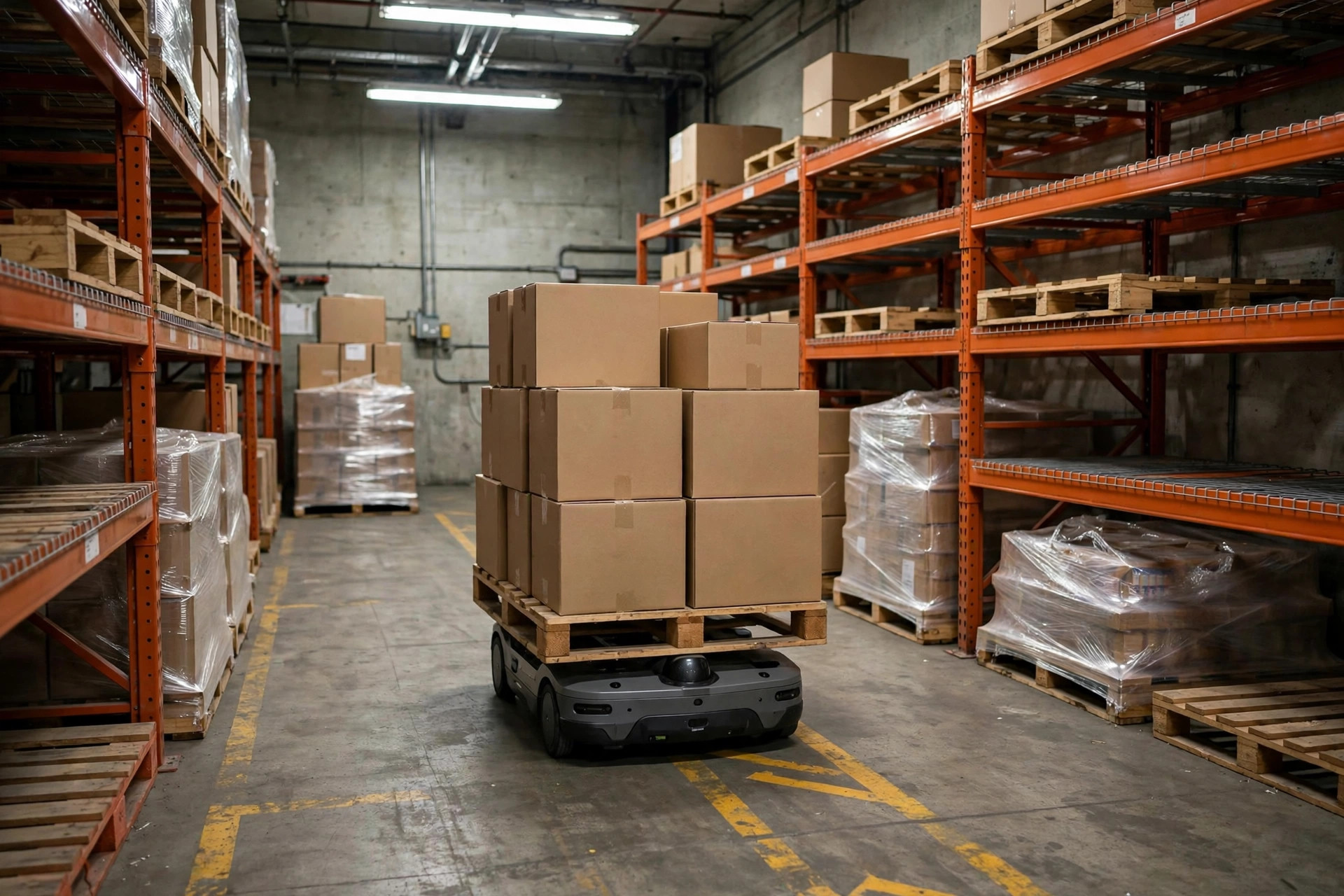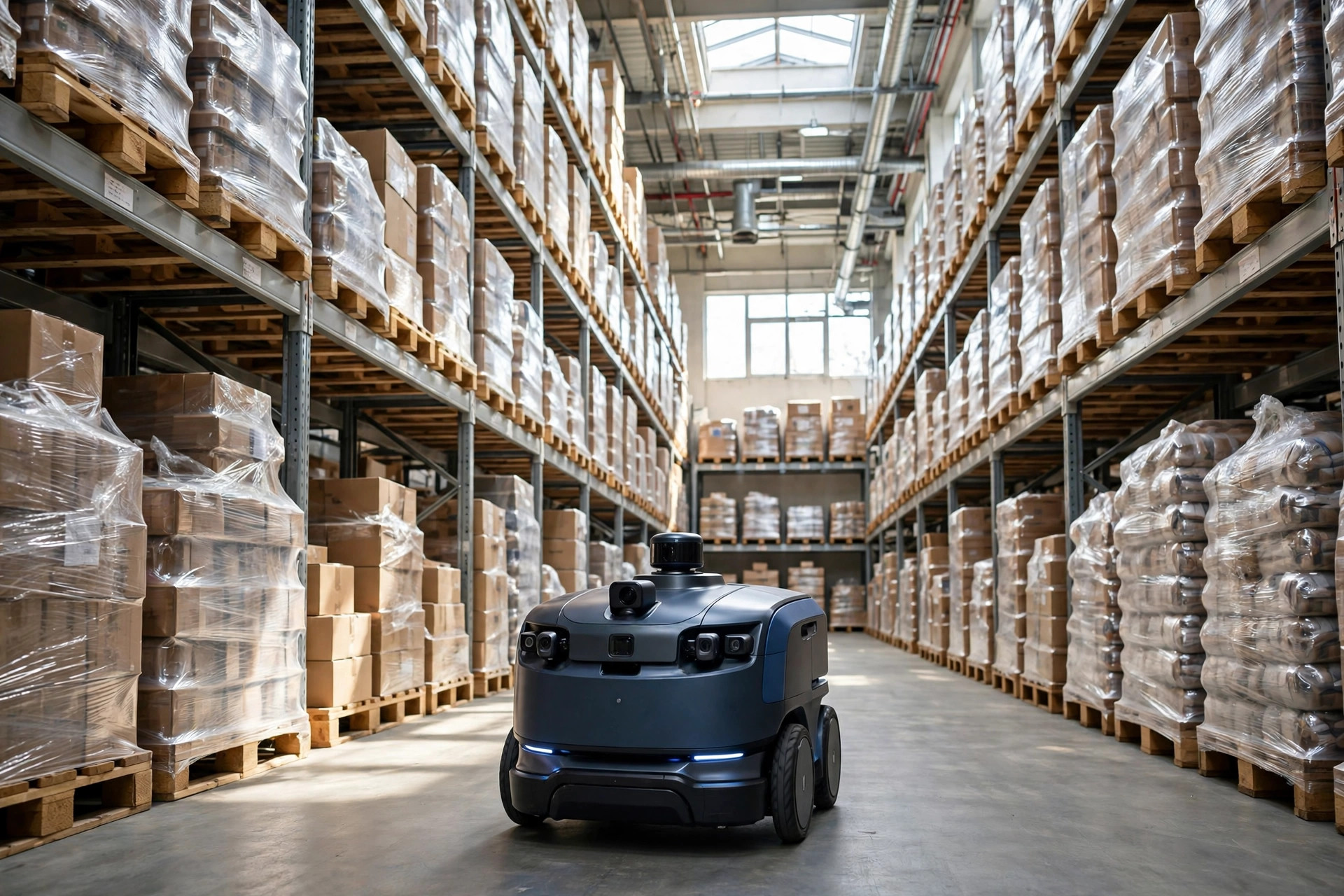
Here's the verdict up front: after a year of running an AMR fleet, the things that shut you down are almost never the controller or the navigation stack. They're the real wear parts: wheels, charge contacts, and a scratched plastic lidar cover. Think of it this way: an AMR is like a car. The engine rarely dies; it's the tires and the wiper blades that eat your budget. Don't believe me? Look at the numbers.
Why These Parts Fail First: The Wear Physics
An AMR has exactly three places where something keeps rubbing against something else, and the failure order barely ever leaves this circle.
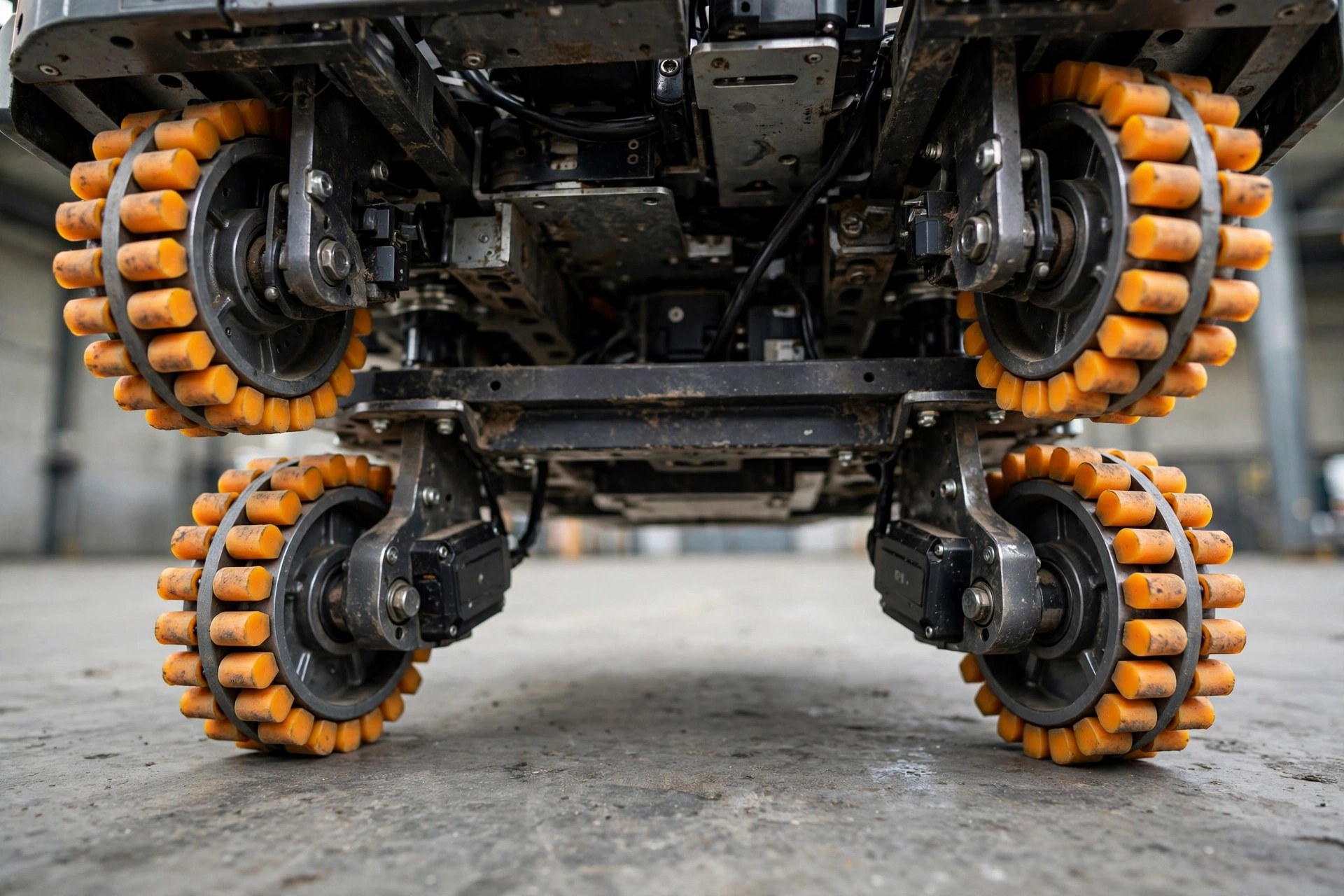
First, the drive wheels. They're the only continuous friction pair on the whole machine. At 18–20 hours a day and 1.2–1.5 m/s on epoxy flooring, one year of mileage equals roughly 5–8 years of a passenger car (rule of thumb, two-shift operation). It's like car tires — rubber tread wear is linear. You can't dodge it; you can only schedule it.
Second, the charge contacts. A bot charges 4–6 times a day, which is 1,500–2,000 mating cycles a year, each one a micro-arc plus mechanical wear. You can think of it as a phone charging port, except the current is an order of magnitude higher, so oxidation and erosion run much faster. Once contact resistance climbs, charging efficiency drops, heat builds up, and in bad cases the bot simply won't take a charge.
Third, the safety lidar cover. It doesn't wear out, but pallet corners and rack legs scrape it every day. A hazed cover makes the lidar hallucinate obstacles, and the bot crawls along at reduced speed. It's like driving with scratched glasses — the eyes are fine, the vision is shot.
The battery, surprisingly, can wait. LFP packs are good for 2,000–3,000 cycles; a two-shift year burns about 700–900 cycles, leaving capacity around 90%. Replacement is a year-two or year-three problem. Putting batteries on the year-one spares list is buying peace of mind, not uptime.
Casters sit in the middle: bearings plus small wheels, and dust, stretch film, and zip ties cut their life in half. Cleaning them on schedule is the cheapest maintenance money you'll ever spend.
And here's what's not on the list: brushless drive motors (MTBF 30,000+ hours), controllers (50,000+ hours), the 2D navigation lidar (20,000+ hours). At 7,000 running hours a year, that's 4–7 years of theoretical life. Every dollar of year-one spares budget spent on motors and boards is misallocated — the money belongs on wheels and contacts.
Case File: 32 Bots, Wheels Gone in 7 Months
June 2024, a 3PL warehouse in Ontario, California: 32 low-profile AMRs, two shifts, 20 hours a day. In month seven, bots started reporting positioning jitter and unreadable floor QR codes. Operations assumed it was navigation and burned two weeks tuning parameters. I showed up with calipers and measured the drive wheels: 4 mm of tread gone, and the shrunken wheel diameter was drifting the odometry. Not a software problem at all. Eight bots got new wheels — two per bot, a little over $200 each (varies by brand; check the official price list) — and the fleet was back in half a day.
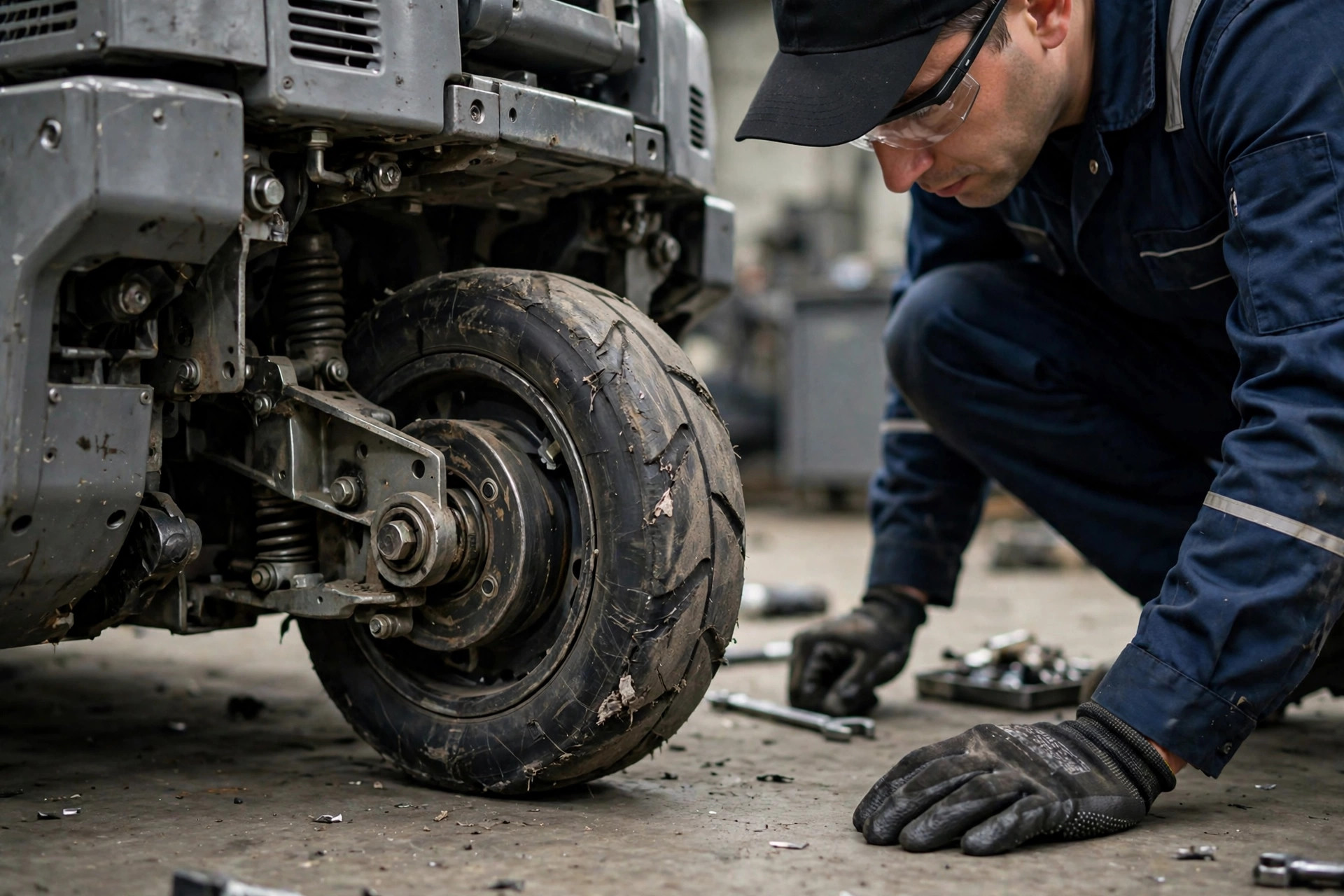
Two lessons fell out of that visit. First, wheels are rated in kilometers, not months — two-shift versus one-shift life differs by roughly 2x. Second, diameter change disguises itself as a navigation fault. Measure the wheels before you touch the parameters, and you'll save yourself two weeks.
Wear-Parts Tier List: Quarterly, Semi-Annual, Annual
Stock to this table and year one is covered. Intervals are two-shift rules of thumb; single-shift sites can roughly double them.
| Part | Replace / inspect interval | Per bot | Reference price (USD) | Notes |
|---|---|---|---|---|
| Drive wheels | 6–9 months | 2 | 180–260 | Go by mileage, not calendar; replace when tread is gone |
| Charge contacts / plates | Clean every 3–6 months, replace every 6–12 | 1 set | 50–90 | Polishing off the oxide layer buys approx. 50% more life |
| Caster wheels | 8–12 months | 2–4 | 60–100 | Clear wrapped debris on schedule |
| Safety lidar cover | Inspect at 12 months, replace on scratching | 1 | 250–400 | Replace when hazed, don't nurse it along |
| Bumpers / cushion strips | 6–12 months | Per model | 30–60 | Deformation affects collision sensitivity |
| Air filters / cooling fans | 6 months | 1 set | 10–30 | Dusty sites: shorten to 3 months |
| Battery pack | 24–36 months | 1 | 2,500–3,500 | Basically maintenance-free in year one |
One more cover story, because covers are sneaky. March 2025, an e-commerce fulfillment site in Texas: line takt dropped 15% during peak-season prep. After a full sweep, we found three bots with lidar covers scratched by pallet corners — the lidar read the scratches as obstacles and crawled. A $300-plus cover slowed the entire line for two days. Covers never raise an alarm; they just slow you down. Give them their own line item on the inspection sheet.
The Selection Line: OEM vs Third-Party Parts
The dividing line in one sentence: if it touches safety certification or navigation accuracy, buy OEM; if it's pure mechanical wear, compare MTBF against the price gap.
Must be OEM, all three: the safety lidar and its cover (optics tied to the safety certification — good luck explaining a third-party cover after an incident), the battery pack (BMS protocol matching; third-party packs have swollen and burned in recent years), and encoder-fitted drive wheel assemblies (diameter tolerance feeds odometry directly; 1 mm off compounds into tens of meters of drift over a year).
Third-party is fine for: casters, charge contacts, bumpers, filters, fasteners. Simple structures, third-party MTBF matches OEM, typically 30–50% cheaper. Charge contacts I'd buy third-party outright — a part you replace twice a year doesn't deserve an OEM premium. We bench-tested two third-party contact suppliers: after 5,000 mating cycles, contact resistance was within 10% of OEM at 40% of the price.
And now a shot at manufactured demand: some vendors tell you "third-party casters void the whole warranty." Read the contract first — the void clause almost always covers only electrical and safety parts. Using warranty threats to sell you a 3x-priced caster is a pseudo-requirement. Make them point at the clause.
How to Stock Spares: Three Tiers by Fleet Size
Spares strategy comes down to one variable: fleet size. Three tiers, all figures USD rules of thumb.
Under 10 bots: 2 drive wheels, 2 contact sets, 2 casters, 1 lidar cover on the shelf. $2,500–$4,000 total. One rule: always hold one of each critical part. Waiting three weeks versus three days is a different life.
10–50 bots: wheels at 10% of fleet count, contacts at 15%, 2–4 covers, 1 battery. $8,000–$15,000 total. Set reorder points: place the order when stock hits 2, not when it hits zero.
50+ bots: a formal spares crib with min/max management — wheels 15%, contacts 20%, batteries at 2% of fleet. $25,000–$40,000 total. Sign a framework agreement with the vendor and lock lead time under two weeks.
Three traps to avoid while you're at it. One: replacing wheels by calendar instead of odometer — pull mileage from the fleet manager; anything past roughly 8,000 km gets a tread check. Two: replacing contacts without maintaining them — wipe them monthly, polish off the oxide layer, gain about half a life cycle. Three: stocking controller boards instead of wheels — at 50,000-hour MTBF the boards gather dust; wheels are the rotating stock.
The Math: Carrying Cost vs One Downtime
Run it for a 32-bot fleet:
| Item | Amount (USD) |
|---|---|
| Safety stock, one-time investment | approx. $12,000 — about 1–2% of fleet hardware value |
| One 3-day parts-wait outage: 12 pickers idle (32/hr × 8 hrs × 3 days) | approx. $9,200 |
| Expedited air freight for one $200 caster | approx. $400 |
| Total, single outage | approx. $9,600 |
Here's the counterintuitive part: the most expensive downtime is never the big failure. Big failures get a vendor engineer on a plane within 48 hours. The expensive one is a $200 caster you didn't stock, three weeks of lead time, the whole line running derated — slow bleeding costs more than one clean outage. And most sites only log "full line stops," so derated running never makes it into the report, which is why the same mistake repeats every year.
So is the money worth it? One number decides: a 32-bot fleet, $12,000 in safety stock, one 3-day parts-wait outage at roughly $10,000. That's 1:1 — prevent a single incident a year and it pays for itself; prevent two, and the spares crib is the highest-ROI investment on the floor.
By Da Liu, Automation Engineer