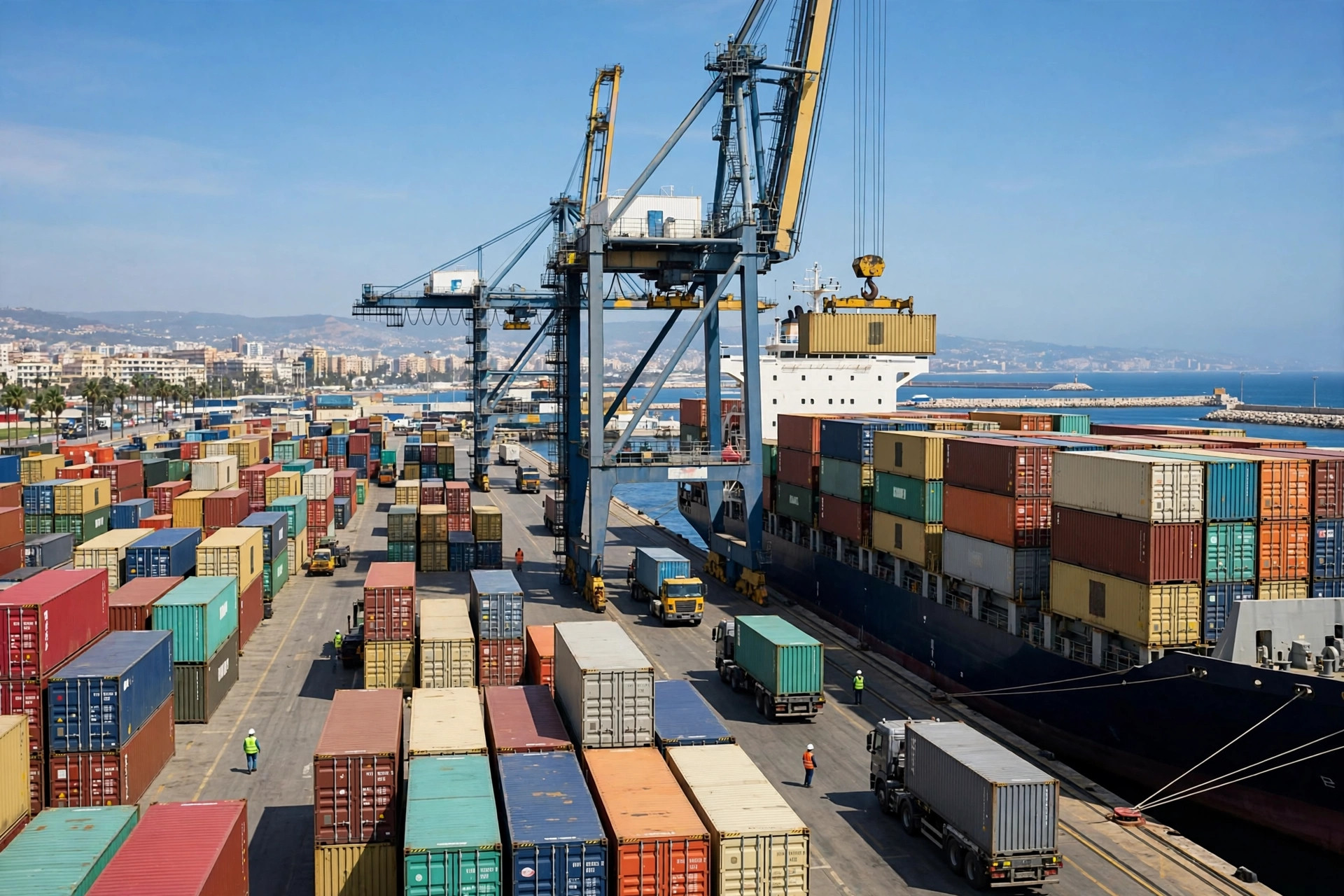
People call Yantian the number-one export port in South China. But for a small-warehouse owner like me — 3,000 square meters, a dozen people — the port gate might as well be on another planet. That changed last year when a cross-border seller friend asked me to fix his rolled-cargo mess, and I finally understood how Yantian Port Shenzhen warehouse logistics distribution really works. This is a small operator's field notes on a giant port — no bragging, just math that checks out.
Our predicament: the big port is buzzing — so what?
Let me start with our embarrassment, because it's real. Our warehouse sits in Longgang, Shenzhen: 3,000 square meters, a small crew, mostly doing fulfillment for e-commerce sellers. Last year an Amazon-seller friend came to me: "Xiao Ma, can you set up a pre-positioning warehouse near Yantian for me? Cargo needs to move fast, I'm chasing vessel schedules."
My first reaction: we small warehouses can't afford that kind of money. Yantian is mountains on three sides and sea on the fourth — land costs more than gold there, warehouse rents near the port run several times what we pay in Longgang, and landlords demand full-unit leases with long terms. A small-timer like me renting next to a mega-port? That's asking for pain.
But his pain was real: cargo leaves the factory, the truck rolls to Yantian, misses the sailing, gets rolled — and one rolled container burns through demurrage and rebooking fees like paper. What he needed wasn't "a cheap warehouse." It was "the warehouse closest to the sailing schedule." That sentence woke me up: the distribution math of a big port is never about cheap rent. It's about schedule certainty.
Yantian Port's assets: how big is Shenzhen's export gateway?
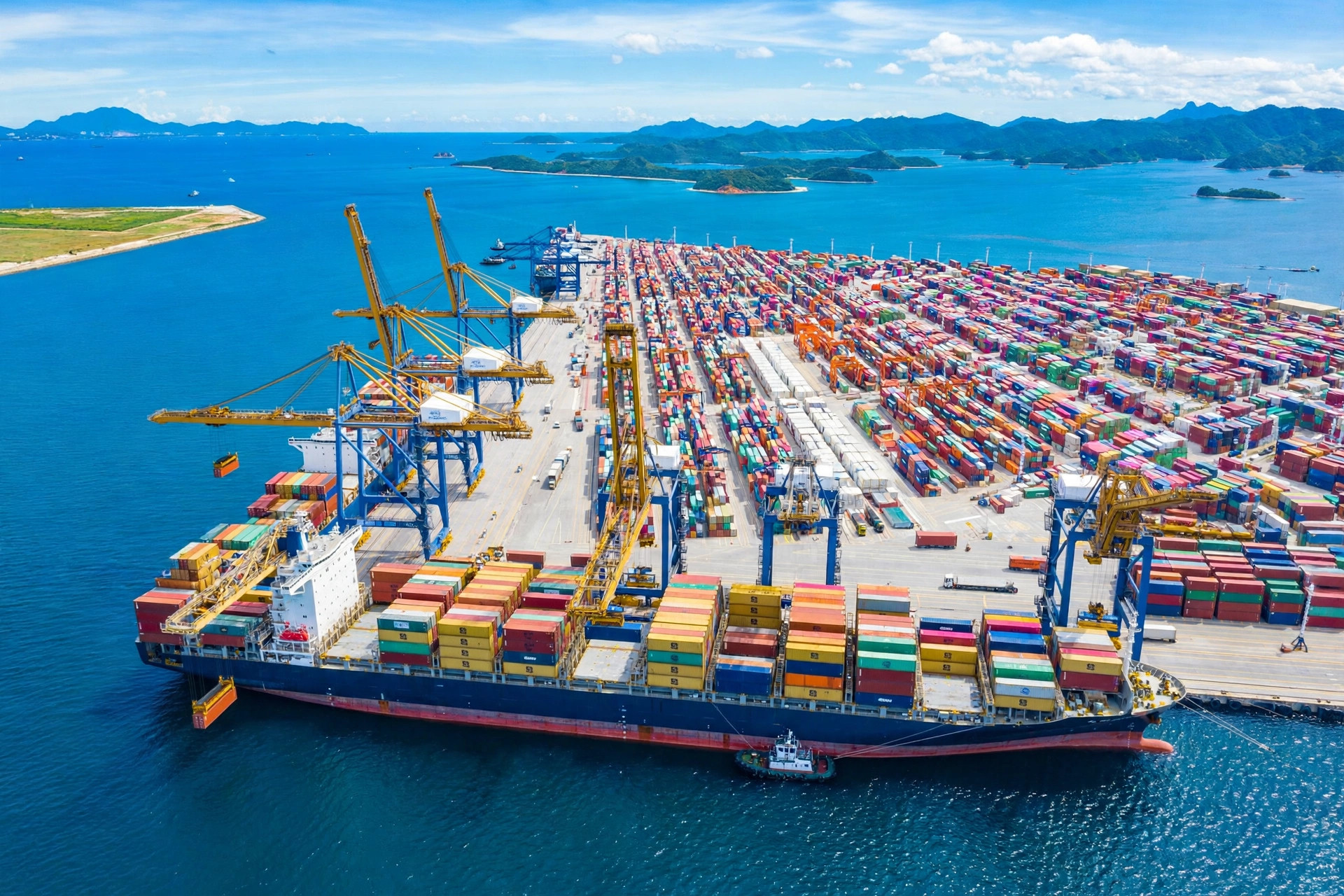
To ride a big port's coattails, you first need to know what you're riding. According to YICT (Yantian International Container Terminals), the port handled more than 15 million TEU in 2024, up over 7 percent year on year. For perspective: Shenzhen's total port throughput first broke 30 million TEU in 2022, which means Yantian alone accounts for roughly half the city's volume — genuinely South China's top export port.
On hardware: 20 deep-water berths, the only 18-meter-deep navigation channel in the Greater Bay Area, open 24/7 to 200,000-ton vessels. On connectivity: nearly 100 weekly services reaching 146 ports worldwide. In June 2026 Yantian won the AFLAS "Best Global Container Terminal" award — its first global-level title.
To feel the scale: the EVER Acme, among the world's largest container ships (built 2022, 400 meters long, 24,000 TEU stacked 25 tiers high), called at Yantian and loaded 5,000 TEU in one go for Europe. Only a handful of Chinese ports can take her — draft, efficiency, yard capacity, miss one and you're out.
The Yantian bonded zone and Shenzhen warehouse logistics, translated into human language
Big ports come with bonded zones, and Yantian's comprehensive bonded zone is no exception. The policy reads like legalese; here's my three-sentence translation:
First, cargo can enter the zone before duties are due. Every day tax payment is deferred is a day your cash stays alive — for a cash-tight cross-border seller, that's survival money.
Second, moving cargo inside the zone is frictionless. In bonded status, shifting goods between warehouses, consolidating, labeling — none of it triggers import/export formalities. It's a buffer layer.
Third, the export tax rebate clock can start early. Cargo entering the zone counts as exported, so the rebate lands first and the sailing can wait. For small and mid-size sellers, that beats cheap rent by a mile.
So the distribution warehouses around Yantian aren't really playing "storage" — they're playing "time arbitrage": bonded status buys funding time, pre-positioning buys schedule time. We can't afford bonded warehouses inside the port zone (rent plus licensing thresholds), but the logic is copyable. More on the knockoff version below.
The knockoff playbook: three moves for small warehouses riding a big port
Here's our predicament: we can't afford port-side rent, but my friend's sailing won't wait. Our playbook has three moves, each born of being broke.
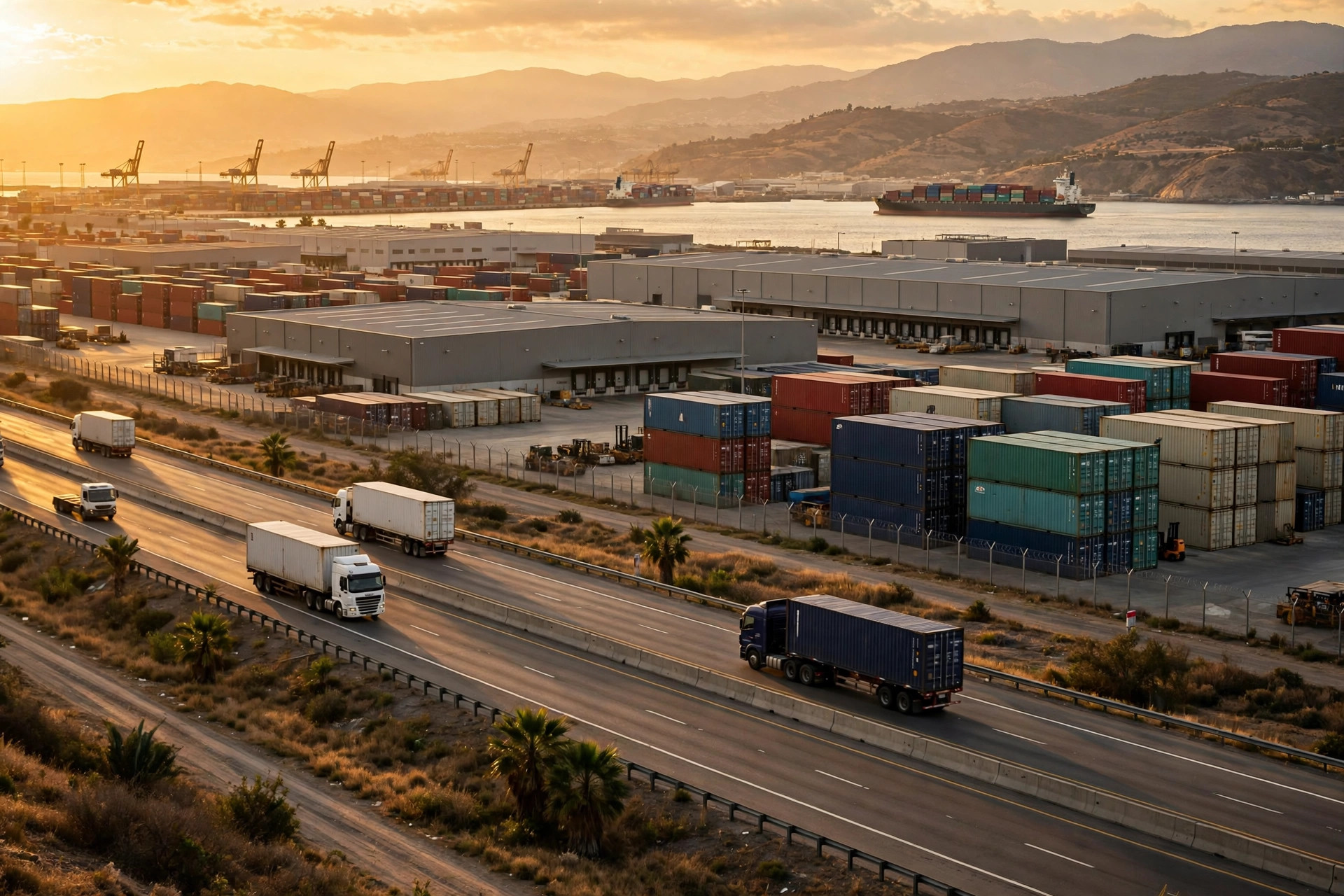
Move one: put the consolidation warehouse in the 30-kilometer ring. Port-side rents are brutal, but drive 30 kilometers toward Pingshan or Longgang and rents fall off a cliff. Our model: factory cargo reaches us first, consolidates into full boxes, then trucks to Yantian. One extra short-haul and one extra handling — but rent savings dominate. Compare (port-side rent premium) × area × dwell days against the extra trucking: cargo sitting over a week belongs in the 30-kilometer ring; only same-day in-and-out deserves port-side rent.
Move two: sell the sailing, not the space. Most small sellers don't need "a warehouse" — they need "that vessel." So we run two fixed "Yantian express" pooled-truck runs weekly, timed to customs cutoffs; clients pay per box, no lease. We earn on organizing efficiency; they skip the full lease. Dodge one or two peak-season rollings and the rebooking savings cover everything.
Move three: play the off-peak. Yantian trucking and warehousing prices explode in peak season (August to November) and go soft in the slack months. With one or two steady clients we do "stock low, ship high": build inventory in the slow months, roll full containers straight through at peak without fighting for port resources. It needs stocking capital and suits evergreen products, not fad SKUs — don't copy blindly.
Did it work? It didn't make us rich, but it kept us alive — and the Amazon friend is now a steady client. No "50% cost reduction" fairy tales: just fewer peak-season fire drills and an extra cash cycle or two a year. That's how small warehouses stay in business.
Port comparison for warehouse distribution: Yantian vs. Shekou vs. Nansha
South China means three ports. Newcomers ask "which is cheapest" — wrong question. Port selection is about "which fits your cargo."
| Yantian | Shekou / Chiwan | Nansha | |
|---|---|---|---|
| Location | Eastern Shenzhen, Daya Bay | Western Shenzhen, Pearl River east bank | Southern Guangzhou, Pearl River west bank |
| Draft & vessels | GBA's only 18m channel, takes 200,000-ton giants | Weaker draft, mostly near-sea and feeder services | Deep-water port, western-bank gateway |
| Service profile | Densest ocean trunk lines, direct to Europe/US | Southeast Asia, Hong Kong transshipment, barge feeders | Growing trunk lines, Pearl River west hinterland |
| Best for | Big Europe/US volumes chasing trunk sailings | Southeast Asia cargo, HK transshipment, factories in western Shenzhen | Factories in Foshan, Zhongshan, western PRD |
| One-line advice | Europe/US cargo: check Yantian schedules first | Factory in Bao'an/Nanshan? Don't drive past your neighbor | Factory in Foshan/Zhongshan? Nansha is closer |
The framework: where the cargo goes (services), where the factory sits (trucking), how tight the schedule is (certainty) — in that order. Certainty weighs most: saving pennies on freight means nothing if you miss the boat.
Counterintuitive: closer to the port isn't always cheaper
Two judgments that run against the grain. First, the warehouse nearest the port is not necessarily the cheapest warehouse. Port-side space in Yantian charges not just high rent but hard terms — full-unit leases, long contracts, no peak-season discounts. For sellers with lumpy volumes, sitting in the 30-kilometer ring and trading trucking for rent is often the better deal. What a pre-positioning warehouse pre-positions is time, not distance.
Second, a big port's "bigness" is worth less in "cheap" than in "certain" for small sellers. In 2026 Yantian rolled out one-inspection-per-seven-days for Yantian–Hong Kong/Macau runs, fully online and paperless (per YICT). The signal: the big port is grinding down institutional friction. A port that lets you calculate precisely beats one that lets you save a little — save 200 yuan on freight, get rolled once, lose 2,000. Schoolkid math.
Three pieces of advice for our kind
Finally, three lessons for fellow small-warehouse owners and small sellers, all paid for in tuition:
- Don't lease port-side. Dwell days × area × rent gap versus trucking cost — let the numbers talk. We can't afford to burn money on looking impressive.
- The sailing schedule is your number-one productive force. Port choice, warehouse choice, trucking choice — ask "can we make the vessel?" before "is it cheap?" Reverse the order and you save pennies while losing dollars.
- The bonded-zone logic has a budget version. Can't afford bonded space? Copy the thinking: trade time for cash (stock in the slack season), trade consolidation for scale (pooled express runs). You can't copy big companies' playbook, but you can copy their thinking.
However big the ships get, somebody must catch each box, consolidate it, and get it aboard. That's our job. Do it well, and the big port's buzz has a piece with your name on it.
Small warehouses have their own way to live.
By Xiao Ma, Small Warehouse Owner