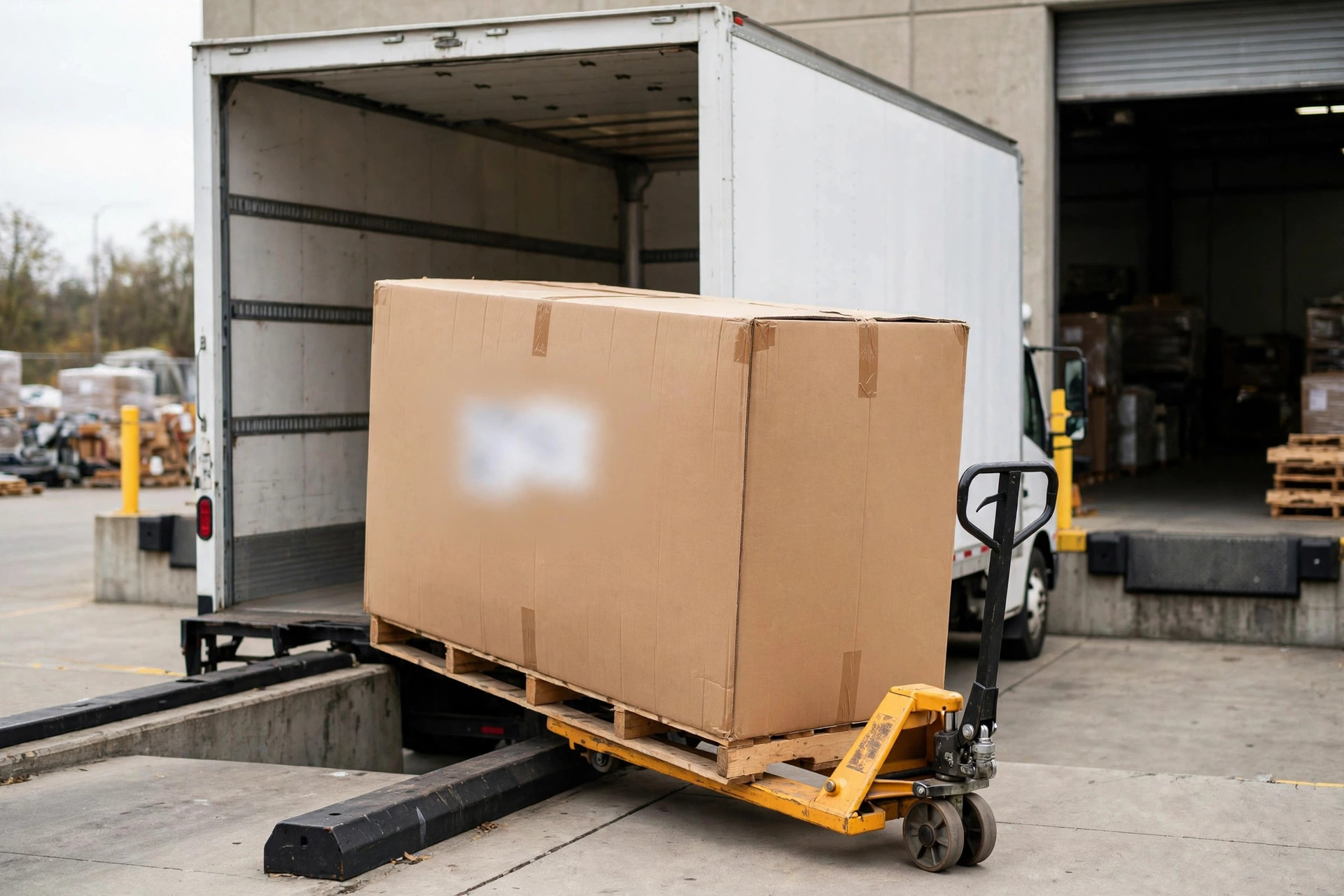
Last fall, a friend who sells Scandinavian-style dining sets called me: "Ma, I'm on Wayfair, volume's picking up — big and bulky stuff. Can your warehouse handle fulfillment for me?"
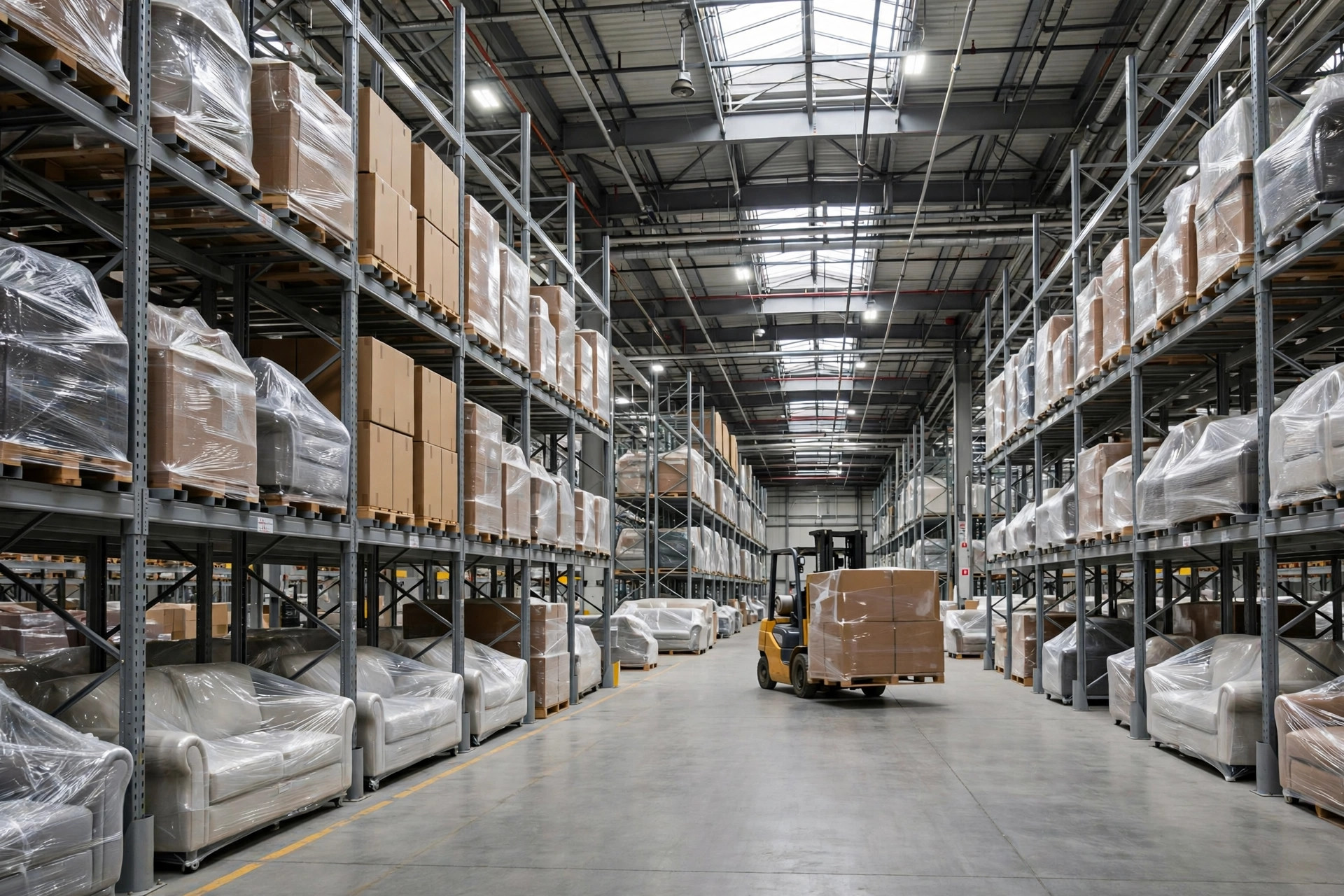
My scalp tingled at the words "big and bulky." We run a 3,000-square-meter warehouse. Our normal day is small parcels. Two forklifts. "Big and bulky" was basically mythology in our building. But an order is an order — turning it down would've been stupid. So our little warehouse walked straight into the wonderful school — I mean, pit — of Wayfair large parcel warehouse requirements. Fair warning: this isn't a sales pitch. It's a tuition receipt.
First, understand who's actually doing the work in Wayfair dropship
Before touching a single order, I mapped out how Wayfair's model really works, so I'd know exactly where the tuition might come from.
Dropship is Wayfair's primary fulfillment method: a customer orders on the site, Wayfair sends the purchase order straight to your warehouse, and you pick, pack, and ship it directly to the customer. Note the words "your warehouse" — not Wayfair's. (Unless you use CastleGate, Wayfair's own fulfillment network. Different game, not today's topic.)
Here's the part of the model that mesmerizes every small operator: shipping rides on Wayfair's carrier accounts. Small parcel goes on their FedEx account; large parcel and white glove move through their logistics network. You pay zero freight. Not one cent.
I know — half the small-warehouse owners reading this just sat up straight. Zero freight cost? Sounds like free pie falling from the sky. My friend, there's always a bill under the pie. Keep reading.
Then there's "base cost" — essentially the wholesale price you quote Wayfair per product. Wayfair sets the retail price on top of it and keeps the spread. So whatever you quote as base cost directly sets your margin — and every penny of big-and-bulky warehouse cost hides inside that number. We'll do the math later.
Three different worlds: small parcel, large parcel, white glove
Wayfair sorts freight into three tiers, and operationally they're three different jobs:
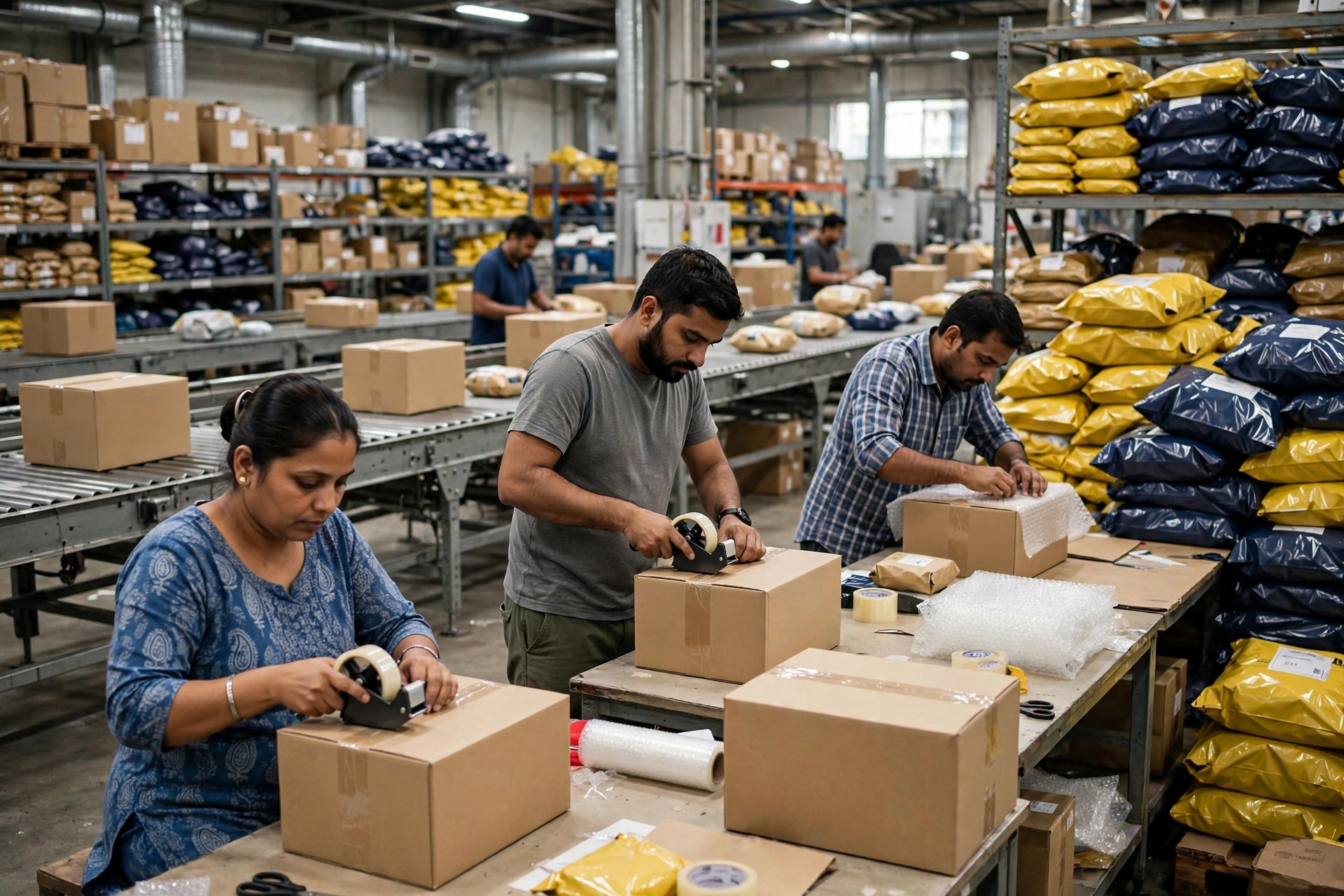
Small parcel: FedEx comes to you every day. You arrange the daily pickup yourself — and you pay the pickup fee out of your own pocket. Simple process, barely different from shipping regular parcels.
Large parcel: this is where it gets real. You can't just hand big items to a parcel driver. You register the shipment in Partner Home — Wayfair's supplier portal — and Wayfair arranges a truck to come to your facility. When the truck shows up and how many come depends entirely on whether you registered correctly and early enough.
White glove: the top tier. Delivery into the room of choice, unpacking, sometimes assembly. Most complex operation, most people involved.
Where exactly are the cutoffs between the three tiers — what weight, what dimensions? Check the current policy in Partner Home. Don't trust year-old screenshots floating around online; this policy changes, and last year's screenshot is not this year's bible. Crying later won't help.
See the pattern? Big-company narratives love talking about "tier definitions." Small operators like me only care about one thing: per tier, how much extra work and how much extra money.
Two expensive lessons: one in packaging, one in scheduling
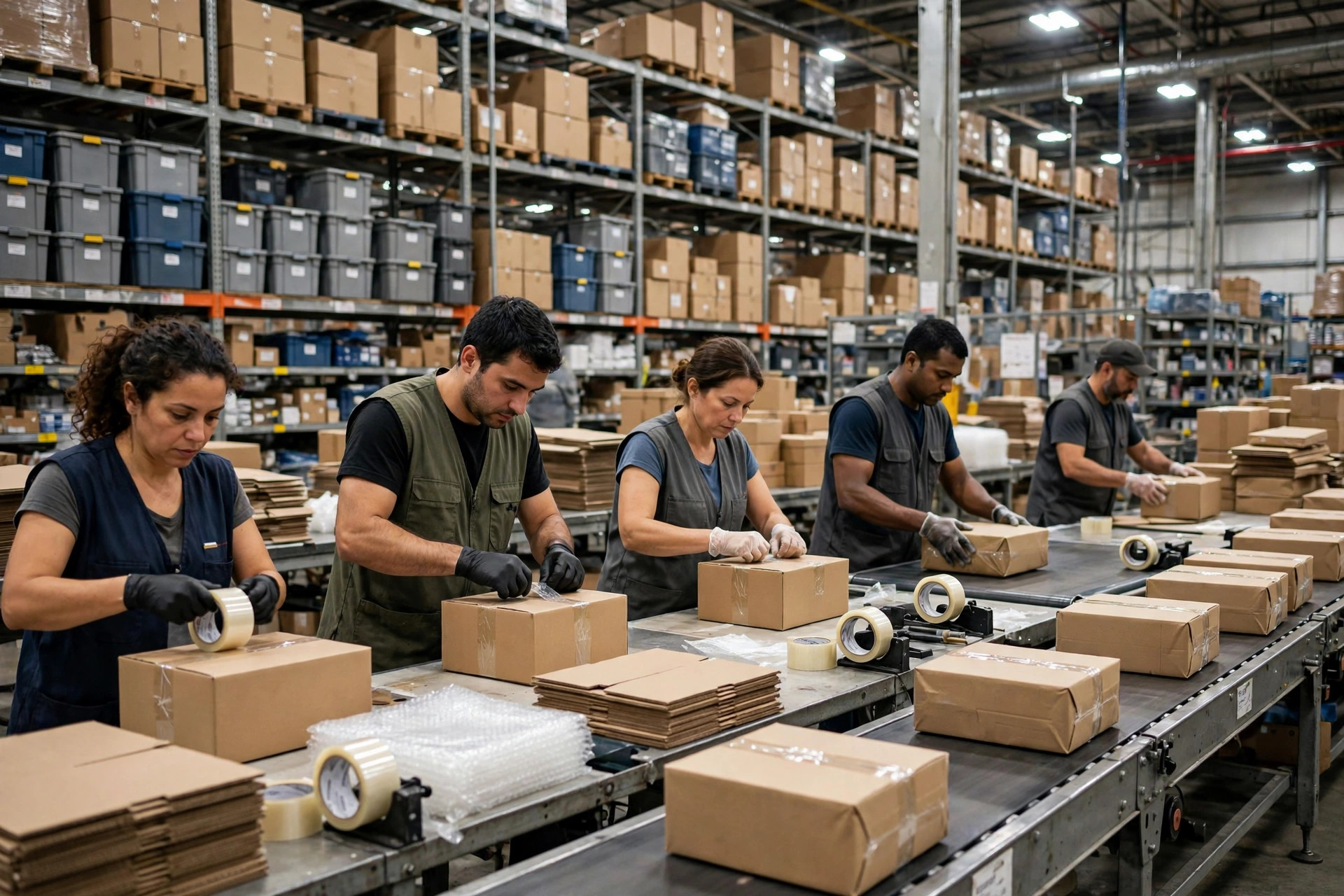
Packaging first. Among my friend's first Wayfair shipments was a solid-wood dining table, north of 80 pounds. He shipped it the small-parcel way: single-wall corrugated box, a bit of bubble wrap, tape, done.
It arrived with a chipped corner. The customer sent photos, returned it, left a one-star review — the full triple hit. Wayfair's supplier performance scorecard went red, and my friend nearly got throttled.
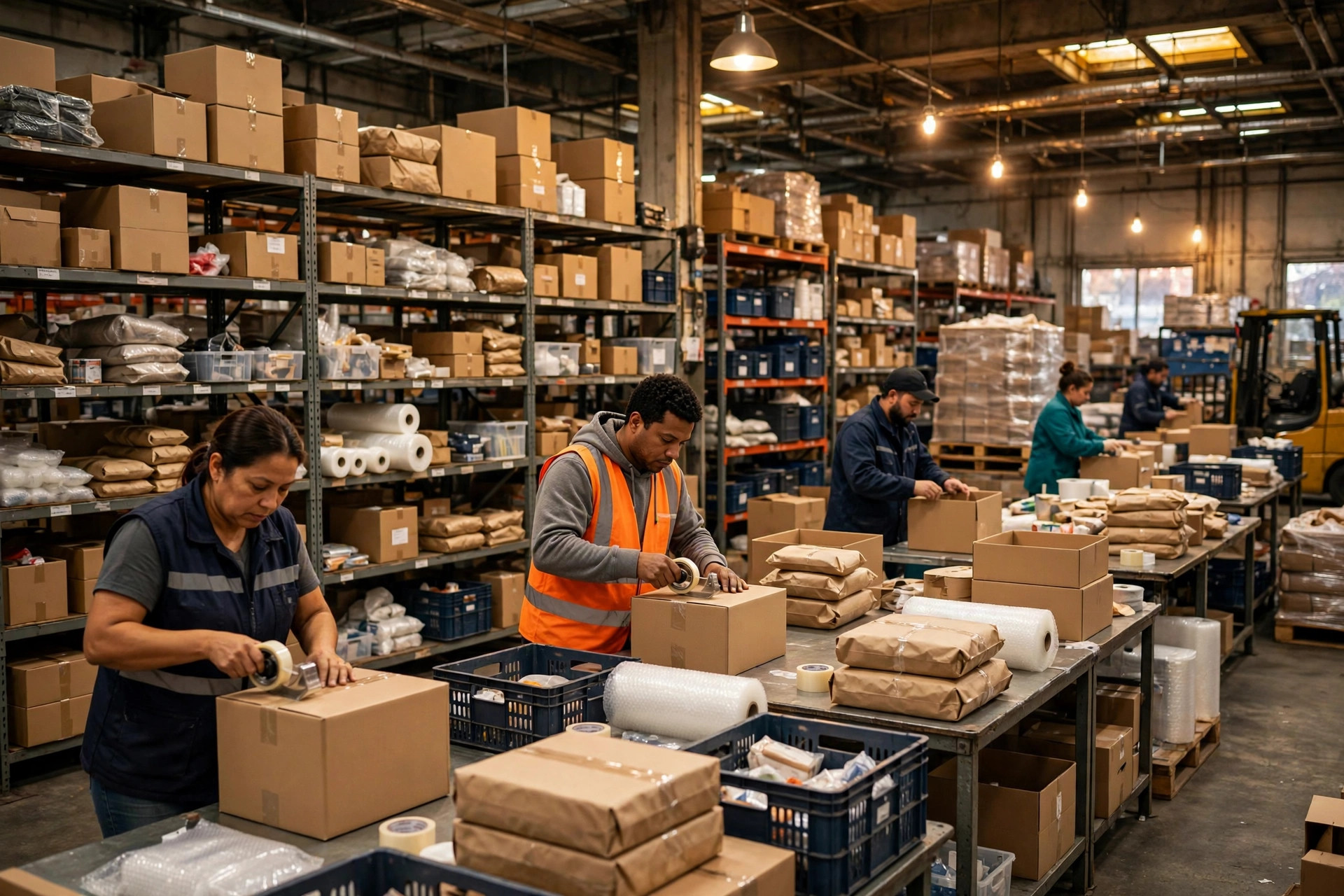
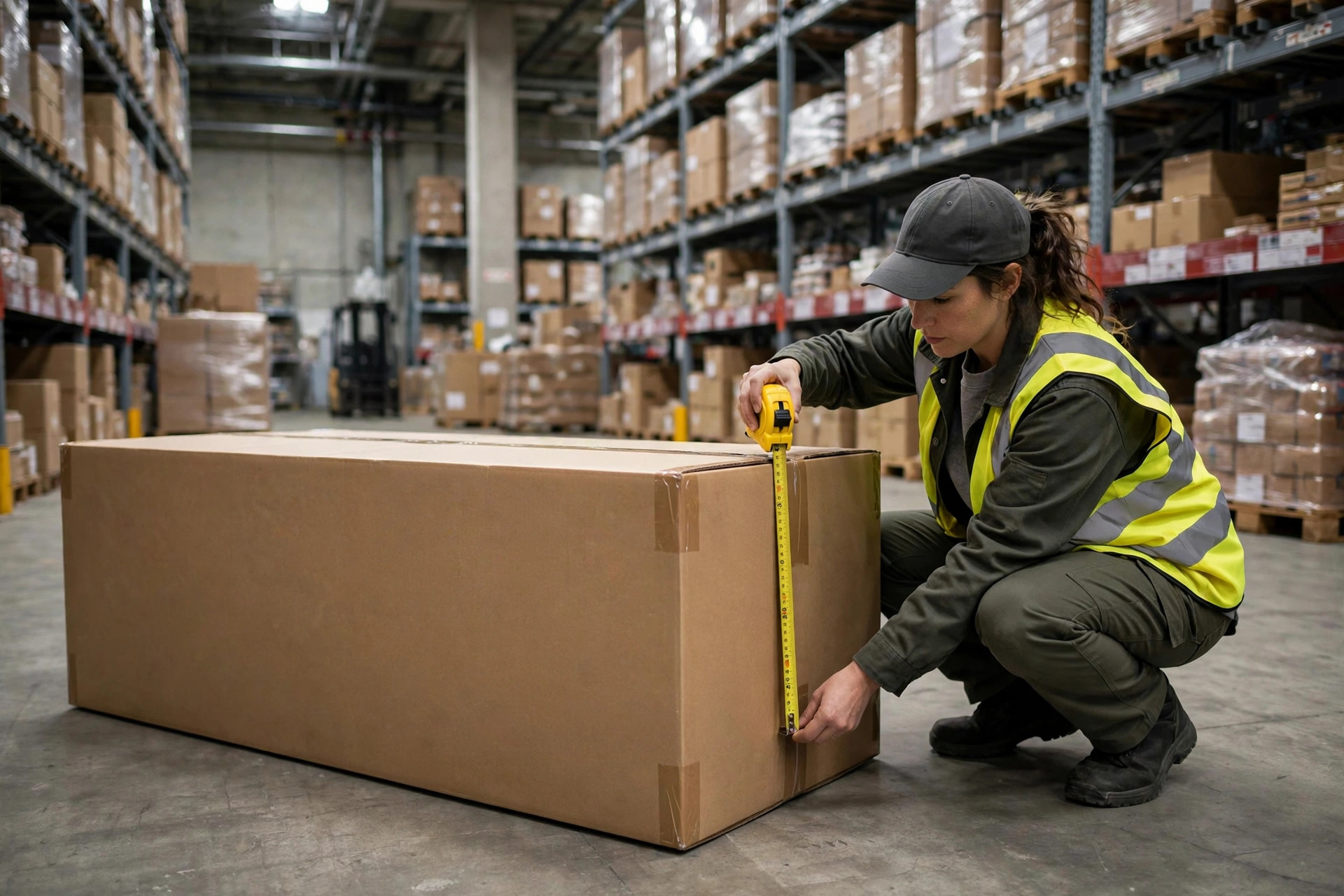
When he re-ran the numbers afterward, he wanted to cry: packaging materials plus labor for a big item ran roughly 3–4x what a small parcel costs. The packaging budget he'd baked into his base cost was quoted small-parcel style — that math was underwater from day one. Big-and-bulky packaging isn't "wrapping something up," it's engineering: corner protectors, reinforcement, stretch wrap. Skip one and it comes back as a return label.
Then scheduling — that one was ours. Our first large-parcel shipment: freight prepped, palletized beautifully, and we sat in the warehouse waiting. All morning. No truck. I called my friend. He asked: "Did you register the pickup in Partner Home?" Me: "What's Partner Home?"
The truck came the next day. The freight sat an extra day, the forklift crew handled it twice, and staging lost a big chunk of floor. Since then we've had a Wayfair large-parcel shipping checklist taped to the office wall: prep → photograph → register in Partner Home → wait for the appointment → load. Skip one step and the whole thing stalls.
The math: three cost lines your base cost must cover first
Two tuitions paid. Here's the cost breakdown table we built for Wayfair large parcel. If you're thinking of becoming a Wayfair supplier, fill this out before you quote a base cost:
| Cost line | Small parcel | Large parcel |
|---|---|---|
| Pick/pack labor | Per unit, assembly-line | Per order — one big item can eat half an hour |
| Packaging materials | Box plus fill | Corner protection, reinforcement, custom packing — real money |
| Loading | Driver grabs it on the way out | Palletize it, forklift it onto the truck — equipment and labor tied up |
| Damage reserve | Low — replace one, move on | Mandatory — one damaged big item costs like ten damaged small ones |
| Waiting/scheduling | Fixed daily pickup | Waiting on trucks, rescheduling — time is money |
The formula is simple: base cost minus those five lines is what's actually yours. Plenty of newcomers quote base cost as "product cost plus a little labor" with zero packaging and damage reserve in it. The bigger the volume, the faster they bleed.
Our small-warehouse hack: before taking Wayfair large-parcel volume, run 5 test orders. Log the real time per order and actual packaging used, then back into your base cost from there. Those 5 orders might not make money — but that's a hundred times better than quoting blind on 500 orders and discovering you're losing money on every one.
The counter-intuitive part: freight isn't your cost, but it's your biggest risk
Here's the part we only understood after paying tuition.
With Wayfair large parcel, freight isn't your cost — but it's your biggest risk. Freight rides on Wayfair's account; you pay nothing, which sounds like pure profit. But when the truck doesn't get scheduled, freight piles up in your warehouse while storage and labor burn. When something arrives damaged, the return, the bad review, the red scorecard — all of it lands on you. Wayfair saved you the freight bill and handed you the entire pressure of "on time" and "intact" along with it.
So the base-cost game isn't really about "wholesale price." It's about how well you understand big-and-bulky warehouse economics. Quote too low and there's nowhere to recover packaging and damage costs; quote too high and volume never comes. The narrow road in between is called "doing the math first."
Small warehouses have their own way of surviving. Big companies compete on scale; we compete on care. Big-and-bulky is a bowl of rice small warehouses can eat better than big ones — on three conditions: don't cheap out on packaging, don't skip steps in the pickup process, and run the base-cost math before you quote. Get those three right, and small operators can chew this meat just fine.
By Xiao Ma, Small Warehouse Owner