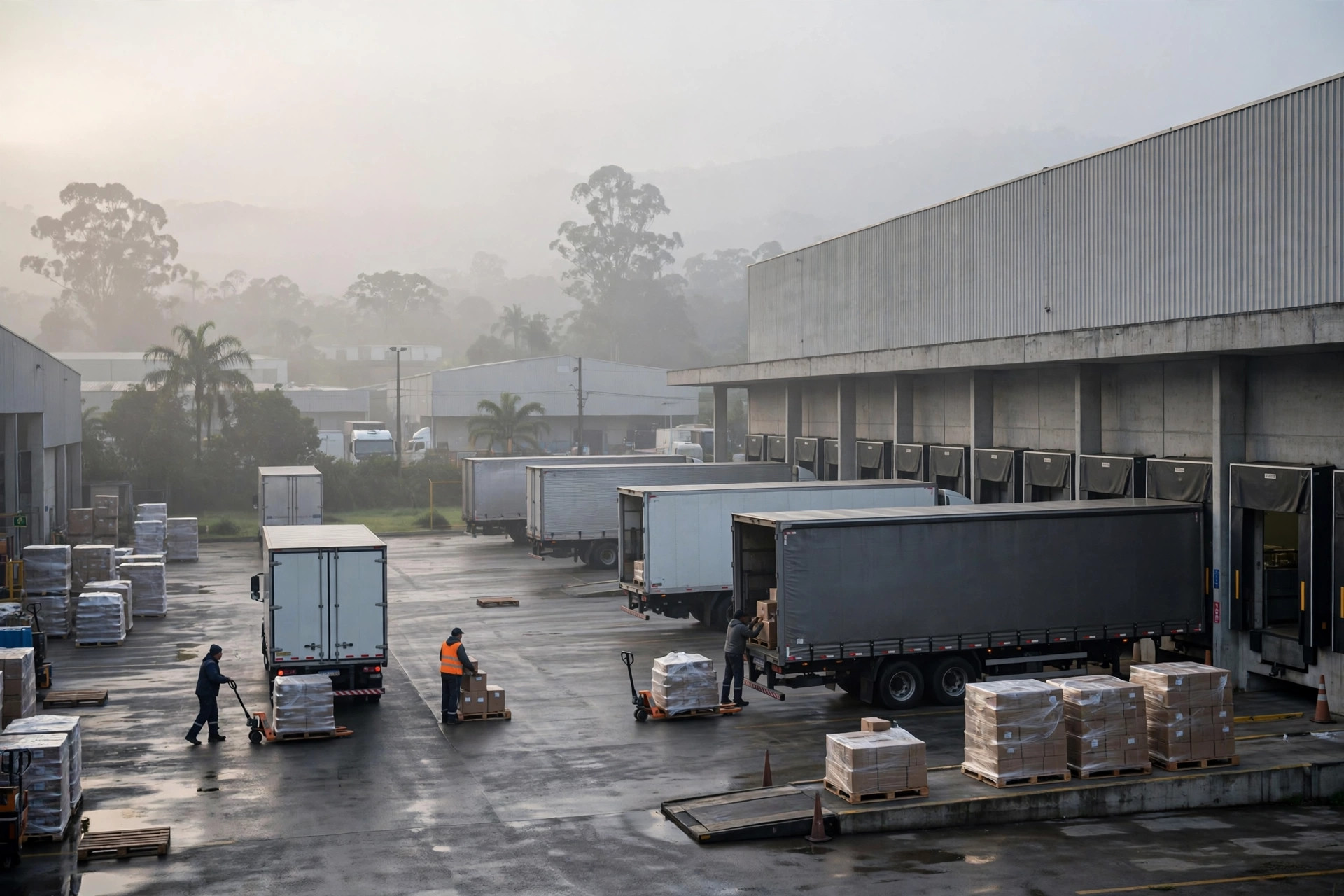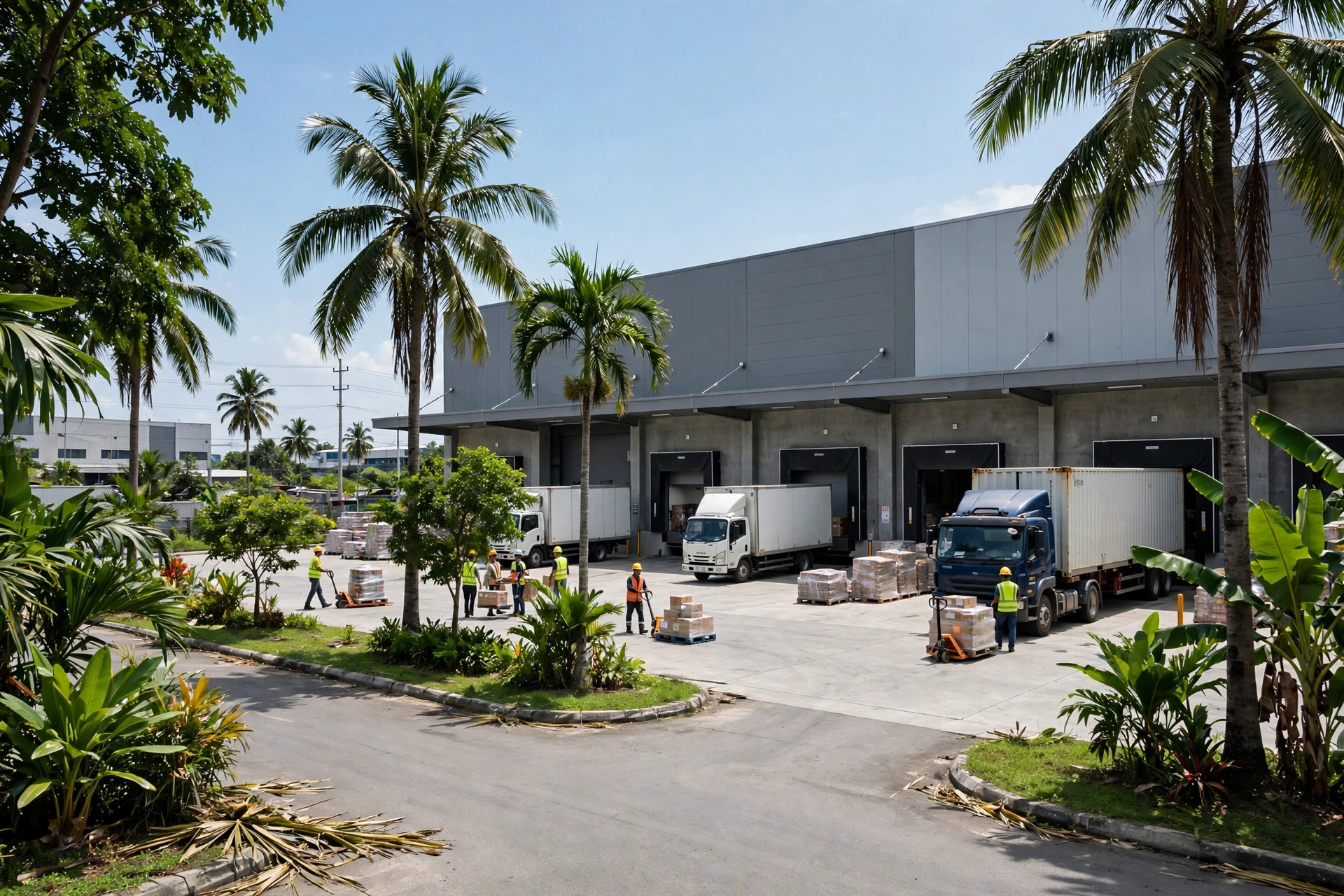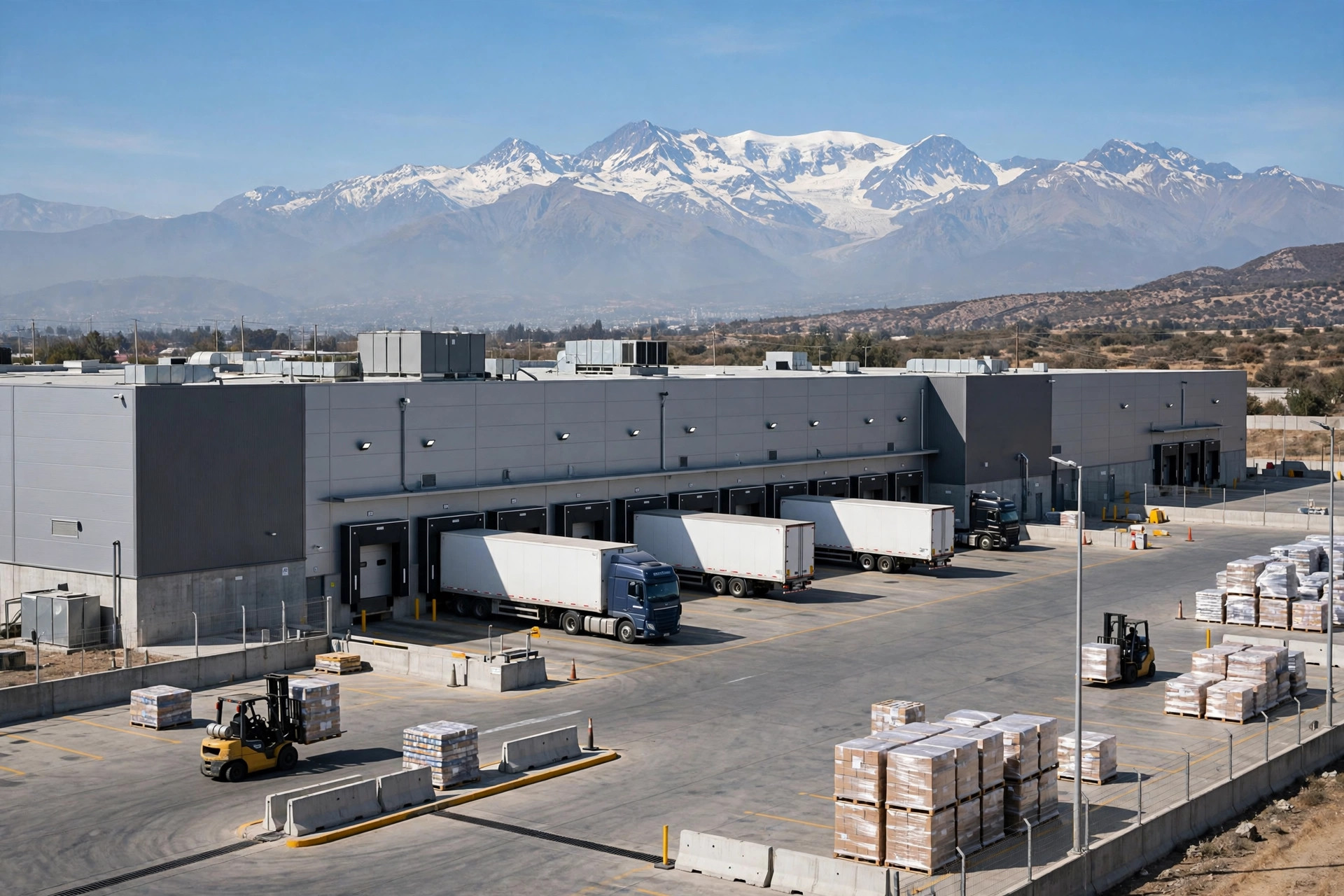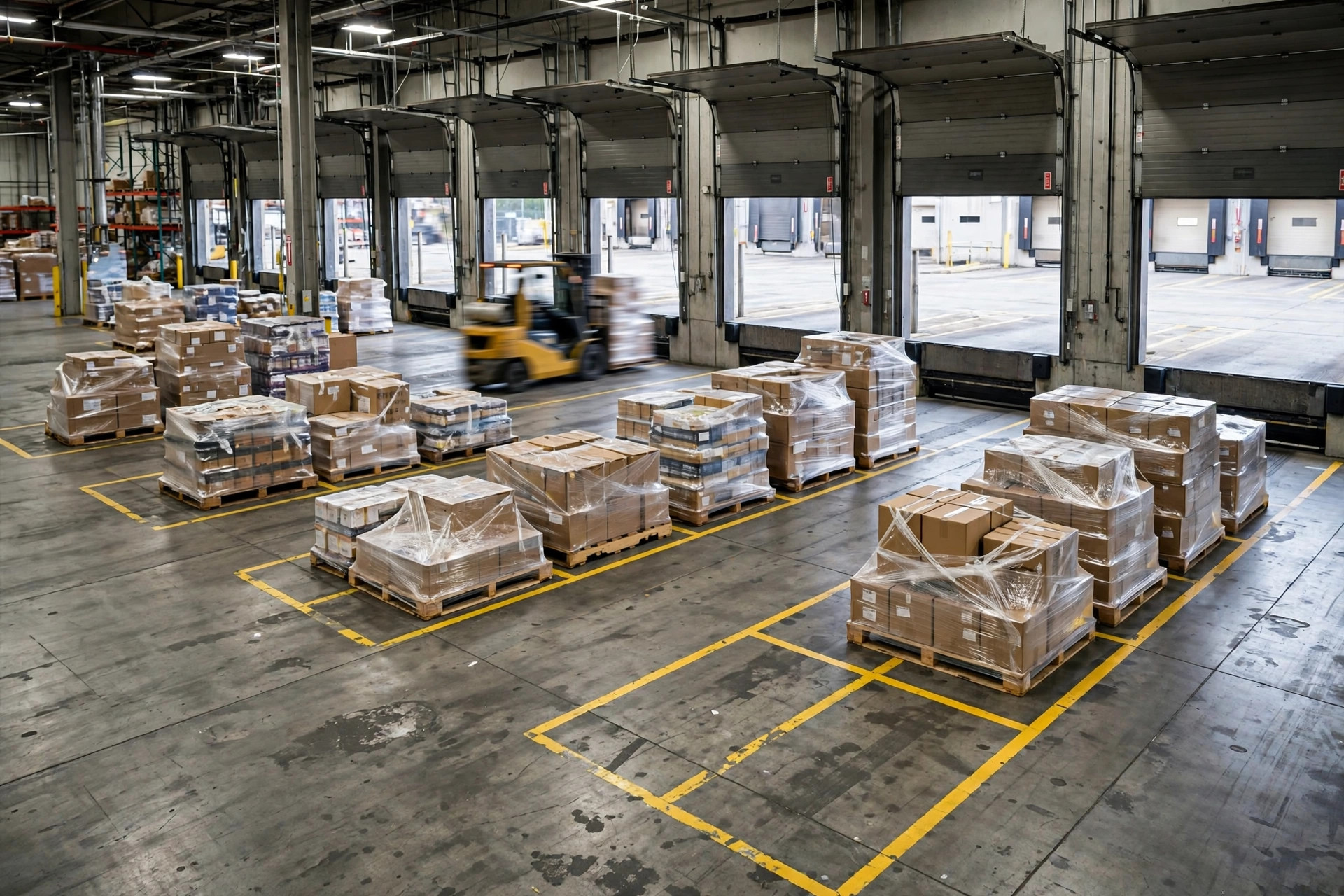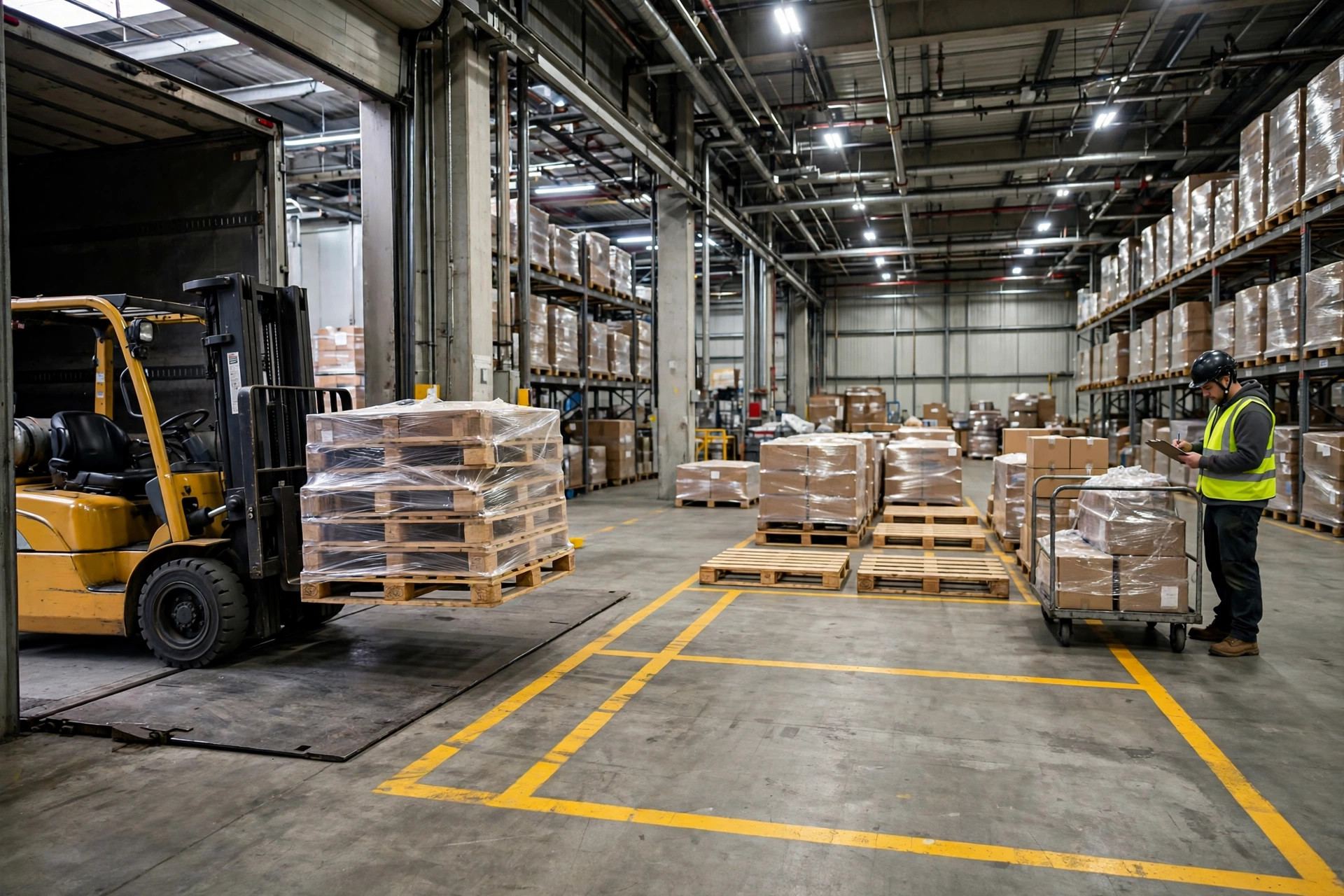
Let me give you the verdict first: when the dock backs up, it is rarely a headcount problem. A warehouse receiving area layout either works or it does not, and no amount of extra hands fixes a floor with no zones. I have watched too many operations throw people at a jam that was drawn into the floor itself. Trucks queue outside, forklifts idle in aisles blocked by pallets, inspectors wander looking for freight that has no assigned spot, and the whole building slows down to the speed of the messiest corner.
In 2019 I spent a morning in a third-party warehouse outside Ontario, California, doing a peak-season postmortem. Eight dock doors, more than forty inbound trucks a day, and the worst three hours were 8 to 11 in the morning. Their floor was one big open space. Whoever unloaded a truck set the pallets down wherever there was room. In a single morning I counted six pallets that a forklift moved three times or more, and an inspector who walked four trips trying to find one disputed pallet. The crew was not lazy. The freight had no address, so people worked from memory, and memory fails under pressure. I told the warehouse manager that day: you are not short-staffed, you are short-zoned.
That is the trade-off nobody wants to say out loud. Drawing zones costs floor space, and floor space is money. But not drawing zones costs more, just in places nobody puts on one invoice: extra forklift travel, double handling, hours spent hunting freight, and the cost of shipping the wrong goods to the wrong customer. Zone the floor and you pay once, in paint and discipline. Skip it and you pay every day.
Warehouse Receiving Area Layout in Five Zones: Unload, Stage, Inspect, Quarantine, Handoff
I draw five zones, no more and no fewer. Add a sixth and you have invented a parking lot. Drop one and the missing job will colonize somebody else's space.
Zone one is unloading, tight against the doors, and it does exactly one job: get freight off the truck. No breaking down pallets here, no counting, no labeling. The moment a pallet lingers in the unload zone, the door behind it is blocked, and the queue outside grows by one truck.
Zone two is staging. Freight lands here after unloading, grouped by supplier or by purchase order, waiting for its turn at inspection. One rule matters more than any other: one order per staging position, with enough room for a forklift to turn between positions. When staging positions run out, it is better to hold a truck at the door than to mix two orders in one pile. Mixed piles are where mis-ships are born.
Zone three is inspection. This is where cartons get opened, counts get checked, damage gets noted, and barcodes get scanned. Inspection sits close to staging but not against the doors. Put it against the doors to save a few steps and you will regret it the first time an inspector stops to photograph damaged goods and the whole door backs up behind them.
Zone four is quarantine, the home for problem freight: damaged goods, short counts, mismatched paperwork, anything waiting on a supplier decision. Quarantine must be physically separated from good stock, ideally with a different floor color. Without it, suspect freight drifts back into the normal flow, and the problem surfaces only when a customer opens the box. By then the cost of fixing it is several times what it would have been at the dock.
Zone five is the putaway handoff, where inspected and cleared freight waits to be put away, roughly sorted by the direction of its destination locations. This is the handshake between receiving and putaway, and it needs its own ground. Without it, cleared freight gets stacked back in staging, and everything you just sorted gets unsorted again.
Flow runs one way only: unload to staging, staging to inspection, inspection to handoff if cleared, to quarantine if not. Lines on the floor and numbers on the positions are what make it real. If a new hire can walk in and know where a pallet belongs without asking anyone, the zones are working. If they have to ask, the paint is decoration.
Here is the honest accounting. Painting zones and numbering positions costs little more than paint, signs, and a day of labor. The alternative costs forklift hours every shift, search time every day, and a mis-shipment every so often that eats the margin on a whole account. I have run this math with several operators, and the answer has always been the same.
Surge Flex: Leave a Relief Valve in Your Receiving Area Layout
A layout that works on a normal Tuesday will fail on a peak Monday. So a good receiving area layout needs a relief valve: floor that is aisle or open space most of the year and becomes temporary staging during a surge, then goes back to open space when the surge passes.
In the fall of 2023 I visited a warehouse near Dallas, Texas, that had this figured out. Along one wall of staging they kept a row of positions that sat empty most of the year. During peak weeks they hung temporary position cards on that row and used it as overflow staging. During the two worst weeks of the year, that row absorbed a dozen extra trucks a day that would otherwise have choked the dock. The manager told me it was the row he most hated to leave empty and most hated to lose.
This is the two-sided part. Flex space means accepting that some floor earns nothing directly for most of the year, and owners hate that sight. But a surge with no relief valve means the whole receiving line stops, and two weeks of missed service levels and penalties cost far more than an empty row ever did. Flex space is not waste. It is insurance, bought with floor instead of premiums.
Two rules make flex space work. First, decide its location and numbers in advance. Surge space found on the day is always an aisle, and an aisle full of pallets is a safety problem, not a solution. Second, set a trigger for using it, such as staging positions passing eighty percent full, or more than three trucks waiting at the doors. Hit the trigger, open the flex row. Clear the trigger, empty it. Without a trigger, temporary space quietly becomes permanent space, and your relief valve is gone the next time you need it.
Mis-Ships Start Where Zones Blur
Here is the second story, and it is the one that still bothers me. In 2021 I was in a fulfillment warehouse in New Jersey serving online sellers when two sellers' goods got swapped. Same product, different packaging. The freight had been unloaded into one shared pile, inspection counted it correctly against the paperwork, but putaway pulled from the wrong pile. From that moment the two sellers' inventories were crossed. By the time anyone noticed, more than a dozen orders had shipped wrong. The refunds and apologies cost real money, but the bigger cost was trust. A seller who gets someone else's goods in their customers' hands does not forget it quickly.
The counterintuitive part is this: mis-ships are rarely caused by careless workers. They are usually caused by a floor that gives workers no choice but to rely on memory and judgment. When freight has no assigned position, people sort by feel, and feel fails when the building is busy. Clear zones do the opposite: they let ordinary people get it right without thinking hard. A good layout is one where an average worker cannot easily make the mistake, not one where a great worker avoids it.
So if your building ships wrong goods, do not start by telling people to be more careful. Start with the floor. One order per staging position. Problem freight physically separated. Cleared freight never sharing ground with unstaged freight. Get those three right and most mis-ships disappear. The rest is process work, and it is much easier once the floor stops fighting you.
One more thing worth saying plainly: a warehouse receiving area layout is not a drawing you frame and forget. Walk it on a busy morning and stand where the jam forms. The floor will tell you which zone is undersized and which line is ignored. Fix that one spot first, then the next. A dock that flows is earned one zone at a time.
So here is my question to you: which part of your dock jams first? Go stand there for a morning before you buy software, hire people, or blame the team. The answer is usually painted on the floor, or missing from it.
By Lao Mi, Supply Chain Veteran (20 yrs)