Every July and August, as outdoor temperatures climb past 35°C and warehouse docks turn into ovens, a line item resurfaces on HR payroll sheets across China: the heat allowance. For warehouse operators, it is neither an optional perk nor a vague "subsidy" — under the 2012 Heatstroke Prevention and Cooling Measures issued jointly by four central authorities, it is a statutory wage component with a defined threshold, defined beneficiaries, and defined accounting treatment. This guide sorts out the full picture: the legal basis, who qualifies, where to find the rates, and what skipping it costs.
The Legal Identity of the Heat Allowance: Wages, Not Welfare
Treating the heat allowance as corporate generosity is wrong at the root, and a wrong understanding produces wrong bookkeeping. Article 17 of the Heatstroke Prevention and Cooling Measures provides that employers arranging outdoor work in heat above 35°C, or unable to bring workplace temperatures below 33°C through effective measures, shall pay the heat allowance and include it in total wages — with three implications worth unpacking.
First, "shall" means mandatory: where conditions are met, the employer has no discretion. Second, the threshold is dual-track — outdoor work above 35°C is one line, whether the workplace can be cooled below 33°C is another; the latter tests only the effectiveness of the employer's cooling measures, not the weather. Third, inclusion in total wages fixes its accounting identity: a wage component, not a "cooling expense" tucked into welfare funds. Once classified as wages, the chain reactions follow — the social-insurance contribution base, the severance calculation base, and the income-tax treatment are all pulled along, which is why some finance departments default to "pay only if we must."
One detail is frequently misunderstood: mung-bean soup, herbal drinks, or iced beverages cannot substitute for the allowance. The Measures make it an independent statutory monetary obligation — goods in kind cannot offset it — while separately requiring cooling drinks that likewise may not be replaced by cash or goods. Heat-relief supplies and the allowance are two parallel obligations; fulfilling one does not discharge the other.
Who Qualifies for the Heat Allowance: 33°C Is the Only Hard Line
While rates vary by province, the qualification logic is uniform nationwide, and the only hard yardstick is 33°C: open-air workers, or workers whose employer cannot effectively bring the workplace below 33°C, shall be paid. Applied to warehouses, this two-dimensional framework draws clearer boundaries than most expect.
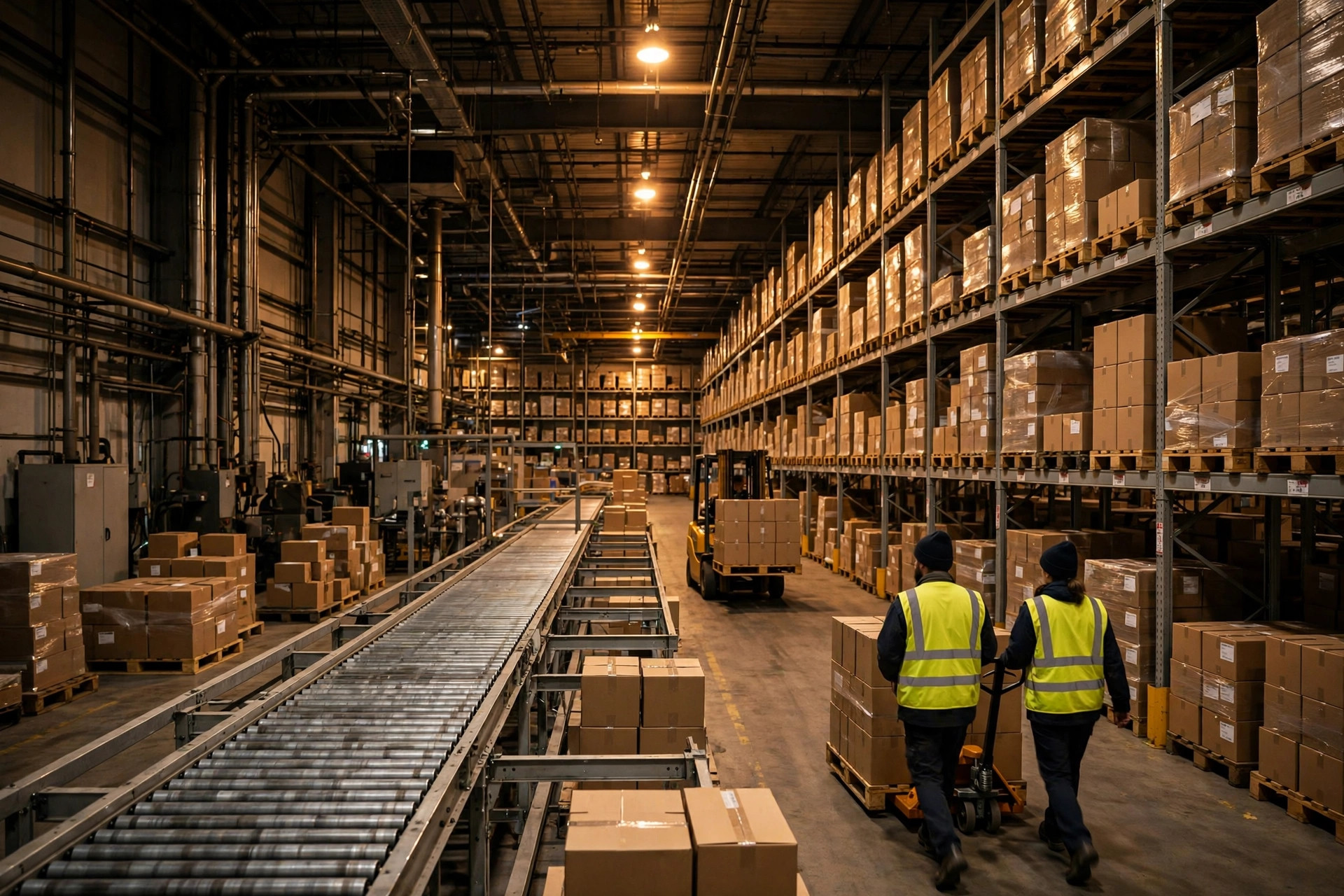
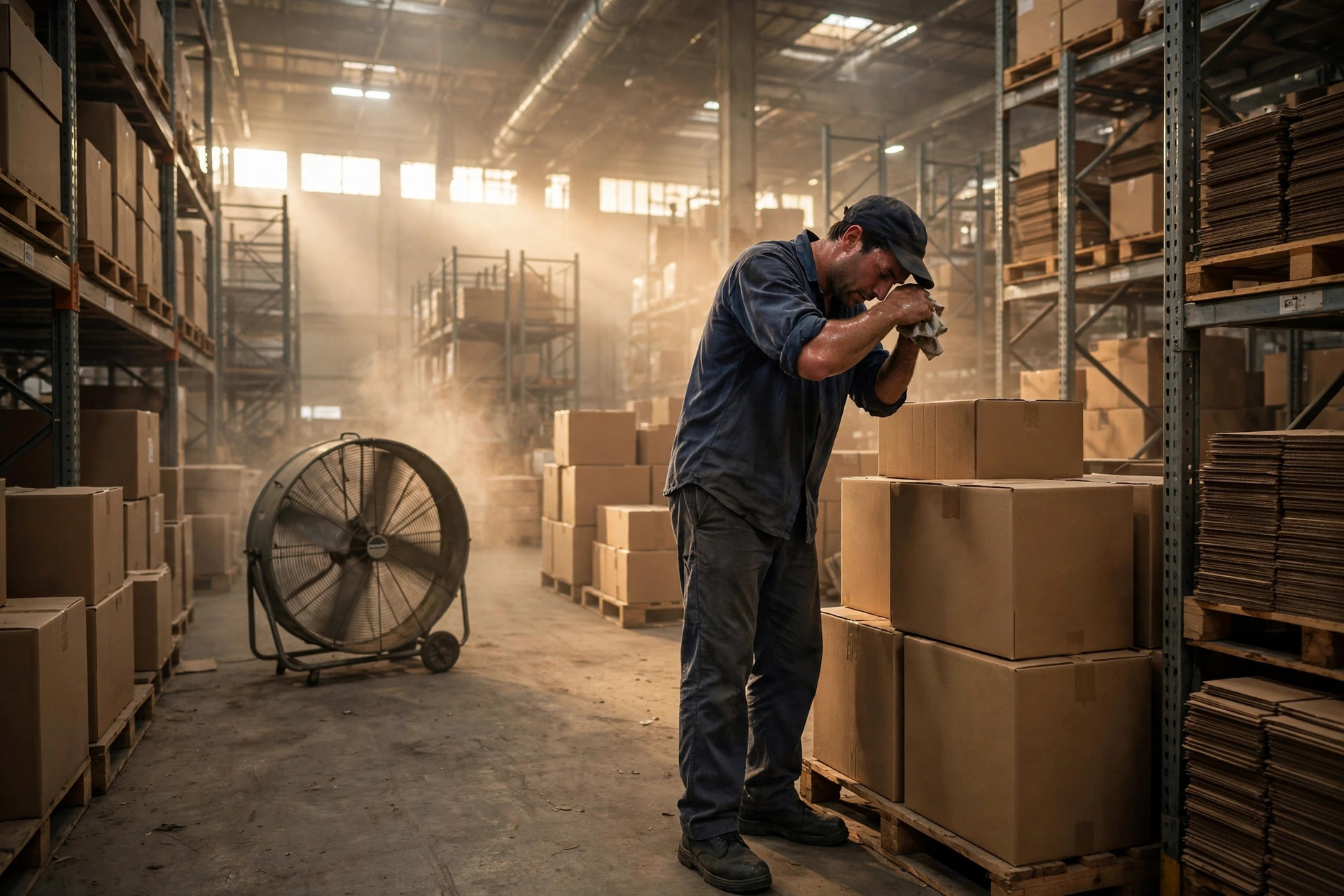
First, outdoor dock loading: trucks in and out, manual loading, forklifts shuttling between dock and yard — in summer the dock is essentially open air, squarely "outdoor work in heat above 35°C." Second, indoor work without effective cooling: many traditional warehouses rely on a few industrial fans, indoor temperatures routinely exceed 35°C, and even "indoor" work then meets the below-33°C condition. Third, air-conditioned warehouses genuinely kept below 33°C may be exempt — but the burden of proof sits entirely with the employer.
That burden of proof is the sharpest edge in the framework. Publicly reported arbitration cases show a stable pattern: workers claim back payment, employers argue "we installed cooling equipment," and tribunals ask for evidence — equipment logs, temperature records, payroll records. All three. A widely reported 2017 Dongguan judgment is instructive: a team leader dismissed after disputing unpaid allowance won at second instance, the court finding the employer could neither prove the workplace had been cooled below 33°C nor prove the allowance had been paid. The order: 1,500 yuan in back-paid allowance for 2015–2016, plus 40,000 yuan for unlawful termination. The logic is crisp — equipment existing does not matter; the temperature being brought down does; and payment must be proven by the employer's own payroll records.

A practical corollary for warehouse managers: mixed indoor-outdoor posts — forklift drivers loading at the dock and picking inside, for example — should be classified by primary work environment, erring on the inclusive side. Once a dispute begins, the party unable to produce a complete temperature record is always the employer; solid monitoring and payment ledgers are cheaper than probing the boundary, because every dispute returns to evidence.
How Much and How to Pay the Heat Allowance: Rates and Bookkeeping
Rates demand the most caution. Under the Measures, specific rates are set by provincial HRSS departments with relevant authorities and adjusted over time with socioeconomic development — no national figure, differing by province and year. Guangdong, Shanghai, Jiangsu and others each publish local standards, but the exact amount must follow each province's latest published policy; this guide cites no figure as authority. From public information, 200–300 yuan per month is the commonly seen range, with payment windows clustering between June and October. Lookup path: the policy section of each provincial HRSS website, or the national HRSS hotline 12333.
Two payment forms exist: with regular wages, or booked separately and consolidated into total wages — identical accounting substance either way. Here is the counterintuitive judgment: paying the allowance pushes up the social-insurance contribution base and the severance base, raising reported labor costs; yet it is a compliance cost, not an option. Non-payment saves a few months of allowance and buys exposure to rectification orders and arbitration back-pay — a trade no rational operator should take.
One more bookkeeping detail: the allowance is excluded from the minimum wage — employers may not bundle "minimum wage plus allowance" to meet the requirement; it must be paid on top. Burying it inside base pay as a "package" becomes a liability in arbitration, when the employer cannot identify which part of the paycheck was the allowance.
The Cost of Skipping the Heat Allowance: From Rectification Orders to Arbitration Awards
The risk of non-payment runs along two tracks: administrative and judicial.
Administratively, workers can report to labor-security supervision authorities. Under Article 26 of the Regulations on Labor Security Supervision, employers withholding wage remuneration are ordered to pay within a deadline, with a 50%–100% surcharge if they still fail. Since the allowance is part of total wages, "unpaid heat allowance" equals "wage arrears" and falls squarely within this clause. Every summer brings targeted inspection campaigns, with logistics and warehousing among the inspected industries; in public enforcement bulletins, the "order to rectify" is the most common outcome — back payment plus remediation being the lightest possible ending.
Judicially, workers can seek labor arbitration for back payment. One timing rule matters: the limitation period is one year, but during ongoing employment, wage-arrears claims are exempt from it; after termination, the claim must be filed within one year of that date. Former employees claiming several years of back pay within a year of leaving is the most common shape of these cases.
Rather than reacting passively, companies are better served by a four-step self-audit. One, coverage: re-map every post against the "outdoor work / below 33°C?" test, especially dock loading, forklift, and mixed posts. Two, rates: verify amount and months against the latest provincial policy of the contract's place of performance, province by province for multi-province operations. Three, payroll presentation: list the allowance as its own pay-slip line, never merged into base pay. Four, record-keeping: retain temperature records, equipment logs, and payroll records — the entire ammunition for an inspection or arbitration.
What makes this money unusual is that disputes are never about the value judgment of "should we pay," but the technical question of "is the evidence sufficient." With extreme heat more frequent and provincial rates adjusted dynamically — Chengdu's four departments raised the local rate back in 2018 — the 33°C line will only be tested more often. The question for operators may not be "do we pay this year," but: when an inspector asks "what exactly was the temperature in your warehouse," can the company produce a complete set of records? No standard answer exists — but every warehousing company should have thought it through before the next summer.
By Dr. Chen, Supply Chain Researcher