Let me be blunt: if you sell on the Walmart marketplace, your late shipment rate is one of the few metrics that can quietly kill your store. Sellers searching for "walmart marketplace late shipment rate how to fix" are usually already over the limit — so here's my verdict up front: stop chasing growth and save the patient first. This metric drops fast and climbs back slowly. I've watched too many sellers learn that the hard way.
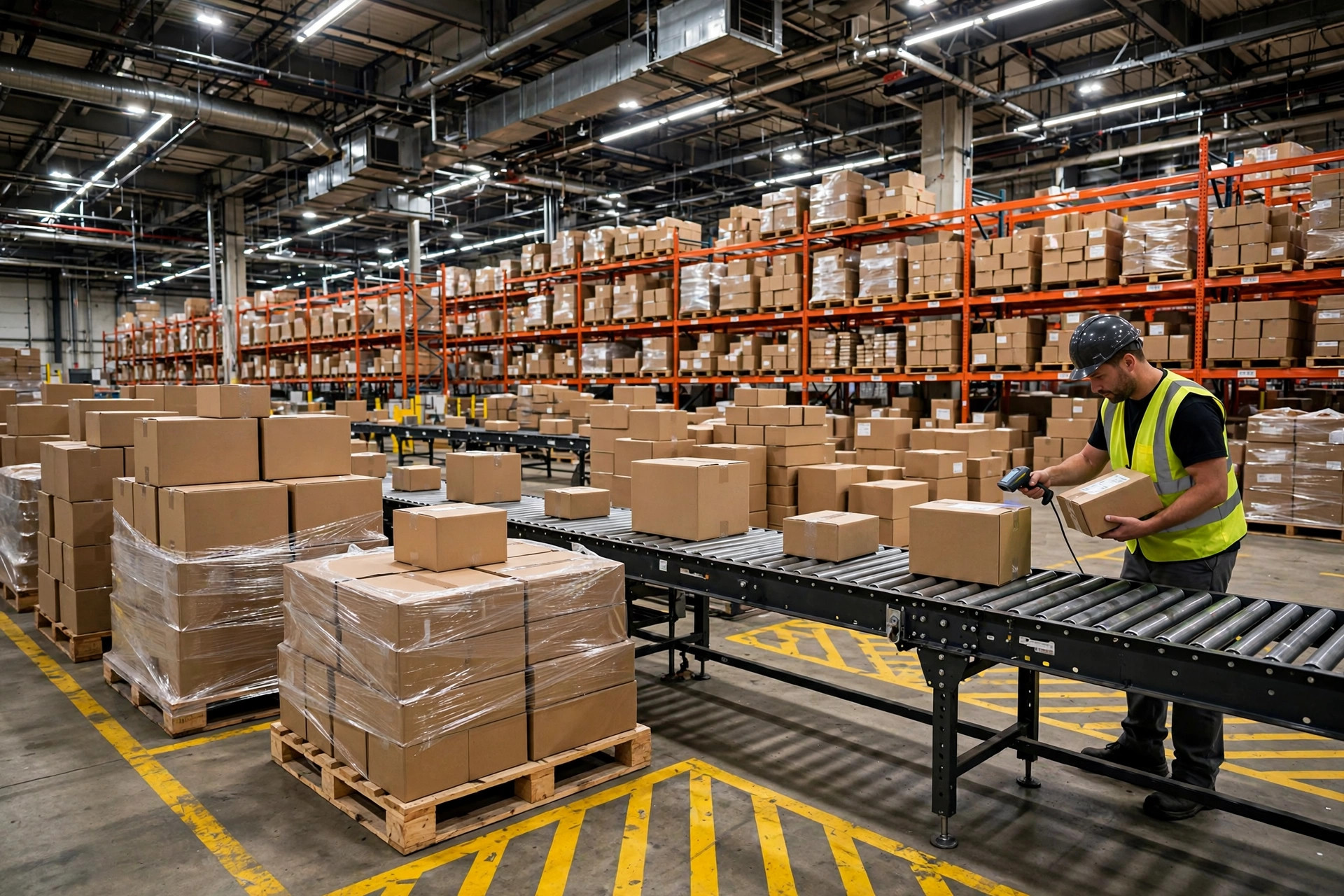
Last fall I visited a client in California's Inland Empire. They rent a 10,000-plus square foot warehouse, run a team of seven or eight, and ship 700 to 900 orders a day — half on Walmart, half on their own site. The owner told me his Walmart store's organic traffic had dropped by nearly half in a month. Ad spend was unchanged, but conversion was falling off a cliff.
I had him open the performance dashboard in Seller Center: late shipment rate over 6%. He was stunned. "We ship every single day. The carrier picks up daily. How can we be late?" That's the thing — from the seller's perspective, the boxes leave the building. From the platform's perspective, a shipment doesn't exist until the carrier scans it for the first time.
We traced the problem to a black hole inside the warehouse. Pickers printed all the day's labels around 4 p.m., packed everything, and stacked it in the staging area — the system flipped those orders to "shipped." The carrier's scheduled pickup was 6 p.m., but on heavy days the truck ran late or didn't come until the next day, and the packages didn't get their first scan until the following afternoon at the sort center. The seller thought he was on time. The platform saw a pile of orders promised for today with pickup scans two days later. That's how a late shipment rate gets built, one order at a time.
What Walmart's Late Shipment Rate Actually Measures
The math is simple: within the evaluation window, the number of orders picked up by the carrier after the promised ship time, divided by the total number of orders with a promised ship time. Three details matter.
First, it's the pickup scan time that counts, not your label-creation time. The platform doesn't care when you printed the label. It only recognizes the carrier's first scan.
Second, it's measured on a rolling window, and the exact window and threshold change — check the current policy in Seller Center before you act on old assumptions. Walmart doesn't send you a memo when it tweaks the rules.
Third, it's never a lonely metric. Valid tracking rate, untracked orders — they're all connected. A blown late shipment rate usually means your outbound process has a structural hole, and the sibling metrics will light up red sooner or later.
How to Fix Your Late Shipment Rate: Prevent, Monitor, Recover
Cost first, payoff second — there is no shortcut here, only three layers of work, and none of them is optional.
Prevention is the cheapest layer. Set your order cutoff at least one hour before the carrier's actual pickup time, not the theoretical one. My client's fix was simple: cutoff moved from 4 p.m. to 3 p.m., and the driver now signs a pickup log confirming the real pickup time — that signed sheet becomes your evidence if you ever need to appeal. Second, your picking rhythm has to match the cutoff — run a fixed afternoon pick wave every day, and don't let paid-but-unpicked orders sit in the system overnight. Third, inventory accuracy: cancellations from overselling hurt worse than late shipments under some definitions. The whole prevention layer boils down to one sentence: keep at least half a day of buffer between your promised ship time and the time you can actually hand the box over.
Monitoring is the second layer. Every morning, ten minutes, one report: orders due today with no carrier scan yet. More than ten sitting idle? Someone chases them down that same day. Not in the weekly report, not in the monthly review — late shipment rate is built day by day. I've seen too many sellers check the metric monthly, and by the time they see 6%, three weeks of holes are already unfixable.

Recovery is what happens after you're over the limit, and it's the most expensive layer. Step one, stop the bleeding: pause on-site promotions, pull tail SKUs with long handling times or raise their shipping templates. Two-sided trade-off — you'll lose short-term volume, but that's far cheaper than platform throttling. Step two, voluntarily shorten your promised handling time; buy the metric back with conservative promises. Step three, appeal: organize the pickup logs and evidence of late carrier pickups, and document what you changed. Appeals are judged on what you fixed, not how unfair it feels. On pacing — don't expect a turnaround in a week. Plan for four to eight weeks; the metric rolls, and old orders age out of the window naturally.
The Math: What One Point of Late Shipment Rate Actually Costs
People always ask: if my late shipment rate goes from 3% to 4%, how much traffic do I lose? I can't give you a precise number — it varies wildly by category and store weight. But I can give you the magnitude: the client above went from just over 2% to over 6%, and his organic traffic dropped by nearly half while his ad cost per conversion nearly doubled. It's not linear. The platform quietly moved his store down a tier in its trust ranking.
Flip it around, and the ROI of fixing this metric is enormous. That client changed a cutoff time, added a signed pickup sheet, and spent ten minutes a day on a dashboard — almost zero cost. Two months later the metric was back under 2% and traffic was recovering. Say what you want about warehouse operations: this is the highest-ROI fix in the building. It costs no money, only discipline.
One counterintuitive finding: most late shipments aren't the carrier's fault. I've reviewed more than a dozen over-limit stores, and in over half the cases the problem was inside the warehouse — the "label printed, never handed over" black hole. Labels created, system shows shipped, boxes sit in staging overnight. Sellers curse the carrier, the carrier feels wronged, and the real culprit is the warehouse's own process. Straighten out your internal timeline first, then negotiate carrier performance. Get that order backwards and you'll fix nothing.
One last piece of advice: this metric is the platform's way of filtering for reliable sellers. Treat it as a warehouse discipline problem and it's a minor nuisance. Treat it as "the platform is out to get me" and it becomes the thing that kills your store. Tomorrow morning, go look at your performance dashboard.
By Lao Mi, Supply Chain Veteran (20 yrs)