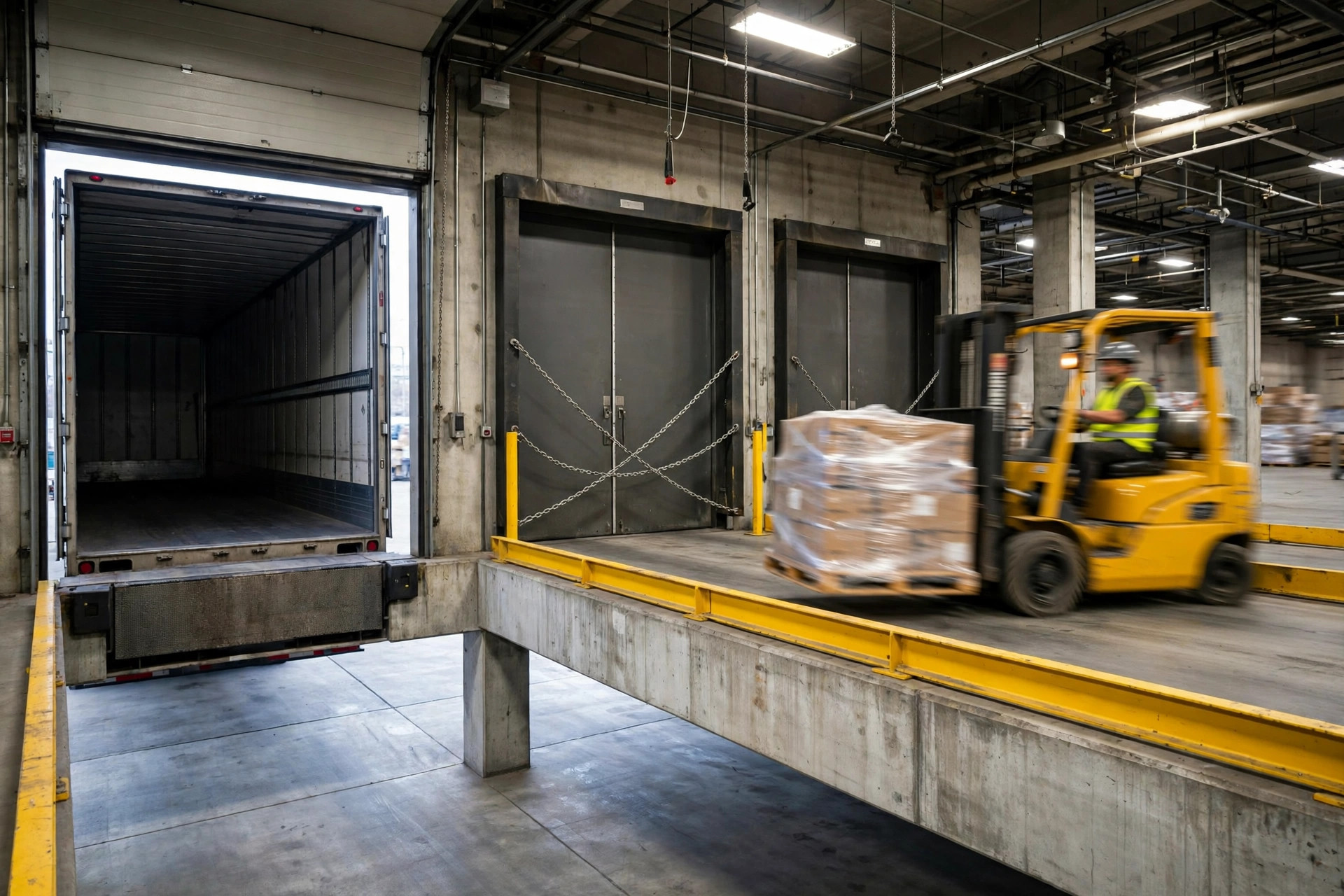
Let me tell you something. Fifteen years behind the wheel, and the load that still makes me nervous isn't oversize freight or overweight machinery — it's bagged ammonium nitrate fertilizer. Twenty-two tons of it, stacked neat in the trailer, looking for all the world like ordinary fertilizer. But this stuff has a temper, and every old hand knows it: when it comes to fertilizer warehouse storage requirements, ammonium nitrate gets its own section in the federal regs, and every line in that section is a hard number.
July 2019. High noon. I picked up 22 tons of bagged ammonium nitrate from a plant in Kansas, bound for a farm co-op warehouse in Iowa. A hundred degrees outside, and the bags had been baking in that steel trailer all morning — hot to the touch. I backed into the dock, ready to unload, when the old-timer who ran the warehouse walked over with an infrared thermometer, took a reading off the top bag, and shook his head. "Bag temp's over 130 Fahrenheit. We don't accept it. Come back after it cools down tonight."
I was floored. Fertilizer has to take its temperature now? The old man just pointed at the sign on the wall: "29 CFR 1910.109. Ammonium nitrate containers over 130°F don't get accepted for storage. Take it up with your dispatcher."
I slept in the warehouse parking lot that night and unloaded at 3 a.m. After that I went and actually read the regulation. My blood ran cold — Beirut, August 2020, showed the whole world what ammonium nitrate looks like when it loses its temper. Since then, whenever I get offered an ammonium nitrate load, the first thing I check isn't the rate. It's whether the receiving warehouse knows what it's doing.
What It Comes Down To: The Hard Numbers for Ammonium Nitrate Warehouse Storage
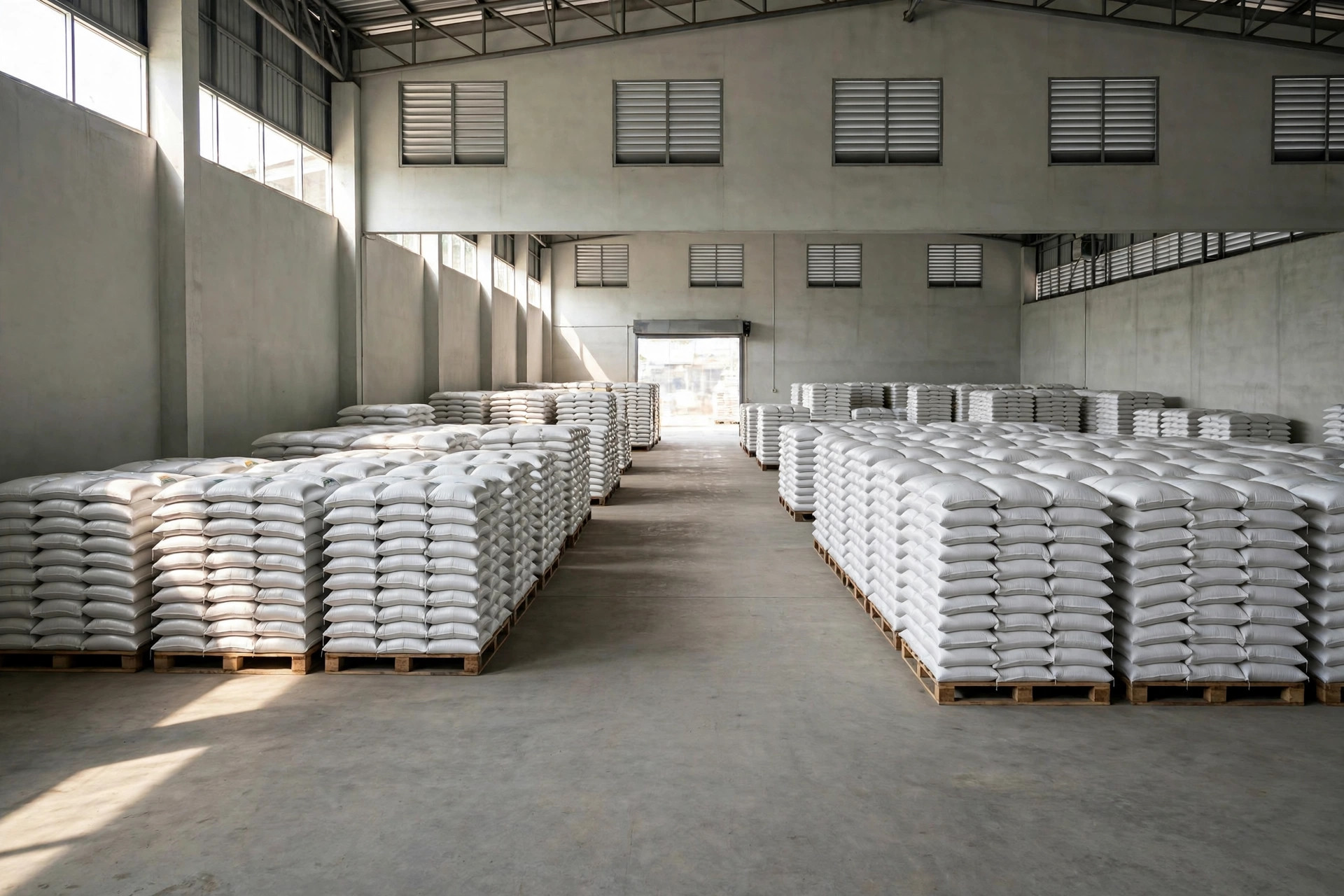
The federal safety agency OSHA has a regulation written specifically for ammonium nitrate storage: 29 CFR 1910.109(i). I've gone through the text line by line, and here are the hard numbers that matter at receiving, stacking, and inspection. First, the trigger: the whole rule kicks in at 1,000 pounds or more stored in the building — that's barely 450 kilos, less than a pallet. In practice, if you store it, the rule applies.
Start with receiving, where drivers feel it most:
- Containers over 130°F get rejected. That's the rule that kept me out in Iowa. Bags that baked in a trailer at midday in July will fail this test. What drivers can do: schedule arrival for morning or evening, and don't let the load sit in the sun.
- Signage has to be there. Piles and bins of ammonium nitrate must be marked with signs reading "AMMONIUM NITRATE" in letters at least 2 inches high. When you roll in, look for the sign first — a warehouse without proper signage tells you plenty.
Then stacking, which is where inspectors write the most citations. The numbers are not suggestions:
| Item | Hard number | Citation |
|---|---|---|
| Bags off the wall | At least 30 inches | 1910.109(i)(3)(ii)(b) |
| Pile size cap | Height ≤ 20 ft, width ≤ 20 ft, length ≤ 50 ft | 1910.109(i)(3)(ii)(c) |
| Clearance to roof/beams | At least 36 inches | 1910.109(i)(3)(ii)(c) |
| Aisles between piles | At least 3 ft wide | 1910.109(i)(3)(ii)(d) |
| Main service aisle | At least one, ≥ 4 ft wide | 1910.109(i)(3)(ii)(d) |
| Bagged AN per unsprinklered building | Max 2,500 tons | 1910.109(i)(7)(i) |
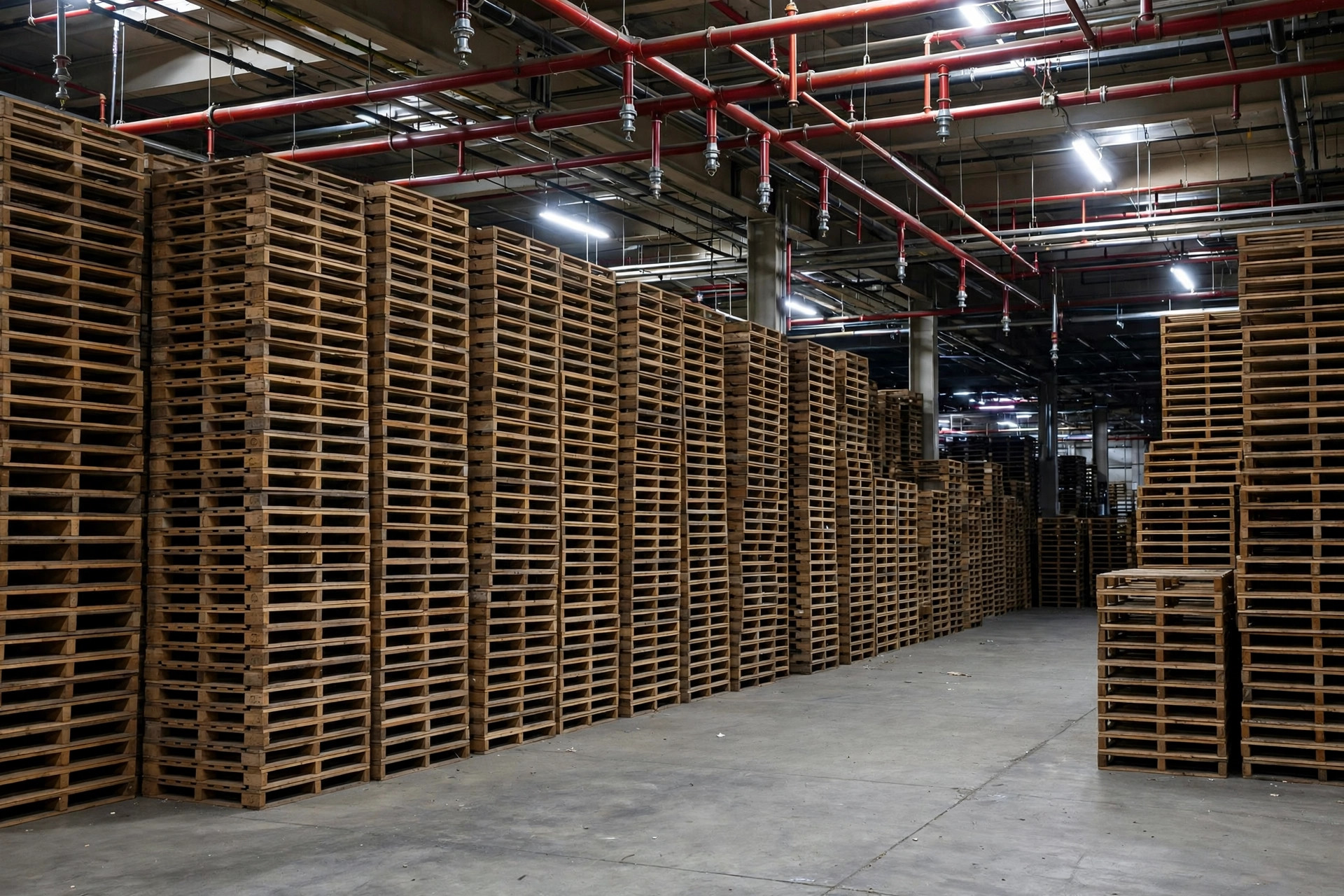
Now here's the part worth reading twice: the 50-foot pile length limit doesn't apply if the building is noncombustible construction or protected by automatic sprinklers. Same story with the 2,500-ton cap — it only binds buildings without automatic sprinklers. See the logic? Spend the money on fire protection, and the regulation hands you back your storage density. Cheap out on sprinklers, and you pay in stack dimensions and tonnage limits. That's a clean trade-off.
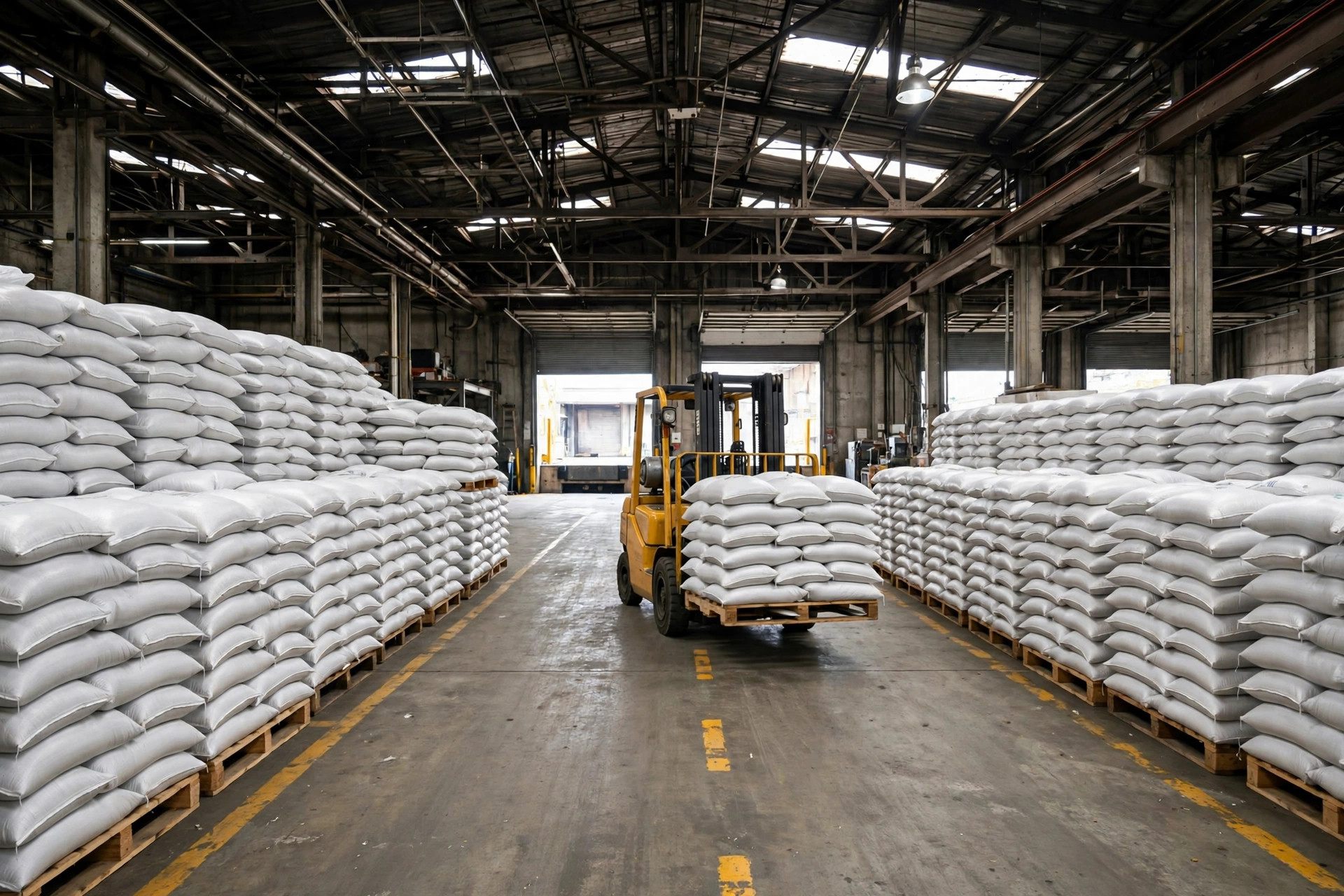
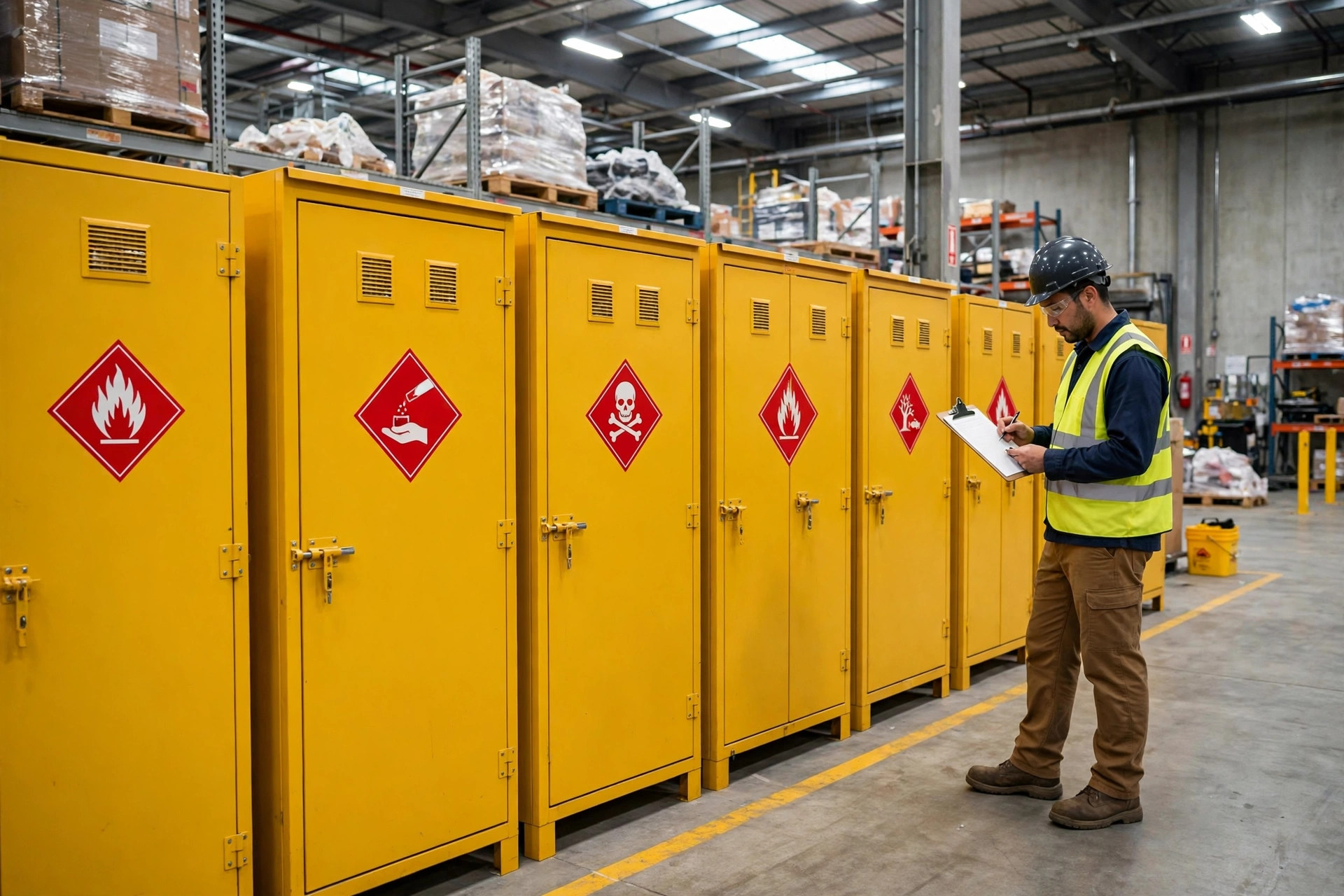
Then there's separation — the rule most warehouses overlook, and the most dangerous one to miss. Ammonium nitrate must be kept away from organic chemicals, acids, oils, wood shavings, sawdust, oily rags, and the whole list of combustibles: either in a separate building, or divided by a firewall with at least a 1-hour fire-resistance rating, or separated by 30 feet of open space. Any one of the three counts as compliance. Bulk storage warehouses need adequate ventilation, the building generally can't exceed 40 feet high (unless noncombustible or equipped for roof firefighting), and the floor must be noncombustible or treated against impregnation — with no open drains, traps, pits, or pockets for molten ammonium nitrate to flow into and get trapped. Storage buildings are single-story; if there's a basement, it has to be open on at least one side.
Three Chokepoints in Ammonium Nitrate Storage Handoffs
After all these years, I've seen the handoff between transport and warehouse jam up in the same three places. Every jam costs half a day:
Chokepoint one: arrival temperature. As I learned the hard way — 130°F and the warehouse turns you away. Dispatchers who book noon deliveries in July and August are setting drivers up to fail; bags bake in a steel trailer for two or three hours and sail past the limit. The fix is low-tech but it works: schedule arrivals before 10 a.m. or after 5 p.m. in summer, and ask the plant to let the bags cool in the shade before loading so there's margin on the thermometer.
Chokepoint two: a dirty trailer. The regs are ruthless about contamination. Ammonium nitrate can't sit next to oil or organics — if your trailer hauled lubricants last trip and wasn't cleaned properly, residual oil on a bag is enough for the receiving clerk to reject the load on the spot. Before loading ammonium nitrate, the trailer gets swept clean, with special attention to oil stains and chemical residue. Plenty of rookie drivers have learned this one the expensive way.
Chokepoint three: the warehouse's own non-compliant stacks. I saw a warehouse in Nebraska where ammonium nitrate piles were stacked within a foot of the roof beams, aisles choked down to half a meter by stray pallets, bags practically leaning on the walls. An inspector walked in, measured the 30-inch wall clearance — failed — and wrote it up on the spot. The warehouse spent two full weeks pulling every pile back into compliance, and every inbound truck sat in a queue at the gate while drivers fumed. That's why old hands ask before accepting a load: has this warehouse been inspected before? One that's been through it is paradoxically the one you can trust — because the corrections are already done.
The Counterintuitive Truth
After all those numbers, here's the counterintuitive part: ammonium nitrate doesn't burn. It's an oxidizer — it feeds fire, it doesn't start one. Hold a lighter to a bag and it won't catch on its own. The real danger is always what's sitting next to it: a drum of motor oil, a pile of wood shavings, a few bags of sawdust, an oily rag. The neighbor catches fire; the ammonium nitrate is the accomplice that pours oxygen on it and takes the whole building down.
So the heart of fertilizer warehouse storage requirements isn't really "how to store ammonium nitrate" — it's "how to manage its neighbors." Plenty of small warehouses hear "hazardous material" and jump straight to building a separate dedicated structure. But the regulation offers three paths: a separate building, a 1-hour firewall, or 30 feet of separation. For a warehouse that already has a big building, pouring a firewall or moving the oil storage 30 feet away costs a fraction of new construction and delivers the exact same compliance. Spend the money where it counts. The money counts at "separation," not at "the building."
Practical Advice for Shippers and Warehouses
For shippers, three things. First, vet the warehouse with your own eyes: look for the 2-inch-lettered AMMONIUM NITRATE sign, check the 30-inch wall clearance, walk the aisles — these are visible, and they don't lie. Second, ask about sprinklers, and if there are none, ask how close their inventory runs to the 2,500-ton ceiling — don't let your freight land in a warehouse that's about to burst its cap at peak season. Third, write summer arrival windows into the contract to dodge midday heat, so your driver isn't sitting at the gate waiting for sunset.
For warehouses, three things. First, add a temperature check to receiving — an infrared gun costs next to nothing, 130°F is the red line, and over the line means rejection, no exceptions. Second, measure your wall clearances and roof clearances with a tape measure once a quarter — those two numbers are the inspector's favorites. Third, keep oils, lubricants, and maintenance rags and shavings at least 30 feet from the ammonium nitrate zone — or pour that firewall once and be done with it for good.
Fifteen years on the road taught me this: every regulation was paid for with somebody's disaster, and Beirut paid the tuition for the whole world on ammonium nitrate. Those of us who haul it and store it owe it to ourselves to take the hard numbers seriously. There's an old saying — a careful driver sails ten thousand miles. This fertilizer behaves itself, but it forgives exactly zero carelessness.
By Shifu Zhao, Trucking Veteran (15 yrs)