Bottom line first: when the FDA flags a food import for exam, the warehouse side has exactly three jobs — lock the freight the moment the notice arrives, have people and space ready on exam day, and reconcile the release paperwork and the bill afterward. Sounds simple. Every failure I've seen in my projects happened in one of those three. The FDA decides the exam itself — timelines and standards follow the latest FDA guidance — but how well the warehouse cooperates is measured in real days and real dollars.
The FDA Exam Notice Arrives: First, Find Out Which Tier
Imported food entering the US goes through the FDA's risk screening system (PREDICT). Flagged shipments get an exam notice. There are three tiers: document review, field exam at the facility, and sample collection for lab analysis. Each tier demands completely different cooperation.
I've seen this exact failure three times: the importer calls and says "we got flagged," and the warehouse prepares for the worst — clears space, stages forklifts, pulls documents — only to learn it was a document review. Two dock days wasted. So the warehouse's first move after a notice is not to scramble; it's to ask. Get the actual FDA notice text from the importer or customs broker — not a paraphrase. The notice states the exam type, location, and timing. Prepare exactly to the notice: not one step more, not one step fewer.
Why the Warehouse Is the Linchpin: Two Real Cases
Case one, fall 2023, a 3PL near the Port of Long Beach handling imported food distribution. A Southeast Asian seasoning shipment got flagged for a field exam. The warehouse never locked the freight; the night-shift picker shipped a dozen-plus cartons against a normal outbound order. The next day the FDA officer counted, the numbers didn't match, and the shipment went to detention. It sat for the better part of a month while storage, re-exam, and amended-entry bills piled up — all charged back to the warehouse. All for a lock action that takes ten minutes.
Case two, early 2024, another warehouse in the same industrial park. Imported frozen seafood flagged for sampling. The day before, they cleared an exam area, staged a forklift driver, and packed the document kit: packing list, bill of lading, certificate of origin, ingredient list, label samples. The FDA team finished the field exam and sealed the samples in two hours. The freight couldn't move until lab results came back, but the warehouse already had temperature logs mapped to lot numbers — the importer's broker used them directly, and it cleared on the first pass. The difference between the two warehouses wasn't luck. It was a checklist.
Why is the warehouse the linchpin? Because many FDA food exams happen at the importer's designated warehouse or bonded facility — not all at the port. The warehouse is closest to the freight. The officer on site wants to see: where the goods are, whether counts match, whether packaging and labels match the declaration, whether the cold chain held. If you can't answer, the officer looks longer, samples more, stays later. Time is money — and confusion is the most expensive line item on the bill.
The Warehouse FDA Exam Checklist, Step by Step
Step 1: within two hours of the notice, confirm three things
- Exam tier: document review, field exam, or sampling. Get the notice text.
- Location and timing: at your warehouse or a designated exam site? Which day, what time?
- Lock the freight in your system: set the lots and pallets to HOLD in the WMS — freeze outbound, freeze moves. Restrict who can release a HOLD and log every release. Ten minutes of work. Skip it and reread case one.
Step 2: 24 hours before the exam, the prep list
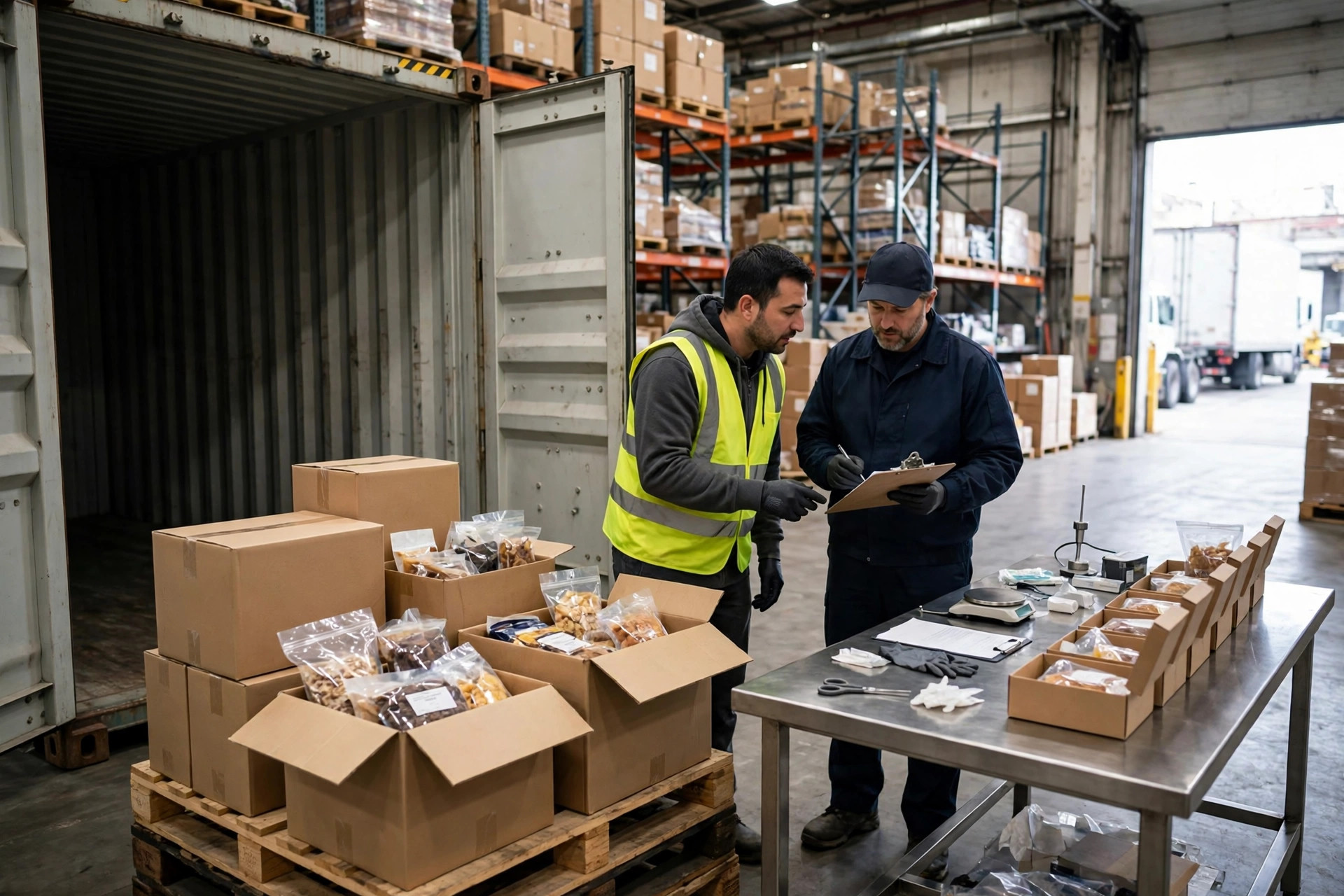
- Space: clear an exam area near a dock door, good lighting, pallets laid out neatly; for frozen or chilled goods, confirm temperature-controlled space is available.
- People: name one point person — ideally the shift lead who knows this shipment; keep a forklift driver on standby with no competing tasks during the exam window.
- Document kit: everything the notice requires, plus one printed copy at the exam area.
- Freight: stage by declared lot, labels facing out; count it yourself first. If your count doesn't match, tell the importer before the officer finds out.
Step 3: exam day, on-site cooperation
- Your point person stays with the officer the whole time. Answer what's asked; if you don't know, say "let me verify" — never improvise.
- Your people do all the opening, moving, and restoring. Handle gently, mark opened cartons, restack as found.
- If samples are taken, record quantities, sample IDs, and seal numbers, photograph everything, and deduct the sample quantities in the WMS with a note.
- Keep your own log: officer name, arrival and departure times, which lots were examined, any issues raised.
Step 4: after the exam, close out
- On release ("May Proceed"), lift the HOLD in the system first, then schedule outbound. In that order — never the reverse.
- Reconcile costs: overtime, forklift time, space occupation during the exam — recorded per contract terms so the importer billing is defensible.
- Archive: notice text, field log, photos, and sampling records go into that shipment's file. Next time a similar product gets flagged, reuse the whole package.
Four Failure Points, Each Bought With Real Money
Failure one: freight shipped before it was locked. HOLD status needs restricted permissions — not everyone gets to lift it, and every lift leaves an audit trail.
Failure two: labels don't match the declaration. Check English labels, ingredients, and net contents yourself before the exam; have the importer prepare explanation files for anything off.
Failure three: broken cold chain. Opened frozen product sitting at ambient temperature too long breaks the temperature record, and then nothing is defensible. Have insulation measures and a fast restore process ready.
Failure four: thinking it's over when the exam ends. Lab results take time, and freight can't move until they're in. Tell the importer the schedule up front and don't hard-book outbound plans behind it.
The Counterintuitive Part: Good Exam Cooperation Is a Product
Most warehouses dread exams. Here's the counterintuitive take: a warehouse that runs exams smoothly wins imported-food customers. What importers fear isn't the exam — it's the warehouse fumbling the exam. A warehouse that can run the checklist above can list "exam cooperation service" as a line item in its quotes, and customers will pay for it. Compliance cost becomes a product.
And a cost framework (actual fees per your bills and the latest FDA guidance): direct exam costs = response labor + space occupation + equipment + possible re-exam support; hidden costs = dock schedule disruption + capital tied up in sitting freight. The warehouse controls the first two, and the lever is the checklist compressing time. A smooth field exam wraps in half a day; a chaotic one drags into two or three. Completely different bill.
One last thing: policies change. Don't apply last year's experience to this year's freight. The checklist is fixed; the notice text is live. Read the notice first, every time.
By Lin Xiao, WMS Implementation Consultant