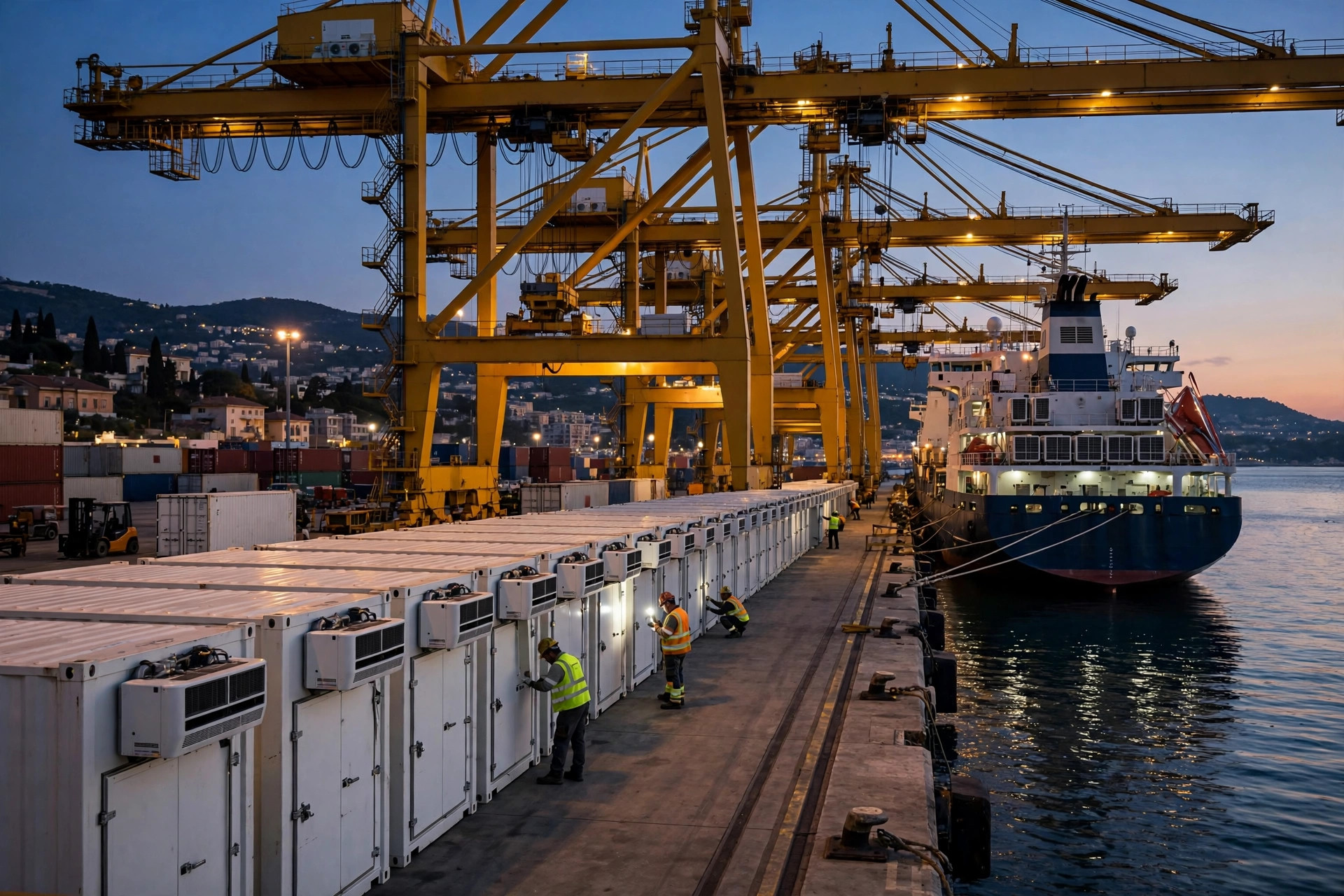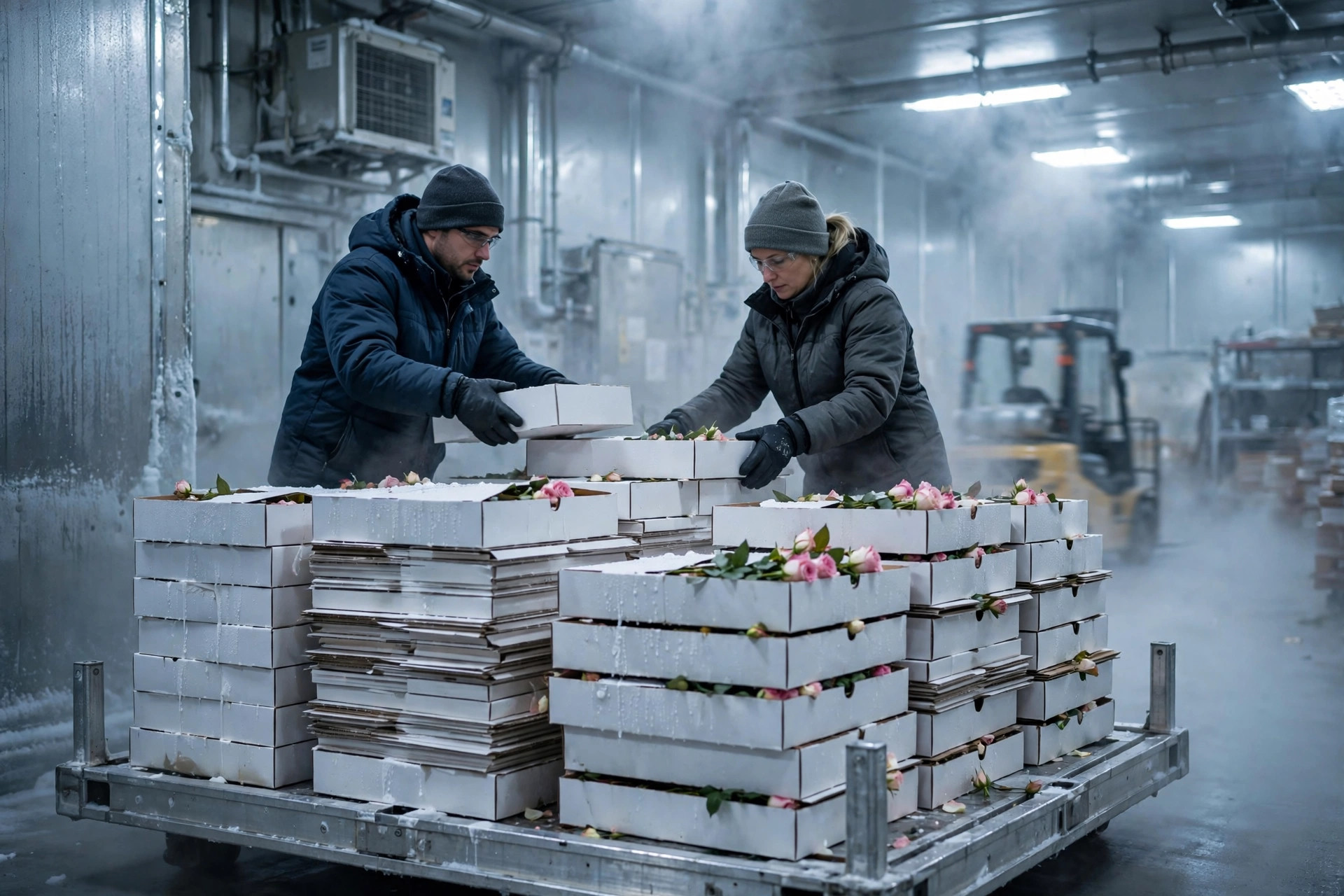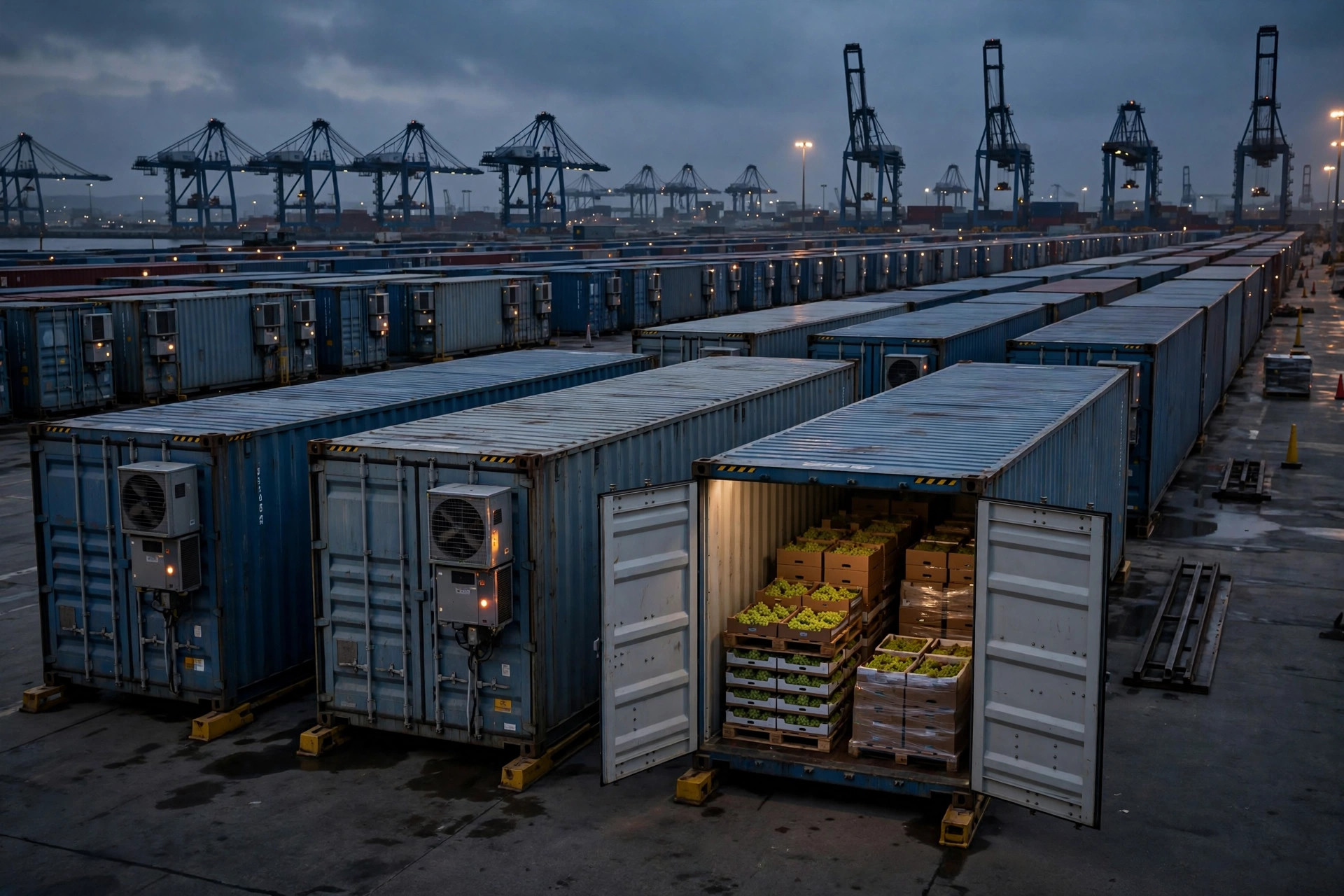
Cape Town port congestion is back. And honestly? It gives me the same feeling as peak-season Amazon FC meltdowns — except when our parcels arrive late, we eat extra storage fees, and when South Africa's table grape cold chain export runs late, entire reefer containers rot on the dock.
Here is the part that stings. The 2025/26 season was a record: nearly 79 million cartons of table grapes exported, up 8% (farmersweekly). A bumper crop. And port congestion turned it into a discount sale — a joint statement from SATI, Hortgro and the exporters' forum put logistics losses at roughly R3.2 billion.
Let me say the quiet part out loud: this port has never been smooth.
The World Bank's Container Port Performance Index 2025 covers 400+ ports. Cape Town ranked dead last. Crane productivity at the Cape Town Container Terminal: 12 moves per hour, against a target of 19. Imagine queuing at checkout behind a cashier who scans 12 items an hour while the manager demands 19. He just won't. When peak season hits, reefers queue outside, vessels queue outside, and the grapes sit inside counting down.
And exporters have stopped waiting politely. In 2025/26, 55,000 tons of grapes skipped Cape Town entirely and diverted to the Port of Gqeberha in the Eastern Cape. Cape Town's share of South African grape exports fell from 90% to 76%. Voting with your wheels is the most honest math there is — a 14-point share drop means the industry already ran the numbers: paying for extra road haulage beats letting containers rot in a Cape Town queue.
Port Congestion Doesn't Just Delay Fruit — It Kills the Price Window
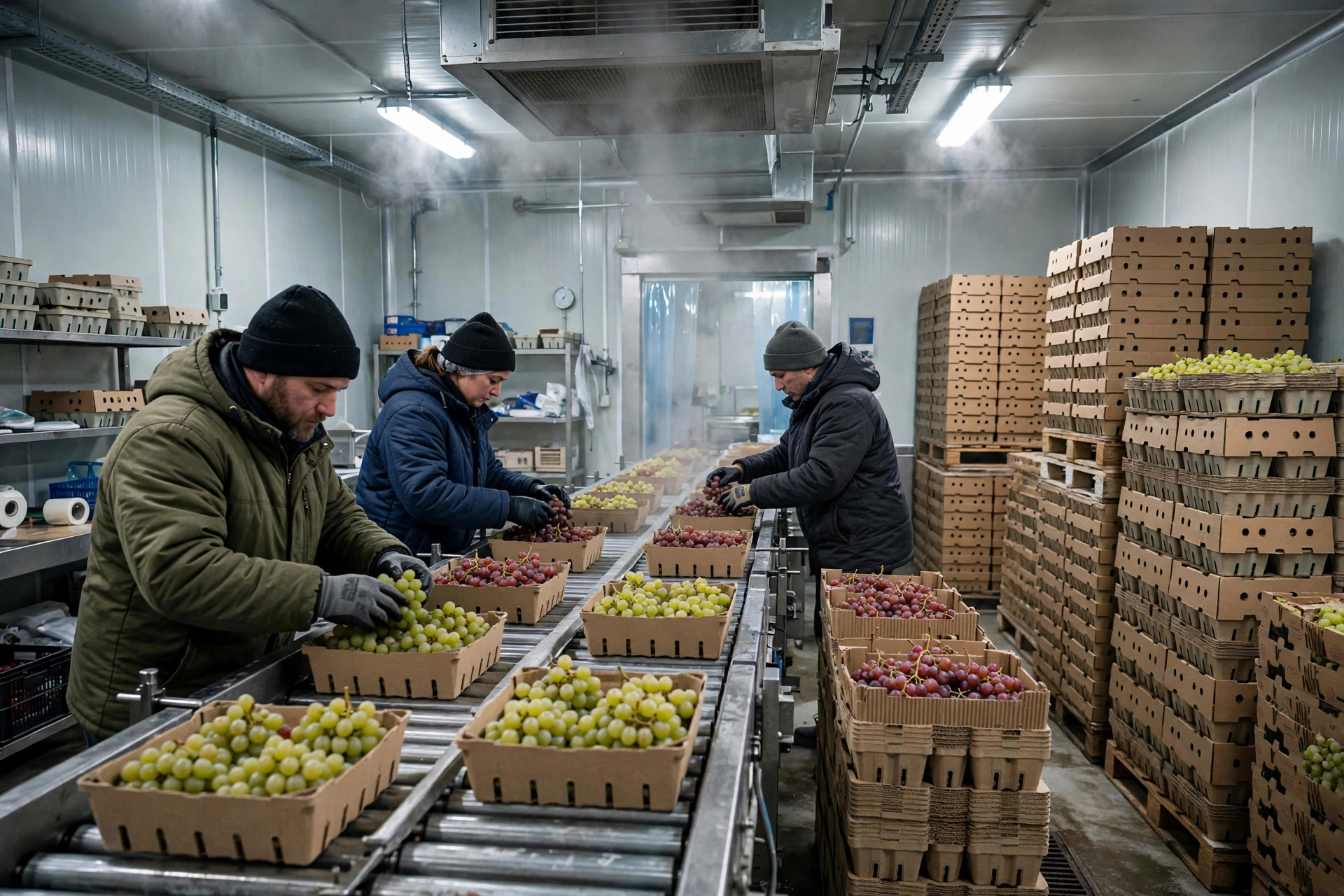
February 2026. Peak of the season. Packhouses up in the Hex River Valley were doing everything right: pick, precool, pack, load the reefer, truck it to Cape Town — and then wait. Vessel schedules slipped again and again. Containers sat in the yard, plugged in, blowing cold air, burning money by the minute.
Table grapes start dying the moment they are picked. A cold chain only hits pause, not stop. Every extra week a container waits outside the port, wholesale prices in Europe slide a little further.
An agri sales head at a bank put it bluntly: fruit has to get out when it has to get out — the nightmare scenario is arriving at the market at the same time as peak supply. Sailing schedules are prices.
That is the counterintuitive part everyone misses. People think "port congestion = a few days late." The real damage is "late + arriving in a bunch." A record 79 million cartons, all delayed, all landing in Europe in the same compressed window — right into peak supply, crushing wholesale prices. A bumper crop that doesn't pay. The bigger the volume, the harder the fall.
Any e-commerce seller knows this movie. Black Friday: everyone ships at once, last-mile blows up, bad reviews roll in together, ad spend goes down the drain. Grapes work the same way. Late isn't the worst outcome. Late and bunched together is.
Three Cold Chain Export Routes Out of Cape Town: My Playbook
Okay, rant over. Here is what I'd actually do if I were an exporter planning the 2026/27 season:
First, lock in your split ratio before the season — don't improvise when the queue forms. Cape Town's share already dropped to 76%, and you're still betting 100% on it? Negotiate Eastern Cape capacity with your forwarder early and divert a share during peak. The exact ratio depends on your volume and how tight your market window is. One rule: never put every egg in one port.
Second, keep buffer in cold storage — not as stockpiling, but as schedule insurance. The Belcon cold chain hub drew R1.7 billion in investment precisely to push cold storage capacity outside the port — a buffer for the queue. A container waiting outside the port beats one stuck at the packhouse gate: temperature controlled, and the cargo is still in your hands.
Third, book conventional reefer vessels as backup during peak — don't rely on liners alone. When liner schedules get shredded by port delays, conventional vessels are more flexible. Check rates and availability on the carriers' official sites early; don't go begging at the last minute.
Fourth, trial the Walvis Bay diversion for 2026/27 with one test shipment. Industry media reported in October 2026 that a Walvis Bay diversion is on the table for the 2026/27 season. New routes always need a shakedown — road connections, handover procedures, unbroken cold chain. Don't wait until everyone piles in, but don't go all-in either. One trial box first.
Side by side:
| Wait it out at Cape Town | Divert to Gqeberha | Trial Walvis Bay in 2026/27 | |
|---|---|---|---|
| Best for | Small volumes, flexible schedules | Peak-season volume chasing a price window | Planned full-season volume |
| Cold chain risk | Queue time uncontrollable — highest risk | Extra road leg, chain stays intact, takes longer | New route, needs operational shakedown |
| Cost direction | Demurrage and yard storage burn cash; check carrier and port authority sites for current rates | Extra trucking cost, but schedule certainty | Trial shipment first, no all-in bets |
| Schedule reliability | Lowest | Medium | To be proven |
Read that table and the real math becomes obvious: it's not about the freight difference. It's about what missing the window costs. R3.2 billion in losses says the extra trucking money for a diversion isn't even the same order of magnitude.
Cold Chain Export Isn't Won in the Cold Store — It's Won by Never Depending on One Port
A few traps to dodge, all paid for in someone's real money:
Don't go hunting for an alternative port after the congestion starts. Alternative-port contracts, forwarder quotes, trucking capacity — sign all of it before the season. Shopping in peak season means double the price and maybe no slots at all.
Lock in plug-in yard slots for reefers before peak. A container queuing without power is a disaster. Plug-in slots are scarce. First come, first served.
Watch blank sailings like a hawk. In peak season carriers skip ports and merge rotations constantly, and your forwarder won't always tell you first. Track the schedules yourself and ask proactively.
Don't budget this year with last year's numbers. Port fees, demurrage, reefer surcharges — they change every year. Check the official sites for the latest policies, and keep a separate contingency line for port delays instead of getting blindsided.
Keep the full temperature trail. If a container waited extra days outside the port, keep your own record of whether the temperature curve ever broke. When it comes to claims, no data means no leverage.
Bottom line: Cape Town's productivity isn't getting fixed anytime soon. Dead last in the CPPI isn't a one-year fluke, and 12 moves an hour doesn't become 19 because someone changed the port manager. What exporters can control is the "never depend on the port" muscle: divert early, push cold storage forward, plan ahead.
This one actually works: set your split ratio before the season, don't reroute in a panic. I do the same in my own store — never send everything to one fulfillment center before a big sale, and when one warehouse blows up, orders still ship. Grape exports are no different. Don't fight the port. Divert early. Sailing schedules are prices.
One thing you can do tomorrow: write down your 2026/27 diversion plan now, even if it's just one trial shipment via Walvis Bay. Move first, don't wait.
By Ah K, E-commerce Seller (5 yrs)