I did not get serious about air column bag cushion packaging because I read a white paper. I got serious because customers kept sending me photos of broken glassware, and every photo cost me money. Our warehouse is small, about 3,000 square meters, a dozen people on a good day, mostly shipping home goods and glassware. For years we packed the way everybody packs when they are starting out: two wraps of bubble wrap, some crumpled paper, tape it shut, send it off. It looked fine. Then peak season arrived, and the damage claims arrived with it.
Big-company packaging advice never says this out loud: we small warehouses cannot afford a packaging engineer, a drop-testing lab, or a custom insert for every product. One broken order for us is not a line item in a damage budget. It is the product cost, the shipping cost thrown away, and a customer who may never come back. The worst stretch I remember was a customer who ordered three glass ornaments in a row. Two arrived broken. For the third, we wrapped it in twice as much bubble wrap as usual, and a corner still chipped. That evening I sat at the packing table and finally admitted the problem was probably not how thick we wrapped. It was whether we wrapped the right way at all.
Air Column Bag Cushion Packaging, Priced Out in Plain Terms
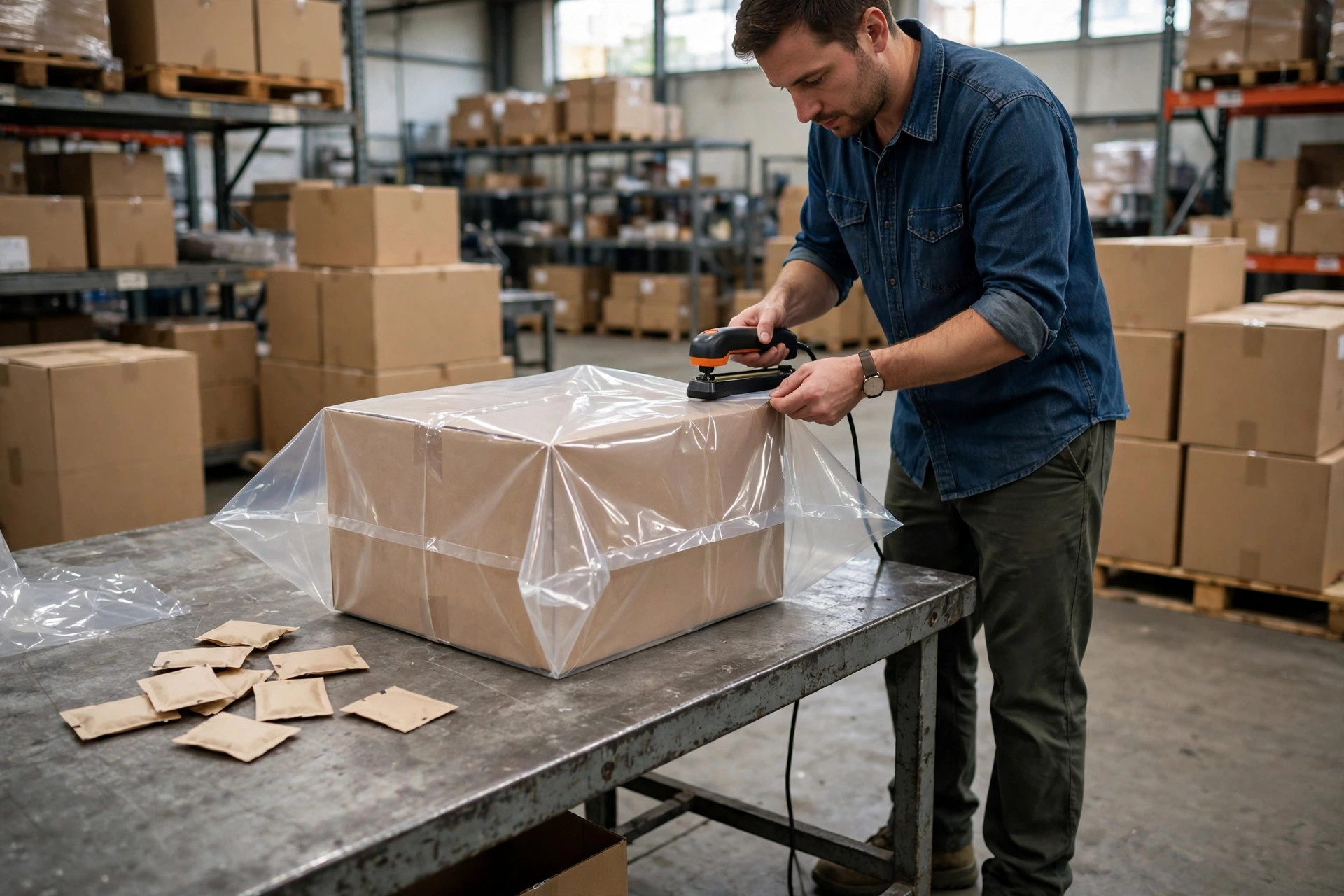
An air column bag is basically a row of connected inflatable tubes, like a life jacket for whatever you put inside it. Uninflated, it is a flat roll of film that takes up almost no space. Inflated, the columns support each other. Bubble wrap absorbs a hit by sacrificing a few bubbles, and once those bubbles pop, that spot has no cushion left. Air columns spread the force: press one column and the air shifts into its neighbors, so the whole surface shares the impact instead of one point taking it all.
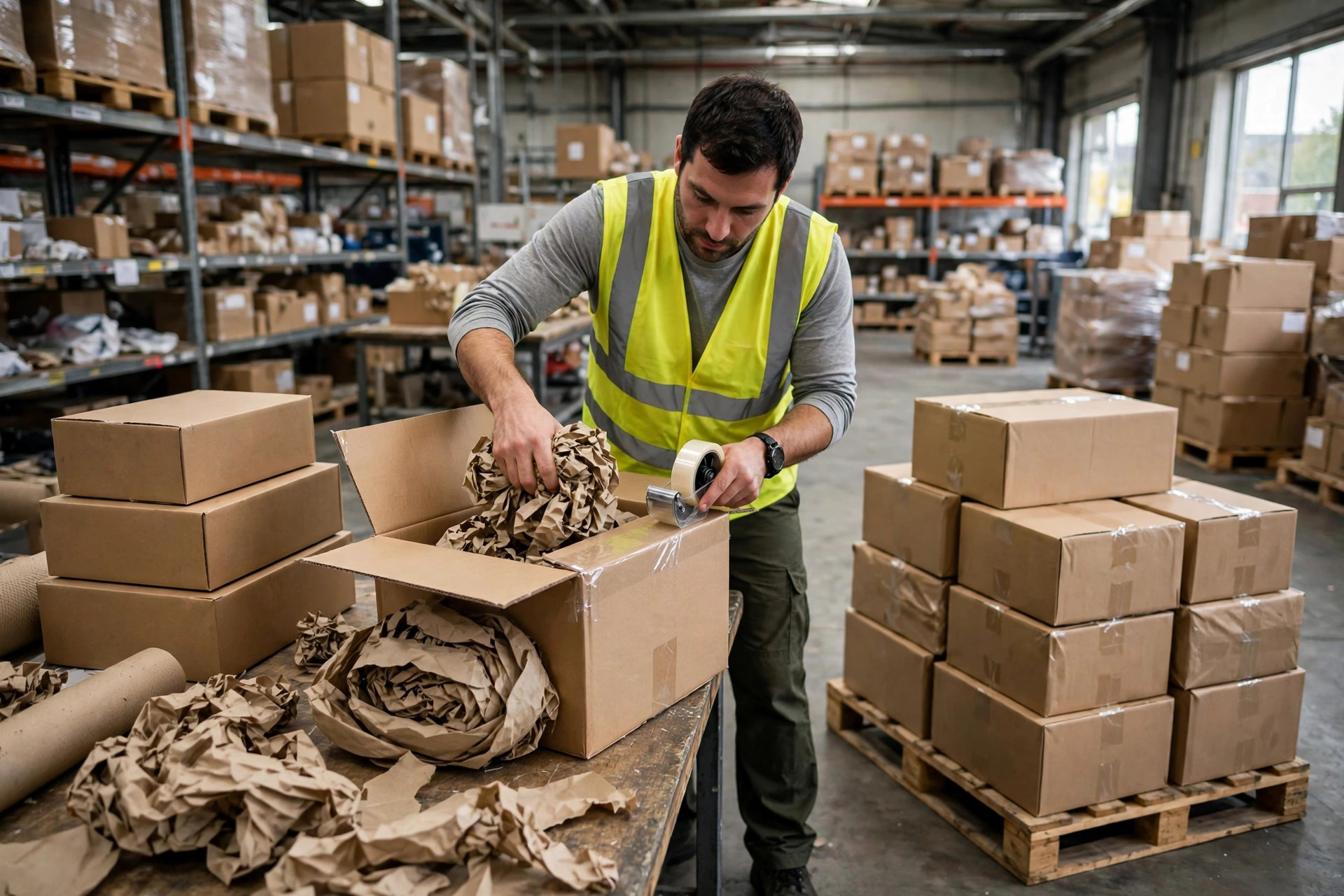
Now the money part, because that is the only part that decides anything in a small warehouse. Bubble wrap looks cheap on the invoice. What it really costs is time and space. It is slow to wrap by hand, one loop after another, and the rolls are bulky, light, and awkward to stack. Air column bags are not the cheapest single item on the shelf, but they are fast: slip the bag on, inflate, seal, box it. When we timed the same glass cup both ways, the air column version took roughly half the packing time of the bubble-wrap-and-filler version. In peak season, that saved time is real money. Uninflated film rolls tuck into a corner. Bubble wrap rolls eat shelf space in a warehouse where every square meter pays rent.
Here is the counterintuitive part, and I argued with it myself at first: thicker packing is not automatically safer packing. Wrap something so tight in bubble wrap that it cannot move inside the box, and a drop sends the shock straight through, because there is nowhere for the force to go. Leave a little room for the cushion to deform, and breakage goes down. Cushioning is about shedding force, not about being hard.
Where Air Column Bags Let Us Down
Air column bags are not magic film, and pretending otherwise is how you get a second round of claims. Last summer we took on a batch of ceramic vases, small, with narrow necks and round bellies. One of our packers, trying to be efficient, slipped a standard air column bag over each vase, inflated it, boxed it, done. A customer received one with a chipped neck. When we opened the return, the reason was obvious: the columns hugged the belly of the vase but left the neck exposed, and the neck had been floating free inside the box, knocking against the cardboard on every bump. After that we made a rule that still hangs over the packing table: find the most fragile point first, protect that point first, and only then worry about wrapping the whole item. Necks, handles, rims, corners. Give those their own small piece of air column if you have to. Never trust a standard bag to guess where your product is weakest.
The second trap is inflation. Under-inflate a bag and the columns go soft, which is barely better than no protection. Over-inflate and the columns turn rigid, which kills the cushioning effect and strains the seals until they leak. We started out with a cheap handheld pump, and the pressure varied from bag to bag, so the same product came out soft one day and drum-tight the next. Eventually we bought a small dedicated inflator and set it to one fixed setting. Every new product and every new bag size gets a sample pack first: squeeze it, press it, shake the box and listen. Only when the sample feels right do we pack the batch. The machine was not expensive. What it bought us was consistency, turning packing quality from a matter of feel into a matter of standard. That is exactly the thing small warehouses are missing most.
The money-saving workaround we actually use is worth spelling out, because the big-company version is custom everything, with tooling fees and minimum orders we cannot touch. We stock two or three standard air column bag sizes, plus a roll of air column film we cut to length. Standard products get standard bags. Odd shapes get a piece cut from the roll, wrapped around, and heat-sealed on the spot. No custom mold per product, no warehouse full of single-purpose bags, no cash tied up in stock that only fits one item. For a small warehouse, the rule is simple: the more varied your products and the smaller your volumes, the more you should lean on standard sizes plus cut-to-length film. Custom inserts only earn their money when one product ships in large, steady volume.
| Packing method | Material feel | Packing speed | Storage footprint | Best for |
|---|---|---|---|---|
| Bubble wrap plus filler | Looks cheapest | Slowest, all hand wrapping | Bulky rolls, hard to stack | Light, sturdy small items |
| Standard air column bag | Mid-range | Fast, slip on and inflate | Tiny before inflation | Regular bottles, cups, dishes |
| Air column film, cut to length | Mid-range, some cutting waste | Medium, cut and seal on the spot | One roll covers many products | Odd shapes, mixed sizes |
| Custom molded insert | Most expensive, plus minimum orders | Fastest, drop the product in | Custom sized, takes space | One high-volume product, long term |
Do not copy that table as a verdict. Use it as a decision lens. Messy catalog, small batches: stay generic and cut to length. One hero product shipping by the thousand: then custom starts to make sense. Get it backwards and you burn money either way.
A Packing Routine You Can Copy Tomorrow
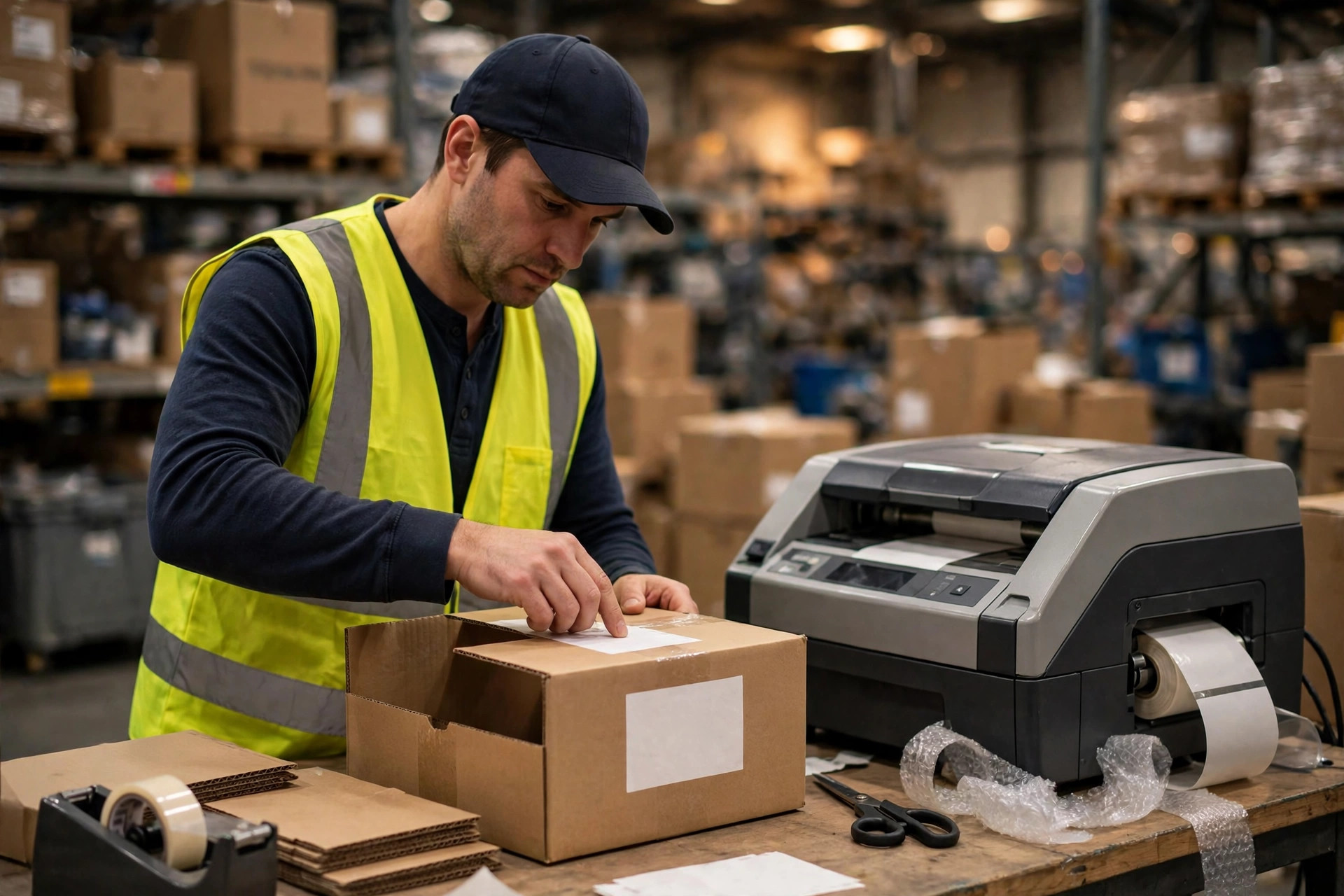
This is the routine we run now, and there is nothing in it a small team cannot do tomorrow morning. Sort first: fragile goods get their own zone, away from heavy items, so nobody grabs the wrong material in a rush. Pick the method by the product: regular shapes get a standard bag, odd shapes get cut film, and fragile points like necks and handles get their own protection before anything else. Inflate a sample first: one sample per product and per new bag size, squeezed and shaken, before the batch starts. Pack with breathing room: the air columns inside the box should be able to flex slightly, not be jammed solid, and before you tape the box, give it a shake. If you hear the product knocking around inside, open it and repack. Label honestly: a fragile sticker is the bare minimum, and a handling note on the shipment itself costs nothing, even if not every courier reads it.
Let me be straight with other small operators about the limit of all this. Air column bag cushion packaging will not fix every breakage. It fixes the breakages caused by bad cushioning. If the product itself is flawed, or if a parcel gets genuinely abused in transit, no packaging saves it. What good packing does buy you is a paper trail you can learn from: which batch, who packed it, what size bag was used. When something breaks, you can review the actual decision instead of everyone blaming everyone else. Every order we pack as if our reputation rides on it is an order that comes back as a repeat customer, fewer damage claims, and fewer apologetic phone calls.
Small warehouses have their own way of surviving. It is not about matching the big players move for move. It is about making every single order profitable and every customer willing to come back.
By Xiao Ma, Small Warehouse Owner