We small warehouses can't afford this kind of money, so today I'm worrying on behalf of the 3PL owners who can.
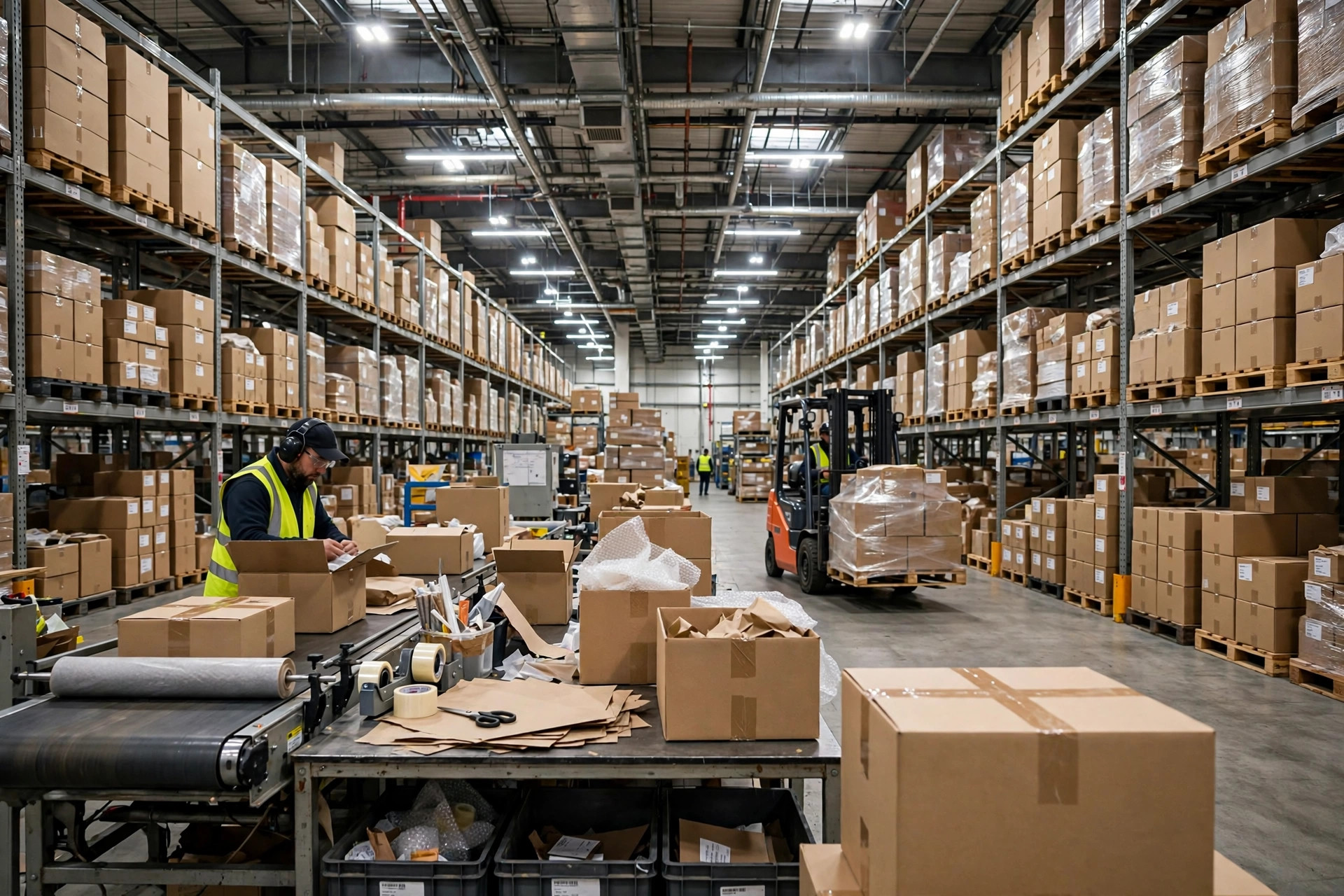
Last month a fellow operator took me to dinner. His Dallas warehouse, 50,000 square feet, packed to the rafters, clients queued up to get in. He asked me: "Xiao Ma, should I open a second one in Houston?" I asked back: "Is your current warehouse actually making money?" He paused. "It's full, but somehow not much money stuck around."
Folks, that's lesson one: if warehouse number one isn't making money, warehouse number two is just digging yourself two holes.
Signal 1: Utilization Above 85% for Six Straight Months
"Full" comes in two flavors. Real full: slot utilization above 85%, sustained for half a year, clients still queuing. And fake full: the slots are occupied, but half of it is dead stock while the moving goods barely fill anything.
Clear the dead stock first. I've watched too many 3PLs sit on three-year-old client inventory, collecting "storage fees" that look great on paper while the goods squat in the best slots blocking new clients. After the purge, if you're still above 85%, then talk expansion.
Signal 2: Cross-Zone Freight Eats 15%+ of Your Margin
The hardest signal of all. Put every client's ship-to address on a map. If 40% of your freight travels 500+ miles, the freight math is ugly.
Run it: one Dallas warehouse serving the whole country averages 900 miles per shipment. Add Atlanta, and eastern freight ships from Atlanta at 400 miles average. Saving $3–5 per order, at 2,000 orders a day, that's over $2 million a year. That money funds warehouse number two by itself.
Flip it: if 80% of your clients sit around Texas, a second warehouse is self-inflicted pain. The first principle of expansion is getting closer to your shippers, not closer to your dreams.
Signal 3: You're Losing Orders, and the Big Ones
Losing small orders stings a little. Losing big ones is fatal. When you've lost 2–3 major clients in a row to "lead time too long" or "freight too expensive," your network no longer matches your sales team.
My dinner friend lost two national-distribution clients back to back before he started touring Houston sites. Sales charges ahead while fulfillment drags behind; you can't win that war.
Three Pits of Warehouse Number Two
Pit 1: people. Ninety percent of your first warehouse's manager won't relocate. You'll recruit and train from scratch, with at least a 3-month break-in period. Expect error rates 2–3x the old warehouse during those months; warn clients in advance.
Pit 2: systems. One WMS per warehouse or one network-wide instance? You never thought about it with one building; with two, you must. My advice: one network-wide instance. Pay more in implementation now, save the trouble for warehouses three through N.
Pit 3: cash flow. The first six months of a new warehouse are pure burn: rent, fit-out, hiring, consumables, hundreds of thousands out before a dollar comes in. Without 12 months of cash on hand, don't open number two. Iron rule.
The Decision Framework
| Check | Pass bar |
|---|---|
| Current utilization | >85% for 6 months (after dead-stock purge) |
| Cross-zone freight share | Eating 15%+ of margin |
| Lost orders | 2–3 big clients lost to lead time/freight in a row |
| Cash | 12 months of burn on hand |
| Team | Someone who can run the new site solo |
All five green, go tour buildings. Any red, fix warehouse number one first.
A parting cheap shot from a small-warehouse owner: we've never even filled one warehouse, so this particular headache may never find us. But honestly, making one warehouse truly profitable is harder, and worth more, than opening ten unprofitable ones.
Small warehouses have their way of surviving; big ones have their math. Get warehouse one's numbers straight, and you'll know exactly when number two is due.
By Xiao Ma, Small Warehouse Owner