Here is the conclusion first. Warehouse order exception handling is not won by fast hands. It is won by triage and by freezing the right orders before anyone tries to fix them. When an exception appears, the first question is never "how fast can we ship this anyway?" It is "could this order contaminate the orders behind it?" Answer that, and the rest of the work falls into place. Get it backwards, and an extra person at the pack bench will not save you.
I have seen this failure three times, and the pattern never changes: a checker fixes a problem on instinct and leaves no record a system can follow. In one cosmetics warehouse on the eve of a promotion, a picker short-picked a serum, and the checker grabbed a replacement without scanning the batch. The system still showed a shortage, the batch record was wrong, and customer service spent the next day untangling two orders. That job taught me a rule I now put into every project: change the order status in the system first, then fix the physical problem.
Warehouse Order Exception Handling Starts With Triage, Not Speed
Triage exists to decide who may act and how fast. I use three levels, and I insist they live in the system as order statuses, not as verbal instructions:
| Level | Typical case | First action | Who handles it |
|---|---|---|---|
| P0 line-stop | Mis-ship already out the door, mixed batches, wrong city on the label | Freeze sibling orders in the same wave and product, notify customer service and the carrier | Shift lead or above |
| P1 same-day | Short pick, damaged goods, outer carton damaged but product intact | Hold the order, photograph the evidence, wait for replenishment or replacement approval | Packing lead |
| P2 queued | Vague house number, unclear batch note, product itself correct | Hold with a note, work in the order customer service replies | Checker |
The exception reason code matters as much as the level. One generic "exception" code is useless. Split it into short pick, damage, mis-ship, address exception, batch exception, and system quantity variance. If the codes are too coarse, you cannot answer the simplest monthly question: which kind of exception actually hurt us most? And if you cannot answer that, you cannot improve anything.
A beauty warehouse in East China learned this one autumn morning. A wave of more than two hundred orders mixed short picks and damage, and checkers logged all of them as "exception." By afternoon, nobody could tell customer service which orders could ship, so the whole wave sat while the truck left. Triage and reason codes are not paperwork. They are what lets the next person take over the job.
Short Picks, Damage, and Mis-Ships: The Step-by-Step Playbook
Start with a short pick. Do not run off to another location looking for stock. First confirm three things: system stock, physical stock, and whether the picker simply picked the wrong slot. Many reported short picks are wrong-slot picks, with the goods one bay away. Once a real shortage is confirmed, hold the order with a short-pick reason code, recording how many units and which batch are short. Check for a proper transfer from another location rather than pulling stock from quarantine. Then let customer service decide: partial shipment, wait for the full quantity, or cancel the short line. The checker does not make that call.
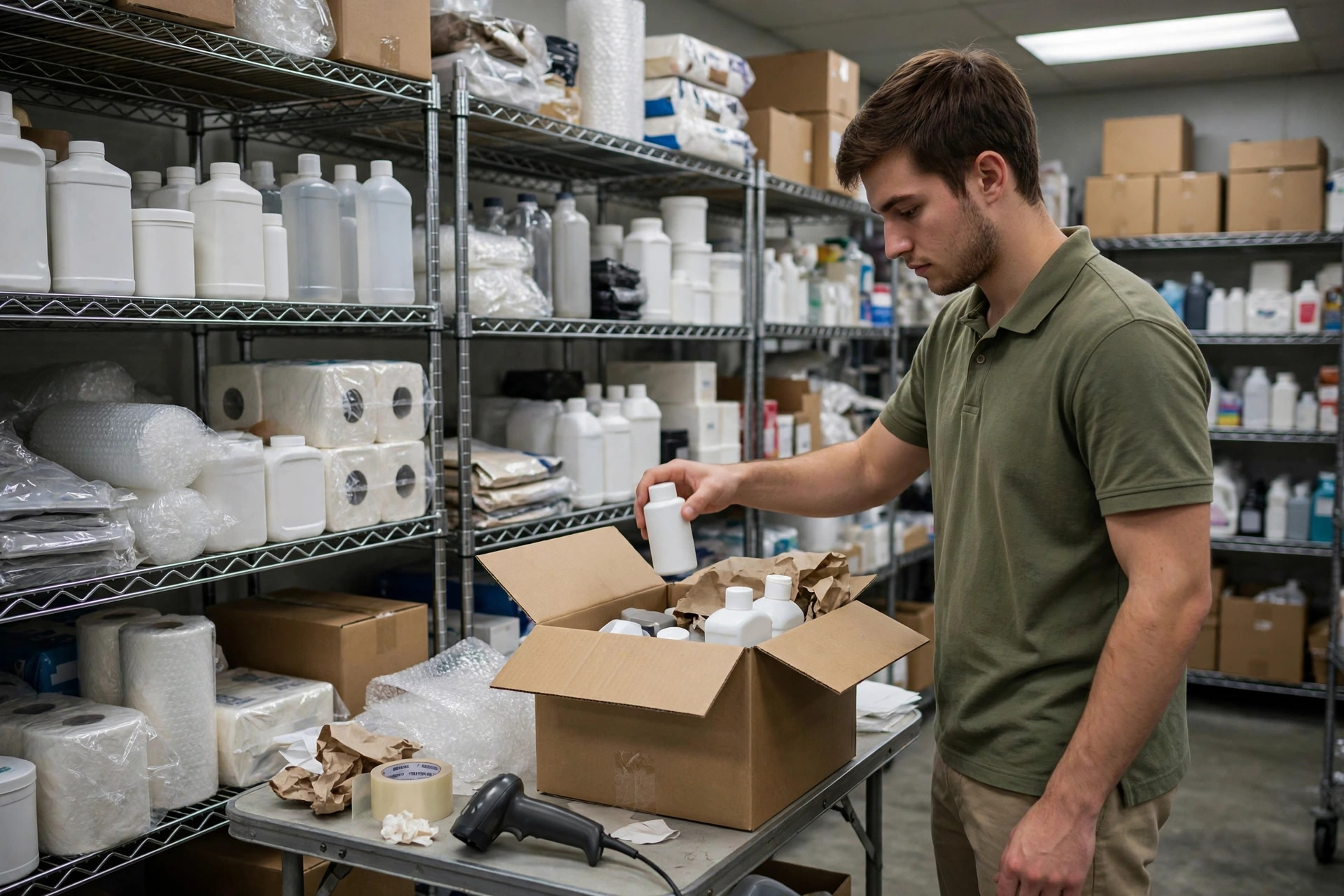
Damage needs evidence before anything else. A damaged outer carton with an intact product is a different problem from a damaged product. Photograph the damage, the product barcode, and the order number together. Move the item to a separate exception area, tag it, and never return it to sellable stock without a record. Log quantity and batch in the system. If the product is intact, re-box, re-weigh, and re-check it. If it is damaged, start the write-off process and wait for approval. The worst habit is setting a carton "aside for now" with no tag and no record. I have seen this mistake three times, and it always starts there.
A mis-ship is the most expensive exception, and its handling order is counterintuitive. Do not rush to send the correct goods first. Confirm where the wrong goods went, which carrier has them, and the tracking number. Contact customer service and the carrier at once to see whether the shipment can be intercepted. If it has been delivered, log the mis-ship before sending a replacement, and start a return for the wrong goods. A replacement must be a separate order with its own check, never a quantity edit on the original order.
Address and Batch Exceptions: Do Not Rewrite Them at the Pack Bench
Address exceptions usually look harmless: a missing digit in a house number, a short phone number, an old address on file. The instinct at the bench is to guess the correction and ship. That instinct has to be banned. An address belongs to the customer, and the warehouse has no right to rewrite it on a guess. Hold the order, match it against the customer note and the customer service confirmation, and only change it after confirmation, with a change record. If no reply arrives, keep holding it. A correct guess is luck; a wrong guess is a mis-ship plus a return.
Batch exceptions follow the same logic. If an order requires a specific batch and the batch on hand does not match, stop. Do not substitute a nearby batch. First find where the requirement came from: a customer contract, an order line, or a customer service note. The source decides who may approve a change. Contract-level requirements need customer confirmation; an unclear system note can be resolved by a shift lead under an agreed rule. Any substitution must record the original batch, the replacement batch, who approved it, and when.
A 3C accessories warehouse in Guangdong paid for this lesson last summer. A batch-managed connector differed from the ordered batch by one character, and a checker shipped it anyway because "it was the same model." The customer rejected the whole lot on inbound scanning, the warehouse paid freight both ways, and it lost that customer's orders for the following quarter. The right model is not the same as the right batch.
Where Warehouse Order Exception Handling Usually Breaks Down
The first breakdown is physical: exception goods share space with normal goods. In a busy shift, someone will grab the wrong carton. My rule is a separate exception area, red tags, and three facts on every tag: order number, exception type, and hold time. A tagless exception item found on a lead's walk-through gets logged as an open problem on the spot.
The second breakdown is follow-up. Orders get held and then forgotten, and the customer complains before anyone remembers the hold. Before each wave, review the held list in level order: P0 first, P1 the same day, P2 in reply order. Every line needs an owner and a next action. "Pending" is not an action; "waiting for a reply by 3 p.m., then switching to partial shipment" is.
The third breakdown is treating each exception as a one-off. Once a week, review the reason codes: if short picks cluster, is location accuracy wrong or is the pick path flawed? If damage clusters, is packaging weak or handling rough at one handover? If address exceptions cluster, is address validation too loose or the import template wrong? Fix only the single most painful cause each week, then check the next week for movement.
Before go-live night, tick every box before opening the first wave: are reason codes split finely enough for a weekly review? Is the exception area marked, and are red tags stocked? Does every shift lead know the P0 freeze procedure and who gets notified? Is the customer service confirmation channel working, and what happens if no reply arrives in time? Are carrier contacts for mis-ship interception posted at the bench? If any box is unticked, someone will improvise when the first exception arrives.
The counterintuitive judgment, stated plainly: the fastest way to clear exceptions is usually to slow down first. Freeze, triage, and preserve evidence. Those steps look slow, and they eliminate the hours later spent correcting records, intercepting shipments, arranging returns, and apologizing. The most expensive thing in a warehouse is not labor. It is a wrong shipment that cannot be called back.
By Lin Xiao, WMS Implementation Consultant