Here's my verdict up front: undeliverable parcels coming back to your warehouse are a cost line most e-commerce operations have never actually calculated — and it burns just as much money as the outbound freight rates everyone obsesses over.
Put plainly, every parcel that can't be delivered and comes back burns money four times: the return freight, the warehouse space it occupies, the second cost of reshipping or refunding, and the customer-service hours spent untangling it. I've seen too many owners fight tooth and nail over a few cents on outbound discounts while returns pile up in a corner of the warehouse that nobody looks at. Two sides to this: outbound freight is a visible line item; everything that comes back is invisible — and the invisible side is usually more expensive.
The Three Carriers' Return Rules Differ More Than You'd Think
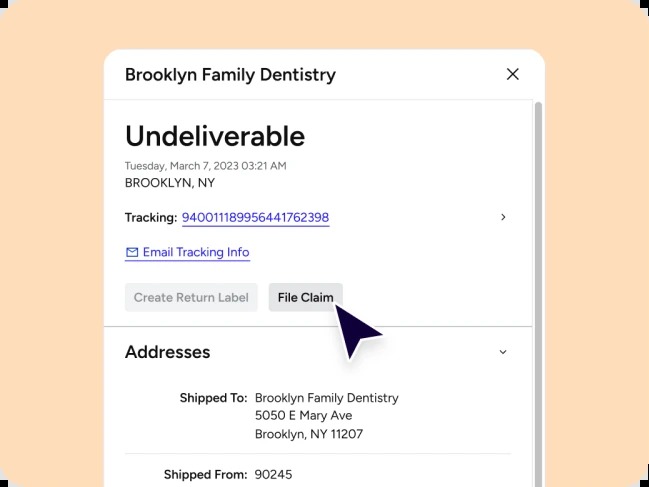
First, the rules. USPS, UPS, and FedEx handle "undeliverable" in completely different ways, and getting it wrong costs real money.
With USPS, an undeliverable parcel is generally returned to the sender. Note the word "generally" — it varies a lot by service type. Some services return for free; some charge the sender return postage; oversized pieces may be treated as abandoned. Which service does what is spelled out in USPS's current published policy — I won't recite a rate table here, because it changes year to year.
UPS and FedEx are commercial carriers, so the logic is more… commercial. An undeliverable parcel typically triggers an attempt to contact the recipient or follows your account's preset disposition instructions (correct the address and reship, return to sender, and so on). Returning to the sender generally incurs return charges billed against your contract. The key difference: these two give you disposition options, while USPS in many cases just sends it back by default.
Here's a trap I watched someone walk into. In 2022, a home-goods client shipping about 30,000 parcels a month, mostly USPS Ground Advantage, ran a steady 4% undeliverable rate — roughly 1,200 parcels a month coming back. Finance had always booked returns as "free," because early on most of them were. Then USPS adjusted its policy and return postage started applying to a chunk of them. One quarter, tens of thousands of dollars in surprise charges landed on the books, and finance had no idea where they came from. The lesson is one sentence: return rules aren't carved in stone — recheck the carrier's published policy at least once a year, and don't price this year's operations on last year's assumptions.
So the first practical move: print your primary carrier's undeliverable policy and pin it on the wall of your returns area. Don't rely on anyone's memory.
The Returns-to-Warehouse SOP: Receive, Inspect, Close Out
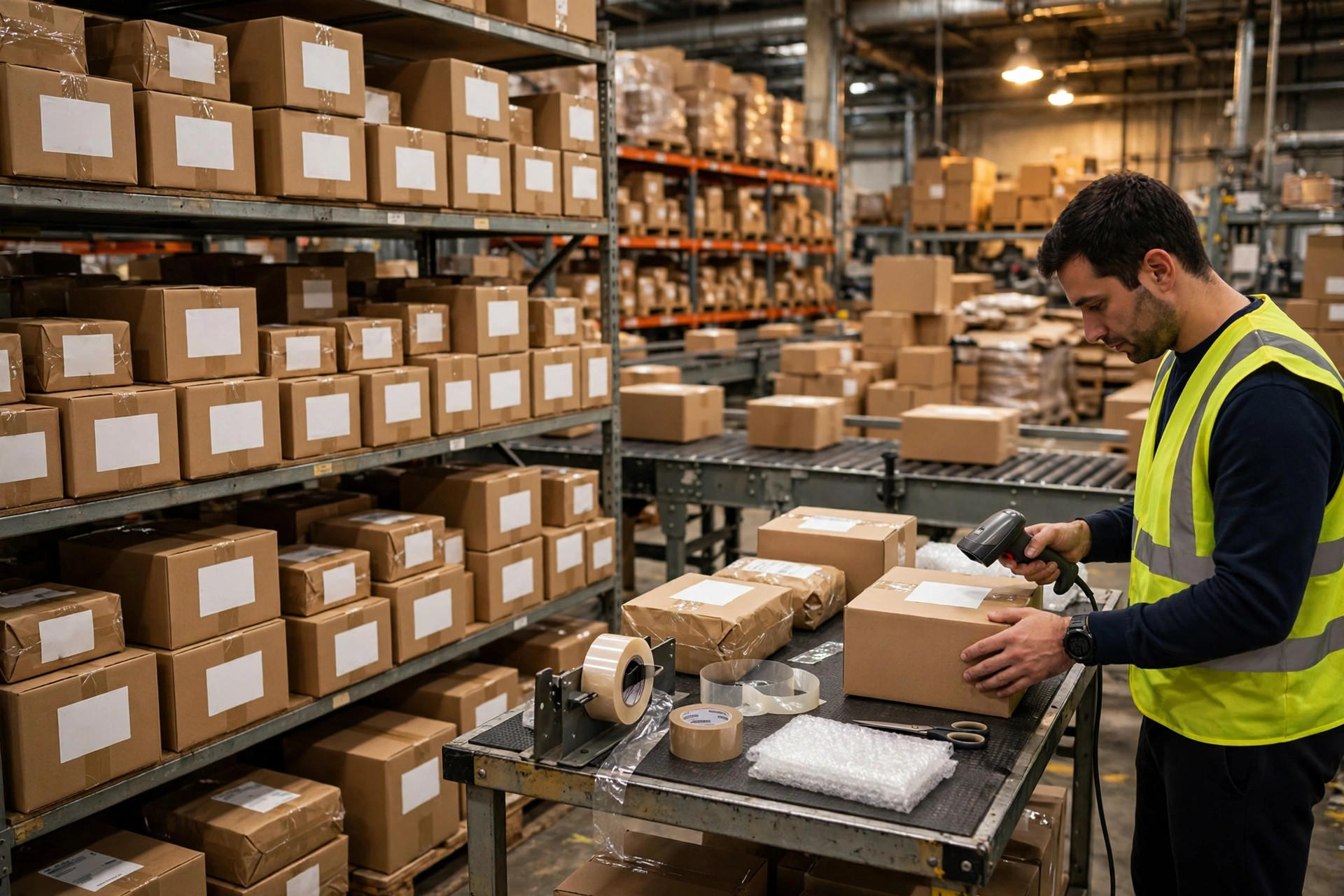
I've seen too many warehouses handle returns like this: the driver dumps them by the door, somebody tears a few open, the good ones get tossed back on a shelf, the broken ones go in the trash, and nothing gets recorded in the system. Three months later, cycle count doesn't reconcile, and the whole gap gets written off as "shrinkage." Put plainly, that's not processing returns — that's destroying evidence.
A workable SOP is just three steps, but every step leaves a trail:
Step one: receive and scan. When returns arrive, scan every label and flip the parcel's status in the system from "in transit" to "return received." The point is to tell the system the freight is back — otherwise your in-transit inventory never reconciles. A lot of warehouses' inventory variances start right here: returns never got received, so the system thinks the goods are still on a truck.
Step two: open and grade. Sort into three grades: Grade A (packaging and contents intact, resellable as-is), Grade B (outer packaging damaged, contents fine, resellable after re-boxing), Grade C (contents damaged or contaminated, not resellable). Photograph the inspection and tie the photos to the return tracking number. This step decides whether the parcel goes to reship, refund, or disposal — without grading, everything downstream is guesswork.
Step three: close out in the system. Grade A and B go back into stock in a dedicated "returns pending resale" location — not mixed into regular inventory, with batch and condition kept separate. Grade C goes to the defective area for disposal or carrier claims. And log a return reason code in the system: bad address, refused by recipient, no one available, address doesn't exist. Reason codes are the raw material for every analysis that follows.
In 2023 I saw the positive version at a 3PL warehouse in Southern California. Their returns used to sit an average of 12 days before anyone touched them; in peak season the returns area got so stacked you needed a forklift to clear a path. After they put this SOP in place — hard rule of 48-hour closeout: inspected the same day as receipt, assigned a disposition (reship/refund/dispose) within 24 hours of inspection — the returns area went from junkyard to transit hub in three months. Reship turnaround dropped from two weeks to three days. Their ops director told me the biggest change wasn't speed — it was that "where is my replacement" tickets fell by roughly seventy percent, because every step was traceable in the system.
Reship or Refund: A Decision Table, Not a Gut Call
Once a return is processed, the hardest call is the decision: spend money reshipping it to the customer, or just refund and move on? Too many CS teams decide by gut feel — and then they refund the ones they should have reshipped (losing the repeat purchase) and reship the ones they should have refunded (burning another freight charge on an unhappy customer).
Here's a decision table. Score four dimensions and the answer comes out by itself:
| Dimension | Leans reship | Leans refund |
|---|---|---|
| Item value | High value; margin covers second freight | Low value; reship freight costs more than the goods |
| Return reason | Minor, fixable address error (one wrong digit) | Refused by customer; address doesn't exist |
| Customer intent | Customer reached out, willing to wait | Customer already requested refund or chargeback |
| Urgency | Not urgent; 3–5 days is fine | Customer needs it now; can't wait for redelivery |
And here's the counterintuitive call most people struggle with: not every return deserves to come back to the warehouse. For low-value, lightweight SKUs, the return freight plus storage plus handling can exceed the item's value before the box even arrives. For those SKUs, the cheapest move is to set "abandon on undeliverable" at the carrier level, or agree with your 3PL that low-value returns get donated or disposed of locally instead of shipped back. Every parcel that comes back burns money — don't put the ones that aren't worth burning on the truck. Two sides to it: abandoning sounds wasteful, but spending eight dollars to bring back a five-dollar item is the real waste.
The flip side: high-value goods (a few-hundred-dollar electronics, say) get the full treatment — photographed receiving, documented inspection, reship on a trackable service. Lose one of those and you've wiped out the savings from processing a hundred small ones.
One more trade-off: which carrier for the reship? Same carrier as the original, and the address problem may just repeat — same carrier, same address database. Switch carriers and it costs more but succeeds more often. My rule: if the address was corrected, the original carrier is fine; if the cause is unclear, switch. Don't pay freight twice into the same hole.
Return Reason Codes: The Gold Mine Nobody Analyzes
One last thing most people ignore: analyzing return reason codes.
The SOP asks you to log reason codes, and it's not for decoration. Once a month, pull the data and ask four questions: which SKU has the highest return rate? Which reason dominates? Which regions produce the most bad addresses? Which sales channel brings the most returns?
I watched an apparel seller do this and find that 40% of their returns were "address doesn't exist," concentrated in a handful of states. Turned out their checkout page's address-validation plugin was failing in exactly those states — customers typed bad addresses and nothing caught them. They fixed the plugin; the return rate dropped by half the next month. See, the analysis fixed the website, not the warehouse — but it was the warehouse burning the money.
So returns processing looks like a warehouse job, but it's really a mirror of the whole chain: inaccurate product descriptions, broken address validation, overpromising customer service — all of it eventually becomes a parcel that comes back to your building and burns your cash.
One piece of advice to close: starting today, keep a separate ledger just for returns. Look at it again in a month. You'll find your old understanding of "freight cost" was missing at least one whole chapter.
By Lao Mi, Supply Chain Veteran (20 yrs)