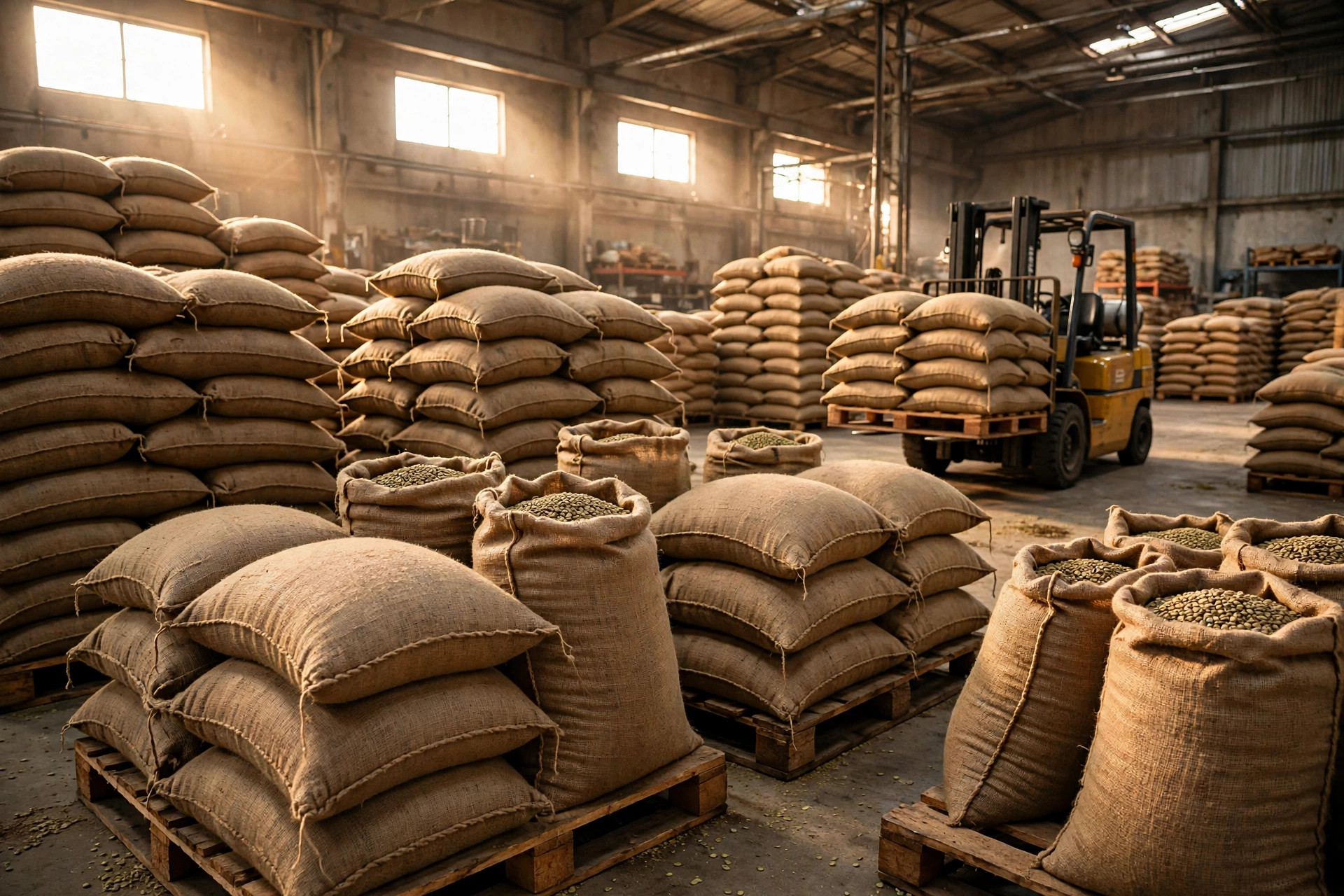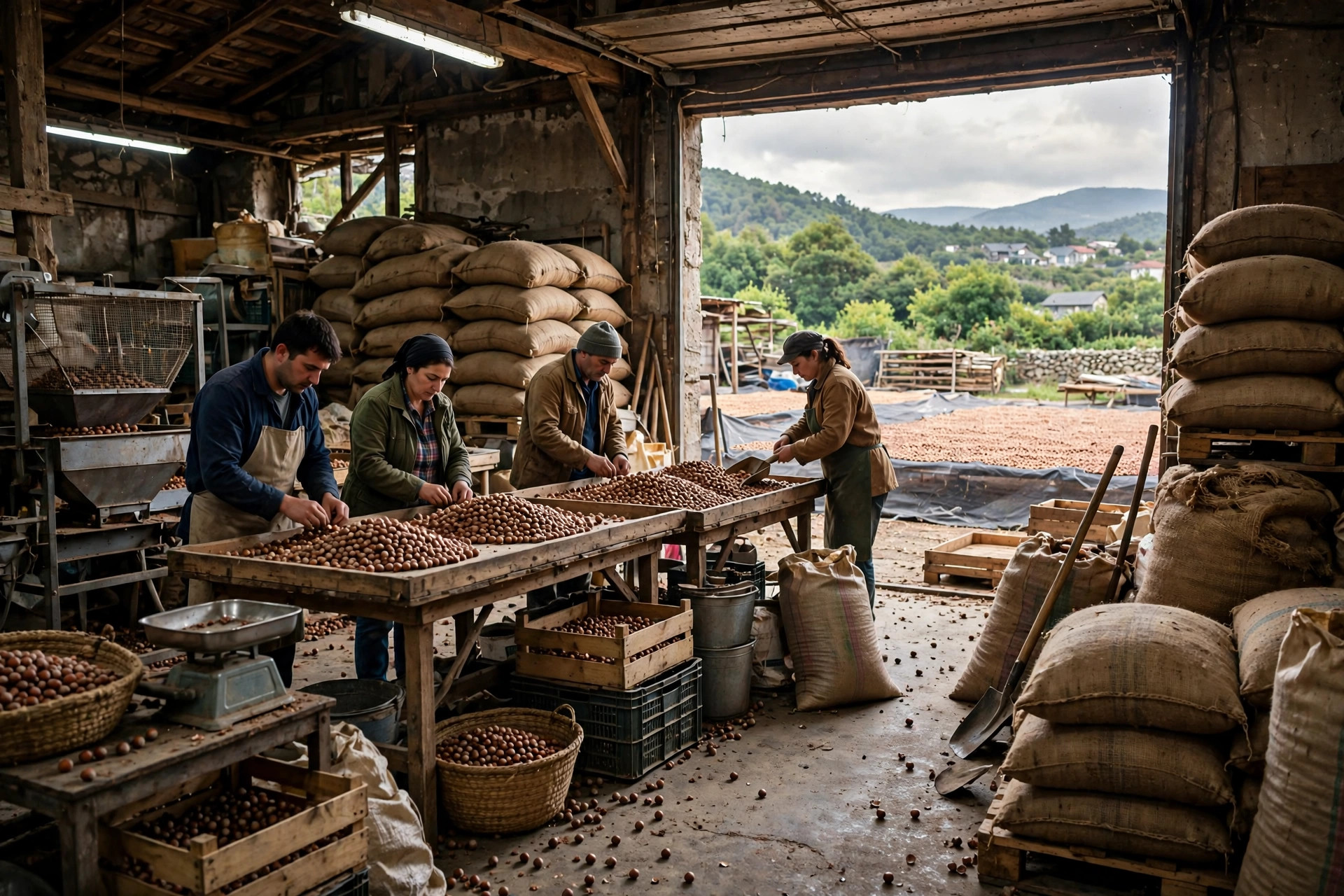
Turkey hazelnut export warehouse storage is, at heart, a money problem. Take a 20-tonne lot of in-shell hazelnuts moving from a Black Sea drying yard to a European chocolate maker's ingredient store: storage, shrinkage, and financing together often take a visible slice of the margin. Exporters rarely lose on the selling price alone. They lose in the warehouse — nuts dried too little, held too long, or shipped against paperwork that does not match the goods.
Where Turkey Hazelnut Export Warehouse Storage Money Actually Goes
Start with the cost structure, not a single rate. The table below is an illustrative breakdown; every operator's numbers differ, and that is exactly the point. Rent is seldom the biggest line.
| Stage | Where money goes | Where it slips away |
|---|---|---|
| Drying yard | Labor for turning and pre-cleaning | Rainy harvest, nuts stored before they are dry |
| Warehousing | Rent, stacking, pest and moisture control | Mixed lots, unclear grading |
| Shrinkage | Excess moisture, mold, breakage | One moldy stack downgrades the lot |
| Financing | Capital tied up while stock sits | Price flat, interest still running |
| Shipping | Re-grading, documents, loading | Documents mismatching goods, missed sailing |
Cheap storage can be expensive. A licensed warehouse charges more rent, but its warehouse receipts are standardized, pledgeable, and transferable — which can lower financing costs. Judge the total cost of ownership, not the rent line alone. Saving a day of drying labor and then losing half a stack to mold is money spent badly.
Turkey Hazelnut Export Warehouse Storage Starts at the Drying Yard
In September 2024, a cooperative near Giresun took in farmers' hazelnuts during a run of wet weather. Drying space was short, so several lots went into storage after only two days in the yard. The surface felt dry; the inside was not. Two weeks later, spot checks found heating in part of a stack. The whole stack had to come out and be re-dried. Restacking labor, handling, and shrinkage together cost far more than an extra week of drying-yard rental would have.
Mold, not insects, is the main enemy here. Aflatoxin risk follows moisture and temperature, and damp nuts in a stuffy warehouse are the perfect host. My method is unglamorous and it works: keep lots separate by drying yard, farmer, and date — never blend them. Tag every stack with its origin and its intake condition. Open one stack a week and look. One inspection at intake is not a control system.
Grading is money, too. Large, small, and broken kernels sold mixed together will be priced at the worst grade in the mix. Separate them, and the good grades earn their price.
Sampling deserves the same discipline. Sample by stack, not by truck: one truck can carry nuts from several drying yards, and a good bag sampled from the top proves nothing about the rest. Keep a sealed retention sample from every stack, labeled with date and origin. If a dispute arises, that sample is your evidence. Record results on the spot — memory is at its least reliable in the pressure of harvest season. And do not store retention samples by the warehouse door for convenience; temperature and humidity swing hardest there, and a degraded sample is degraded evidence.
Then there is the paperwork trap. In the 2023 harvest season, an exporter in Ordu rushed to meet a European buyer's sailing date, only to find the grade on the warehouse receipt did not match the pre-shipment check. The lot had to be re-sorted, the sailing was missed, and a rescheduling fee followed. A warehouse receipt is not an internal note. It is a title document: grade, quantity, intake date, and inspection result must all line up, or the bank will not accept it, the buyer will not accept it, and in a dispute you will not be able to rely on it either.
Turkey Hazelnut Export Warehouse Storage: Hold or Sell?
Volatile prices make storage a trading decision as much as a logistics one. I use a calculable rule, not a feeling:
Monthly holding cost = storage fees + financing cost + expected shrinkage
Hold only when the expected price rise over the next month exceeds that monthly holding cost. As an illustration: if holding for a month costs 1.5% of the lot's value in total, and you expect only a 1% rise, sell. If the stock is held to meet a locked delivery contract with a European chocolate plant, the calculation changes — the cost of default belongs in the formula too.
A licensed warehouse earns its premium in three ways: standardized receipts that banks recognize for financing, third-party grading and inspection that cut disputes, and complete documents that speed up loading. For a small exporter, the rent premium is often partly offset by cheaper financing. That is the whole discipline: total cost, not line-item cost.
Here is the counterintuitive part. The cheapest warehouse strategy is sometimes to hold less. Many owners treat a full warehouse as safety. In my experience, fast-turning stock molds less, keeps cash moving, and keeps documents fresh — and the total cost comes out lower. A warehouse is for flow, not for storing hope.
The last check before shipping is simple: re-grade, verify documents, and load — done right the first time. One more detail is easy to miss: do not load different grades into one container to save a trip. The buyer still has to sort them at the other end, and that sorting cost comes back to you, either as a visible charge or as a lower price on the next order. A licensed warehouse receipt carries a quiet second value as well: it makes your stock auditable. When receipts, retention samples, and inspection records line up, a visiting buyer negotiates differently. When warehouse management runs on word of mouth, even good nuts do not earn larger orders. At that point the warehouse stops being a cost center and becomes leverage in a price negotiation. European chocolate makers buy consistency. A mixed, inconsistent lot does not just hurt this shipment; it weakens your next price negotiation. Get the drying account, the storage account, and the holding account right, and the shipping account takes care of itself.
The rule fits on one line: write down the monthly holding cost when a lot enters storage, sell when the expected rise cannot beat it, never store nuts that are not dry enough, and never ship against a receipt whose four fields do not match. Follow those three rules, and most of the profit leaks in Turkey hazelnut export warehouse storage close up.
By Lao Zhou, Logistics Cost Analyst