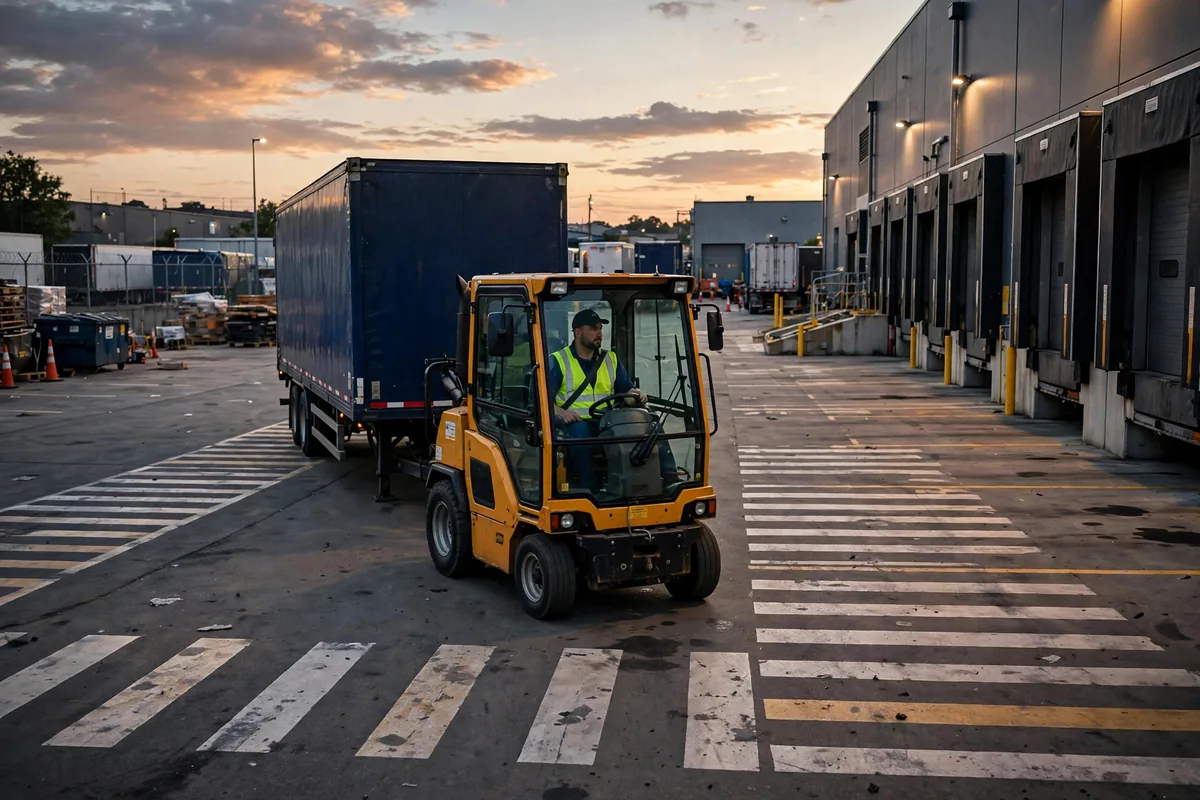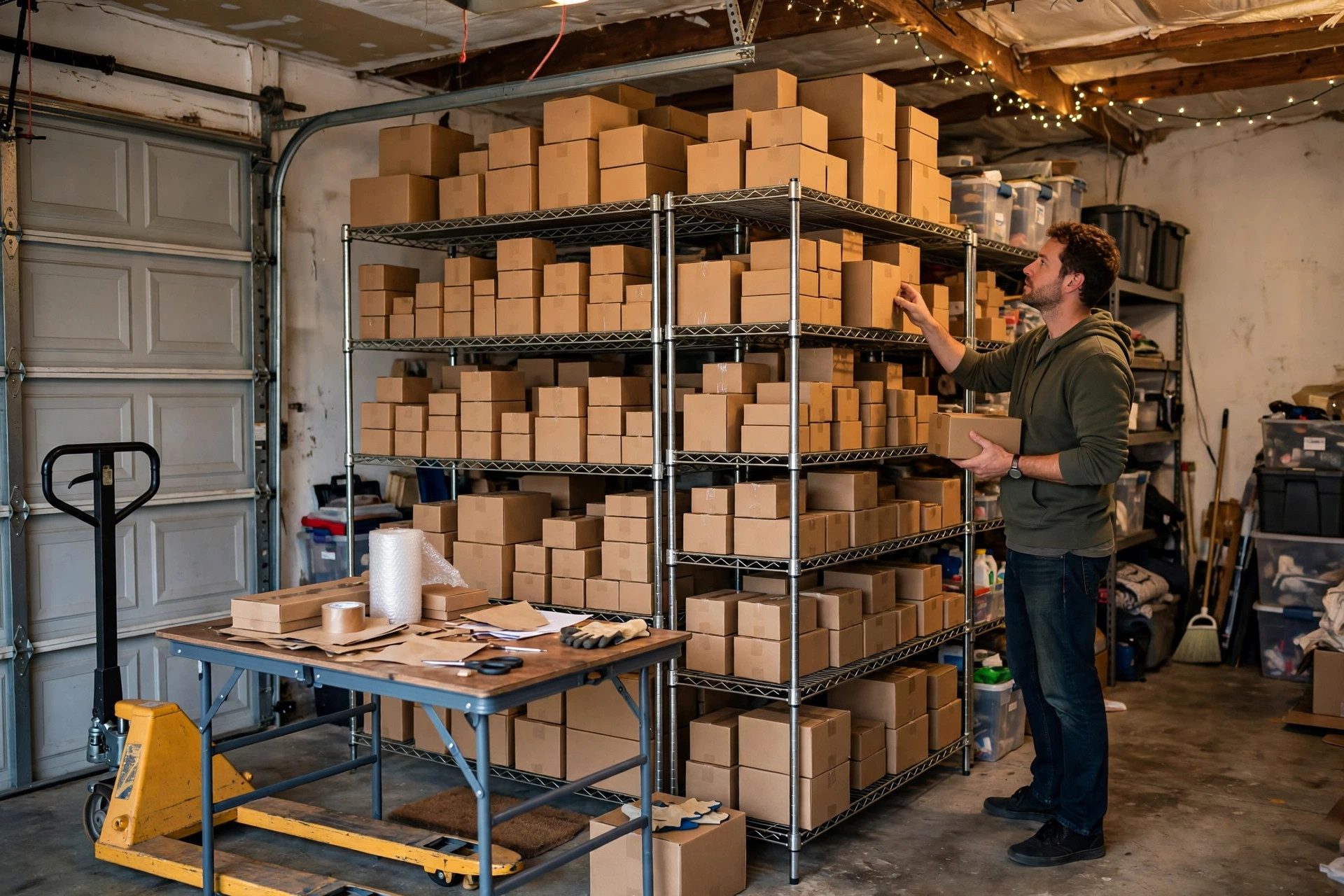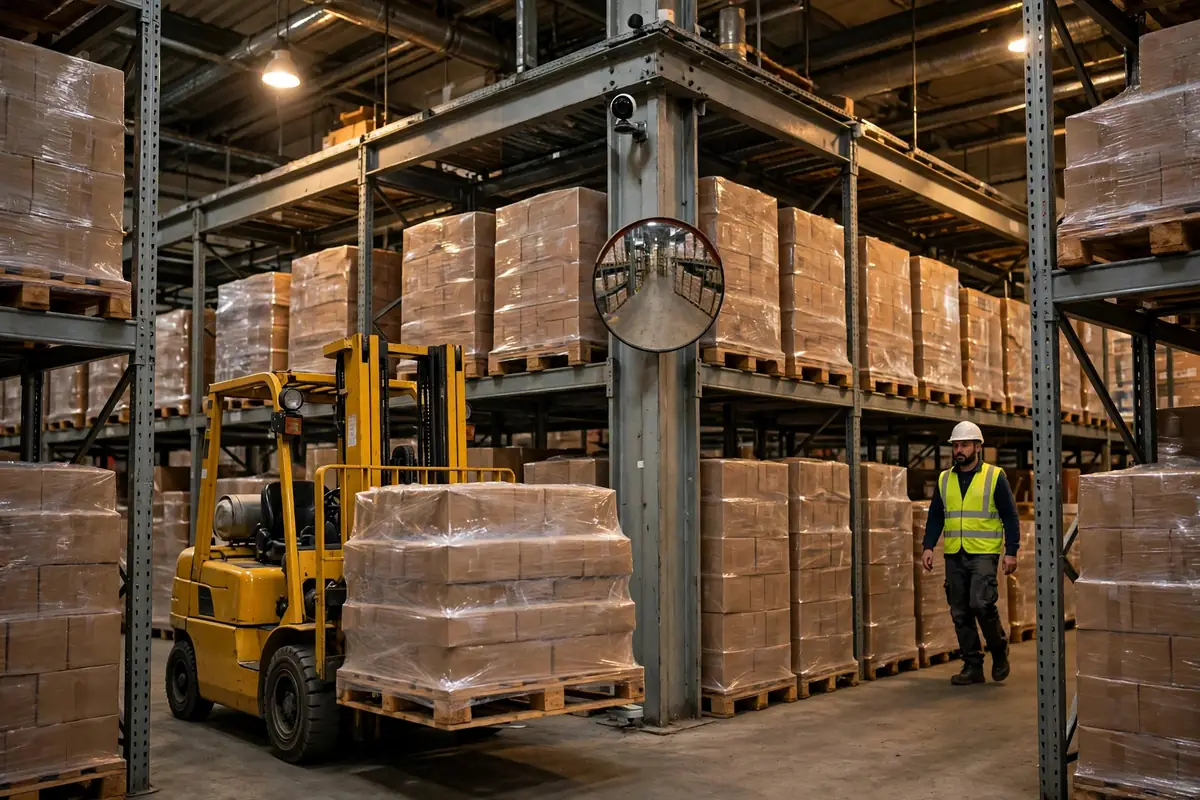
Let me confess our circumstances first. Our warehouse is about three thousand square metres on a good day, with four dock doors and two forklifts, one of which has moods. So when I see photographs of big distribution centres with gleaming dock equipment everywhere, I feel genuine envy, right up until I see the quotations, at which point I remember that we small warehouses cannot afford to burn money like that. And yet trailer restraint dock safety warehouse is exactly the subject a small site cannot skip, because a trailer does not check your turnover before it decides to creep away from your dock.
First, understand why a parked trailer moves at all. Plenty of operators assume that a stopped trailer with its brake set is a finished conversation. It is not. Every forklift entry pushes the trailer slightly forward, every exit pulls at it, and the load shifting inside changes the weight balance the whole time. The trailer inches away from the dock in small, invisible steps, which the industry calls trailer creep. A few centimetres go unnoticed. Then the dock board bridging the gap has less and less lip to sit on, until a forklift wheel drops into the crack, or worse, the board slips and the truck goes down with the load. The second classic accident is uglier: the driver, believing loading has finished, pulls away while a forklift is halfway into the trailer. One accident is about holding the trailer still. The other is about communication and interlocks. Neither is solved by asking everyone to be careful.
Scenario illustration one: a small auto-parts warehouse in the next town relied on wheel chocks alone and, being human, sometimes forgot them. During one night shift the trailer crept forward load by load until the dock board was barely hanging on, and on the final entry it slipped. Nobody was hurt, which was pure luck, but two pallets of goods were destroyed. The owner now tells anyone who will listen that those two pallets cost more than proper restraint equipment would have. I cannot audit his arithmetic, but I recognise the pattern: the bill for the one bad night is always uglier than the quotation you rejected.
trailer restraint dock safety warehouse starts with knowing chocks and restraints do different jobs
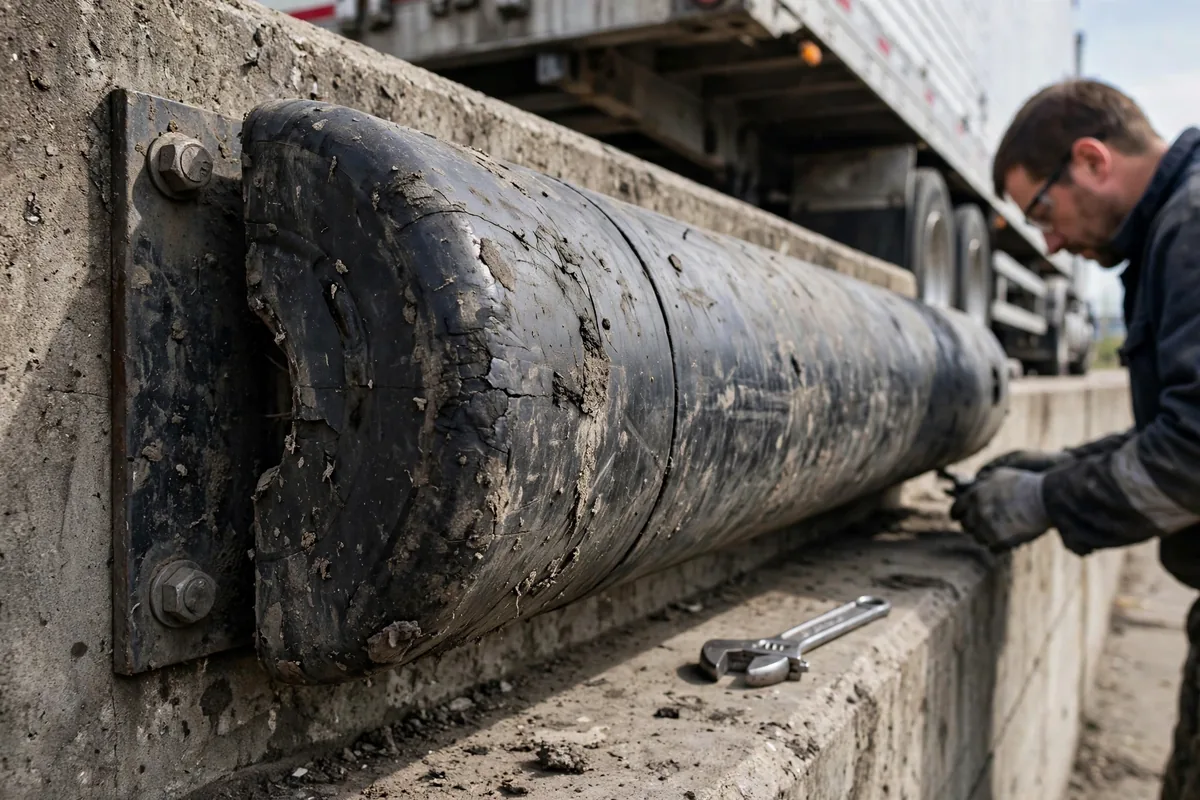
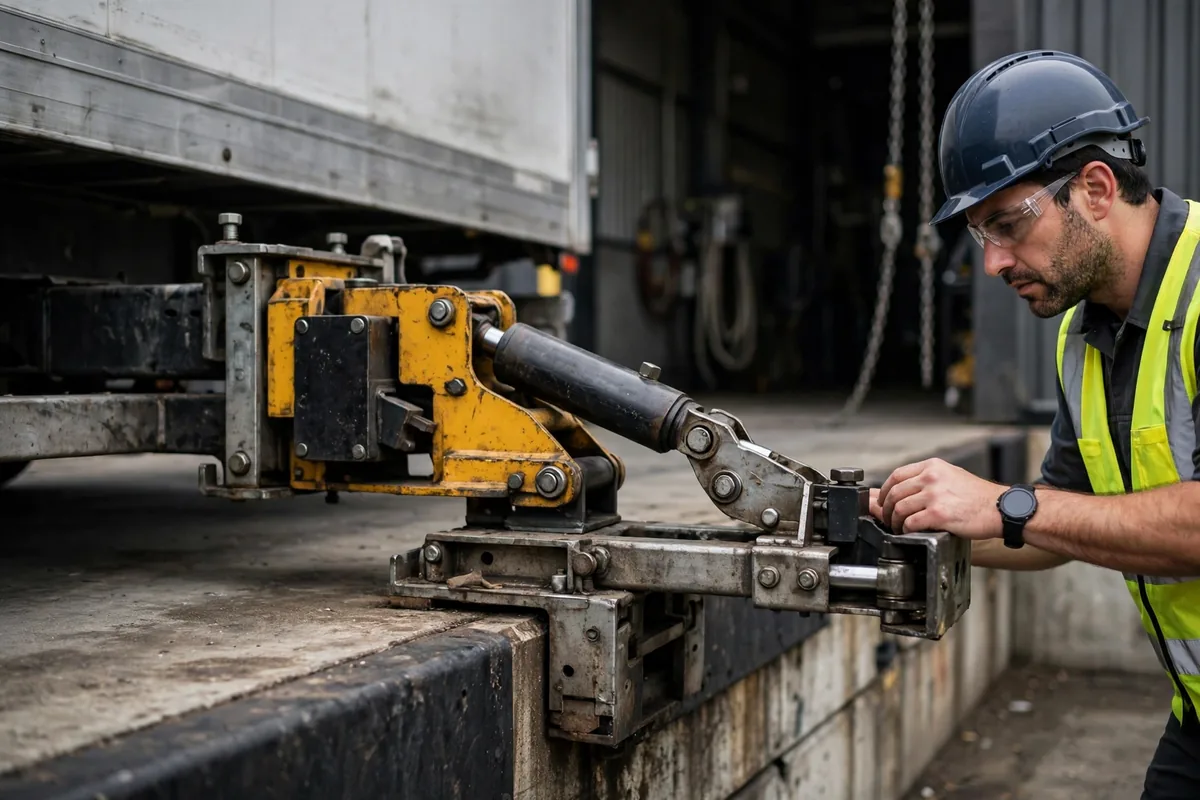
Wheel chocks and mechanical restraints get treated as either-or purchases, but they guard against different failures. A chock is a wedge at the tyre. It is cheap, obvious, and genuinely useful against slow rolling, but it has one structural flaw: it cannot report its own status. Whether it was placed, and placed tightly, is invisible to the people inside the building and to the forklift driver. Everything depends on one person outside remembering. A mechanical vehicle restraint is mounted at the dock face and hooks or locks onto the trailer's rear impact guard. Its panel shows a light: locked or not locked, visible inside and out. It can also be interlocked with the dock door and the signal lights, so the door will not open, or the light stays red, until the trailer is secured. It costs real money, and in exchange it turns good intentions into a visible state.
This comparison is ranked by a small warehouse wallet. Prices are orders of magnitude only; get current quotations before budgeting anything.
| Option | Upfront cost band | What it actually guards against | Biggest weakness |
|---|---|---|---|
| Chocks, chain, and a posted procedure | Lowest | Slow rolling | Relies on memory, shows no status |
| Chocks plus signal lights and a checklist | Low | Creep plus early pull-away | A person still confirms the chock |
| Mechanical restraint with interlocks | Medium to high | Creep and early pull-away | Installation, upkeep, trailer fit |
Now the counterintuitive part, and I will defend it: for most small warehouses, the first purchase should not be the restraint. It should be the cheap signal lights and the written routine, because the most common small-dock failure is not weak hardware, it is broken information. The driver does not know loading is unfinished; the dock crew does not know the trailer has been released. Fix the information with lights, a key handover, and one named person confirming the chock, and a large share of the risk leaves the building. The restraint is step two, upgrading the defence from human memory to machinery. One honest caveat: a high-volume dock, a sloped approach, or heavy night work should skip my thrift and go straight to the proper equipment. Cheap methods have a service area, and pretending otherwise is how people get hurt.
Our own interim setup, for fellow small operators collecting workarounds: chocks with handles and reflective strips, each on a chain fixed by its door, so a missing chock is visible at a glance. A simple red-and-green signal light at every door, switched manually, with one rule printed on the driver sign-in sheet: red means the truck does not move. Drivers hand over keys or a gladhand lock during loading, and the dock worker confirms the chock before the board goes down. Three parts of this are not negotiable, however cheap the hardware gets: somebody named confirms the chock, the confirmation leaves a record, and the cost of pulling away early is explained to every driver in advance. Skip any of those, and the saving is imaginary.
Scenario illustration two: a furniture warehouse near us painted a stop line and a chock storage box outside each door. If a chock is not back in its box at shift end, the supervisor spots it during the closing walk. Total cost, one tin of paint. It works because it treats the real disease, which is habit, not hardware. Fairness demands the other side, though: mechanical restraints have their own moods. They grip the trailer's rear impact guard, and on older trailers that bar can be bent or missing, producing a lock that is not a lock. Fit varies by trailer type, so test a restraint against the trailers that actually visit you before signing anything a salesperson says.
trailer restraint dock safety warehouse is mostly inspection and maintenance
Buying the device is the easy chapter. Dock safety equipment fails quietly, through neglect. Chocks need regular checks for cracks and wear, and a broken chain or handle gets replaced immediately, not admired. A restraint needs periodic inspection to the manufacturer's instructions, and once a month somebody should run the full cycle with a real trailer: lock it, check the lights, test the door interlock, release it. Signal lamps are the sneakiest failure of all, because a dead red bulb reads to a driver as permission. Reverse that logic in your procedure: a dark lamp is treated as a red lamp, and loading waits until the light is fixed. Keep the records anywhere you like, spreadsheet or whiteboard, as long as each check carries a date and a name. On the regulatory side, follow the latest OSHA requirements as published for dock operations and vehicle securing, and treat your homemade layer as padding above that floor, never as a substitute for it.
So here is the small warehouse version of the plan. Spend the small money first: chocks that can be seen, lights that can be trusted, a one-page routine, and an inspection habit. That step fits almost any budget. Then, as trailer volume grows, night work increases, or customer audits start asking hard questions about your dock, add mechanical restraints door by door instead of trying to fund the whole dock in one painful leap. The thing to fear is not owning the cheaper setup for a while. The thing to fear is knowing that trailers creep and drivers hurry, doing nothing at all, and calling a clean accident record a safety programme. A clean record mostly means the luck has not run out yet.
Small warehouses have their own way of surviving.
By Xiao Ma, Small Warehouse Owner