Small warehouse WMS vs Excel was the argument I had with myself for two full years. Not because I loved spreadsheets. Because I was broke. Our place is under 3,000 square metres on a generous day, six people at peak, plus two temps when orders spike. Then a software salesperson walks in talking about digital transformation, and all I can think is: can you digitally transform my rent away first?
Let me start with how the spreadsheet era actually ended for us. In March 2023 I took on an auto-parts client near Kunshan. Their SKUs grew from 400 to 1,100, and daily orders climbed from 80 to about 260. We ran inventory on one shared spreadsheet. My wife owned the file, I owned the floor, and whoever picked an order shouted in the group chat so someone could update the number. Crude, yes. It also worked for six months. The crash came on a Friday in June. The client needed 240 sets of brake components urgently. The sheet said we had them. The shelf had 170. A return the day before had been booked into an older version of the file. I ended up driving to another warehouse, buying 70 sets at a painful price, and eating more than 3,000 yuan in price difference and freight, plus an apology. That day I learned the real problem with Excel: it never tells you the moment it has already gone wrong.
Small warehouse WMS vs Excel: start with order volume, not floor size
People ask me for the dividing line, and they usually want it in square metres. Floor size lies. Three numbers do not: average daily orders, active SKUs, and how many shipping mistakes you make in a month.
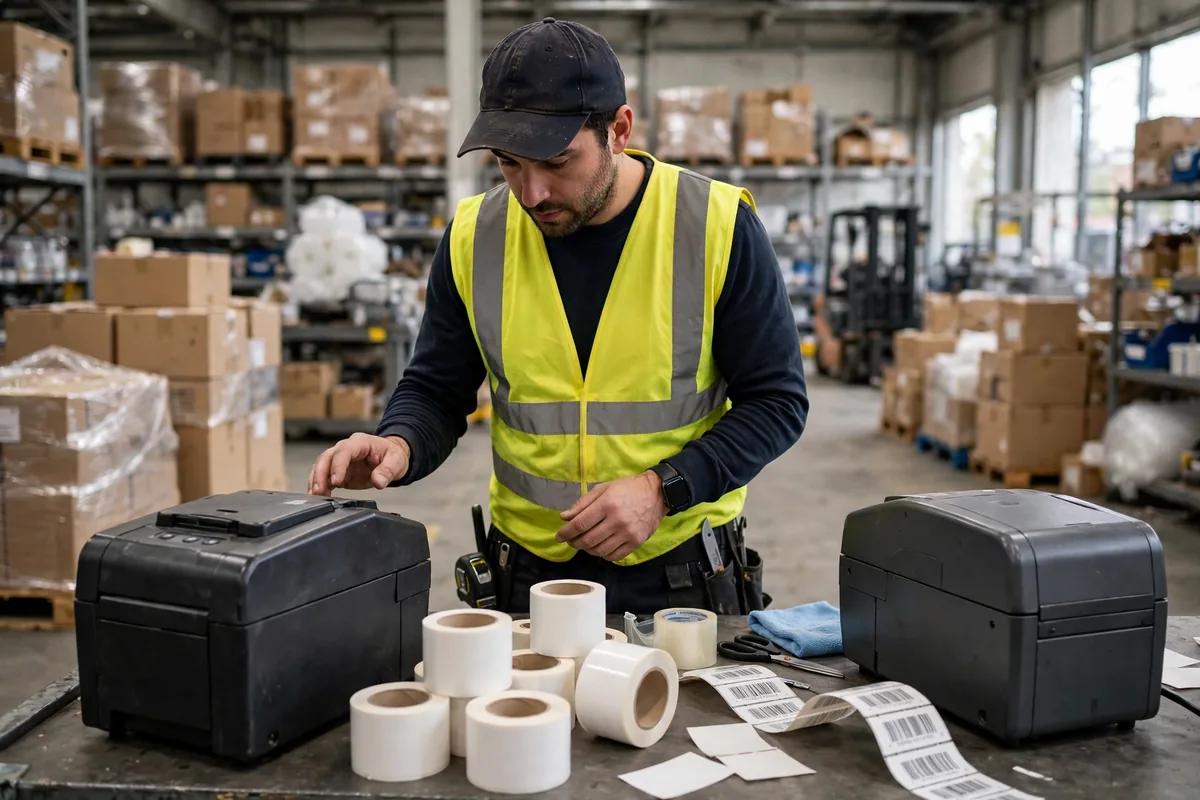
Here is the rough maths I run for other small operators. Say you ship 200 orders a day and your spreadsheet-era picking error rate hovers around 0.8 percent, worse when temps arrive. One wrong shipment costs you, on average, about 60 yuan once you add reshipment freight, return handling and the goodwill credit. That is 200 orders times 26 days times 0.8 percent times 60 yuan, roughly 2,496 yuan a month in error costs alone. Now add reconciliation labour: one person spending 1.5 hours a day fixing the sheet is 39 hours a month, and at 35 yuan an hour that is another 1,365 yuan. You are near 3,900 yuan a month for the privilege of a free spreadsheet. A lightweight WMS subscription, check current pricing on the vendor site because it changes, plus scanners and a label printer spread over two years, is already in the same neighbourhood, often below it.
Now flip it. If you ship 30 orders a day, carry fewer than 200 SKUs, and mis-ship once or twice a month, the honest answer is: do not buy software yet. Fix your spreadsheet discipline first. Who can edit, when the file locks, how returns get logged. That costs nothing and solves most of your problem. We small warehouses cannot afford to burn money, and I do not sell software, so I have no reason to push everyone onto a system.
Here is the counter-intuitive part, and it took me two paid lessons to learn it. The trigger is not how big your order volume is. It is how messy your SKU base is. A warehouse shipping 500 orders a day of 50 SKUs in full cases can live on Excel for years. A warehouse shipping 100 orders a day across 2,000 SKUs with piece picking and look-alike variants will watch the spreadsheet die first. Error probability follows pick lines and similar-looking products, not order count. Phone cases that differ by one colour code, bearings that differ by one suffix: a spreadsheet cannot tell them apart at speed. A barcode scan can.
When the small warehouse WMS vs Excel answer flips
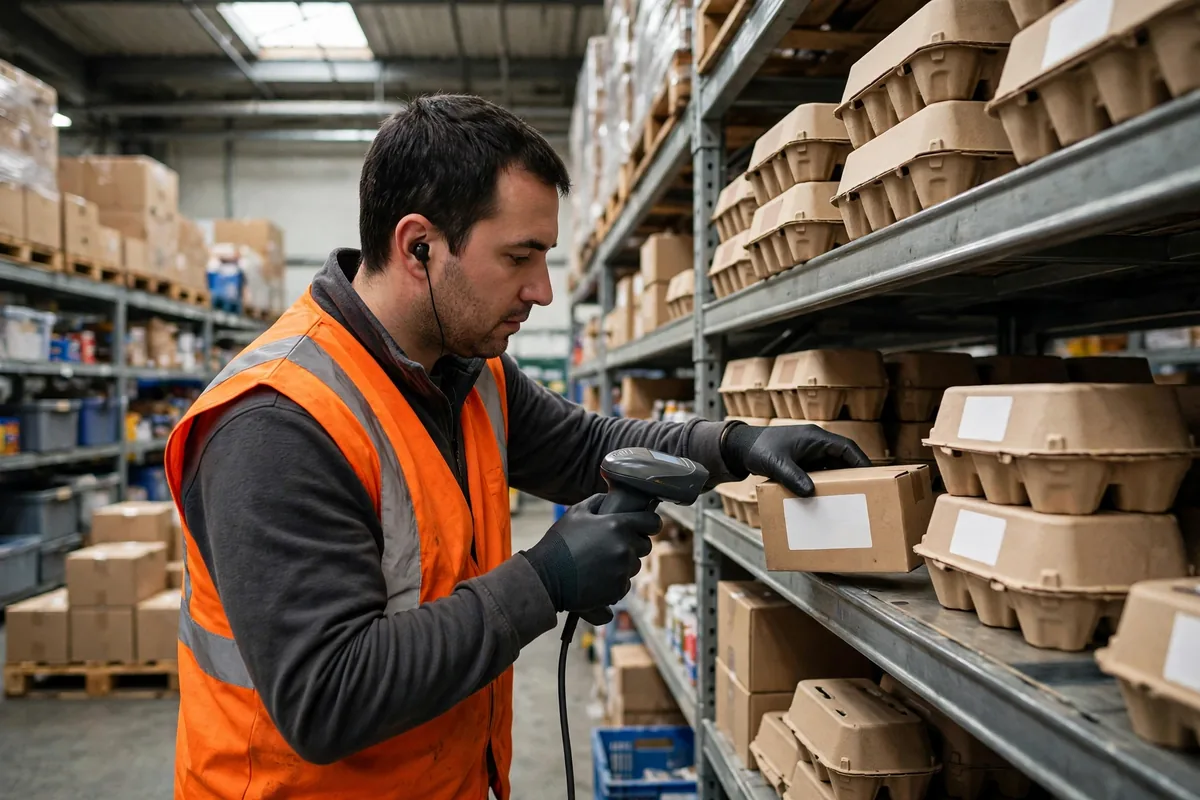
The second case is not mine. A friend runs a pet-supplies warehouse in Dongguan. During a September 2025 promotion his daily volume jumped to 900 orders and he brought in eight temps. Every spreadsheet weakness exploded at once. Three people editing one file overwrote each other. New hires did not know the products and picked from paper lists. His error rate that week was a number he still will not say out loud. After the sale, returns took two weeks to untangle and the marketplace penalised his dispatch scores. What he bought afterwards was not a big system. He switched on exactly two functions: scan-on-receiving and scan-on-picking. No wave planning, no fancy replenishment. Three months later he told me the money was not even mainly in fewer errors. It was in training. A new hire went from three days to half a day, because nobody has to memorise locations any more. You follow the scanner.
That is why I recommend a hybrid path instead of a dramatic rip-and-replace. Step one: keep Excel for what it is genuinely good at, client billing and settlement reconciliation. Step two: move only the three highest-error physical actions onto the system first, receiving and putaway scans, pick verification scans, and a weigh-and-photo step at dispatch. Step three: only when you are stable above roughly 300 orders a day, or past about 1,500 active SKUs, turn on waves and replenishment alerts. Switching everything on at once just frightens a small team back to paper.
One more low-tech trick from my own migration: run both in parallel for two weeks. Every evening, compare system stock against the sheet. When the difference is zero three days in a row, retire the spreadsheet's inventory role. Those two weeks were tiring, but I slept fine. Never let a consultant talk you into a same-day hard cutover. A small warehouse has no error budget. Stop shipping for one day and the client leaves.
So here is your homework, usable tomorrow morning. Look at the last 30 days. More than six mis-shipments? Average search time over five minutes when someone cannot find stock? Cycle counts disagreeing with the sheet by more than 3 percent? Temps making up more than half your pickers? Hit any two of those four and stop debating: trial a lightweight system with your real orders during the free period. Hit none of them and keep your spreadsheet, tighten its rules, and spend the money on rent. Small warehouses have their own way of surviving. There is no shame in that. The shame is leaking money every month while hugging a spreadsheet and saying, well, this is how we have always done it.
By Xiao Ma, Small Warehouse Owner