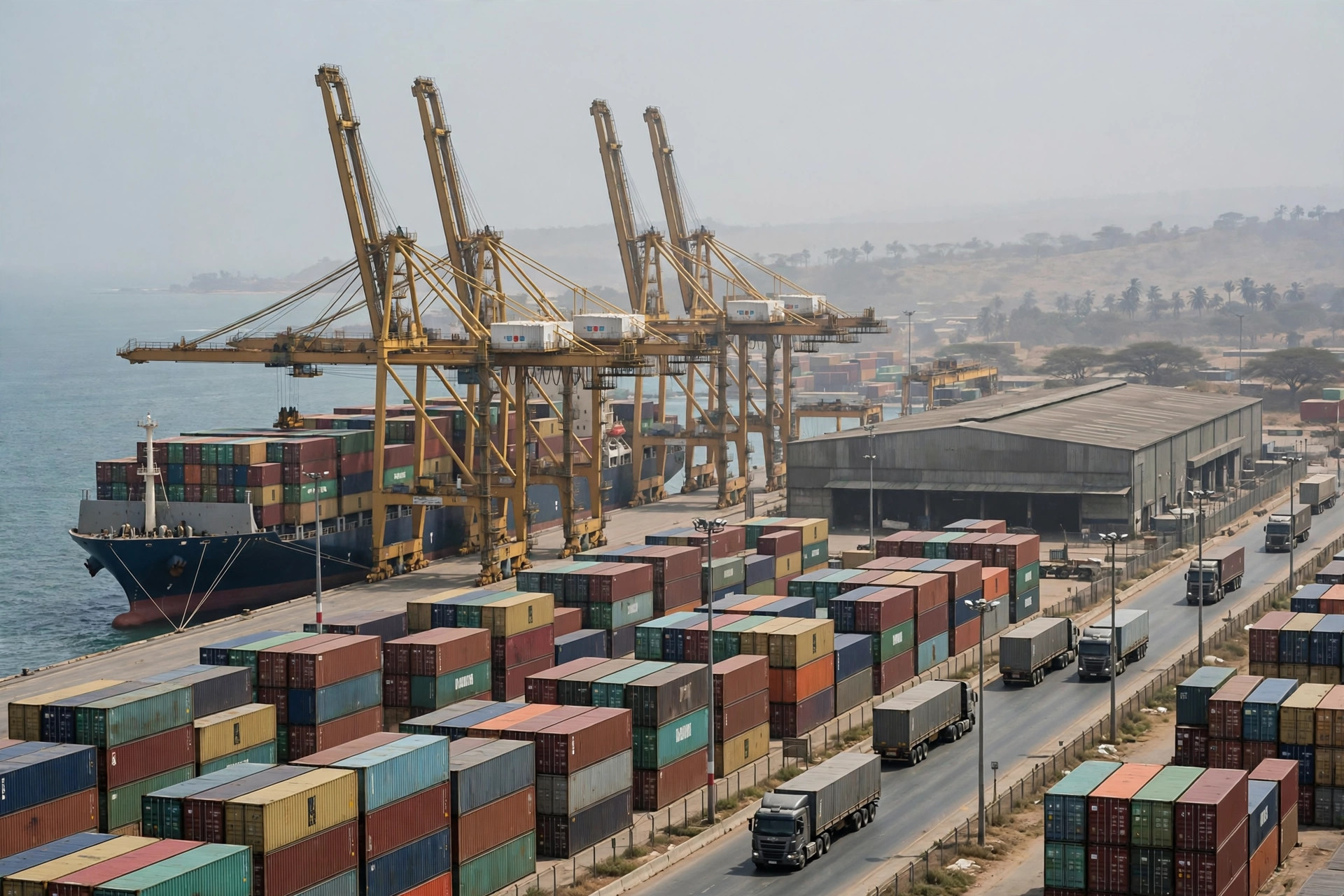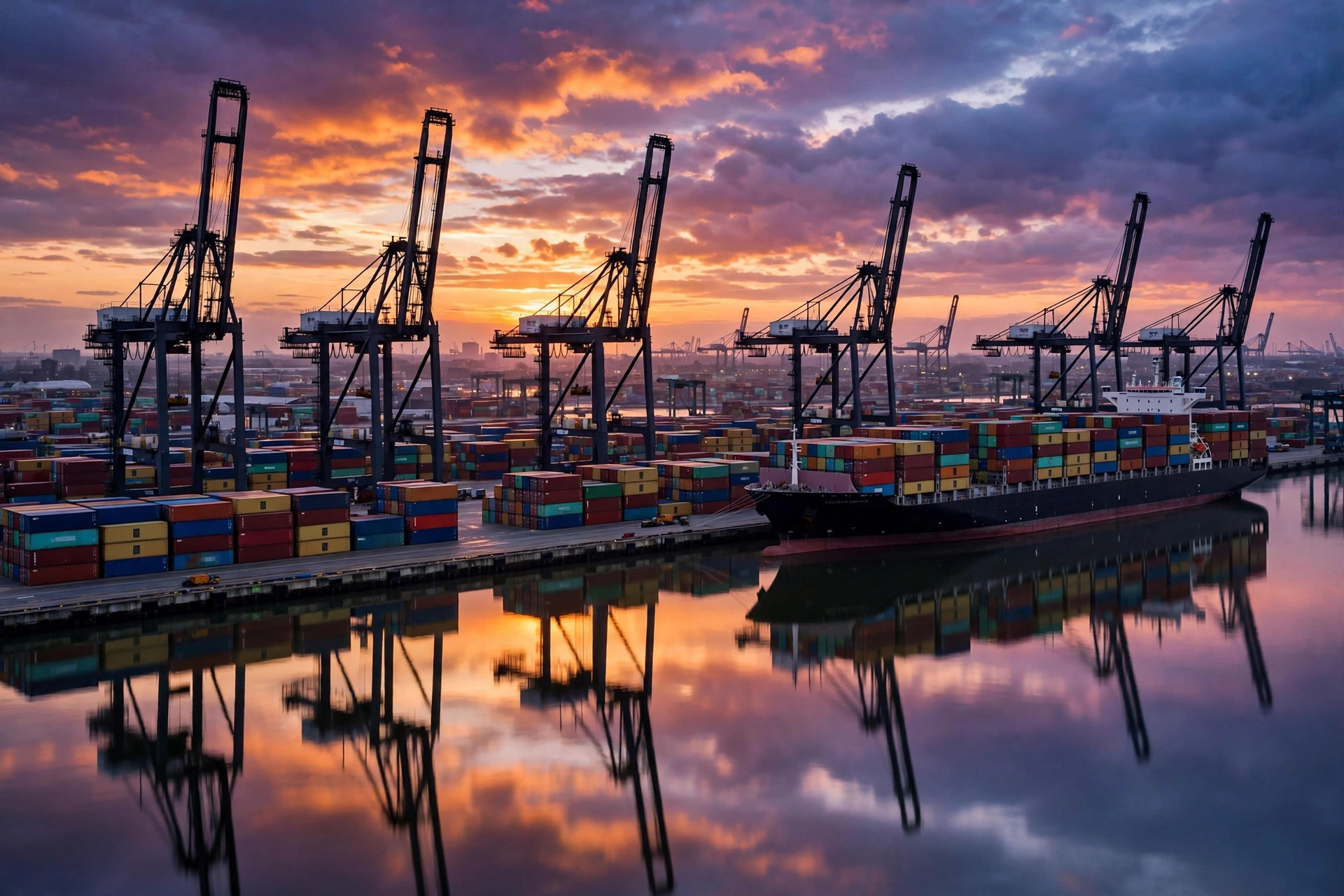
Here's my verdict up front: if you're selling into Europe, putting your first distribution warehouse in the Rotterdam port area is the highest-percentage opening move. But I've seen too many people get this exactly backwards — they hear "Rotterdam port warehouse distribution in Europe" and think it means renting a warehouse near the quay. Then they pay premium rent, their containers still sit inside the port for days, and every dollar saved on ocean freight gets handed straight back on the landside.
Here's the thing: in Europe, ocean freight is just the opening act. The real money gets spent after the box hits the quay — pulling the container, customs clearance, bonded storage, barges, trucks. One warehouse covering a dozen countries sounds beautiful, but the price is knowing Dutch bonded-warehouse rules, German truck restrictions, and Rhine water levels all at the same time. Two sides to this: Rotterdam gives you options; the cost is you have to know how to choose. Choose wrong, and a gateway port becomes a money funnel.
Rotterdam Port Distribution: Start With Three Numbers
Rotterdam handled 3.3 million TEU in the first quarter of 2025, up 2.2% year on year. More than 400 liner services call every week. The port connects to over 1,000 ports worldwide. Those three numbers tell you one thing: the best liner density in Europe. Your cargo from Asia or the Americas gets the most sailings and the most routing choices.
But I've seen too many shippers look at those three numbers and conclude "Rotterdam is always fastest." High density doesn't mean your box moves fast. A port is a funnel — the mouth can be huge, but if the neck (container pickup, inspection, inland transfer) clogs, everything still slows down. In peak season, when the yard fills up, a container sitting a few extra days racks up storage charges day by day. Most shippers never put that money in the spreadsheet when they were comparing ocean rates.
So here's the contrarian take I'll put on the table first: when choosing a port, don't start with the ocean rate. Start with what happens after. Ocean freight is only part of the door-to-door cost; the big money is inland. Whoever figures out the inland leg wins the European distribution math.
Rotterdam or Antwerp? I get asked this constantly. Here's my framework — it depends on where your cargo is going:
| Compare on | Rotterdam | Antwerp | | Liner density | Highest in Europe, 400+ weekly services | Dense, but a notch below | | Inland waterway | Rhine runs straight into Germany's industrial heartland | Scheldt river, weaker barge network | | Port congestion | Peak-season congestion is the norm — build in buffer | Relatively calmer | | Best for | High volume, multi-country coverage across Germany and France | Cargo focused on Benelux and northern France |
The decision logic is one sentence: if most of your cargo heads to Germany and Central/Eastern Europe, Rotterdam's barge network is a hard advantage. If your volume concentrates in Benelux and northern France, Antwerp may run smoother. There is no standard answer — only the answer that matches your cargo flow. The deadliest mistake is "everyone picks Rotterdam, so I will too." Your freight profile isn't theirs, and that's where the math breaks.
A Pit I Watched Happen: The Closer to the Quay, the Faster You Die?
A few years back, a home-goods client asked me to review their setup. Cargo from Asia into Europe, Rotterdam as the port, and a warehouse rented right at the edge of the port area. Their logic: close to the vessel equals fast lead times. Done deal.
Peak season hit and everything surfaced at once. It started with container pickup queues — the port clogged, boxes sat at the terminal for extra days, and storage charges climbed daily. Then the trucking fell apart: half their cargo went to Germany, half to France, all by direct truck. Drivers queued on German autobahns and at border crossings, lead times swung wildly, and key accounts complained nonstop. And the killer — they never used a bonded warehouse. Everything cleared customs on arrival, import VAT paid in one lump sum, and their cash sat trapped in transit for a full quarter. When the owner ran the total numbers with me, his face said it all: what they saved on ocean freight didn't even cover a fraction of the storage bill.
What does that tell you? Picking the right port only buys you the ticket in. Real distribution capability is the chain after the port: how you clear customs, what kind of warehouse the cargo sits in, whether the inland leg goes by water or by road. Get those three wrong and it doesn't matter how close your warehouse is to the quay.
Bonded Warehousing and Barges: The Two Real Legs of Rotterdam Distribution
Bonded warehousing first. Most shippers describe it in four words: deferred tax payment. True, but that's the surface. What a bonded warehouse really buys you is two things: cash flow and operating room.
The cash-flow math: cargo enters the bonded warehouse with no import VAT due. You clear and pay one sales order at a time, so the tax follows the sale. Seasonal shippers — Christmas, Black Friday — feel this hardest. Stock built months ahead: clear it all on arrival and your cash sits in tax for a quarter. Keep it bonded and the tax can wait months. For small and mid-size shippers, that's the line between alive and dead.
The operating-room math: inside a bonded warehouse you can do light processing, relabeling, and re-sorting. Orders for multiple countries ship from one building; returns come back to the same building; inventory doesn't get split across five countries. A friend of mine importing food products has been looking at cold-chain space in the Rotterdam port area — the Necron Food Park cold storage (145,000 square meters) and the PTP terminal (73,000 square meters) signed in June 2026 show the port keeps adding cold-chain capacity. For cold-chain shippers, the site decision isn't about kilometers from the quay — it's about temperature control, inspection capability, and distribution reach.
Two sides again: bonded warehouses carry a high compliance bar. Every in-and-out record has to reconcile with the customs declaration; books that can't survive an audit are a buried landmine. Want it easy and cheap at the same time? That combination blows up eventually. My rule: stable volume and a concentrated SKU base — go bonded. Volatile volume and messy processes — get your operations straight first.
Now barges. The Rhine is Rotterdam's real moat. A large barge carries upward of a hundred boxes in one trip — the capacity of dozens of trucks — with no traffic jams, no driver-hours limits, and lower emissions, which scores points with European customers watching carbon footprints. The price is speed: Rotterdam to Duisburg by water takes days, so forget barges for urgent orders.
That's why the mature play is layered: routine replenishment goes by barge to crush cost; urgent orders and stock-out alerts go by truck or rail to protect service. I've seen both extremes — all-truck shippers paying freight that makes you question reality, all-barge shippers stocking out every time peak season wobbles. Layering isn't compromise; it's matching each urgency level to the right cost.
One Warehouse, Many Countries: You Save on Rent and Pay in Complexity
Last point — the beautiful dream of covering many countries from one warehouse. Free movement of goods inside the EU is real. VAT is not. Cargo shipping from a Dutch warehouse to a German customer means somebody has to handle German tax — either register a local VAT number or use the EU's one-stop scheme. Returns come back, and the books have to close the loop. Plenty of shippers set up their first European warehouse to "ship," never asking "where does the tax go," and the first tax audit takes them down.
My judgment: until volume justifies it, don't get greedy. Run two or three countries first and close the loop on warehouse, tax, and returns. Then expand. What you save on rent won't cover one tax penalty and a pile of unreconcilable books.
One line to close: is your first European warehouse rented to be close to the vessel, or close to the customer? Get that answer straight, and the Rotterdam port distribution math finally starts working.
By Lao Mi, Supply Chain Veteran (20 yrs)