Let me start with a complaint: Amazon changed the rules again.
Right before Prime Day this year, the inbound cutoff moved up without much warning, and my seller group chat exploded. One guy had 4,000 units stuck in transit. Another got his inventory to the warehouse but it sat there "receiving" for days while the traffic poured in and his listing showed the dreaded out-of-stock badge. Walmart wasn't any kinder — Walmart+ Week keeps creeping earlier every year, the playbook shifts constantly. Under-stock and you miss the wave; over-stock and your cash is buried in a warehouse in Kentucky.
Five years selling cross-border, and the thing that keeps me up at night isn't product selection. It's inventory staging: how much to send, when to ship, how many warehouses, and where the red lines are. Get those four wrong and a big sales event just hands your traffic to competitors. Here's the rhythm and the red lines I've battle-tested over the last two years.
The Core Tension of Big-Event Prep: Too Early Burns Cash, Too Late Means Stockouts
Bottom line first: Prime Day and Walmart+ Week run on two completely different rhythms. Don't use one plan for both.
Prime Day is a game of lead time — Amazon's check-in and receive cutoff typically lands about three weeks before the event, and if you miss it, you're just watching. Walmart+ Week is a game of flexibility — WFS inbound is generally faster, but Walmart punishes stockouts and cancellation rates just as hard. My working numbers (personal experience, use as a reference only):
| Stage | Prime Day (Amazon FBA) | Walmart+ Week (WFS / 3P warehouse) |
|---|---|---|
| Start planning | 10–12 weeks out | 8–10 weeks out |
| Ship freight | 6–8 weeks out | 5–6 weeks out |
| Safety stock red line | 21–28 days of sales | 14–21 days of sales |
| Post-event clearance window | Within 2 weeks after | Within 2 weeks after |
Why does Prime Day get two extra weeks? Because FBA receiving is the most unpredictable link in the chain. Ocean freight swings, Amazon's receiving queues back up, peak-season transshipments crawl — each step can eat 3–5 days. Those two weeks aren't being conservative; they're being realistic.
Staging Rhythm for Prime Day Inventory: Do the Math Before You Ship
Too many sellers stage inventory on vibes: "it's a big event, send more." How much more? To where? I use a backwards-counting formula.
Step 1: Forecast event daily sales.
Start from your normal daily average. My experience: a core SKU on Prime Day typically does 3–8x its normal daily volume (depends on category, discount depth, and last year's data); Walmart+ Week is usually 2–5x. New sellers doing their first event should estimate at the low end.
Step 2: Staging quantity = forecast daily sales × event days × safety factor.
Real example. I have a home-storage SKU around $24. Normal daily sales: 80 units. For Prime Day I forecast 5x — 400 units a day. Over 4 event days that's 1,600 units. I use a 1.5 safety factor (covers the post-event sales tail), so I stage 2,400 units.
Step 3: Split across warehouses.
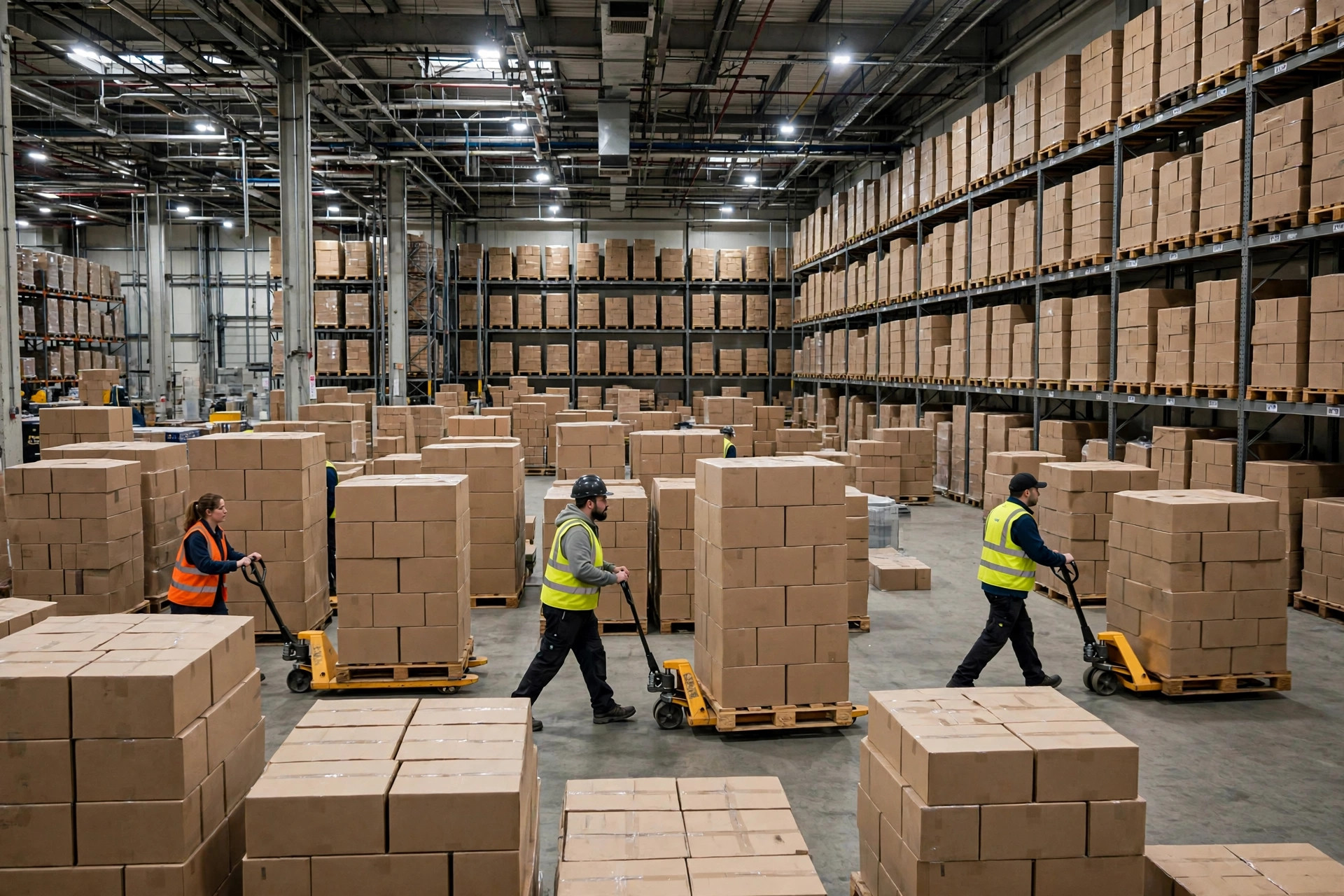
With FBA you don't pick the specific warehouses — Amazon splits it for you — but know this: in peak season it may scatter your inventory across 4–5 fulfillment centers, and transshipments are slow. My rule: ship the full event quantity in one go, never in two batches.
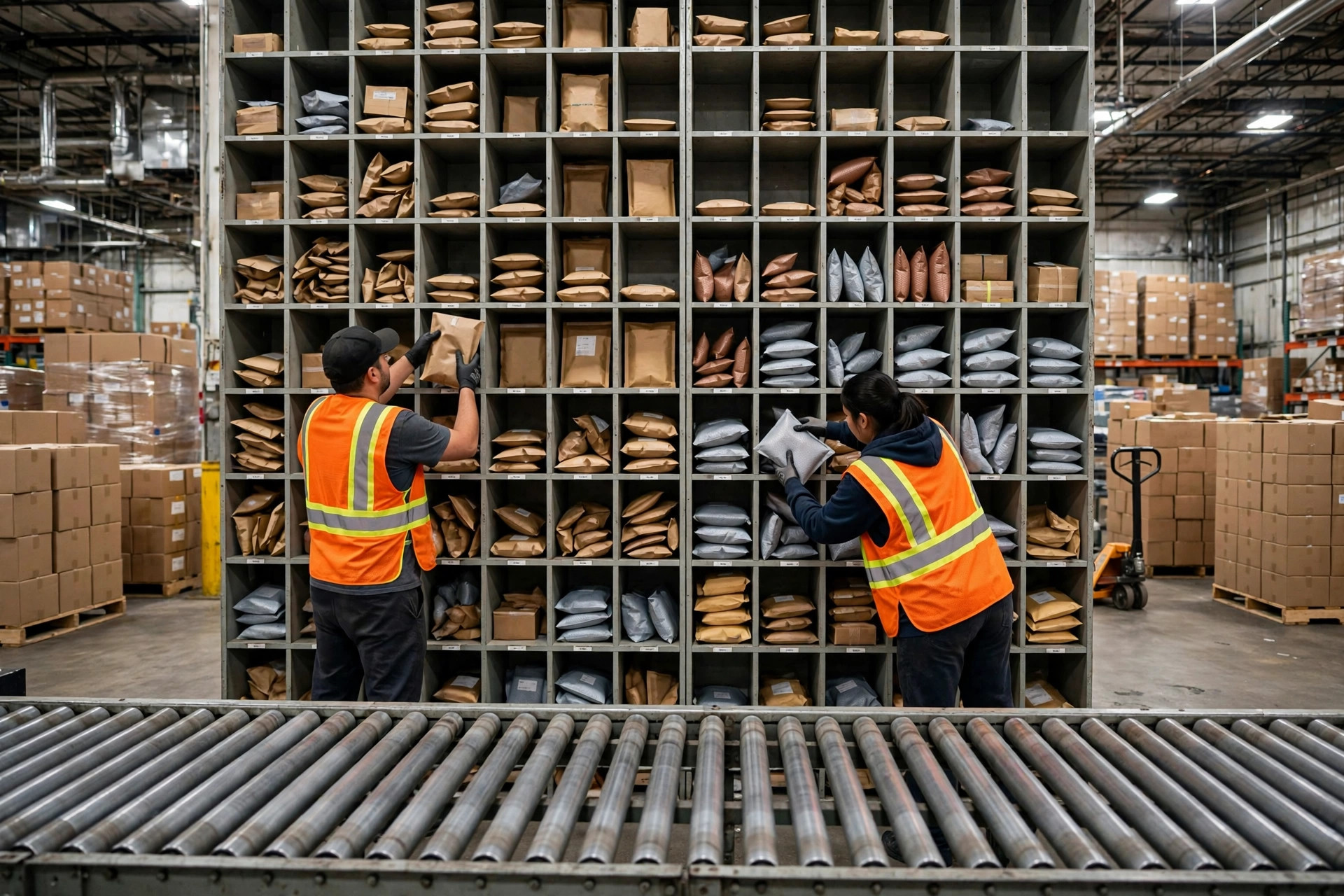
On Walmart's side, if you're on WFS, same rule — one full shipment. If you self-fulfill through a 3P warehouse, split by order heat map: one warehouse on the East Coast and one on the West Coast is my default setup, with Texas as a third if the SKU volume justifies it.
Replenishment Red Lines: Three Lines, All Non-Negotiable
This is the part I most want you to take away. Staging wins the opening; replenishment wins the game.
I run three red lines, ranked by priority:
Red line one: safety-stock days. Keep 21–28 days of safety stock on core Prime Day SKUs, 14–21 days for Walmart+ Week. The math is simple: safety stock = daily sales × replenishment lead time × 1.3. And "lead time" means the full chain from placing the order to units being available for sale — not just freight time.
Red line two: stockout alert line. When sellable inventory drops to 10 days of sales or less, an alert fires (I do it with a spreadsheet and manual checks — no fancy system needed). The moment this line is crossed, you decide: emergency air replenishment, or cut prices and stop the bleeding. No dithering.
Red line three: overstock ceiling. Stop when staged quantity exceeds 2x forecast sales. The biggest fear in event prep isn't stocking out — it's being stuck with leftovers. Unsold units keep burning storage fees, and you'll have to discount them again at the next event.
Case One: The Time I Got Burned at an Atlanta Warehouse During Prime Day
An embarrassing one. This July's Prime Day, I had a hot SKU staged perfectly on paper — freight leaving 6 weeks out. Then the factory slipped 5 days, ocean freight hit port congestion, and the goods reached the West Coast warehouse only 12 days before the event.
Worse: Amazon split the shipment across 3 warehouses, and one batch got transshipped to Atlanta — a 6-day journey. When Prime Day kicked off, the Atlanta region showed out of stock, and that region happened to be one of the SKU's top order clusters.
Result: over 4 days, the SKU did only 55% of forecast volume. Ad spend burned, traffic came, inventory didn't. The lesson: Prime Day staging timelines must be built on worst-case assumptions — add 5 buffer days to both factory lead time and freight. Since then, my Prime Day freight always leaves 8 weeks out. No exceptions.
Case Two: How the Red Lines Made Me 40% More on Walmart+ Week
Same year, early-October Walmart+ Week. Lesson learned from Prime Day: I shipped into WFS 6 weeks early with the 1.5x safety factor from my formula.
On day two, the data showed one SKU selling at 1.8x forecast — Walmart had put it in a homepage recommendation slot I hadn't expected. Running the red-line math, sellable inventory would last only 9 days. Stockout alert triggered.
That same afternoon I placed an air replenishment order (500 units, 3 days to the warehouse) and slightly eased the promotion depth to control the burn rate. Final tally: the SKU finished 40% above plan, zero stockouts.
That's what red lines buy you: the confidence to catch the wave instead of panicking when it arrives.
Counterintuitive Take: Filling Every Forward Warehouse Before the Event Isn't Always Smart
A lot of sellers think more is safer — max out FBA, WFS, and every forward warehouse before the event. I've paid for that mistake, so hear me out: full coverage can be the most expensive way to stage inventory.
Three reasons:
First, cash flow. Event prep is already the year's biggest cash lockup. Filling everything means betting your working capital on a 4-day event. If it underperforms, storage fees and financing costs hit you twice.
Second, IPI and overage storage fees. Amazon shows no mercy on excess inventory, and peak-season storage rates are already steep (check Amazon's official site for current rates — they change). Over-staged units burn money every single day they sit.
Third, flexibility. Once everything's shipped out, you can't adjust mid-event — no repricing strategy shifts, no pivoting to a different hero SKU, no chasing a surprise winner. My approach now: ship 70% of event inventory, keep 30% back at the origin or an overseas transit warehouse as a mobile reserve. Traffic surges? Air top-up lands in 3–5 days. Traffic doesn't come? The remaining 30% never gets locked into a US warehouse.
This 70/30 split is my proudest adjustment in two years — cash pressure cut nearly in half, stockout risk unchanged.
Pitfall Alerts: Don't Do These
- Don't touch your listing's main image or title in the two weeks before the event. Ranking fluctuation plus incoming traffic you can't convert is a double hit. Finish optimizations a month ahead.
- Don't enroll every SKU in the event. Pick your top 20% core SKUs for heavy staging; let the long tail sell normally. Event prep is a special-forces operation, not a full-army charge.
- Don't rush into sky-high air freight the moment FBA stocks out. Do the math first: air cost vs. stockout loss. Sometimes being out for 3 days is cheaper than paying 3x freight.
- Watch Walmart cancellation rates closely. Cancellations from stockouts hit account health directly — check WFS inventory daily during the event, don't wait for system alerts.
- The two weeks after the event are your clearance window. Don't get sentimental about leftovers — mark down, clear out. Inventory carried to the next event often costs more in storage than it's worth in margin.
Final Word
Event inventory staging comes down to four things: forecast early, ship in one go, set red lines, keep a mobile reserve.
Forecast with formulas, not feelings. Ship the full quantity at once — no split shipments. Watch the three red lines daily. And run the 70/30 split instead of going all-in.
I've run this rhythm for two years across both Prime Day and Walmart+ Week. This one's personally tested and proven — take it and run.
By Ah K, E-commerce Seller (5 yrs)