Let me tell you something. After all these years on the road, I finally understood porto wine export warehouse storage on a quiet morning outside a small cellar in the Douro Valley. I had gone to pick up a load of Port, and the owner, a man in his fifties, would not let my truck straight into the yard. He made me wait outside so the heat from the tyres would not drift into the cellar. I thought he was being fussy. Then I watched his workers carry the cases out one by one, slow and careful, and I got it. Wine is not like other freight.
That load came out of a cellar near Vila Nova de Gaia and was heading for the port to be loaded into a container. It was not a long drive, only a few dozen kilometres, but the instructions were longer than for many long hauls I have done: no direct sun, no hard braking, no sharing the truck with anything that smells, and somebody had to watch the loading order at the port. That day I learned that the real cost of Port wine is not rent or freight. It is patience.
Porto wine storage starts with a steady cellar, not a cold one
Most people hear "store wine" and think colder must be better. Let me tell you, that thinking will get you in trouble. What hurts wine is not a little warmth. It is swinging back and forth, warm by day and cool by night, so the cork tightens and loosens and lets air in. A good cellar stays steady. Cool, dark, quiet, with bottles lying flat so the wine keeps touching the cork.
I have seen a plain-looking warehouse with thick walls and small windows do a fine job, because inside it barely changed all day. I have also seen a bright new warehouse lose a customer, because its big doors kept opening and closing and every forklift brought a gust of warm air inside. My rule is simple: check steadiness first, not size.
Bottles and barrels in Porto wine export storage are two different jobs
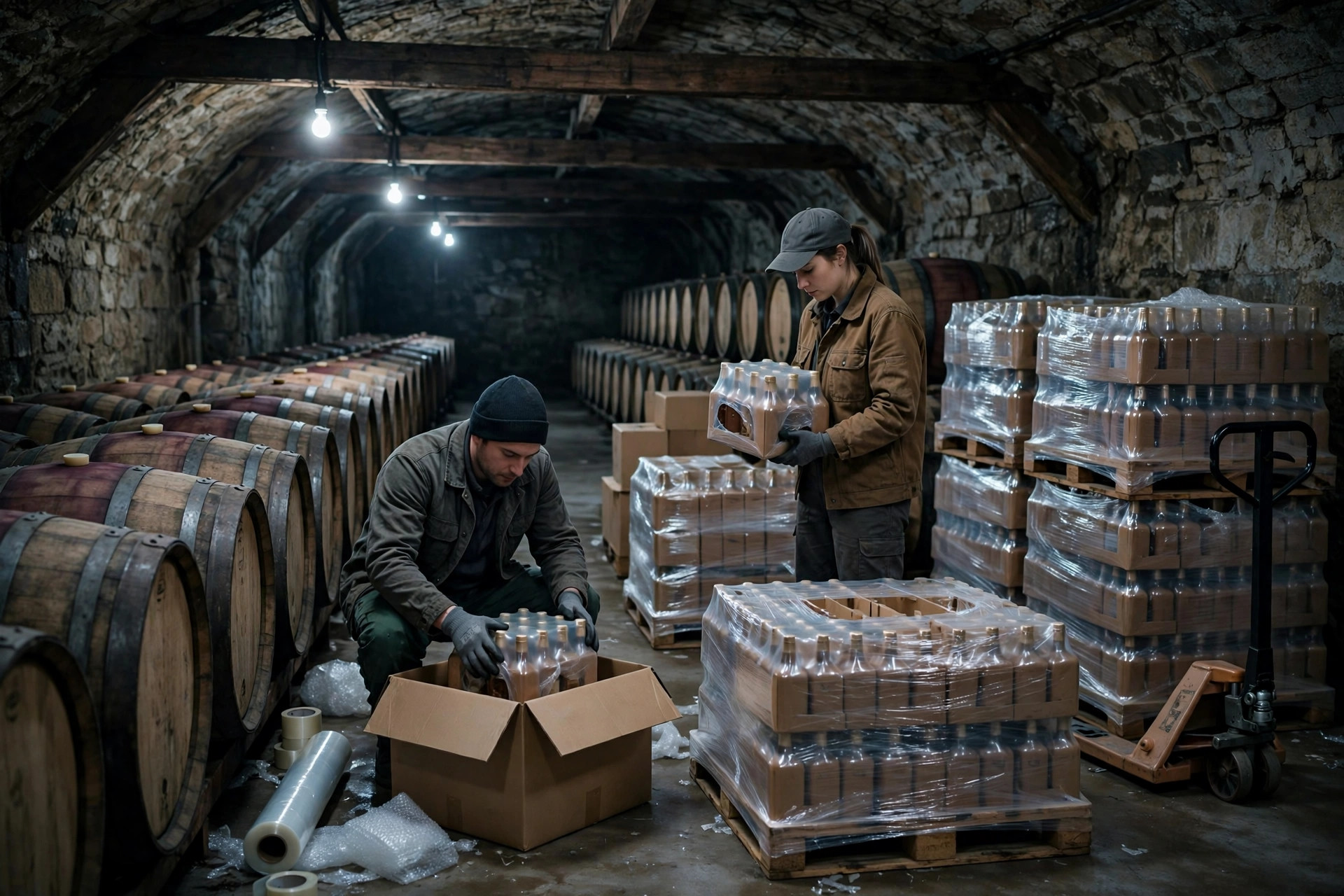
Bottled wine and wine in oak barrels do not belong to the same routine. Bottles hate shock and falls. Cases go flat, stacked neatly, never piled so high that the bottom cases bend. You lift from underneath, not by the edges. Barrels hate knocks and drying out. You check the wood, leave a gap for air, and never push them tight against a wall. Mix those two jobs together to save time, and sooner or later something breaks.
| Storage form | Best for | Biggest risk | Warehouse must do |
|---|---|---|---|
| Bottles lying flat | Finished wine waiting for export | Shock, sun, being stored upside down | Dark and cool, neat stacks, no over-stacking |
| Bottles standing briefly | Short sorting and labelling work | A cork drying out if left standing too long | Keep it short, return bottles to flat storage |
| Oak barrels | Wine still ageing, not yet bottled | Knocks, dryness, picking up smells | Air gaps, regular checks of the wood |
Here is a simple bit of arithmetic to show why rushing costs money. Say a shipment has a few hundred cases, and a crew saves half an hour by adding one extra layer to each pallet. If the bottom cases bend and one bottle leaks, the whole pallet has to be opened and checked. The time lost and the wine written off can easily cost several times what that half hour saved. I have watched that happen more than once. Saving a little at the start and paying a lot at the end is the oldest mistake in this trade.
Labelling is where slow beats fast
For Port going abroad, labelling is the step everybody wants to hurry, and the step you must not hurry. Different markets want different things on the label: origin details, importer details, and their own way of writing alcohol content and bottle size. A label put on crooked, wrong, or missing can hold a shipment up at the destination port, and one missed sailing costs far more than an extra day spent labelling.
I once hauled a load where the woman doing the labels checked every case against the order, word by word, and peeled off any label with a single wrong character. I was impatient that day. She told me, driver, you rushing now is nothing compared with the return trip if this gets sent back. She was right. Duties, inspection rules, and exact label requirements differ by market, so always check the official source for the latest policy rather than trusting a number heard on the road.
Here is a judgement that surprises people: the warehouse that labels fastest is not always the best warehouse. Fast can mean nobody checked. Slow can mean every case was checked. When a shipper picks a warehouse, do not only ask how many cases it can label in a day. Ask how it catches a wrong label, and what it does when it finds one. A warehouse with a second check, a kept sample, and a written record is a warehouse you can trust with wine.
Loading day is about order, not muscle
On loading day, plenty of people think the job is just getting cases into the container. Let me tell you, loading is a craft. Heavy cases go low, light ones go high, and you leave no big gaps in the middle. Fill gaps with padding, or one hard stop on the road will send the whole load sliding. Cases near the door should be easy to inspect, and batches must be kept apart, so a check at the destination port does not mean emptying the whole container.
I once watched a loading crew work with the order sheet spread out by the container door, ticking off each pallet as it went in, and taking photos when they finished. The shipper later told me the photos were not for himself. They were for the buyer, and for his own record if anything went wrong on the road. A photo can show exactly how the goods left the warehouse.
I remember another small shipper whose wine sat in a shared warehouse next to scented cleaning products. The manager said the aisle between them was enough. The shipper sniffed the outside of the cases, thought something was off, and made them move the wine before it left. Wine picks up smells you cannot see, and your nose will not lie to you. A warehouse handling porto wine export warehouse storage must keep wine away from anything with a smell, even if that means leaving a bay empty. An empty bay is cheap. A tainted shipment is not.
I also saw batches loaded in the wrong order. One pallet was an older vintage and the next was a younger one. The order sheet was clear, but the crew sorted by case colour, and the colours looked alike. At the destination, the batch the buyer wanted was buried at the back, and half the container had to come out to find it. Since then I always ask before loading: how are the batches marked, and which batch sits by the door? Trust the paperwork and the batch code, not the colour and not a feeling.
So here is my plain advice for shippers and warehouses. For porto wine export warehouse storage, that checklist is worth more than speed. First, pick a warehouse for steady conditions, not just for a new building or a low rent. Second, leave time in the plan for a labelling check, and write down in the contract who pays when a label is wrong. Third, have somebody at loading, shipper or agent, who checks the order, the batches, and the photos before the container is sealed. Also look at the road to the port. If rain season traffic can leave a truck baking for hours, even the best cellar work goes to waste.
Wine cannot be rushed, not on the road and not in the warehouse. There is an old saying I like for this trade: slow work makes fine work. With Port wine, that is not just a saying. It is the whole job.
By Shifu Zhao, Trucking Veteran (15 yrs)