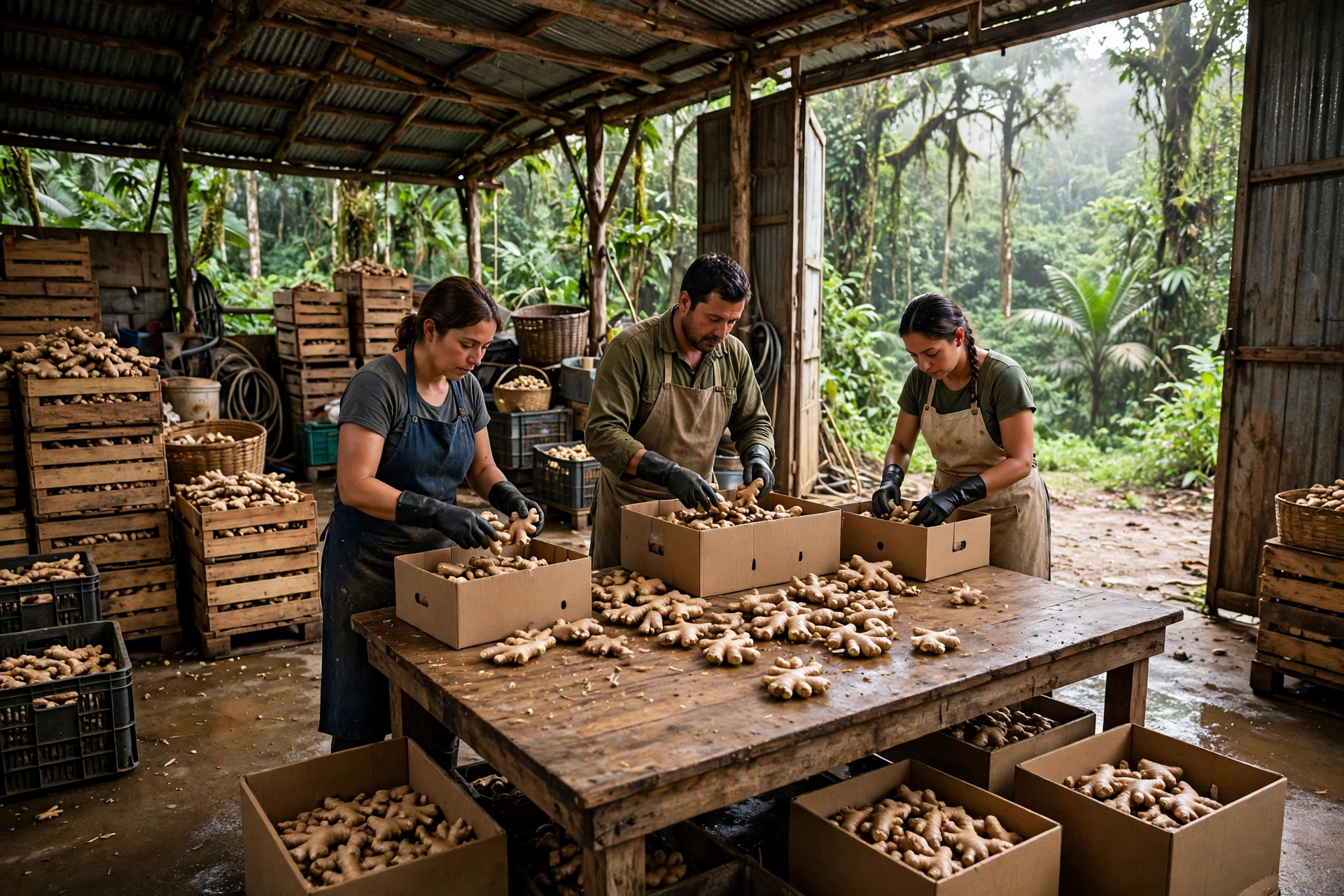
Peruvian ginger mostly comes from the central jungle, around Chanchamayo and Satipo. It comes out of the ground dirty, damp, and uneven in size. Pack it straight off the field and you are packing the trouble in with it. The loads that travel well are the ones that get worked over, step by step, in the packing house. The wash tank, grading table, drying area, and packing line each matter, and sloppiness at any one of them gets paid for later.
The Packing House: Where Peru Ginger Export Warehouse Storage Is Won or Lost
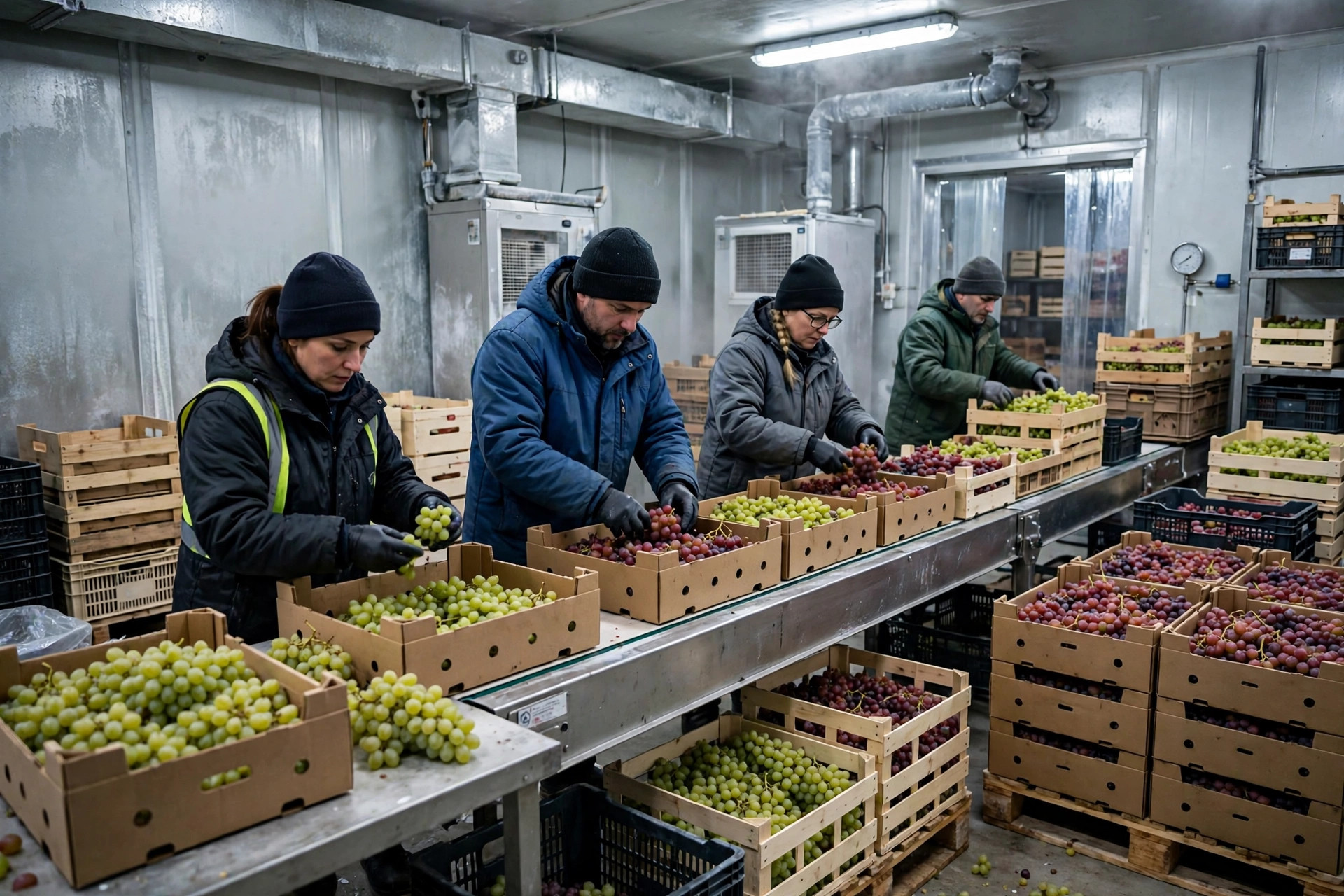
Washing ginger is a matter of touch. The soil has to come off, but the skin must stay whole. Break the skin and moisture gets in, and mold has a place to start. The brush in a worker's hand looks simple, but scrub too hard and you are opening the door for rot. After washing, the ginger must dry. Do not pack it wet. Wait until the surface feels dry to the touch and the cut end no longer looks watery, then grade it. Grading is not about picking the pretty ones. It is about pulling out the bruised, soft-spotted, and badly undersized roots. Good roots go in the export carton. The rest goes elsewhere. Mix them together and one bad root drags the whole carton down.
In August 2024, I followed a load near Satipo. The shed was small. They washed in the morning and packed in the afternoon, in a hurry to catch the day's trucks. The liner paper at the bottom of the cartons was already damp. I told the shed owner to let the ginger dry for half a day and said I would sort things out with the truck team. He was afraid of missing the trucks, so they packed anyway. At Callao, the arrival check found mold spots on the cartons stacked against the wall. The whole container had to be opened, sorted, and repacked, which cost two full days. Rework means re-grading and repacking, and that labor and time are gone for good. After that, the shed changed its rule: washed ginger must pass through the drying area, and nothing goes on the packing line until it feels dry.
Packing has its own logic. Export cartons run about 13.6 kilograms each, and that weight is no accident. Workers can carry it, and the stacks stay stable. Pack too heavy and the bottom layer crushes, juice leaks, and the whole pallet suffers. Leave room for air inside the carton, and do not press cartons tight against each other. Stack pallets with air channels. Moisture control is not about adding more layers of paper. It is about giving damp air somewhere to go. The warehouse floor must be dry, pallets must not sit straight on damp concrete, and in the rainy season, watch the corners and the roof for leaks. A thermometer and humidity gauge, checked morning and evening, beats digging through records later.
From the Jungle to Callao: Peru Ginger Export Warehouse Storage Breaks on the Road
The inland run from the jungle to Callao is the leg most people underestimate. It is not a short hop, and it mixes mountain roads with city outskirts. One sharp jolt tips a stack, blocks a vent, and changes the little climate inside the load. Before loading, check the truck body. Is the floor dry? Is there leftover dampness or smell from the last load? Ginger picks up odors and moisture fast. Load the pallets steady and keep the air channels open. Do not cram in extra pallets at the cost of airflow.
In November 2024, I rode with a load out of Chanchamayo. The driver meant well. Afraid the ginger would get damp, he sealed the truck body as tight as he could and barely ventilated it all the way. Near Callao, we opened the doors to a wall of stale, muggy air, and several cartons in the middle of the load already felt damp on the surface. The cargo survived, but sorting and drying cost a day. The driver tried to protect the load and ended up suffocating it. Ginger needs to breathe. Keeping it dry does not mean sealing it shut. Ventilation and moisture control have to be planned together, or you will pay tuition one way or another.
Timing is the other half of this leg. The packing house ships, the trucks roll, the reefer arrives, and the port gate opens. Those steps have to line up. If truck and container miss each other, the ginger sits in the open for hours and loses condition. Before the truck leaves, I call the port side to confirm the container number and gate time, and on the road I report our position regularly. Shippers do not fear a slow trip nearly as much as they fear not knowing where their cargo is. Pin the schedule on the shed wall for driver, shed owner, and forwarder alike; half the arguments disappear when everyone reads the same plan.
Inside the Reefer: Temperature, Airflow, and Arrival Checks
Here is the judgment that surprises most newcomers: colder is not better for ginger. Ginger is sensitive to cold. A reefer temperature of about 11.5 degrees Celsius is a commonly used setting in this trade, and pushing it far lower risks chilling injury. Once the skin is damaged by cold, mold finds its opening. The goal is steady, not low. Pre-cool the container before loading, so a warm box does not meet cool ginger and coat the carton walls with condensation. After loading, watch the record: swings hurt more than a steady reading half a degree high.
Airflow belongs with temperature, not after it. Reefer air has to travel through the whole load, so do not block the air outlet or the return vent when stowing, and leave gaps between pallets. When I load, I stand at the container door and look: can the air move? One look tells you. Before the doors close, recheck the marks and count; one wrong carton becomes a dispute at arrival. The phytosanitary paperwork also has to be ready in advance. In Peru this goes through SENASA; check current requirements against the official source, since rules change. If the documents, the marks, and the container number do not match, arrival inspection stalls, and every day stuck at the gate ages the cargo.
Arrival inspection is the last gate. Open the cartons and check the outer boxes first for water stains, crush marks, and mold spots, then sample the ginger inside for dryness and smell. Check beyond the outer layer; the middle and bottom of the stack hide the trouble. My advice to shippers comes down to three lines: dry the ginger fully before packing, keep the road leg ventilated instead of sealed shut, and run the reefer steady rather than cold. Get those three right, and the cargo usually arrives in Callao looking the way it should.
Here is how I frame the money, because the rework and the delays are the real cost:
| Where the money goes | What to do | What it costs if you skip it |
|---|---|---|
| Drying and grading | Dry after washing, separate damaged roots | Full-container sorting and repacking, two days lost |
| Moisture control and ventilation | Dry floors, air channels between cartons | Mold spreading across a pallet |
| Inland coordination | Confirm container number and gate time before departure | Cargo waiting in the open for hours |
| Reefer management | Pre-cool, hold temperature steady | Chilling injury plus condensation, cartons rejected at arrival |
An old saying fits this trade well: cargo is raised by people, and the container is only the last stretch of road. A steadier hand in the packing house, one more look on the road, and documents checked early, and ginger reaches Callao in good shape. After all these years, I trust one rule above the rest: settle the storage account up front, and the trouble stays small at the back end.
By Shifu Zhao, Trucking Veteran (15 yrs)