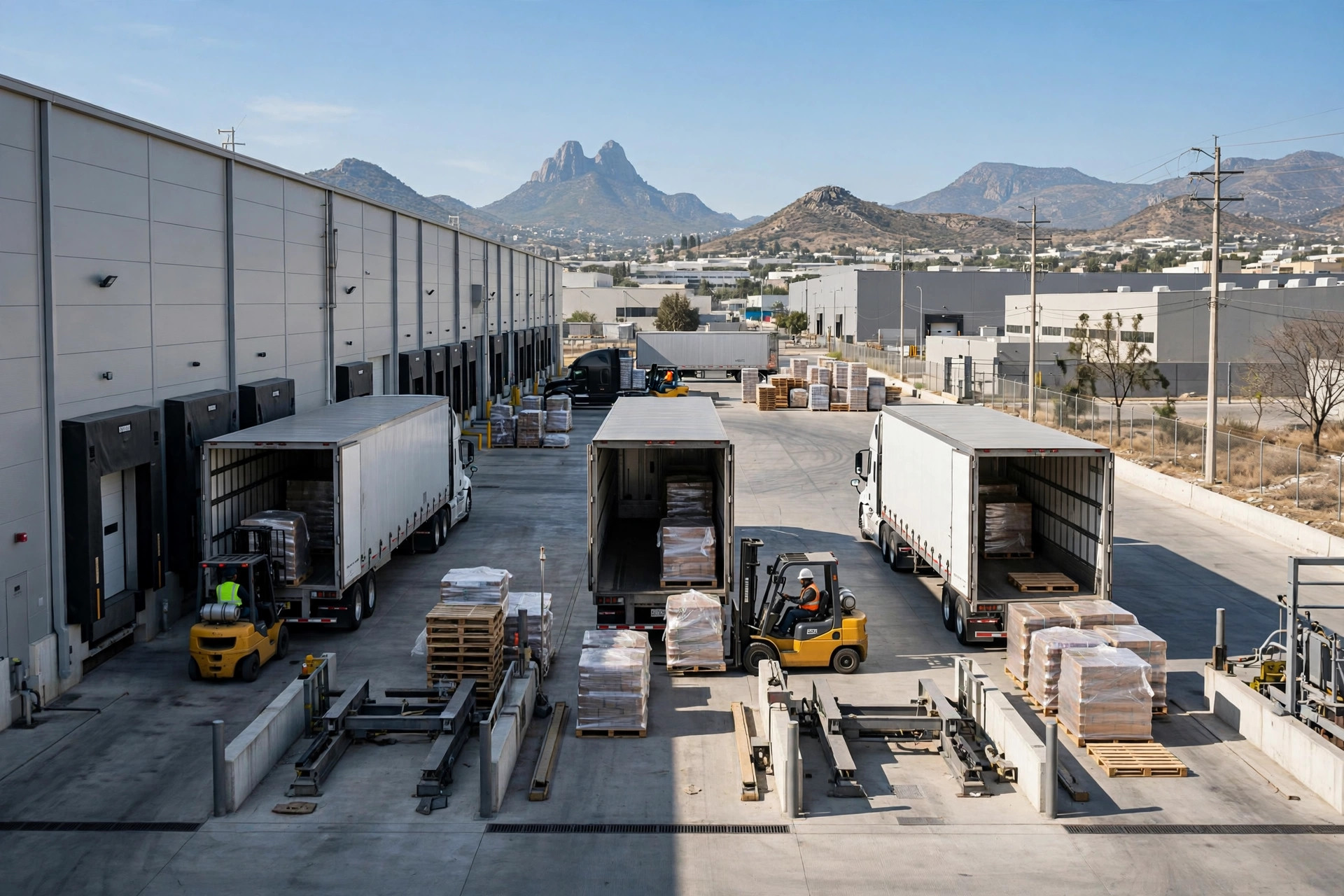
I will be honest with you: when this Italy furniture export warehouse logistics job landed, my first instinct was to say no. We run a 3,000-square-metre warehouse, two forklifts, and a crew you can count on your fingers. We do not have the glossy automated line the big forwarders show off in their brochures, and we definitely cannot burn money the way they do. But the client came through an old customer, a small workshop owner with only a dozen or so pieces, and turning him away felt wrong. My partner and I talked it over all night and decided to take it on our own terms: no fancy equipment, just care and a few stubborn homemade rules.
Our problem was very concrete. Furniture is not standard carton freight. One sofa stretches past two metres, a side cabinet has carved legs, and a dining table comes with a marble top. We have no climate-controlled mega-hall and no expensive custom packaging line. Our crew is solid, but they were used to small parcels, not to the temper of big pieces. On day one, I watched a worker set a carved chair down on its leg without thinking, and I nearly shouted. If that leg had cracked, repair would have been a nightmare.
Italy Furniture Export Warehouse Logistics Starts with the Damage Bill
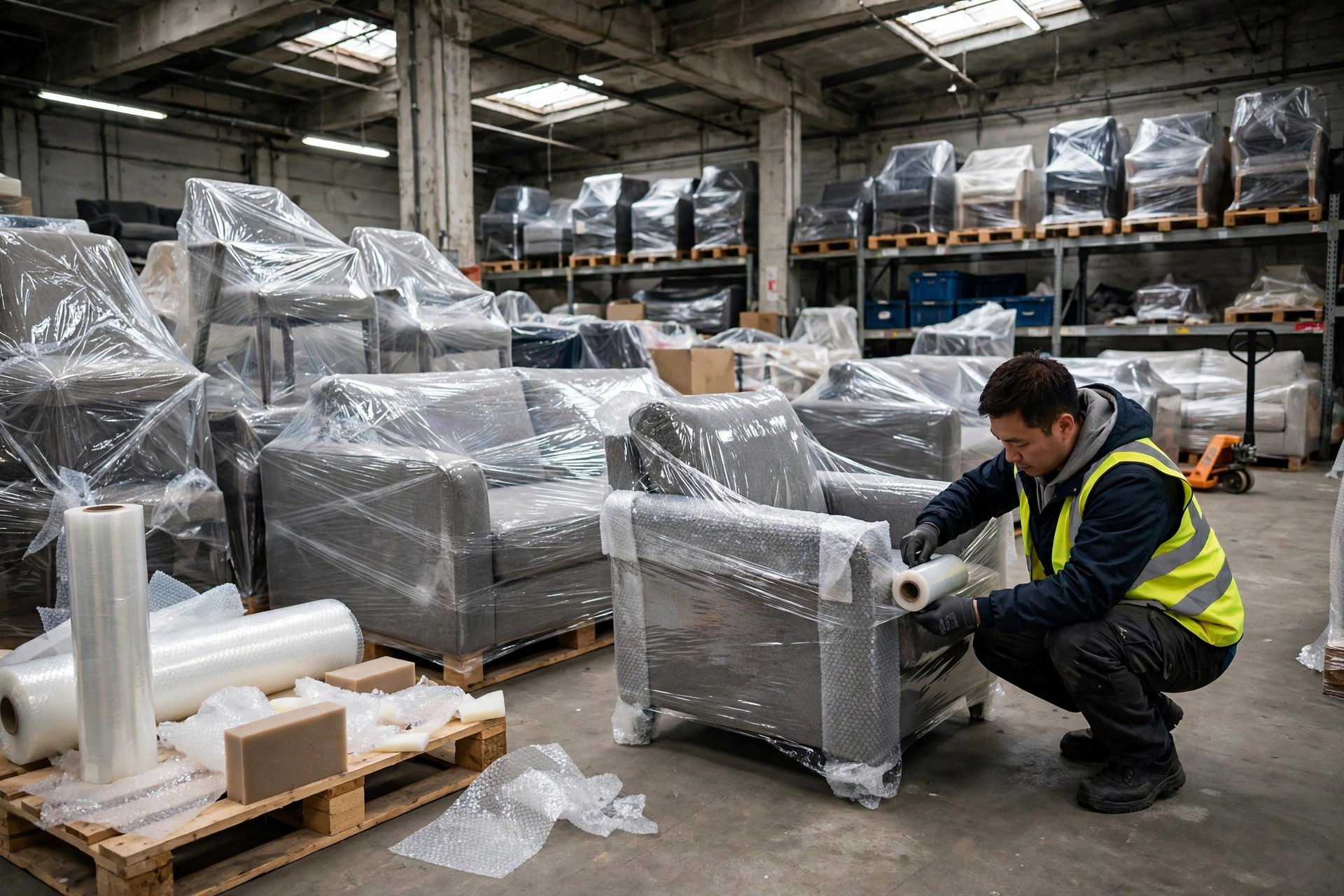
So we made a rough rule of our own: nothing goes straight onto a rack. Every piece first passes through a floor inspection zone we taped out by hand. Corner protectors go on immediately, all four corners, no exceptions. For leather and glossy lacquer, we wrap a soft film first and then corrugated paper. Skipping the soft layer to save time is a false economy, because hard board alone can dull a finish, and a customer spots that at a glance. For solid wood, vertical or flat depends on the structure: a sofa back, whose load sits in its base, stands well and saves space, while a legged cabinet lies better flat, legs up and raised, so its own weight does not bend the legs.
Stacking is where we learned our lesson the hard way. We once piled pieces to save space and found a pressure mark on the piece underneath. Since then the rule is dead simple: furniture never stacks on furniture, heavy never sits on light, and if you absolutely must stack, you use a rigid divider and only one layer. It looks like wasted space. Do the maths, though: an extra half pallet position costs a visible but small amount, while one damaged piece can cost thousands. We cannot burn that kind of money, so we would rather keep the warehouse a little loose than look generous on a compensation form.
One more detail is the aisle. Furniture gets hurt most at corners and turns. We stuck bump strips along the big-piece aisle, painted a yellow line at the turns, and made it a rule that two people carry any large piece. Slow is fine. Our crew grumbled at first, then watched the rework slips shrink, and stopped arguing.
Glass and Marble: The Pricier It Is, the Less You Stack It Like Ordinary Freight
The pieces that scared me most in that first shipment were a marble dining top and two glass cabinet doors. Marble looks tough, but it hates point pressure and vibration. One chipped edge cannot be patched back to new. Our homemade fix works: stand the top upright, sandwich it between thick foam boards, and hold it in a simple wooden frame, with soft padding between frame and stone. Leave a little give. Never wedge it dead tight.
Glass gets its own zone, marked with an orientation label, carried upright only, never flat and wobbling. Here is the counterintuitive lesson we paid to learn: thicker packaging is not always safer. Wrap something too tight in hard boards and every bump on the road presses the hard shell straight into the corner. Our rule is hard outside, soft inside: a solid frame on the outside, soft contact layers inside, and just enough room for vibration to go somewhere. That insight cost us one claim, and it taught us more than ten manuals.
Odd shapes get the same treatment. Carvings, curved armrests, and irregular cabinets have proud bits that catch on everything. We build them simple wooden cradles, proud parts facing out, touching neither wall nor neighbour. It eats floor space, but repairing an odd shape costs far more in labour and time than that floor space ever will. A small warehouse does not win on throughput. It wins on fewer returns.
Italy Furniture Export Warehouse Logistics and the Consolidation Math: LCL or FCL?
LCL or FCL was the hardest maths in the whole job. On freight alone, LCL looks cheaper because the cost is split by volume. But furniture in a shared container lives with strangers: more handling, more loading and unloading, and a higher chance of a knock. FCL costs more in one go, but the cargo is yours, the loading plan is yours, and fewer hands touch it in between.
We laid out a simple comparison for the client, using only numbers we could stand behind:
| Option | Freight feel | Damage risk | Best for |
|---|---|---|---|
| LCL consolidation | Shared, cheaper per volume | Higher, more handling | Sturdy small pieces of ordinary value |
| FCL full container | One-off, pricier | Lower, you control loading | Large, high-value, glass and marble pieces |
In the end we split the shipment. Sturdy small cabinets and chairs went LCL. The sofas and the marble top went FCL, even though it hurt to pay for it. The client balked at the FCL price until I showed him a photo of a rework job from an earlier shipment. Then he went quiet. Saving on freight only to pay it back in damage is not saving. It is digging your own hole. For a small warehouse handling export furniture, the first goal is not cheap. It is no incidents.
Wood Packaging Compliance and Photo Evidence: A Small Warehouse's Insurance
Wood packaging is one area where you never guess. Crates and pallets used for export must meet ISPM-15 rules, with fumigation or heat treatment and the proper mark. Destination countries can also have their own latest quarantine requirements, so always check the destination country's latest quarantine requirements before shipping, and never carry last shipment's experience into this one. Our habit is simple: keep the supplier's compliance certificate on file with the shipment, photograph the mark, and do not ship if either is missing. A big company has a legal team to absorb a mistake. We do not, so we hold the compliance line ourselves.
Pre-shipment inspection photos are our last line of defence. Before anything leaves, we photograph each piece from the front, the side, the corners, and the marks, file the photos by piece number, and send them to the client for confirmation. It sounds fussy, and it is the most useful evidence you can own. Once a client claimed a cabinet door arrived scratched; we pulled our dispatch photos, the scratch did not match, and the trail pointed to handling at the destination port. Responsibility was clear, and there was no argument.
Looking back, we used no grand system and hired no expert. We just made each homemade step solid: inspect on arrival, never skip a corner protector, give odd shapes their own cradle, split LCL and FCL by risk, keep wood compliance paperwork, and photograph everything before dispatch. The goods arrived safely, the client came back for a second order, and he introduced another workshop owner.
A small warehouse taking on big export furniture does not compete on scale. It competes on care and on doing its sums honestly. The big-company playbook is not for us, and there is no point pretending otherwise. A small warehouse has its own way of surviving: the floor can be small, the rules cannot be small, the maths can be rough, and the cargo must not get hurt. By Xiao Ma, Small Warehouse Owner