Here is my rule of thumb after ten years integrating automation systems: if your facility does not consistently see about 1,500 returns a day, do not buy into returns processing automation. The labor you save will not cover the power bill, the spare parts, and the full-time technician you now have to employ. I am Da Liu, an automation engineer, and returns centers are where I see the most automation for automation's sake.
A returns processing automation line is really just three moves: induction, inspection grading, and sortation back to stock. Think of it as a fulfillment line running in reverse. Outbound is many-to-one — thousands of pick locations converging into a single parcel. Returns is one-to-many — lonely parcels trickling back in, getting torn apart, judged, and sent off in four directions. Reverse the direction and the whole logic flips. That is what makes returns automation hard: the input is completely random. Nobody knows the category, the packaging, or the damage level until the box is open.
The anatomy of returns processing automation: three moves, one bottleneck
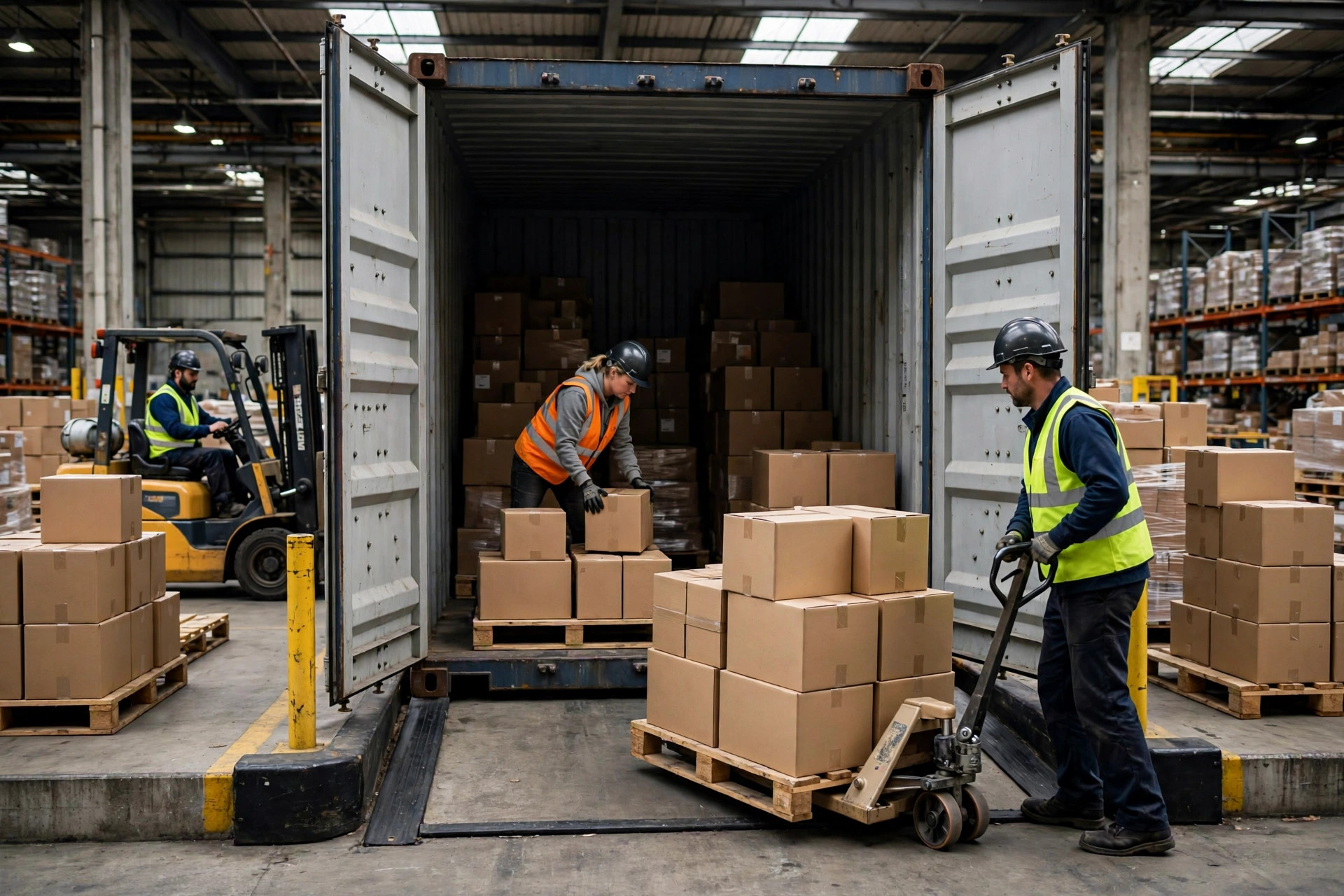
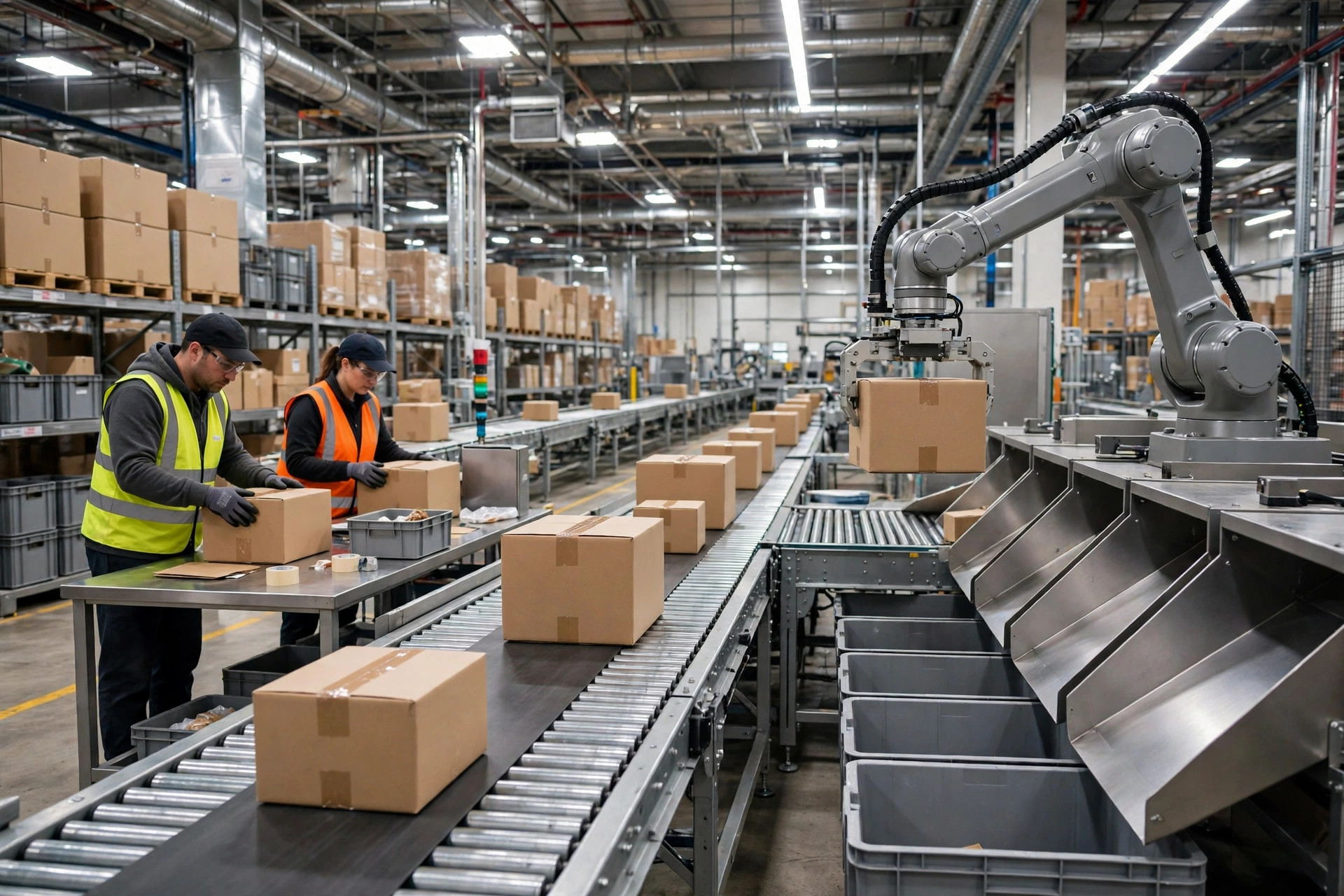
The skeleton is easy to picture. Operators open returns at induction stations and scan them; the WMS identifies the original order and the SKU. Then each item hits the inspection grading station, where its fate is decided. Finally it rides the sorter, which diverts it on WMS instructions — resalable goods back to the forward pick area, refurbishables to the repair zone, donations and disposals down the compliance lane.
It works like airport baggage handling: the conveyors and the sorter are the skeleton, but the barcode tag slapped on at check-in is the soul. Without tag data, a sorter is an expensive sculpture. Same here — the machine is the skeleton, and the WMS returns-receiving logic is the nervous system. Most projects that fail do not fail on hardware. They fail on data flow: return labels that cannot be matched to original orders, divert rules hardcoded with no one updating them before peak, a changed SKU mix — and the whole line jams solid.
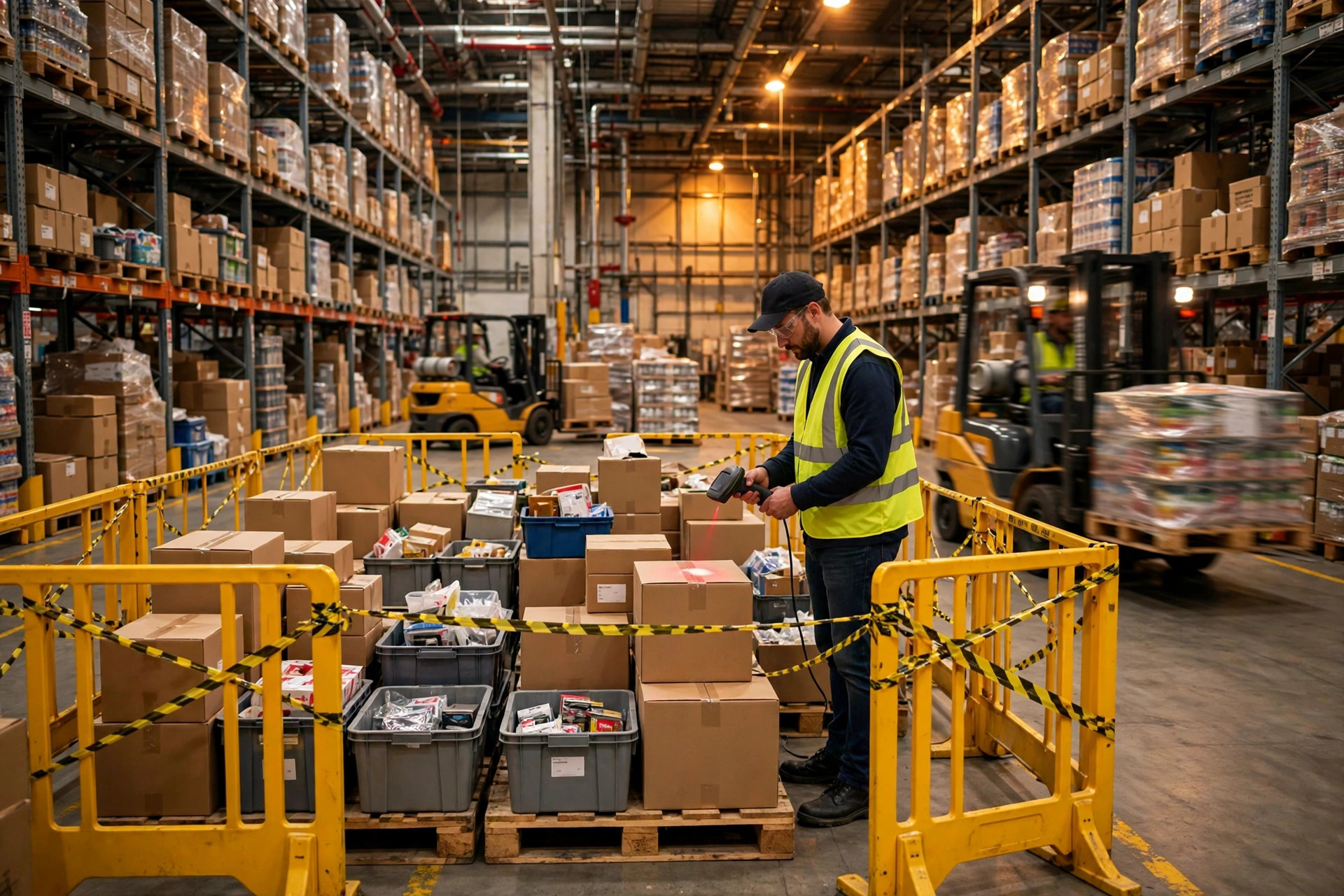
Of the three moves, the bottleneck is always the middle one: inspection grading. A sorter can run thousands of units an hour, but a human at induction handles a few hundred. Grading is worse — resalable, refurbish, donate, or scrap, four destinations. Machines can only assist: weighing, photographing, scanning, comparing against reference images. The final call still belongs to human eyes and hands. Remember this: a line never runs faster than its grading station.
The cutoff: how much volume justifies automation
There is no mystique in selection. It comes down to one chart: your daily returns volume over the last 90 days. My tier table looks like this:
| Daily returns | Recommended approach | Where the money goes |
|---|---|---|
| Under 800 | Manual plus workstation optimization | Grading SOPs, adjustable benches, good scanners and mobile devices |
| 800–1,500 | Semi-auto: powered roller conveyor with manual grading | Conveyor line, simple divert mechanisms |
| 1,500–4,000 | Automated sortation | Loop or shoe sorter; grading stays mostly manual |
| Over 4,000 | Full automation | Auto carton opening, vision-assisted grading, multi-chute sortation with deep WMS integration |
(Equipment pricing varies wildly by vendor and configuration — get current quotes; I do not publish specific prices.)
Someone always objects: we average 500 a day but spike to 3,000 during peak, can we automate? My blunt answer: that is a textbook fake requirement. Size the machine for the peak and it idles ten months a year, while you still pay a full-time maintenance tech. It is buying a race car to deliver pizza — great car, terrible math. Cover peaks with temp labor and flexible stations; the everyday volume is what you size for.
Here is the counterintuitive one: the higher your return rate, the more automation makes sense. Apparel return rates run 30 to 40 percent — returns are simply part of daily operations, and the cost spreads thin across huge volume. Consumer electronics with single-digit return rates? The line starves most of the year and the machine quietly loses money. Do not let anyone sell you on "high-tech category, high-tech equipment." The math amortizes per unit, not per unit of prestige.
Small and large facilities need completely different answers. Under 800 returns a day: do not touch automation. Spend on three things — a standardized grading SOP, height-adjustable benches, decent scanning hardware — and you can still hit a 48-hour restock turnaround. Large facilities: go in stages. Sortation first, vision-assisted grading later. Never jump straight to fully automatic carton opening. Returned packaging comes in every demonic form imaginable: crushed cartons, tape-mummified polybags, items with no packaging at all. Opening robots have nightmares about this. The most automated step usually dies at the least standardized input.
The inspection grading station is the real decider
Another uncomfortable truth: the cheapest part of sortation automation is the sorter itself. The real money and time burn at induction and inspection grading. A consultant's proposal will spend most of its pages on how fast and accurate the sorter is. I will tell you the project lives or dies on the part nobody details — the grading station.
January 2024, right after the holiday peak: a 3PL returns hub outside Memphis handling reverse logistics for two national apparel retailers. Daily volume jumped from roughly 2,500 units to nearly 11,000. The sorter hummed along fine. The grading station collapsed first — restock time for resalable goods stretched from 36 hours to five days, winter styles missed their selling window and went straight to markdown. The postmortem was clear: the bottleneck had nothing to do with sortation speed. It was all grading labor and process.
How should a grading station be designed? I insist on four streams and two passes. Four destinations — resalable, refurbish, donate, scrap — each with its own chute, light-directed, every decision written back to the WMS in real time. Two passes means pass one only decides "resalable or not." That is a fast call; a trained operator clears several hundred units an hour. Pass two takes the non-resalables and splits them into refurbish, donate, and scrap — slower work, dedicated benches. An apparel brand's own returns DC in the Inland Empire rebuilt its station this way in 2024 and lifted grading throughput by roughly 40 percent, with resalable goods mostly back on the shelf within 24 hours.
Do not forget the two streams everyone ignores. Refurbish needs labeling, a repair zone, and a second QC pass after repair. Donations and disposals run through a compliance lane — tax documentation and disposal records, every piece accounted for. If a proposal does not spell out these two flows, send it back.
Maintenance: the part nobody budgets for
Spare parts first. Belts, shoes, and rollers are consumables, not buy-once-cry-once assets. Keep parts on hand — one day of downtime in peak season is a disaster. Uptime belongs in the acceptance contract, not in a salesman's promise.
Then dust. A returns warehouse is an order of magnitude dustier than an outbound one — returned apparel and shoeboxes bring their own dust storms. Wipe the photoeyes on schedule or misread rates climb and the sorter starts confidently sending things to the wrong chutes. That money cannot be saved; put it in the daily checklist.
The biggest trap is people. Hiring an electrician who can tune a sortation system and rewrite divert rules is harder than buying the machine. When the seasonal SKU mix changes, scan rules and chute assignments all need a human touch. The machine runs around the clock without tiring — but with no one to tune it, it is just a very expensive conveyor. Budget maintenance labor separately from the equipment purchase. Mix them together and one day you will discover the "saved labor" got spent again in another form.
So is the money worth it? Do not count how many heads you saved — labor is the cheap part. Watch one number: how many hours until a resalable return is back on the shelf. A thirty-dollar garment restocked a day earlier sells at full price a day earlier. Drag it a week and it is last season at forty percent off — twelve dollars of margin gone per unit, thousands of units a day. Run that math yourself. The ROI of returns processing automation was never about replacing labor. It is about inventory velocity and cash coming home. Any proposal that leads with "replaces X workers" probably never ran these numbers.
Something you can use tomorrow: before talking to any vendor, pull your last 90 days of daily returns and plot the line. Consistently above 1,500? Then let us talk sorters. Below that — get the manual grading station running smoothly first. Get the sequence wrong, and the more expensive the machine, the faster you lose money.
By Da Liu, Automation Engineer