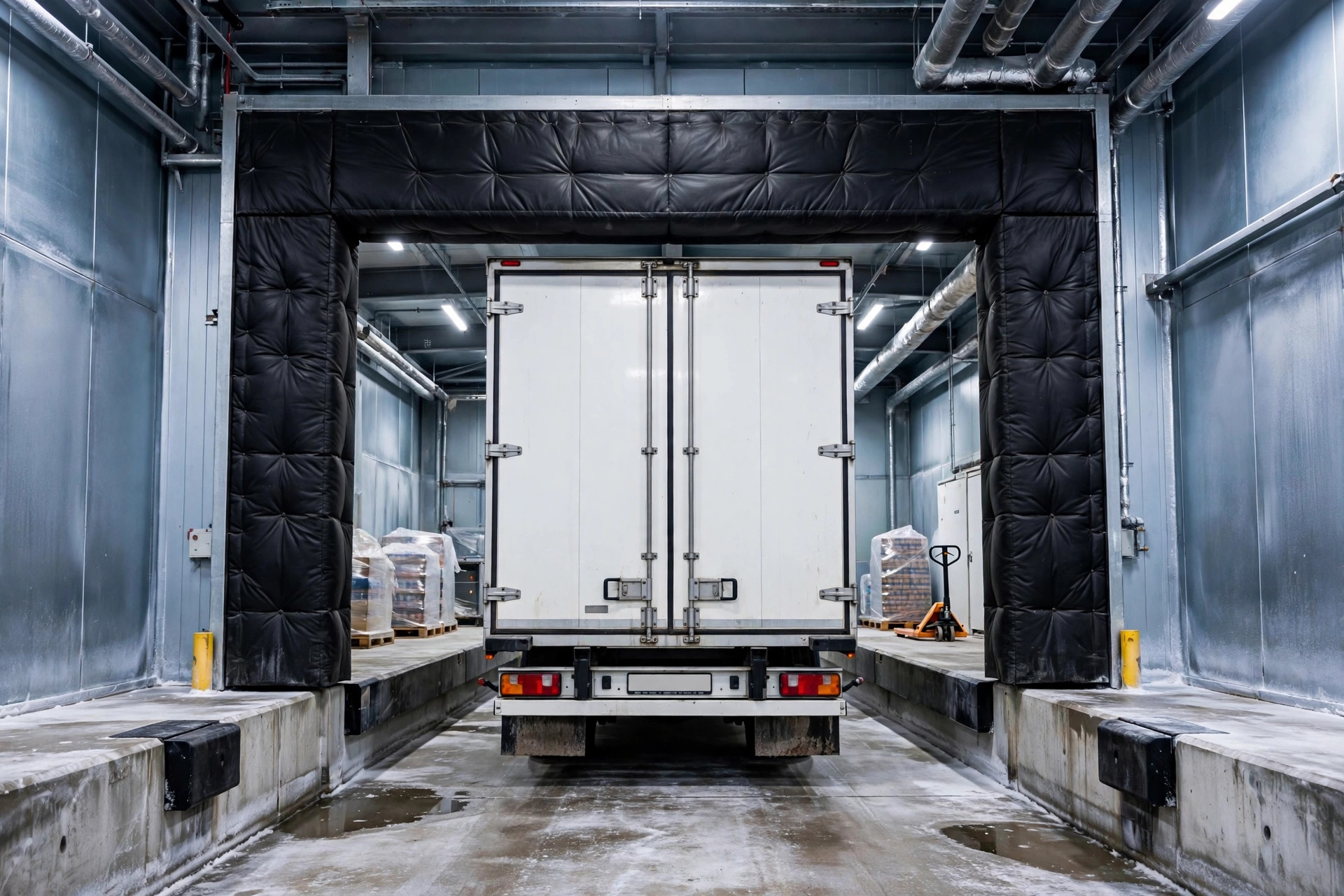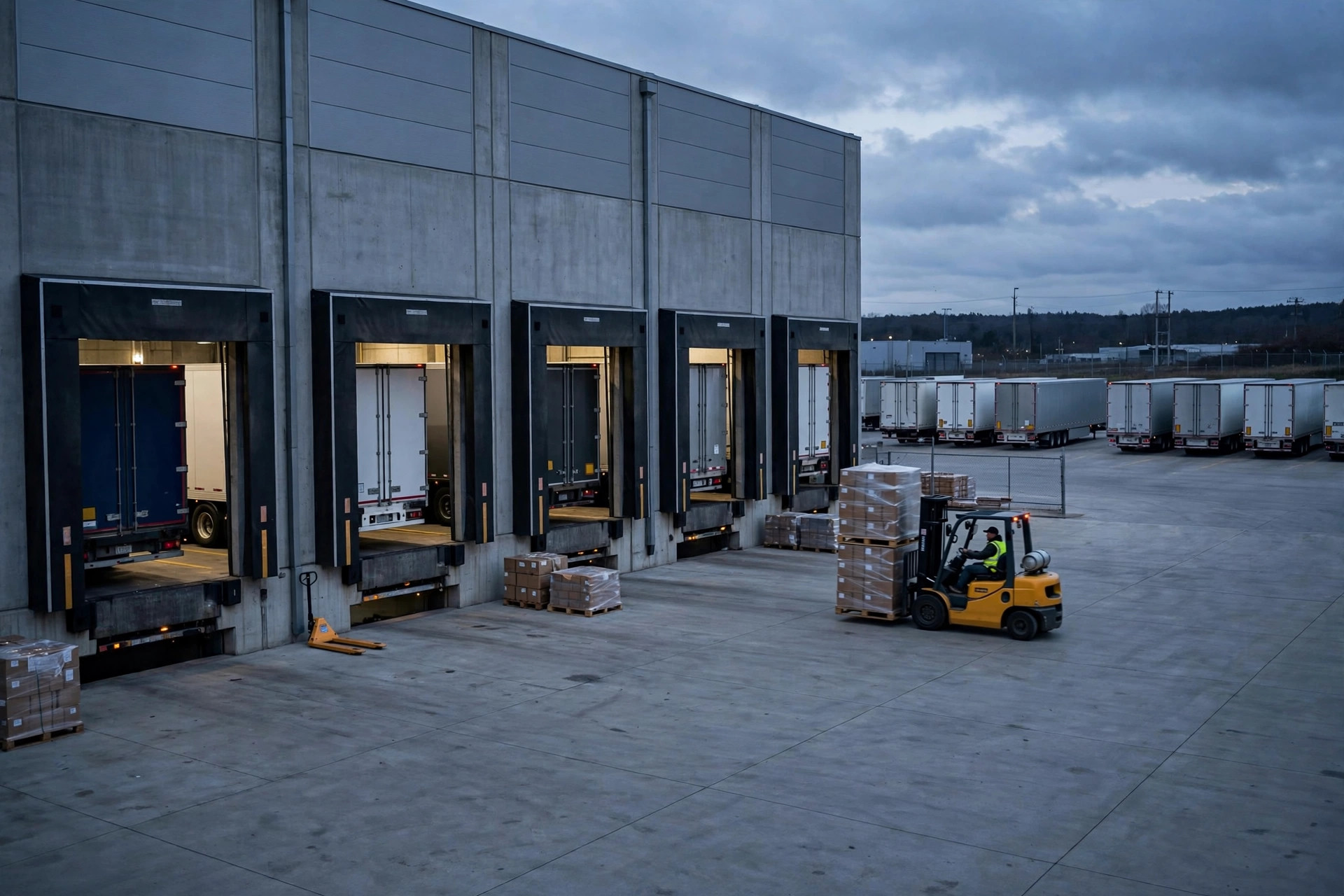
Let me tell you about a December night last year — the night loading dock door preventive maintenance cost stopped being an abstract line item for me. I was hauling a load from Nashville to a cross-dock outside Memphis, pulled in around 9 p.m., and found four trucks ahead of me. No big deal, I figured — I'd be unloaded by midnight. By 1 a.m., the truck at Door 7 hadn't moved an inch.
Turns out the dock door was dead. It had jammed halfway up when a cable snapped, the whole panel wedged crooked in the tracks, and nobody dared force it. The warehouse called their service company, who said the nearest tech was 60 miles out and couldn't get there before 4 a.m. That door wasn't fixed until daybreak. The entire unloading line sat idle most of the night. My load, due off at midnight, didn't get touched until 8 a.m. — and good luck billing detention on that.
Fifteen years of trucking teaches you a few things, and here's one: the dock door is the cheapest-looking piece of equipment in the building, and the one you can least afford to lose. That's the brutal truth about loading dock door preventive maintenance cost — when everything works, it looks like a rounding error; the night it breaks, it's the most expensive thing in the building.
One Dead Door Stops the Whole Building
A dock door is the throat of the operation. Door won't open, the trailer can't dock; trailer can't dock, every appointment behind it collapses. Dispatch starts making call after call to reschedule, the crew inside stands around, and the line of trucks outside keeps growing.
Winter makes it worse. A door that won't close means a cold-storage building can't hold temperature. The shipper's on the phone yelling, the warehouse manager's hanging insulation blankets over the opening — they'll block the wind, but they won't fool the thermometer.
I've seen the other side of it, too. One warehouse I run to has a maintenance contract — a tech comes through every quarter. One visit he spotted a crack in the track at Door 3, and the night crew had it reinforced before morning. Next day, business as usual; nobody ever knew. That's what maintenance buys you: big problems that never get to happen.
The Real Numbers: Dock Door Preventive vs Run-to-Failure
Let's put real numbers on loading dock door preventive maintenance cost. Per service-provider quotes, preventive maintenance runs a few hundred dollars per door per year. A 12-door building? A few thousand dollars a year, total — lunch money, spread monthly.
Now the other bill. Replacing a door on an emergency call runs $5,000–$15,000 per service quotes, depending on size and configuration. And that's just the door. It doesn't count the downtime: driver detention, rescheduled appointments, overtime to catch up. Get to the point where you need a pit-style dock leveler replaced and you're looking at $5,000–$10,000 in materials alone, before labor and lost hours.
A service manager leveled with me once: skip the maintenance, and when something finally breaks, the repair bill runs 3–5x what normal upkeep would have cost. That's not a scare tactic — that's a guy with fifteen years of service tickets talking.
| Preventive maintenance | Run-to-failure | |
|---|---|---|
| Cost per door per year | A few hundred dollars (per service quotes) | $5,000–$15,000 emergency replacement |
| Downtime | Zero (scheduled off-shift) | Hours to a full day |
| Collateral damage | None | Detention, rescheduling, overtime, damage risk |
| Long-run total | Predictable, budgetable | Skipping maintenance costs 3–5x normal upkeep |
The numbers speak for themselves.
How Often Should Dock Door Maintenance Happen?
There's no one-size schedule — it comes down to how hard you run the doors. Most service companies recommend something like this:
| Daily open/close cycles | Recommended frequency |
|---|---|
| 50+ (high-use, e.g. cross-docks) | Quarterly |
| 20–50 (typical warehouse) | Twice a year |
| Under 20 (low-use) | Annually |
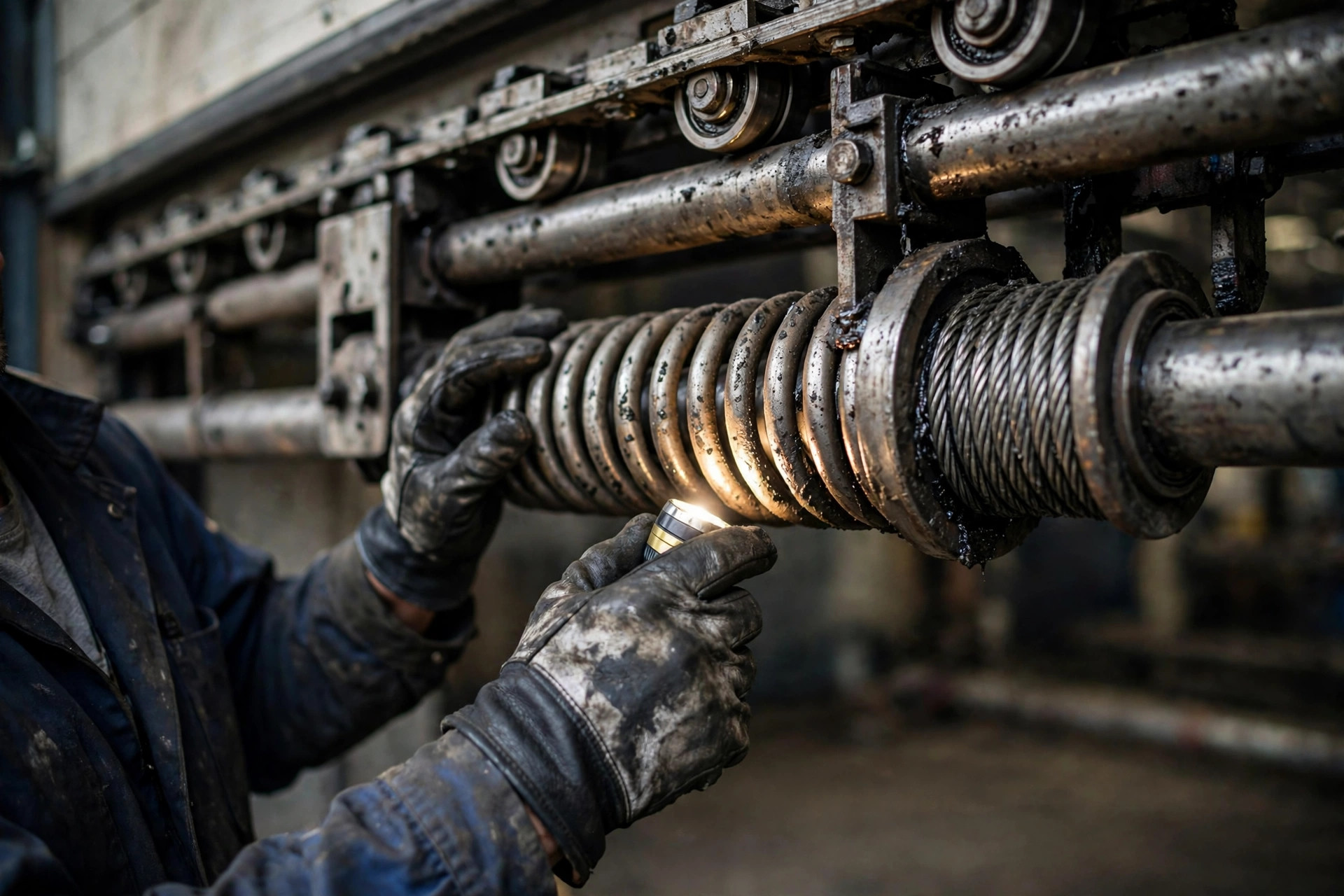
What does a visit actually cover? Spring tension, cable wear, rollers, tracks, weather seals, motors and chains. Those are the door's vital organs — any one of them fails and you're done.
One more thing: get an inspection in before winter. Cold makes metal brittle; broken springs and snapped cables peak in winter. That night in December I told you about? Not a coincidence. A lot of warehouses sign the contract in summer and do the inspection in fall — clear the problems before the cold finds them.
The Most Valuable Line in the Contract Isn't the Maintenance
Here's the counterintuitive part: the most valuable thing in a maintenance contract isn't the maintenance visits. It's the priority-dispatch clause.
Door dies at 2 a.m.? A contracted building gets a tech in a couple of hours; everyone else waits in line until morning. I've watched two neighboring warehouses go down on the same night — one was back running before dawn, the other sat dead until noon the next day. The only difference was a piece of paper.
So when you're shopping a contract, don't just compare the price. Look at three things: first, is the response-time commitment written into the contract, and how many hours; second, does the service truck actually carry parts for your doors, or do they order from out of town; third, at least one full inspection a year with a written report — no report, no paper trail.
One last thing, for the drivers reading this: when a door fails on your watch, don't touch it. A crooked door forced by hand can wreck the tracks — and then it's your word against theirs. Take photos (door number, time, what it looks like), notify dispatch, get the warehouse to confirm in writing. Whether you ever see that detention money depends entirely on the paper trail.
Fifteen years on the road, and I believe one thing: equipment doesn't break from being used — it breaks from being ignored. A few hundred dollars a year to maintain a dock door, versus thousands when it fails on a December night. A schoolkid could do that math. But every winter, some warehouse is still calling around at midnight asking if I know a door guy. An old saying fits: fix the small hole, or the big hole will eat you.
By Shifu Zhao, Trucking Veteran (15 yrs)