I have a client, Mr. Wang, who sells fruit on e-commerce platforms. Last September he called me: "Susan, the apple harvest is coming in from Yantai. I want to buy 200 tons, hold them until Lunar New Year, and sell at the holiday premium. Do you have controlled atmosphere storage?" The moment I heard it, I knew — done right, this becomes a long-term client; done wrong, it becomes a claims lawsuit. Apples are a few dollars a jin in autumn and multiples of that by the holiday. Everything in between is warehousing. Store them well and it is profit; store them badly and it is litigation. Today, from the seller's side of the table, let me break down the real math of controlled atmosphere storage.
First, the basics: CA is not "a colder cold store"
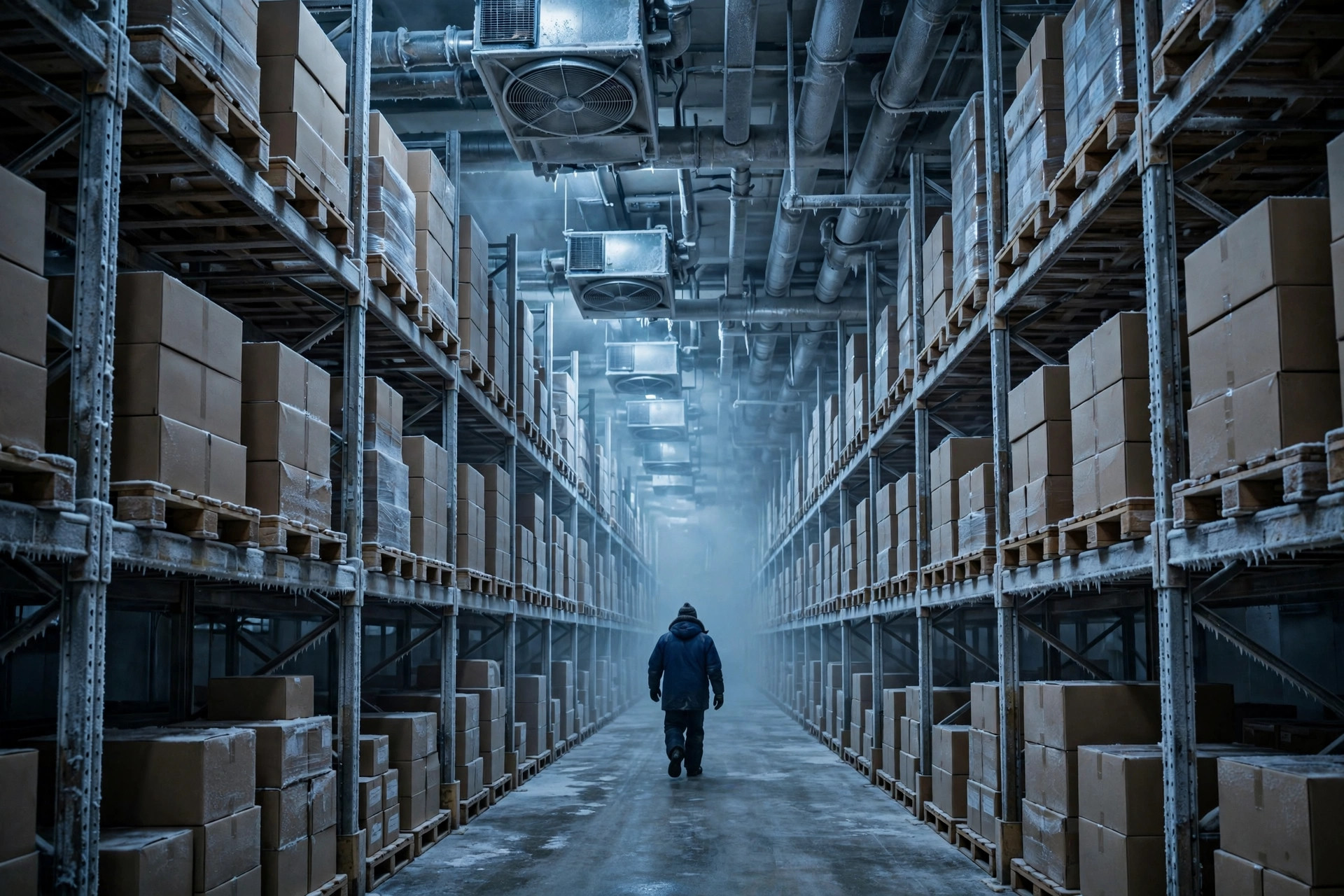
Our dear clients often ask me: "Is a controlled atmosphere room just a cold store with the refrigeration turned up?" No. An ordinary cold store only controls temperature, and inside it the apples keep "breathing" — consuming oxygen, releasing carbon dioxide and ethylene, ripening all the while. The data from growing regions is blunt: apples in regular refrigerated storage are essentially unmarketable after four to five months. The skin wrinkles, the flesh goes mealy.
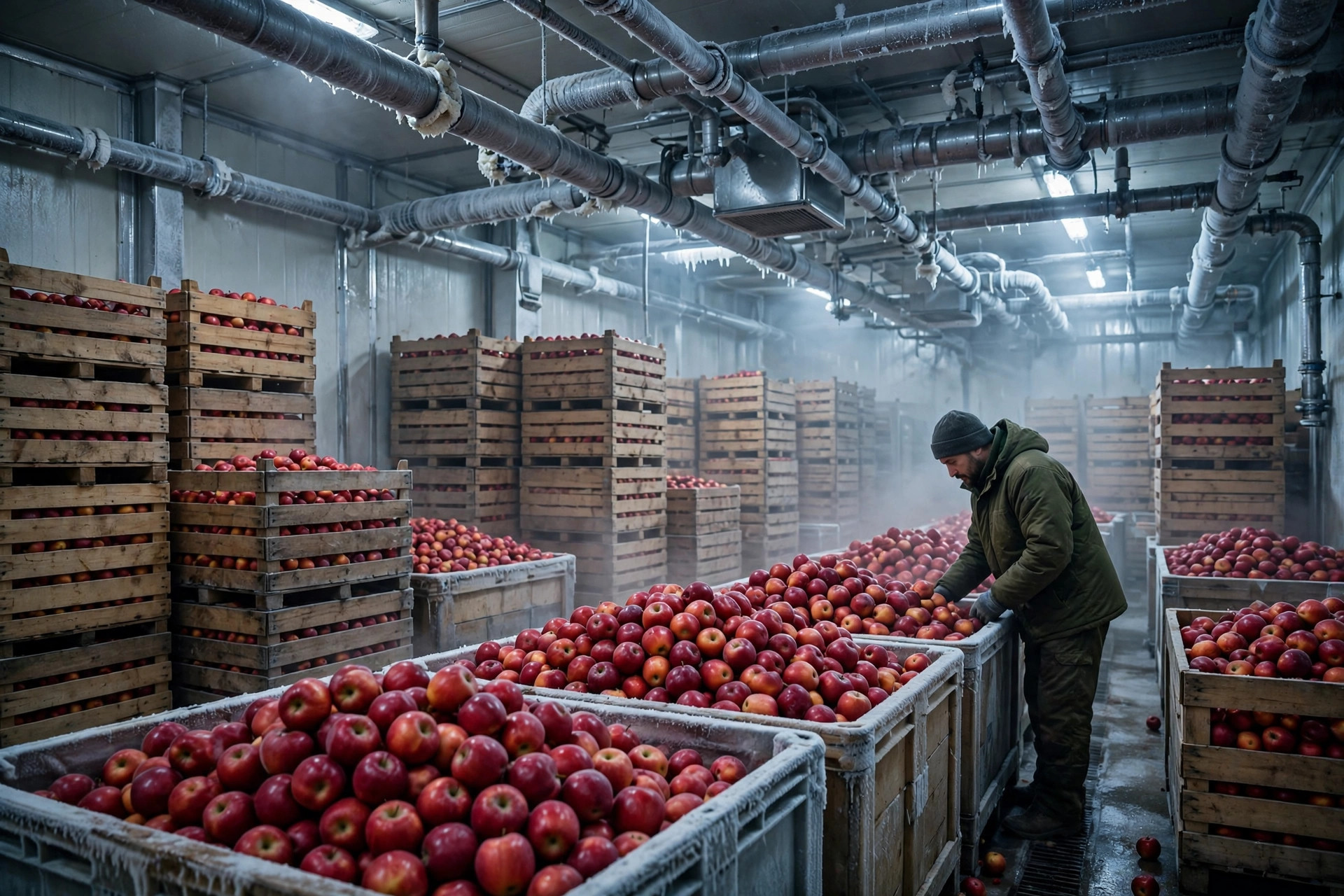
Controlled atmosphere storage plays a different game: oxygen pulled down from the normal 21% to 2–3%, carbon dioxide tuned by variety to somewhere between 1% and 4%, temperature held at 0–1°C, humidity at 90–95%. The apple's respiration is put in slow motion, ripening paused. Depending on variety, fruit holds 6 to 10 months — a sturdy variety like Fuji comes out the following spring still crisp. That is the real secret behind "eight months without a wrinkle" — not frozen, but held in suspended animation.
But here is the counterintuitive trap that catches 90% of newcomers: a CA room is not an upgraded cold store, and the wrong gas mix is worse than no storage at all. Too little oxygen and the fruit suffers low-oxygen injury — brown flesh. Too much CO2 and you get CO2 injury — skin disorders. Both are irreversible, and you only discover them on the day the room is opened. So the most valuable thing in a CA facility is not the refrigeration unit — it is the door seals and the daily gas readings. A leaky room makes the whole gas recipe meaningless.
The variety trap: mixed loads are gambling
In 2023 a client in Shaanxi, trying to save trouble, mixed late Fuji and Gala in one CA room and split the difference on the gas settings. At opening, the Fuji was perfect and the Gala came out with internal browning — losses doubled. Why? Varieties differ enormously in CO2 tolerance. Some develop injury above 1% CO2; others tolerate 3–4%.
So before you even talk to a CA operator, answer three questions: which variety, how many months of storage, and how fast must it sell after it comes out? Those three answers dictate the gas recipe. A serious operator will ask your variety first and then design the parameters. One who quotes a flat price and promises "any fruit, no problem" — walk away, don't look back.
There is also a time window that matters: after loading, oxygen must come down fast. The industry calls it "rapid CA" — the target is getting oxygen below 5% within a week of the first fruit going in. Drag it out over two weeks and the early respiration losses are already eaten; no amount of later storage makes them up.
One more insider detail, the kind you only learn on the seller's side: apples coming out of CA have a shorter shelf life than apples from ordinary cold storage. The logic is simple — they have been "holding their breath" for eight months, and once they meet normal air, ripening catches up fast. So the unloading schedule must lock to your sales rhythm: channels, transport, and packaging all lined up two weeks before the room opens. Move fast, hold nothing. For Mr. Wang we scheduled trucks at 50 tons a week. Not a kilo sat around.
How the quote really works: the seller's-side math
Now the money part — this is where our dear clients lean in. A CA room typically quotes 1.5 to 2 times an ordinary cold store (local markets vary; go by actual local quotes). Where does the premium go? Three places:
First, the building. A CA room must be gas-tight — sealed panels, sealed doors, sealed wall penetrations. That construction cost is baked in.
Second, the equipment. Oxygen scrubbers, CO2 scrubbers, ethylene removal, gas analyzers — a full set is not cheap.
Third, the people. A CA room needs daily gas readings and parameter adjustments by someone who actually understands the job. Not your average cold-store caretaker.
On the quote, interrogate these four lines:
- Billing unit: per ton-month, or a flat seasonal price? Four months and eight months of storage have completely different unit economics.
- Minimum volume: many CA rooms rent by the room — hundreds of tons. You bring 200 tons; who pays for the empty space? Ask upfront.
- Sealing and opening fees: oxygen pulldown, gas conditioning, leak checks — one-time charges, included in the storage fee or not?
- Testing frequency: daily readings or weekly? Fewer readings make the quote cheaper, but you can't see the difference — the apples can.
Here is the arithmetic I ran for Mr. Wang (illustrative numbers; go by actual market prices): 200 tons loaded in autumn, held until January. CA storage fees plus handling on one side; holiday-season selling price minus harvest purchase price on the other; then subtract normal shrinkage — 3% to 5% for CA storage, and that number goes into the contract. The alternative was ordinary cold storage: fruit starts declining by November, forcing an early sale that misses the holiday window. Compare the two, and the CA premium is essentially the price of buying the holiday price spread. Whether it pays comes down to two things: is your variety a good storer, and how confident are you in the holiday price?
The three clauses your contract must nail
Technique and pricing are done. These three are the contract — when things go wrong, they do the talking:
Clause one: shrinkage cap and over-shrinkage compensation. Normal shrinkage of 3–5% in writing. Beyond that, what does the operator pay — harvest price or market price at unloading? The difference is huge. Spell it out.
Clause two: responsibility for gas-parameter excursions. Can the operator send you the daily gas logs? How quickly must they notify you of an excursion? If low-oxygen injury happens, those logs are your entire evidence file. A verbal promise with no records is the same as no promise.
Clause three: acceptance standards at unloading. How do you inspect — sampling ratio, firmness and sugar tests or visual only, external look or cut-open? Whatever both sides agree, in writing. The worst standard is "looks fine" — when claims come, everyone tells a different story.
Mr. Wang's deal closed: 200 tons of Fuji, unloaded two weeks before the holiday, shrinkage under 4%. He captured the price spread, and this September he came back to me — now a long-term client. Another operator went cheap with a "we store anything" room, mixed varieties, and spent three months fighting a claim. The money saved on storage wouldn't cover the legal fees.
So the next time you negotiate a contract, ask these three questions: ① Is the shrinkage rate in the contract, and how is over-shrinkage compensated? ② Can I get a copy of the daily gas readings? ③ What is the minimum volume, and do I get money back for early unloading?
By Susan, 3PL Sales Director