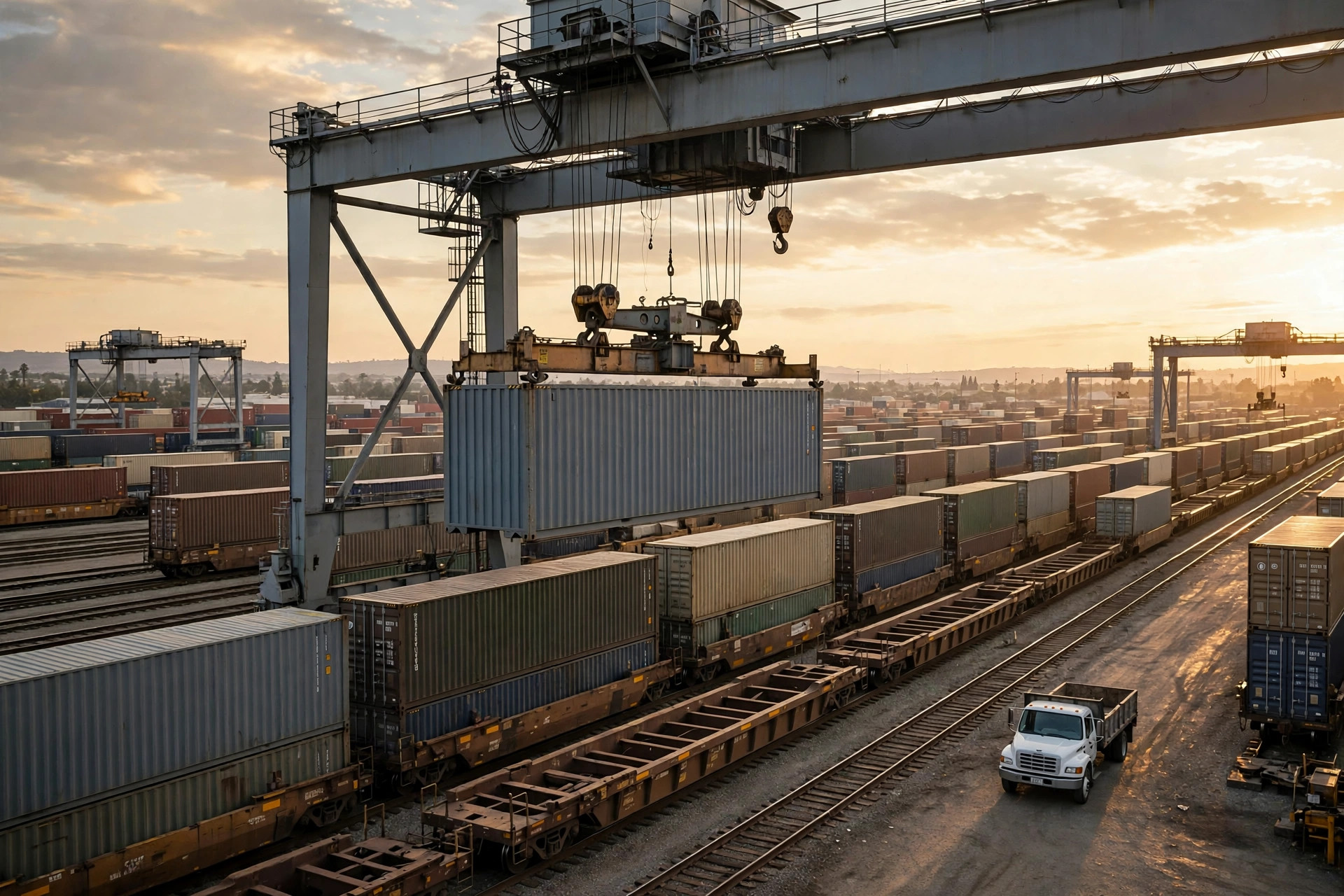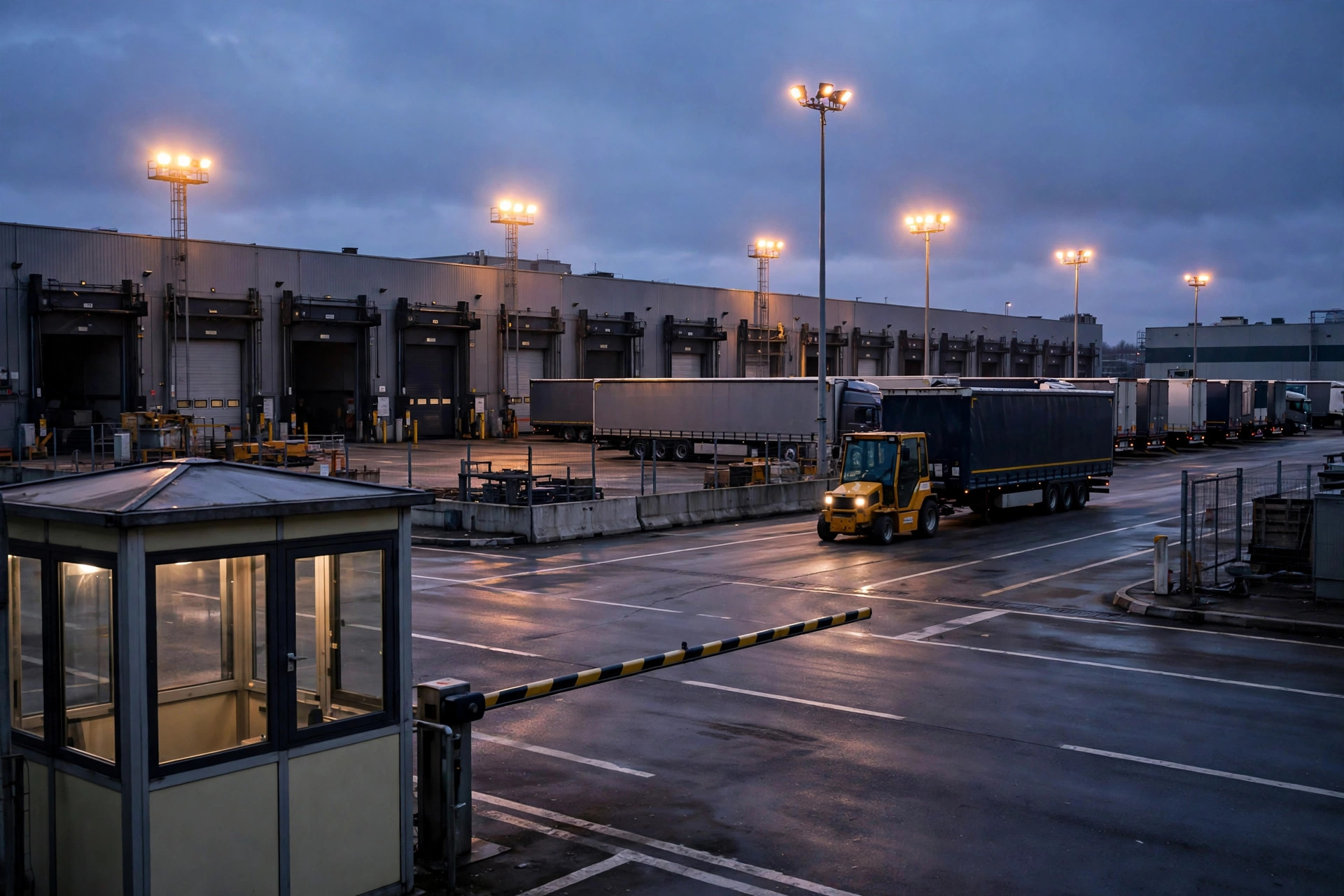
Last October I was waiting for a load at a logistics park in Xianghe, Hebei, killing time next to a driver from Shijiazhuang. He told me he'd just hauled a trailer of garments from Shandong down to Daxing in Beijing, and instead of deadheading home empty, he'd spotted a note on the freight broker's board: a load of hardware fittings in Tianjin bound for Handan — right on his way home. The rate was more than 30% below a normal one-way truckload quote. He grinned: "Empty miles burn diesel anyway. Might as well get the fuel money back."
I've driven trucks for 15 years, and that casual remark hides the most overlooked cost-saving trick in Chinese trucking: the backhaul. Too many shippers overpay for one-way hires when a third of that number could simply not be spent. It's not about squeezing drivers — it's about hitching a ride on a truck already heading your way.
So What Exactly Is a Backhaul Truck?
Simple: it's a truck that has unloaded at its destination and is heading home with an empty trailer. Long-haul trucking is directional: goods flow one way, but the truck has to get back somehow. A thousand empty kilometers still burns the same diesel, tolls, and wages.
So the economics are dead simple: the driver wants to avoid running empty, and the shipper wants a cheaper rate. Both sides win, and the price settles around 60-70% of a standard one-way truckload rate. Treat that as a rough band, not gospel — rates swing with the seasons, so always check live quotes on the freight platforms or with your local broker. In the slow season, when trucks are everywhere and drivers just want to get home, I've seen backhauls go for half price.
First, a wholesaler in Guangzhou. In November 2024 I met a guy at the Baiyun logistics park who ships everyday consumer goods to Chengdu — five to eight full 13-meter trailers a month. He used to book one-way hires on the apps: 13,000 to 16,000 yuan a load. Then he got smart: prep cargo two or three days early and hunt specifically for "Chengdu-bound return" trucks — trucks that had hauled freight from Chengdu to Guangzhou and were deadheading back. Same load, negotiated down to 8,500-10,500 yuan. At six loads a month, that's nearly 30,000 yuan saved — over 300,000 a year. His words: "That money used to just evaporate on the highway."
Second, a fastener factory in Handan shipping to Guangdong — dozens of loads a year, all standard parts with zero time pressure. They book backhauls exclusively now: 11,000-14,000 yuan one-way, 7,000-9,000 as a backhaul. Their secret is patience: "sometime this week is fine," and the driver plans his own route. Annual freight spend down nearly 30%.
Here's what both stories tell you: backhaul savings are a trade. You pay with schedule flexibility, and you get a price discount in return. The less you rush, the more you save.
Three Ways to Find a Backhaul Truck
Route one: the freight apps. Platforms like Full Truck Alliance (Yunmanman) and Huolala let shippers post loads and drivers bid — most let you filter for backhaul trucks. Fast, plenty of choice, you can find a truck at 2 a.m. The catch: you don't know the driver, so vehicle condition and reliability rest entirely on platform ratings. Keep your eyes open.
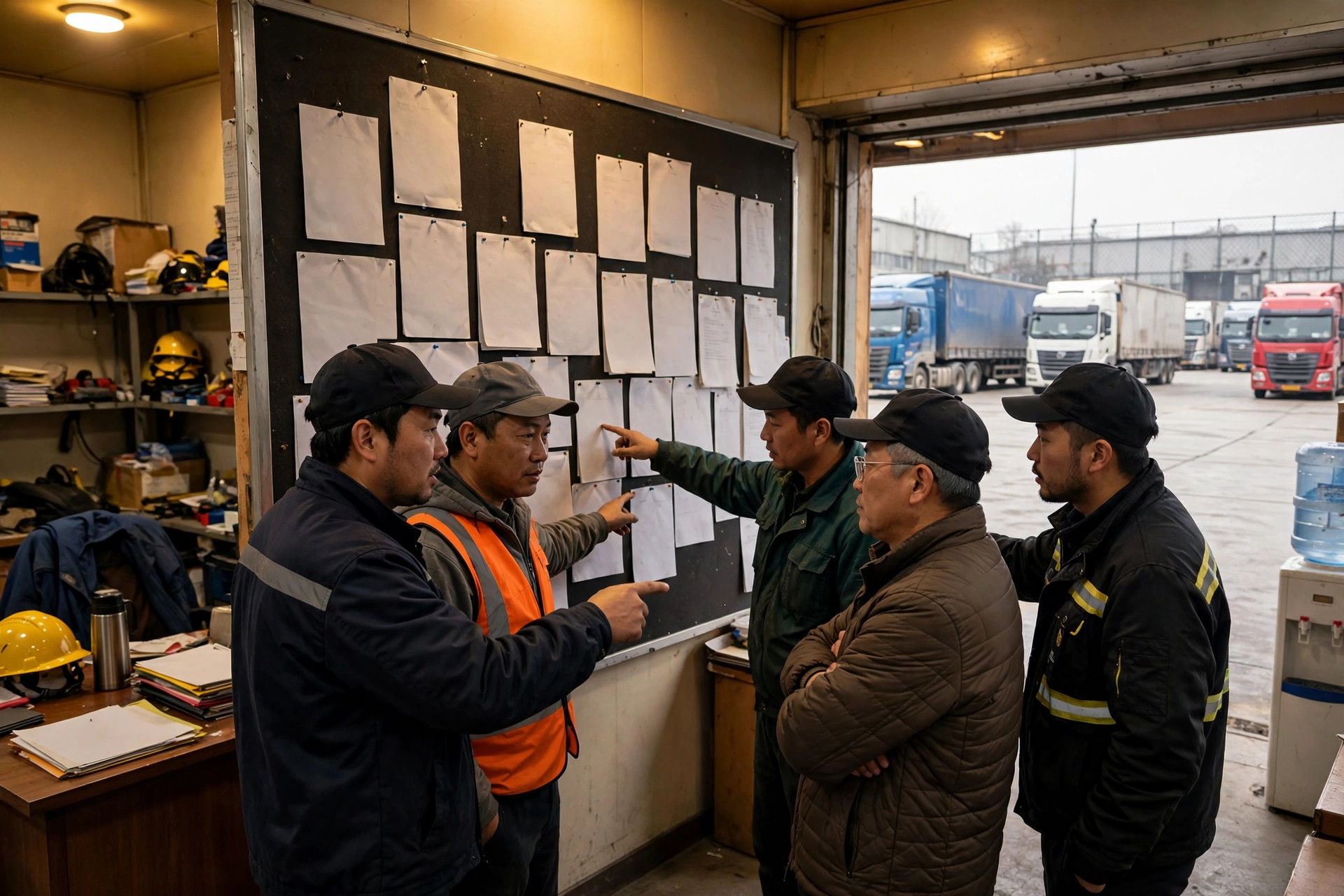
Route two: the freight broker's office at the logistics park. Every major park has one — a small room, a dark board covered in handwritten truck-and-cargo notes, and a proprietor with a notebook who knows every empty truck within a few hundred kilometers. Old school, but the most reliable route I know. These brokers live on their reputation; the trucks they introduce are rarely duds, and if something goes wrong you know whose door to knock on. Plenty of veteran shippers I know have used the same broker's office for a decade-plus.
Route three: drivers you know personally. Linehaul drivers run the same lanes and all know each other. Befriend one or two on your lane, and when they're running empty on the way back, you're the first shipper they think of. This route takes time to build, but it's the most worry-free and the rates are the most stable. Trust me — in trucking, once you're on good terms, everything gets easier to talk about.
The three routes aren't mutually exclusive — use the apps to benchmark rates, the broker's office for dependable trucks, and your driver contacts for the long term.
One-Way Hire vs. Backhaul: The Honest Math
Take a typical ~1,000 km lane with a 13-meter trailer as an example. (Rate bands below are market ranges — they float with the season, so verify against live platform or broker quotes.)
| One-way hire | Backhaul truck | |
|---|---|---|
| Full truckload rate | 9,000-12,000 yuan | 6,000-8,000 yuan (roughly 60-70% of one-way) |
| Time to find a truck | Within hours | Needs 1-3 days' lead time |
| Departure | On your schedule | Follows the driver's return plan; may wait half a day |
| Transit time | Stable, ~2 days | About the same, with some variance |
| Vehicle choice | Pick anything | Take what's available — reefers and high-side trailers aren't guaranteed |
| Best for | Tight deadlines, rush orders | Flexible schedules, consolidatable cargo |
You save ~30%; the price is planning ahead and leaving slack. Never put a rush order on a backhaul — you'll push, the driver will stress, and everyone ends up miserable.
Now, the cargo question. Good fits: non-urgent, ordinary cargo. Daily necessities, hardware, building materials, packaging, apparel — none of it minds waiting or sharing trailer space. Less-than-truckload shipments that need consolidating anyway are also ideal: you're already sharing a trailer, so share a cheap one.
Now the no-go list. Every item here cost somebody real money:
Deadline-driven freight. A backhaul driver may pick up half a load elsewhere first or make extra stops. Transit time is elastic — if your contract has late-delivery penalties, don't gamble.
High-value and fragile goods. Backhauls are often shared loads — your cargo squeezed in with someone else's. If it gets knocked around, the blame game gets ugly. Electronics, precision instruments, glassware: book a dedicated one-way truck and buy yourself peace of mind.
Refrigerated and hazardous cargo. A returning reefer may not run its cooling unit, and hazmat has hard vehicle-qualification requirements. Never chase a cheap rate with an unqualified truck — savings that end in an accident save nothing.
Special vehicle requirements. If your freight needs a 17.5-meter flatbed, the odds of one showing up as a backhaul are slim, and waiting could take days. Ask first; don't let the cargo sit.
One more thing — a quick correction. Most people hear "backhaul" and assume cheap means sluggish. After 15 years on the road, let me tell you — often the opposite is true.
Why? A one-way driver has already locked in his rate; early or late, same money, so hustle is optional. A backhaul driver wants this trip done — that load is literally his fuel money home, and he can't start his next job until it's delivered. Backhaul drivers are frequently the most motivated people on the highway: they drive hard and load and unload fast, terrified of delays.
There's a second thing: a driver heading home empty is relaxed, and relaxed drivers are easy to deal with. A one-way driver gets grumpy after two hours waiting at the dock. A backhaul driver thinks "I'm passing through anyway" — negotiating loading times or asking for a hand goes smoothly. The cheaper truck is often the friendlier truck. Sounds backwards; anyone who's run long-haul knows it's true.
Finally, straight advice for shippers. Move your prep two days earlier. The one real barrier to backhauls is the wait. Have cargo ready two or three days ahead and your options multiply — and so does your bargaining power. Last-minute scrambles always pay one-way prices.
Cultivate one or two regular drivers on fixed lanes. If you ship the same lane monthly, stop rolling the dice on apps every time. Build a standing arrangement with drivers on that lane. Stable rates, and one phone call finds a human being when something goes wrong.
Put the ugly details in writing. With backhaul drivers, spell out the rate, loading windows, and damage liability in a chat message before the wheels roll. Most drivers are straight shooters, but clear terms protect both sides.
Keep a backup lane. In peak season, when no backhaul can be found, the cargo still has to move.
An old saying to close with: money saved on freight is money earned. Backhauls aren't complicated — the complicated part is shippers assuming "booking a truck means paying the one-way rate." Flip that assumption, and saving enough for a new truck in a year isn't bragging. It's arithmetic.
By Shifu Zhao, Trucking Veteran (15 yrs)