Here's the short answer, for everyone who landed here by searching "chile mining spare parts warehouse antofagasta logistics": in Antofagasta, the question was never "do we stock enough spares." It's "did we do the downtime math right." Get the math right and the VMI-versus-stock-it-yourself split answers itself. Get it wrong and every dollar sitting on those shelves is wasted.
Let me be blunt: the spare parts warehouse is the most thankless department on any mine site. When you spend money, everyone says you spend too much. When the plant stops, everyone says you stocked too little. I've seen too many parts managers get squeezed from both sides — and then get measured on inventory turns, which is the wrong KPI entirely. More on that in a minute.
This one cuts two ways. On one side, VMI — vendor-managed inventory — is getting hot in mining country, with suppliers promising "you just use the parts, we'll manage the stock." On the other side, plenty of mines sleep better with a few million dollars of their own spares on the shelf. Both sides are half right, and both are half wrong.
The pit I walked into: a $2.8M parts room taken down by a $12,000 bearing
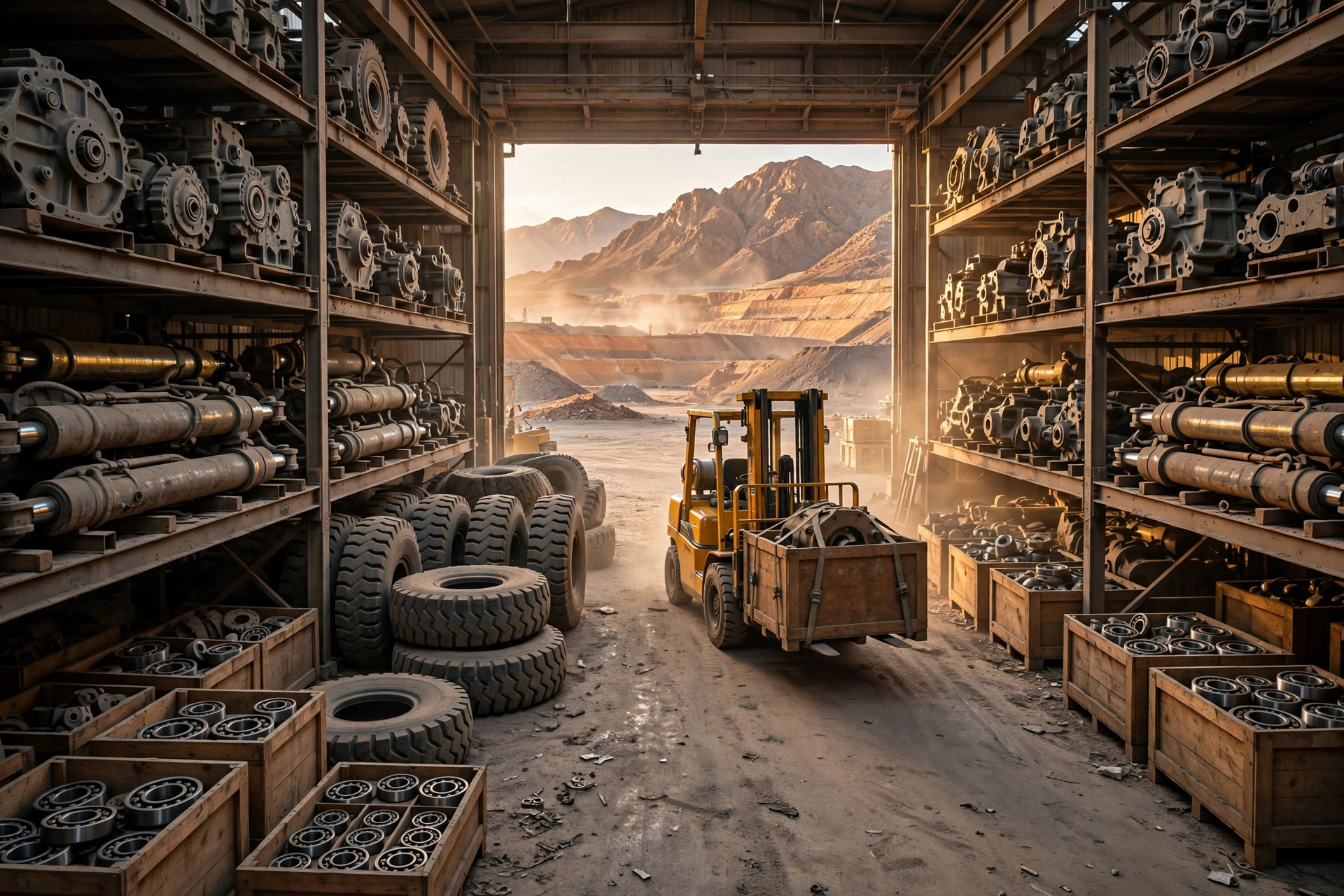
A few years back I was doing a warehousing diagnostic for a copper mine in Arizona. The parts room carried $2.8 million on the books, 4,000-plus SKUs, shelves full to the ceiling. The manager told me, "We haven't stopped production for a missing part in five years." Two months later, the crusher's main shaft bearing failed. A $12,000 part. Not on the shelf.
Why not? Because finance had pushed an inventory reduction the year before, purging "slow movers" that hadn't turned in five years. The bearing was on that list. Clearing it saved $12,000 in carrying cost and everyone celebrated. Then the replacement had to come from the OEM — production slot, air freight, customs — nine days. The crushing line sat idle for six of them.
Here's the math: for a high-value copper operation, unplanned downtime runs $15,000 to $50,000-plus per hour. Take the most conservative end — $15,000. Six days is 144 hours. That's $2.16 million gone. They saved twelve grand and lost over two million.
The part that really stung? That parts room was measured on inventory turnover. The fastest way to make turns look good is to purge slow movers — so the manager hit his KPI and the mine stopped. Tell me again what that KPI was supposed to measure.
So here's my first contrarian take, up front: a spare parts warehouse should not be measured on turns. It should be measured on downtime hours caused by stockouts. Turns are finance logic. Downtime hours are production logic. A parts room is production insurance first, not a finance cost center.
Why Antofagasta changes the Chile mining spare parts warehouse equation
Northern Chile is one of the most extreme mining setups on earth. The Antofagasta region alone accounts for 54% of Chile's copper output. Escondida — the world's largest copper mine, roughly a fifth of Chilean production and about 5% of global supply — sits in the Atacama Desert some 170 kilometers southeast of the city, at 3,050 meters above sea level. Spares travel roughly 200 kilometers inland from the port city to reach the mine.
That geography creates three realities:
First, lead times are measured in months. Standard mining spares run 3 to 45 days; custom major components stretch into months. The part you order today might arrive next quarter. The mine does not wait.
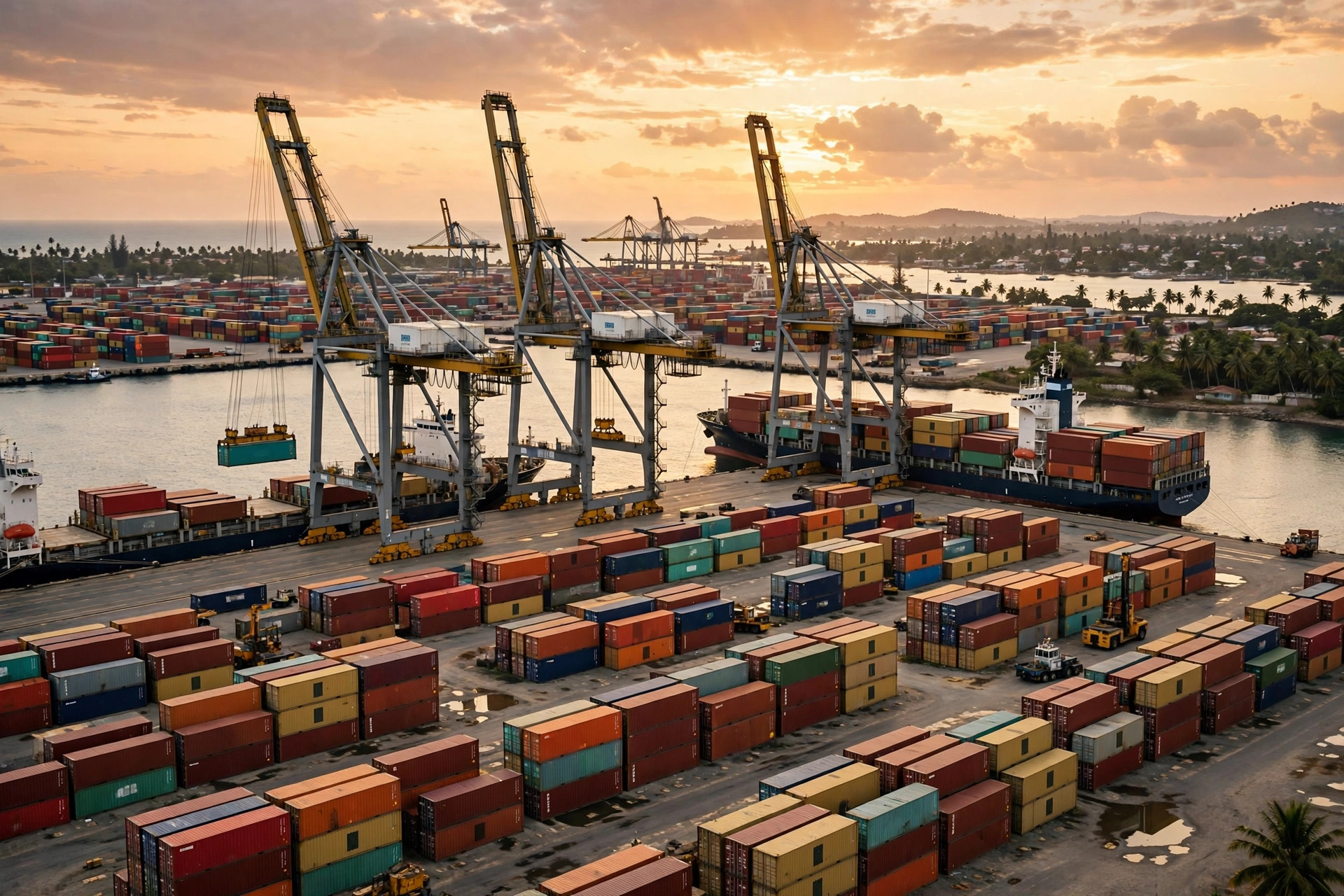
Second, the last mile is expensive and fragile. Parts clear customs at the Antofagasta port complex — the city port, Coloso to the south, two more terminals up at Mejillones — then climb desert highways to 3,000 meters. A port strike or a closed mountain road wipes out whatever you saved on freight.
Third, suppliers cluster at La Negra. The La Negra industrial zone is Antofagasta's main mining logistics pole, and most equipment vendors keep forward warehouses there. Chuquicamata, also in the region, sits about 215 kilometers from the city and ranks among the world's largest open-pit copper mines — which means a forward warehouse in the city covers every major mine within a 160–220 kilometer radius, a same-day round trip. If you arrived here via a "chile mining spare parts warehouse antofagasta logistics" search hoping for a vendor directory, one warning: the vendor matters less than the contract you'll sign with him. Keep reading.
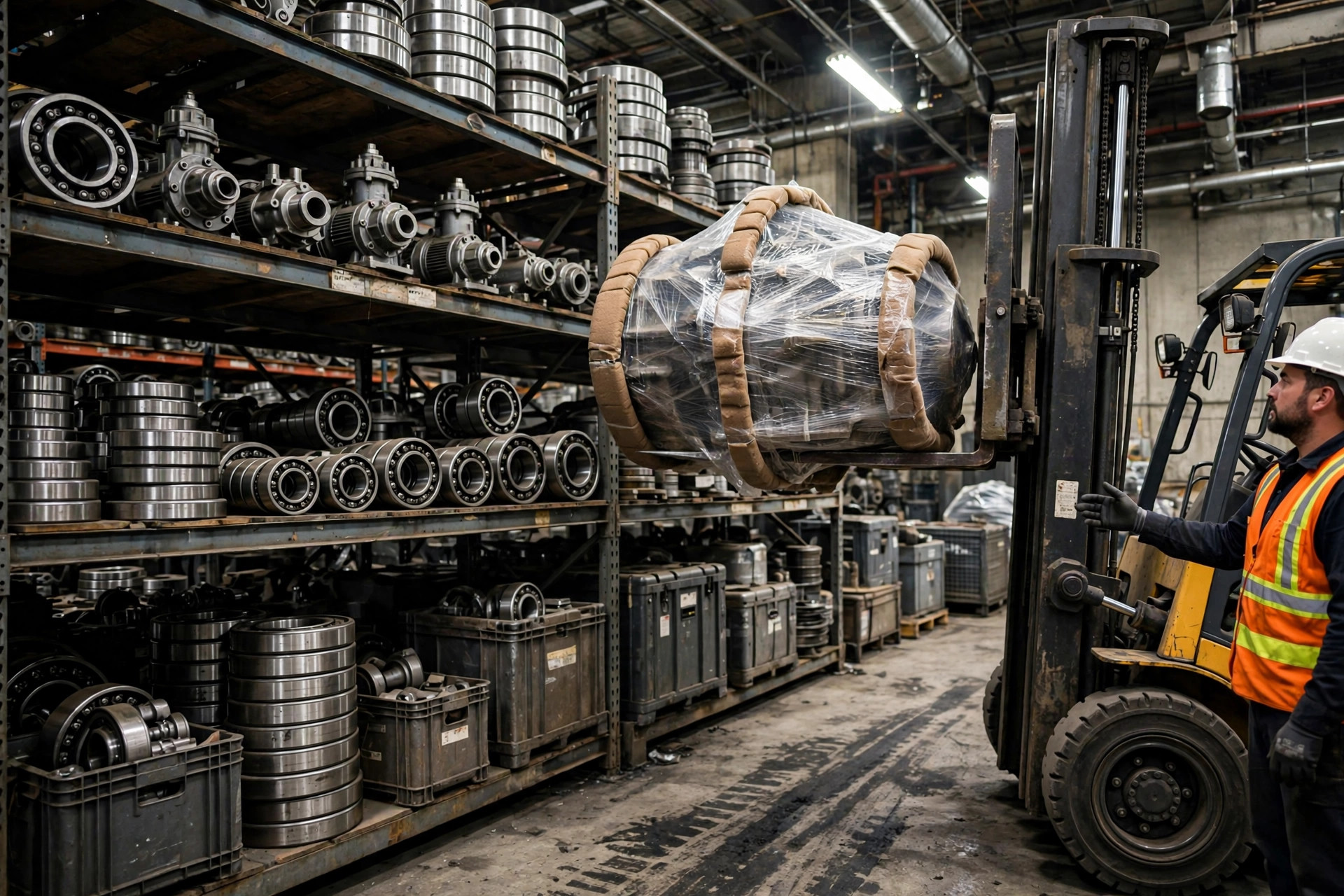
VMI in Antofagasta logistics: the trade-off, costs first
Before we talk VMI, put the costs on the table. This is the sheet I use with clients, and every number below comes from published industry sources:
| Item | Number |
|---|---|
| Unplanned downtime, copper mine | $15,000–$50,000+/hour |
| Unplanned downtime, single haul truck | $5,000–$20,000/hour |
| Emergency repair vs. planned repair | ~4.8x more expensive |
| Haul truck final drive replacement | ~$200,000 |
| Hydraulic system failure | 12–24 hours down, ~$500,000 lost |
| Annual inventory carrying cost | 20–30% of inventory value |
Read that table and the trade-off gets obvious. A million dollars of spares costs $200,000–$300,000 a year to carry. Sounds like a lot — until one hydraulic failure costs you $500,000, which pays for two years of carrying cost in a single incident. Put plainly: in mining country, spare parts inventory isn't a cost, it's an insurance premium. People who complain about the premium usually haven't priced the claim.
VMI's pitch is clean: the supplier manages the stock, you pay for what you consume, min/max levels and replenishment are his problem. In Antofagasta it has genuine soil — vendors already run forward warehouses at La Negra, so the response radius works. But costs first, because this cuts two ways:
Cost one: VMI guarantees availability, not speed. Writing "no stockouts" into a contract is easy. Writing "at the mine gate within two hours" is hard. When the plant stops, what saves you isn't whether the supplier's warehouse has the part — it's how fast his truck climbs to 3,000 meters. In a VMI contract, the response-time clause matters ten times more than the stock-level clause. I've watched too many people skim past it at signing.
Cost two: you hand over your data. VMI only works if the supplier sees your consumption data and maintenance plans. Plenty of mine maintenance departments treat that as crown jewels and won't share. No data, no VMI — you end up with a supplier renting a warehouse next door while the same stockouts keep happening.
Cost three: small mines have no leverage. VMI means the supplier fronts the capital and carries the risk, so he only offers it to big accounts. A mid-size mine asking for VMI gets a markup or a minimum-volume commitment. The money comes from somewhere — sometimes VMI ends up costing more than managing it yourself.
Now the benefits, which are real: cash gets freed up, obsolescence risk moves to the party that knows the parts best, and you stop paying planners to babysit filters and bolts. For operators with mixed fleets and mid-size sites, VMI pencils out.
The system that actually works: three buckets, three policies
Arguing VMI versus self-stock is a false debate. Every mine site I've seen run smoothly does a hybrid, sorted by criticality:
| Bucket | Definition | Policy |
|---|---|---|
| A: line-stoppers | Failure stops production, no workaround | Stock it yourself, never hit zero. Safety stock sized on lead time plus failure rate — ignore turns |
| B: long-lead criticals | Month-scale lead time, but a workaround exists | VMI forward warehouse (La Negra or Antofagasta city), response time locked in the contract |
| C: consumables | Filters, bolts, seals | VMI or consignment, pay on consumption, let the supplier top up on his rounds |
Three hard rules. First, re-score the A-list every year — equipment changes, processes change, the list has to follow. The Arizona mess happened because the list hadn't been touched in three years. Second, B-bucket VMI contracts get response-time penalties; a service level without a penalty is a wish. Third, don't manage C-items yourself to save a management fee — having your planner chase filters is the real waste.
One last piece of advice, the same question I ask every client after a parts-room diagnostic: next time someone tells you the spares inventory is too high and needs cutting, ask them one thing — will the first item cut be the one that hasn't moved in five years but can shut you down for a week when it does? If they can't answer, don't make the cut.
By Lao Mi, Supply Chain Veteran (20 yrs)