Let me tell you about the afternoon that taught me what a california warehouse heat illness prevention plan is — the hard way.
Last September, during one of those brutal Southern California heat waves, the thermometer in my warehouse hit 97 degrees. My building has a metal roof and no central AC — a 30,000-square-foot oven, basically. One of my pickers, Lao Wang, went pale mid-shift, grabbed a rack for balance, and said he felt dizzy. We got him into the office, blasted the AC, and poured water into him until the color came back to his face.
He was fine. But I didn't sleep that night. All I could think was: what if he hadn't been fine? What would that cost me — the ambulance, the shutdown, the investigation, the liability? The next morning I started digging into the regulations, and that's when I learned California had put an indoor heat illness rule in place back in July 2024. For indoor workplaces like warehouses, once it hits 82°F inside, employers need water, rest, cool-down areas, training — and a written california warehouse heat illness prevention plan.
My first reaction, like every small warehouse owner I know, was: how much is this going to cost me? A lawyer to draft it? New equipment? Here's the thing the big-company playbooks won't tell you: we can't afford their version, and we don't need it. My whole setup cost less than a month of gas for the forklifts.
So here's the honest breakdown from one small operator to another: what a california warehouse heat illness prevention plan actually has to include, how we did it on the cheap, and what inspectors really look for.
Our Reality: A Metal Roof in the Inland Empire
Full disclosure, so you know where I'm coming from.
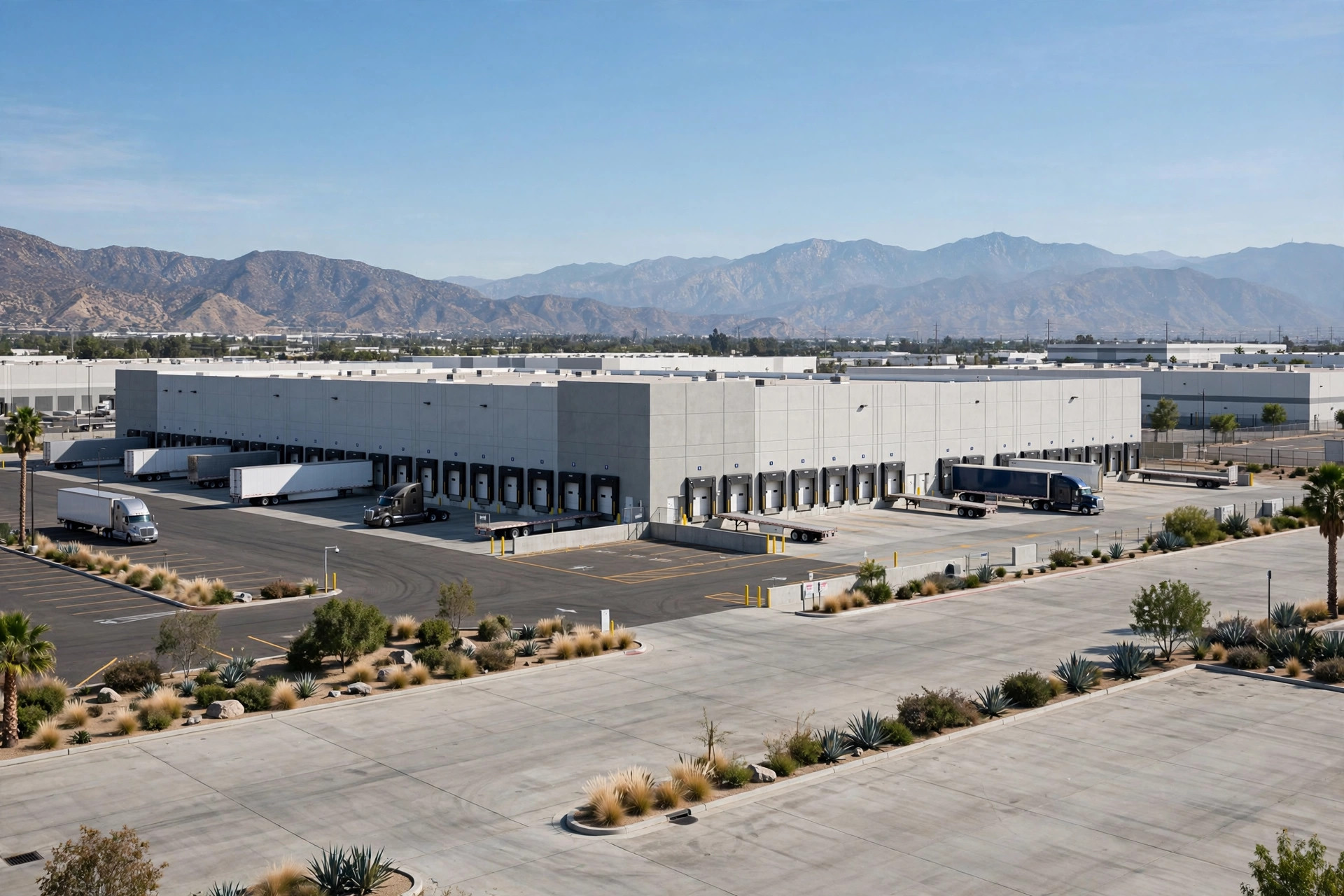
My warehouse sits in the Inland Empire. Metal roof, no central AC — if I had that kind of money I'd have moved buildings already. When it's 100 outside, it's 93-plus inside. I've got about a dozen people doing picking, packing, and forklift work — all physical, all day. Our old "heat strategy" was a case of bottled water by the door. Help yourself.
That doesn't cut it anymore. Under Cal/OSHA's indoor heat rule, warehouses are explicitly covered: at 82°F indoors, you need drinking water, rest, cool-down areas, and training for everyone — plus that written plan. At 87°F there are additional requirements like cooling the work area and work-rest schedules. (Check the Cal/OSHA website for the latest thresholds and details — I'm sharing what we did, not quoting the rulebook.)
The wake-up call came from a buddy of mine, Old Chen, who runs a warehouse two exits down the freeway. An inspector walked in and the first thing out of his mouth wasn't "show me your fans" — it was "show me your written heat illness prevention plan." Chen froze. When you can't produce the plan, everything after that conversation gets harder. That piece of paper matters.
What a California Warehouse Heat Illness Prevention Plan Must Cover
I boiled the requirements down to five building blocks. This is an operator's summary, not legal advice — for anything with legal consequences, talk to a professional.
1. Water. Cool, clean, drinkable water, available where people actually work — not a quarter-mile hike away. We put water coolers with cups at three points in the warehouse, plus a cooler of ice water by the door. Low-tech. Works. The test is simple: can a thirsty worker get water in under a minute?
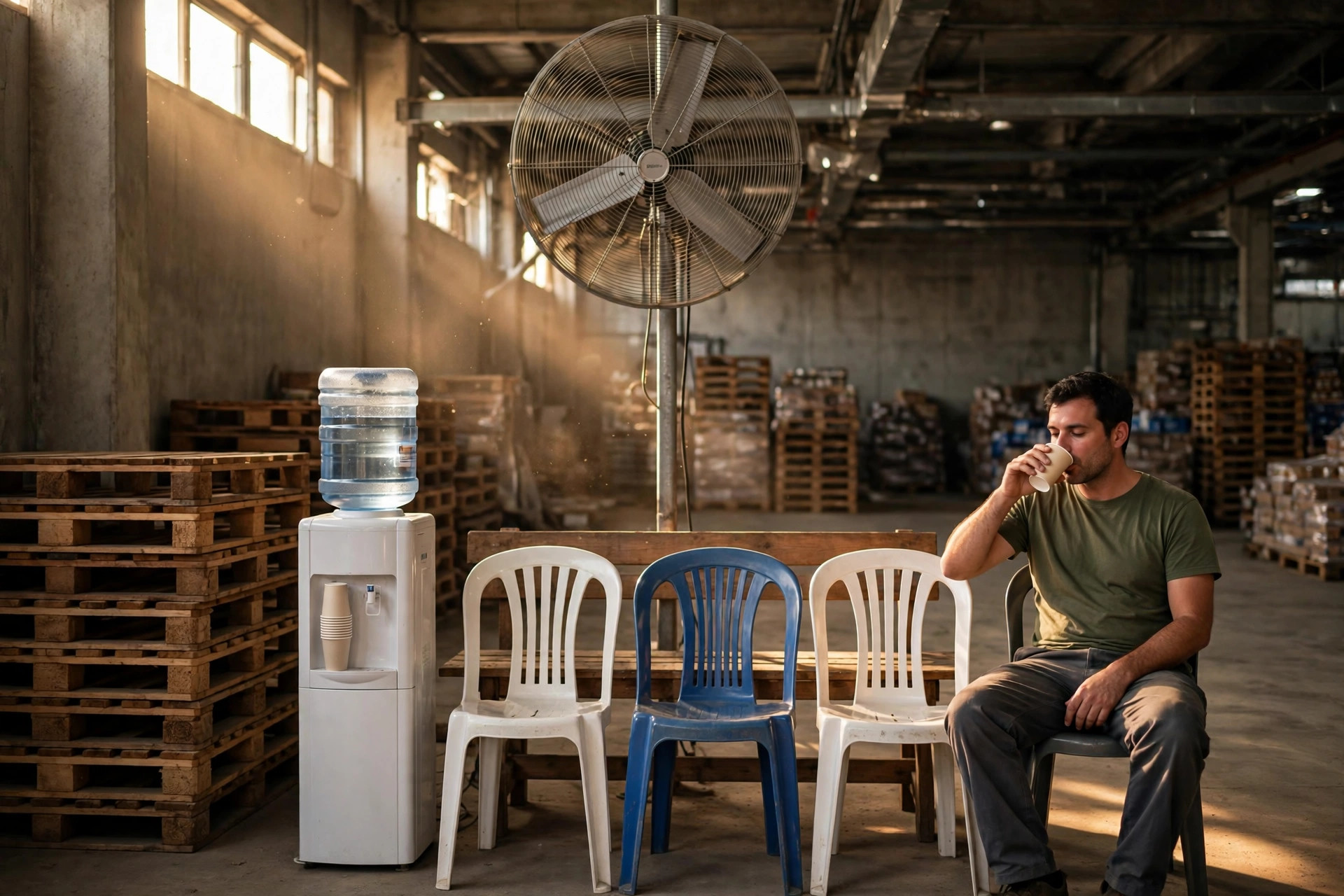
2. A cool-down area. Somewhere cooler than the work floor where people can sit and recover. We don't have a spare room, so we set up a "cool-down corner" in the shade by the office: a few chairs, a big industrial fan, right next to a water cooler. Inspectors check that it exists, not that it's fancy.
3. Training. Every employee — supervisors and floor staff alike — must be trained before doing work that could expose them to heat illness risk. Symptoms, prevention, what to do when a coworker looks off, who to call in an emergency. Our version: a 20-minute huddle every year before summer, I do the talking myself, everyone signs an attendance sheet, and the sheet goes in a folder. That sign-in sheet is one of the first things an inspector asks for.
4. Emergency procedures. If someone shows symptoms, who's in charge, what number to call, which hospital, what first aid on the spot — written down and posted on the wall at the cool-down corner. We named two emergency contacts whose phones stay on during heat season.
5. The written plan itself. How you do all of the above, documented: how you monitor temperature, where the water stations are, where the cool-down area is, when training happens, who the emergency contacts are. It can be a standalone document or folded into your existing safety plan. The point: it's written, people have read it, and it's real.
Five blocks. That's the skeleton of your california warehouse heat illness prevention plan. Now the fun part — doing it without money.
Doing It the Small-Warehouse Way: A Shoestring Budget
Big companies throw systems, sensors, and consultants at compliance. Here's our three-tier approach — pick the tier that fits your wallet:
| Tier | What it covers | The scrappy version | Cost |
|---|---|---|---|
| Zero-dollar | Water + scheduling | Cooler of ice water + cups; shift heavy work away from peak heat hours | Basically nothing |
| Cheapskate | Cool-down + monitoring | Secondhand industrial fan + a wall thermometer; chairs by the office as the cool-down corner | Small |
| Step-up | Training + paperwork | 20-minute all-hands training with sign-in sheet; one-page emergency flow posted on the wall; plan document on file | Costs time, not money |
Let me do the "hassle math" for you. If Lao Wang had actually gone down that day — ambulance, half a day of stopped lines, the investigation, the follow-up visits — my tiny crew would have lost days, not hours. Missed orders, stressed everyone out, and a much bigger bill than any fan or water cooler. For a small warehouse, compliance isn't about dollars spent. It's about trouble avoided.
A few hard-won details, free of charge:
- Hang the thermometer where people work, not in the office. The office says 79°F while the pick line says 93°F. Guess which number the inspector cares about — and which one your conscience should care about.
- Assign someone to refill the water daily. We run a rotation. Forget your refill day, you buy boba for the crew that night. Peer pressure beats fines.
- Don't make training a checkbox exercise. My first session was me reading bullet points while everyone stared at their phones. Then I switched to telling Lao Wang's story — pale face, shaky hands, nausea means stop — and suddenly everyone remembered. Real stories beat regulations.
- Train new hires on day one. Don't wait for "summer." California weather doesn't wait.
What Inspectors Actually Check in Your Heat Illness Prevention Plan
Here's the counterintuitive part: inspectors read the paper first, watch the people second, and look at the equipment last.
They walk in and ask for the written plan and the training records — do they exist, are they signed, do the dates line up? Then they look at the floor: is water actually there, does the cool-down area exist, is there a thermometer? Only then do they care how big your fans are. So don't do it backwards — spending everything on shiny equipment while the paperwork is blank.
Our ritual now is a "heat season checklist" we run every May: coolers working? Chairs still in the cool-down corner? Thermometer battery alive? New hires trained? Emergency contacts' numbers unchanged? Thirty minutes, once a year, and I sleep better.
One trade-off to think through honestly: some operators tell themselves "we usually hover around the high 80s, maybe we don't quite hit 82°F." Don't gamble on that. Heat waves don't ask permission, and "we thought we were under the threshold" is not a defense anyone wants to test. Treat 82°F as "it will happen" and prepare accordingly. Small warehouses can't afford to gamble.
And the obligatory disclaimer, which I mean sincerely: I'm not a lawyer, and this isn't legal advice. Regulation details, temperature thresholds, penalty amounts — check the Cal/OSHA website for the latest official policy, and don't treat this article as gospel. For anything with legal weight, a short consultation with a professional costs far less than learning the hard way.
We small warehouses can't burn money like the big players. But we can afford to care. Five building blocks, one checklist, thirty minutes a year — a california warehouse heat illness prevention plan isn't as scary as it sounds.
Small warehouses have their own way of surviving. Compliance works the same way.
By Xiao Ma, Small Warehouse Owner