Brazil Orange Juice Export Warehousing Starts With Cold, Not Space
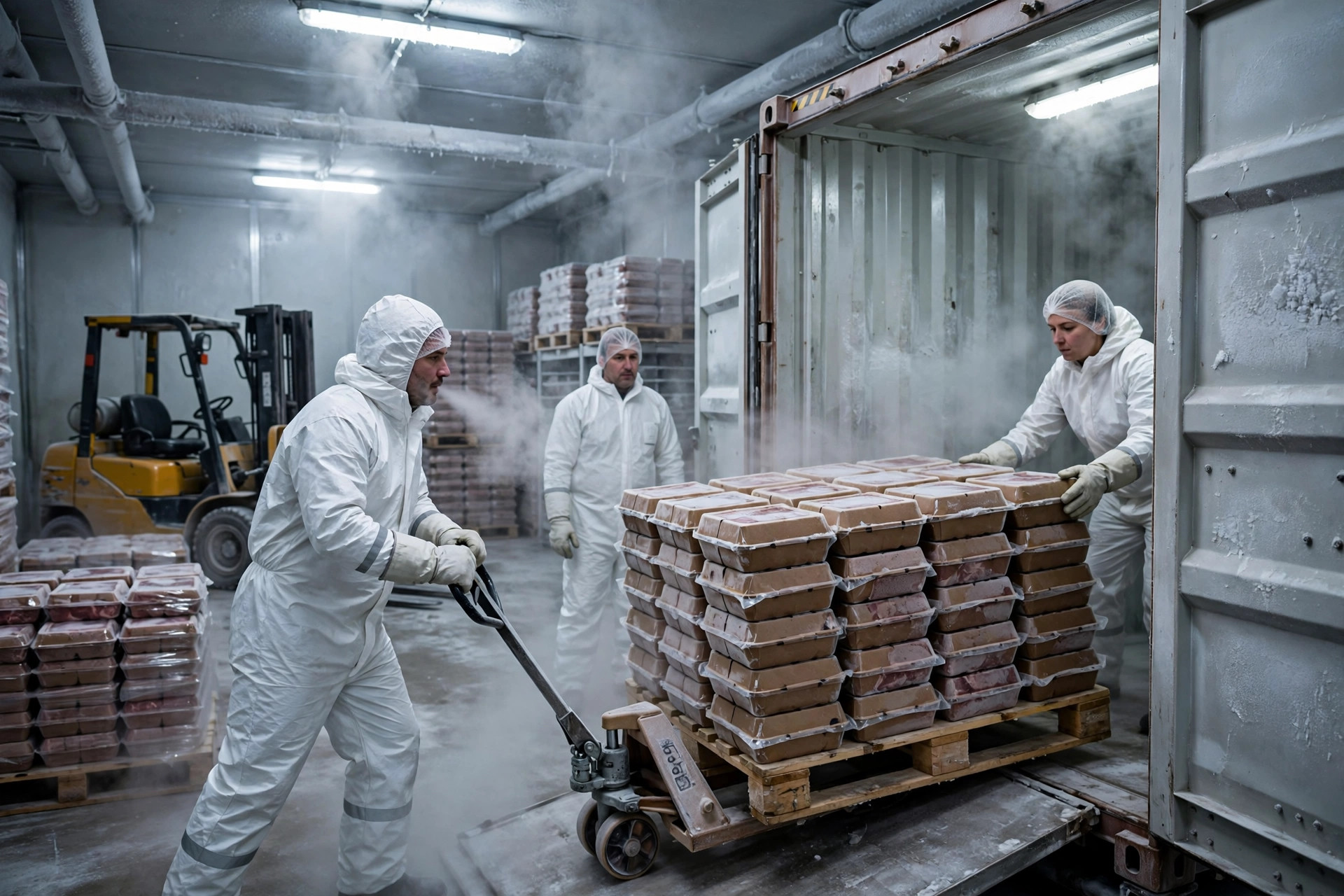
For orange juice, cold is not one line on the power bill. It is the whole game. Juice hates heat, hates repeated temperature swings, and hates it when batches get mixed up so nobody can explain which pallet is which. Our low-budget method is boring on purpose: check the buyer specification first, match the temperature, packaging, and shelf life exactly as written, and do not improvise. No pre-cooling, no loading. Keep door openings to a minimum. Make sure the temperature logger data lines up pallet by pallet.
That sounds fussy until you remember the asymmetry. A big operator can absorb a mistake and move on. A small warehouse cannot. One failed shipment can cost us the profit from several good ones, plus the customer. So we treat the specification sheet like a contract, not a suggestion. When a policy, tariff, or inspection rule is unclear, we do not guess out loud. We tell the customer to follow the latest official policy, and we focus on the part we control: clean storage, clean documents, and a clean handover.
Frozen Concentrate and Not-From-Concentrate Are Different Jobs
Frozen concentrated orange juice and not-from-concentrate juice share a name and almost nothing else in the warehouse. Frozen concentrate lives in deep freeze. Its enemy is thawing and refreezing, so storage is about stable freezing and strict batch separation. Not-from-concentrate juice is more fragile in a different way. Its shelf life pressure is higher, so storage is about speed, rotation, and never letting stock sit around because nobody felt like moving it. Run both with the same routine and trouble is only a matter of time.
| Factor | Frozen concentrate | Not-from-concentrate |
|---|---|---|
| Storage priority | Keep it frozen and stable | Move it fast, first in first out |
| Biggest risk | Temperature swings and mixed batches | Short shelf life and slow turnover |
| Small warehouse fit | Consolidation, short transit, split shipments | Small lots, quick in and out |
| Documents that matter | Freezing specification and batch number | Production date, expiry date, batch number |
One rainy season job still sticks in my mind. A small lot of frozen concentrate came down from the São Paulo growing region, just enough to fill part of a consolidated container. The shipper's big warehouse was full, so the leftover lot spilled over to a small operator like us. I asked three questions before accepting: do we have the specification, are the batches clearly separated, and when is the vessel sailing. Two batches had vague production information on the paperwork, and I refused to receive the goods until the shipper fixed it. That stubbornness paid off at port inspection, when we could match every pallet to its paperwork without a long argument.
The São Paulo to Santos Leg Is Where the Chain Breaks
The road from the São Paulo region to Santos is not especially long. The danger is the handover. Fruit and processing sit inland, the port sits on the coast, and every gap between them is a chance for the cold chain to fail. A late truck, a reefer container that was never properly pre-cooled, or a long queue outside the port can each do real damage. Our warehouse sits in the middle of that route, so I have learned to see us as a connector, not a destination. We stabilize the temperature, sort the batches, prepare the export documents, and hand the cargo over cleanly.
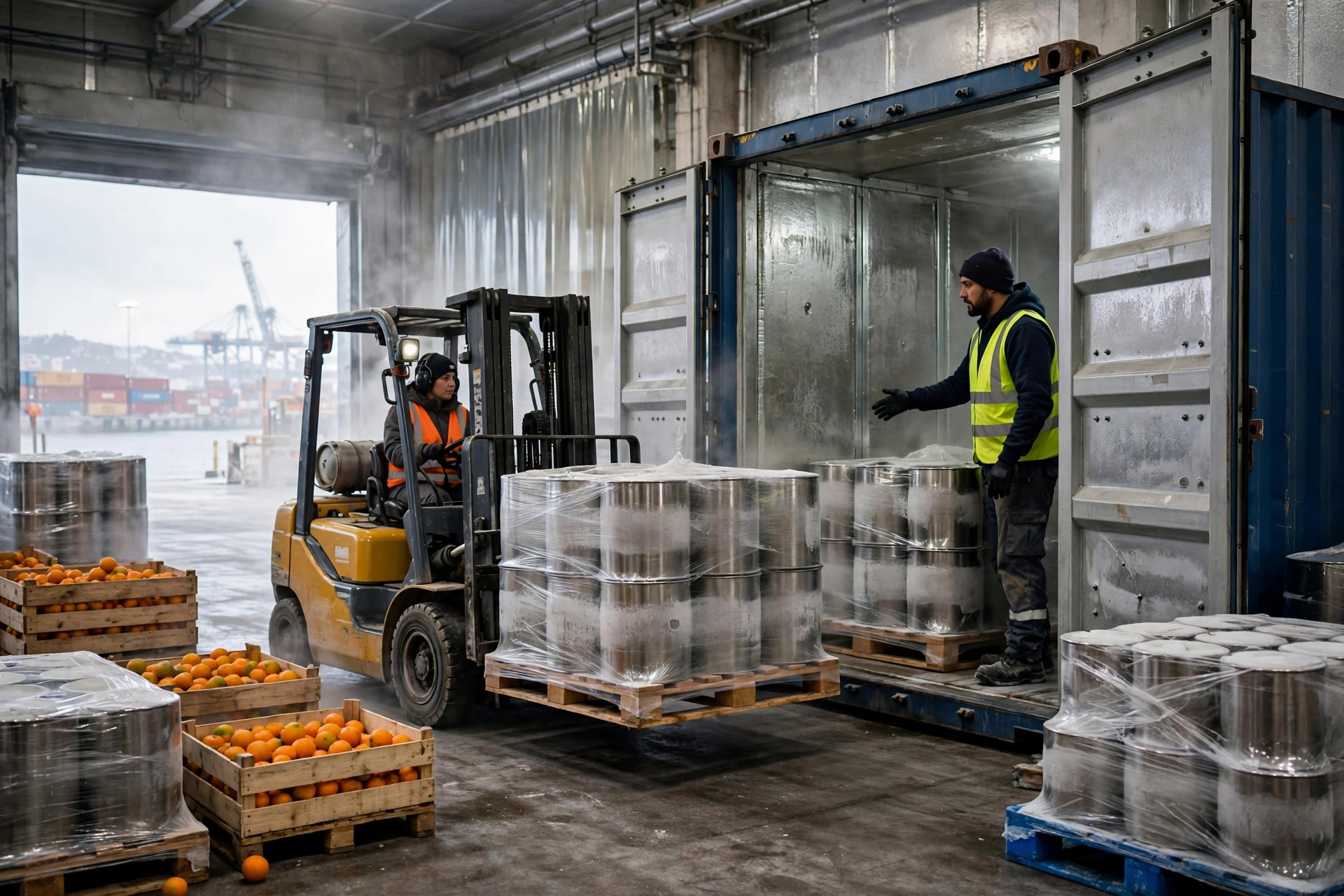
Reefer container checks deserve more respect than they usually get. Before a container reaches us, we want to know its pre-cooling status, whether the refrigeration unit shows any alarm, and whether the inside carries any smell or residue from the previous load. During loading, pallets need to be stable with room for cold air to circulate. Seal numbers, container numbers, and temperature settings get photographed for our records. None of this takes long, but discovering a container problem at the port is a different story. Swapping a container and restacking cargo there costs double the time and double the money. We have no dedicated container inspector, so the checklist lives on a sheet of paper taped to the loading area. Whoever loads the container ticks it off. It looks homemade because it is homemade, and it works.
Another job taught me how much sequencing matters. A consolidated not-from-concentrate shipment had its vessel moved forward, and the shipper asked if we could release a day early. Our tiny team already had a full release schedule that day. Instead of forcing it, we reordered the two batches by expiry date and loading sequence. The batch with the nearer expiry went first, the one with more breathing room shifted by half a day, and both made their vessels. Small teams do not win by having more hands. We win by getting the order right.
Expiry and batch control come down to one rule that has to live on the warehouse floor, not just on the wall: first in, first out. We store by batch, put the nearest-expiry stock closest to the outbound door, and keep labels facing outward so a stock count shows immediately which batch should move next. Spending ten extra minutes splitting batches at receiving saves an hour of hunting later, and more importantly, it stops near-expiry stock from hiding at the back until it is too late. Our stock is small, which is exactly why there is no excuse for letting batches turn into a mess.
Small Warehouses Should Eat the Edges, Not the Whole Cake
Here is the counterintuitive part: for a bulk export product like orange juice, a small warehouse should not chase full containers and long contracts. That is the big warehouse game, and we will lose on price and scale every time. The edge work is different. Leftover lots, consolidated containers, split deliveries, temporary transit storage, and batches with awkward expiry dates are the jobs big warehouses find annoying. Those are precisely the jobs where a small warehouse can build a reputation.
Our survival plan has three parts. Consolidation has to stay clean, with different shippers and batches never mixed on one pallet, documents kept separate, and responsibility clearly assigned. Splitting has to stay logical, so cargo gets divided or combined near the destination port in a way that avoids idle waiting. The final leg has to keep slack in it, because vessel schedules, trucking, and port queues all shift. A plan timed to the minute will fail. A plan with breathing room might survive.
Brazil orange juice export warehousing, seen from a small warehouse, is not a contest of equipment or scale. It is a contest of attention, sequencing, and the courage to reject vague paperwork. We cannot use the big-company playbook, and there is no point envying it. Keep the cold chain intact, keep the batches clear, and make the awkward edge jobs your specialty. Small warehouses have their own way of surviving, and honestly, it is not a bad way to live.
By Xiao Ma, Small Warehouse Owner