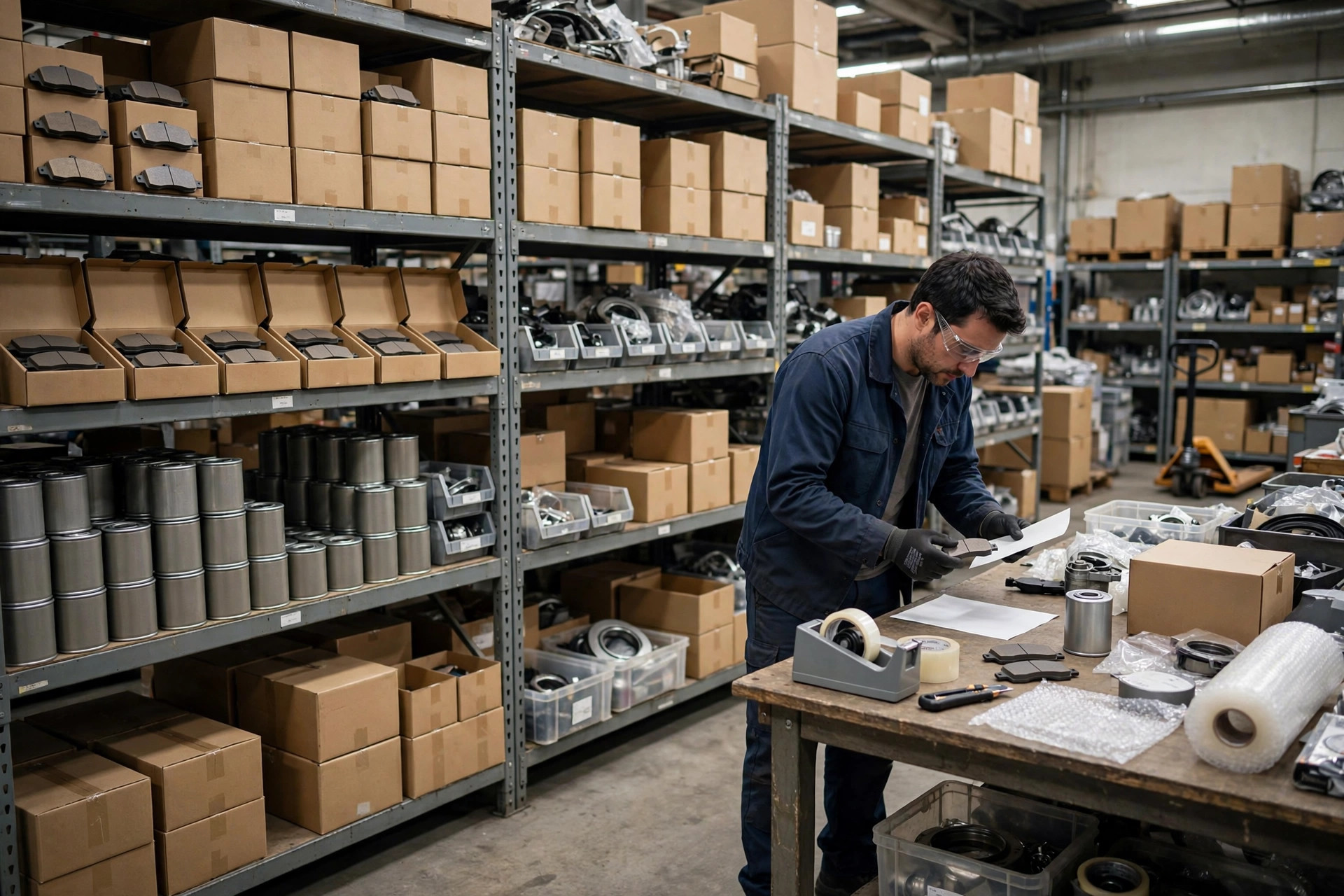
Here is the bill that settles most arguments about auto parts warehouse storage picking: in a mid-size parts warehouse picking 12,000 lines a month with 14 pickers, the cost per line comes out at roughly 9 yuan. Less than 3 yuan of that is actually taking the part off the shelf. The other 6 yuan goes to finding it, walking to it, waiting for a forklift, and moving it twice. Get the slotting wrong, and picking keeps paying for slotting, every single day.
The most expensive mistake I see is putting heavy parts up high. In 2023, a drivetrain parts distributor outside Dongguan stored gearboxes, driveshafts, and transfer cases on the upper levels of beam racking, because the ground level was reserved for fast movers like brake pads and filters. Every gearbox pick took two people and a forklift, averaging 22 minutes, and one rack beam was once bent out of shape by the load. When they moved heavy parts down to floor-level and waist-height pallet positions and pushed small fast movers upstairs, the average pick time fell from 22 minutes to 7, and forklift call-outs dropped by about sixty percent. You do not need precise decimals to see which way that money flows. Heavy parts are slotted by weight and handling method first, and by sales velocity second.
Auto Parts Warehouse Storage Picking Starts With Three Buckets, Not One
Treating all auto parts as one category is where the waste starts. I split them into three buckets, and each one gets a different slotting logic.
The first bucket is heavy parts: gearboxes, engine blocks, driveshafts, steering racks, typically over 25 kilograms each, requiring mechanical help. Their slots must meet three conditions: ground or low level, direct forklift or pallet jack access, and a pick face that is also the storage face, with no re-palletizing in between. Put a heavy part up high and the floor space you save will never cover the forklift and labor bill.
The second bucket is bulky parts: bumpers, doors, hoods, tailgates. The weight is manageable, but the size is not, and the parts damage easily. Their enemy is not weight but wasted space and breakage. Stored upright, hung, or in divided slots, they survive. Stacked flat three or more high, the bumper at the bottom is effectively a damage budget line. I have seen a warehouse flat-stack bumpers five high, and the monthly damage cost per unit came out higher than the cost of buying divided racks in the first place.
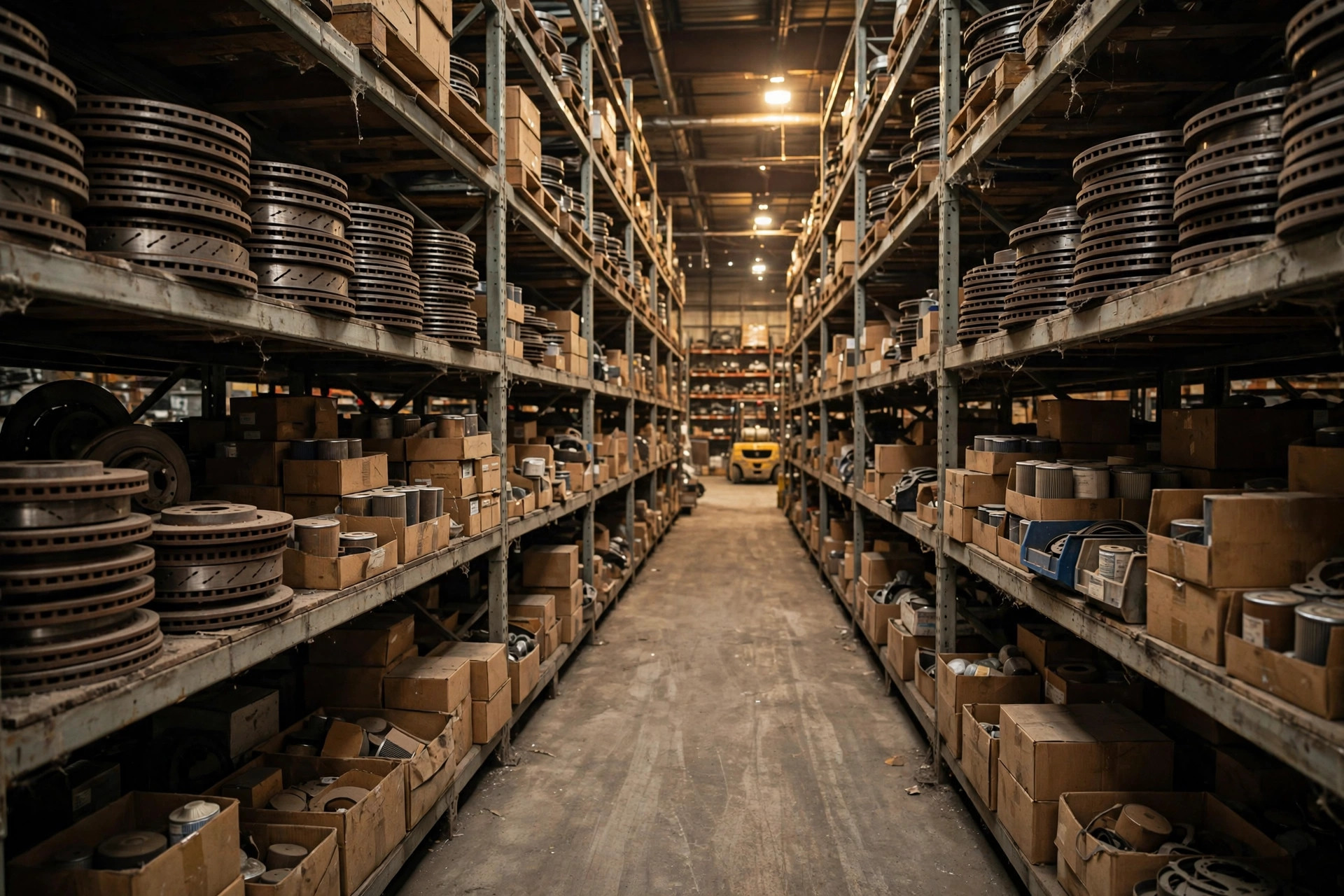
The third bucket is slow movers: hose connectors, clips, and trim pieces for older models, plus sensors for discontinued vehicles. They may move once or twice a month, but when a customer needs one, the need is urgent. Their problem is never pick speed. It is findability. They belong in one dedicated slow-mover zone, grouped by vehicle model and system, with labels that state both the part number and the fitment. I would rather a picker walk an extra 30 meters to a known location than spend 30 minutes hunting across the whole warehouse.
Mix all three buckets on the same rack run and you pay all three kinds of cost on a single pick: waiting for a forklift, handling a fragile panel, and hunting for a slow mover.
Heavy and Bulky Slotting: Price the Handling Before the Rent
Most slotting math I review prices only rent, per square meter. That is the wrong bill. A slot's real cost is rent plus handling plus damage plus waiting time, and rent is usually the smallest of the four.
Here is the comparison framework I use with clients. The figures below are an illustrative example for a mid-size parts warehouse; plug in your own labor rate and forklift cost per shift and the structure still holds:
| Option | Heavy part on upper level | Heavy part on floor pallet position |
|---|---|---|
| Time per pick line | About 20 minutes | About 7 minutes |
| Forklift needed | Almost every time | Occasionally |
| Damage and rework risk | High | Low |
| Floor space used | Less | More |
| Total cost per line | Higher | Lower |
The conclusion is blunt: floor space is expensive, but forklift waiting time and labor are more expensive. Unless your ground-level rent is extreme, heavy parts belong on the ground. The same logic covers bulky parts. Divided racks and upright frames cost money once. Damage costs money every month.
One more lever gets missed often: separate the pick face from the replenishment area. Heavy and bulky storage can sit deep and dense, but the pick face needs a clear lane for full-pallet outbound moves. Making pickers dig through the storage zone means replenishment and picking fight over the same aisle, and both wait. That is paying twice for one trip.
Slow Movers: Stop Chasing Speed and Start Chasing First-Time Finds
Here is the counterintuitive call: for slow movers, pick speed is the wrong target. First-time find rate is the right one. Many warehouses scatter slow movers into fast-moving zones in the name of efficiency, and then a picker spends ten times longer finding a part that moves once a month than actually picking it.
In early 2025, a warehouse in Ningbo stocking parts for older Japanese models found that slow movers made up about forty percent of SKUs but under ten percent of outbound lines. Their fix was simple: a dedicated slow-mover zone, grouped by brand, then model, then system, with labels carrying part number and fitment, and pick tickets printed with the zone code so nobody relied on memory. Within three months, average search time for a slow mover fell from 18 minutes to 4, and mispicks fell too. It does not matter that the slow-mover zone sits farther from the dock, because its pick frequency is low and the extra walking spreads across only a handful of picks per month.
Slow movers carry one more money line: do not hold full-pallet safety stock for them. The stockout cost looks scary, but the tied-up cash and occupied slots are real costs paid every month. Cap holdings based on the last 12 months of actual movement, and cover anything above the cap with transfers rather than stock. Run that comparison and the capital saving usually beats the stockout cost.
A Three-Question Framework for Slotting Decisions
In auto parts warehouse storage picking, I let clients answer three questions, and the slot almost decides itself.
First: can one person move this part safely? If not, it goes to the heavy zone, ground level, with mechanical access. Second: is it crushable or easily damaged? If yes, it goes to the bulky zone, divided or upright, never flat-stacked more than two high. Third: how many times does it move per month? Fewer than twice, and it goes to the slow-mover zone, grouped and fully labeled.
Then sequence the pick itself. On one order, book the forklift for heavy parts first, give bulky parts their own cart, and batch slow movers into one run. Never ask one trip to satisfy three handling methods at once; that trip will always be the most expensive one. The same applies to waves. Small fast movers suit order or wave picking. Heavy and bulky parts suit scheduled pick windows where one forklift run covers a sensible route, which is far cheaper than on-call trips all day.
The closing number is one you can compute yourself: take last month's pick tickets, split them by the three buckets, and multiply each bucket's average pick time and forklift call-outs by your own labor and forklift rates. That gives you a cost per line for each bucket. Whichever bucket costs most per line is the one to fix first. In my experience, eight warehouses out of ten cut their monthly picking cost by roughly a fifth just by moving heavy parts to the ground and consolidating slow movers, though your own figures will set your exact number. That is how you find out whether the money was well spent or wasted.
By Lao Zhou, Logistics Cost Analyst