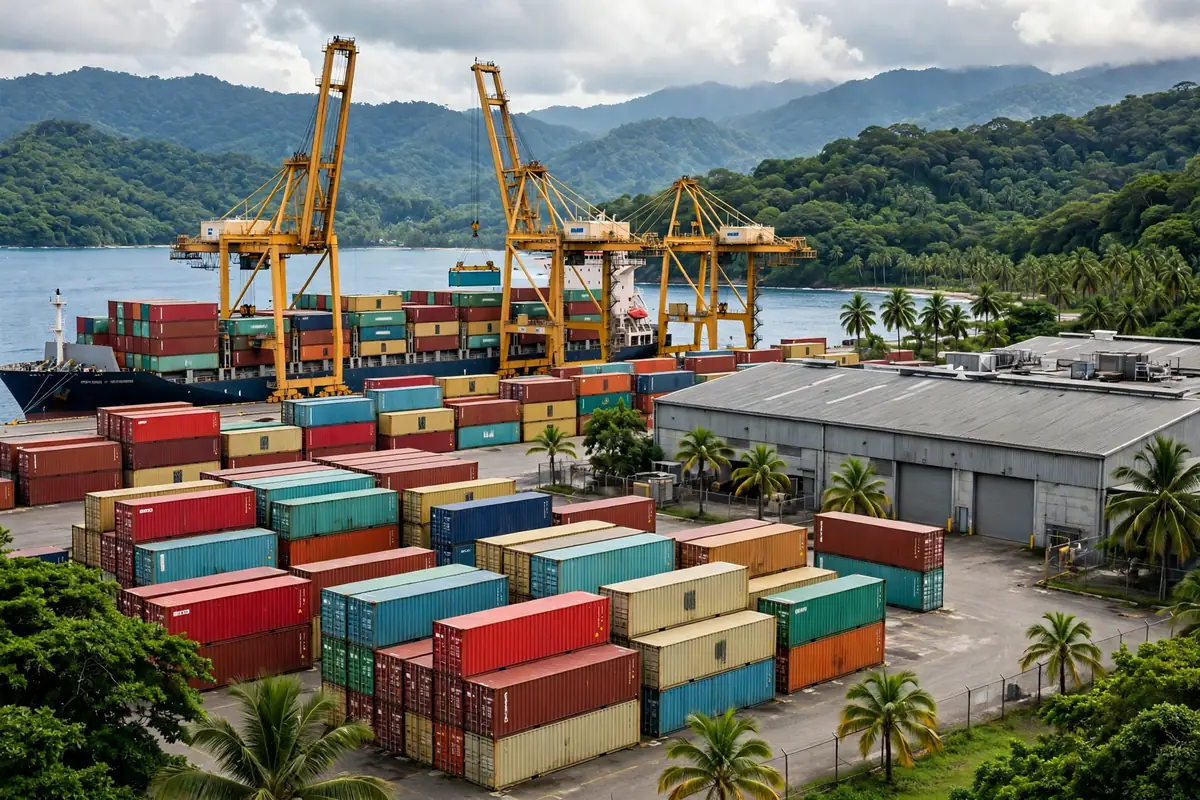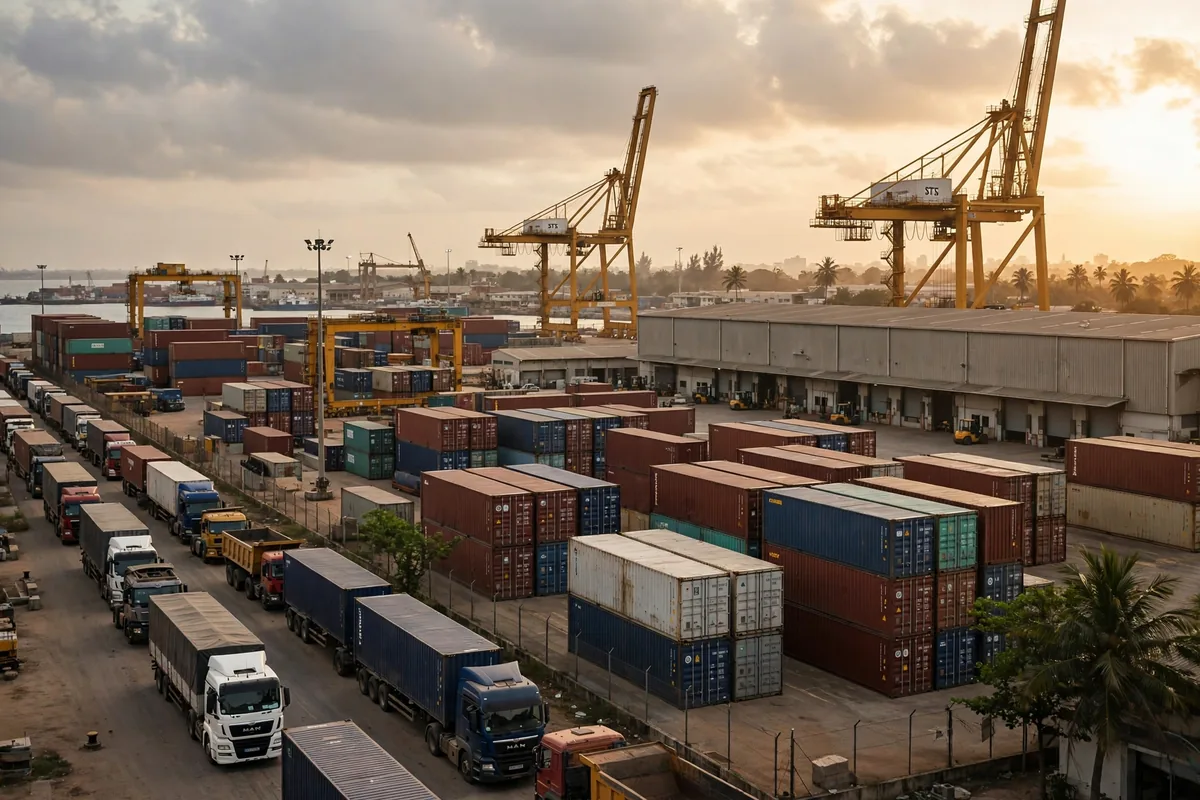
We had a client — a small-appliance exporter — who called me in 2023, thrilled about his first real push into West Africa. "Susan, the containers are landing in Abidjan. I can just rent any warehouse near the port, right?" I laughed, because Abidjan port warehouse logistics in Côte d'Ivoire is exactly the kind of decision that looks trivial in week one and bills you for it every week after. Abidjan is the economic capital of Côte d'Ivoire and the main maritime gateway for francophone West Africa. Where you put your stock — port-side or inland — decides your cost and lead time for distribution into Mali, Burkina Faso, and the rest of the landlocked hinterland.
Why Abidjan Is Not Just a Côte d'Ivoire Port
Côte d'Ivoire is the world's largest cocoa producer, and cocoa and cocoa products dominate its export flows. Abidjan is the main exit door for that trade and, at the same time, the main entry door for consumer goods feeding a whole francophone region. Mali and Burkina Faso have no coastline; a large share of their imports clear through Abidjan and truck north. So the warehouse you rent in Abidjan is rarely serving one country. It serves local Ivorian distributors, wholesalers from the landlocked north, and regional traders working the corridor.
The flows have a rhythm worth knowing. Imports skew to consumer goods, building materials, auto parts, and food. Exports skew to cocoa, coffee, and rubber. The peaks do not fully overlap — during the main cocoa campaign, port and warehousing capacity tightens noticeably, and an importer trying to grab port-side space in that window will pay for the privilege, if space exists at all. Always confirm current tariffs and port charges against official published sources before signing anything.
Port-Side vs Inland: The Comparison I Walk Clients Through
| Factor | Port-side warehouse | Inland warehouse (outer industrial zones) |
|---|---|---|
| Rent (illustrative) | Higher; near-port space is scarce | Lower; more choice of size |
| Container drayage | Short haul, low cost per box | Longer haul on every container |
| Customs inspection handling | Fast; inspection facilities nearby | Cargo may need to move back toward the port |
| Dispatch to landlocked markets | Exit the port area first, then north | Straight onto the highway north |
| Best fit | Fast-turning, bonded transit, inspection-prone cargo | Local distribution stock, slower bulk |
Now the illustrative example — these numbers show the structure of the math, they are not a quote; get live pricing from local providers before deciding. Say you import twenty 40-foot containers of consumer goods a month. The port-side option charges a clear rent premium but saves a long drayage leg on every box and keeps inspection risk cheap. The inland option saves rent, but if three of those twenty boxes get pulled for inspection, the extra trucking and waiting can eat half the rent saving in a single month. The right answer depends on two variables most clients never quantify: your realistic inspection probability, and which direction your freight actually leaves the warehouse. Cargo mostly heading north to landlocked markets with a clean compliance record often totals out cheaper inland. Fast-turning local distribution usually earns back the port-side premium.
Here is the counter-intuitive part. Clients assume closer to the port always means safer and faster. In peak season, congestion and appointment queues around the port can erase the distance advantage entirely. One auto-parts client of ours moved inland in 2024: drayage cost per container went up, but truck turnaround became predictable because drivers stopped burning half a day at the port gates. Distance is a number. Time is money.
The Cocoa-Season Lesson: A Two-Warehouse Structure
Our second case is a European food brand's sourcing agent exporting cocoa products through Abidjan. At the height of the 2023 cocoa campaign, their small near-port warehouse overflowed with outbound cargo. Product sat outside waiting for space, the tail of the rainy season did what rain does, outer packaging took moisture damage, and the European receiver downgraded part of the shipment on arrival. Not a catastrophe — but expensive enough that the following year they restructured: main buffer stock inland, one small port-side cross-dock position, and freight only moves toward the port once the vessel window is confirmed.
I sell this structure often, and I will defend it in any negotiation: let the inland site carry inventory cost, let the port-side footprint carry shipping certainty. Asking one warehouse to be both the cheapest storage and the fastest exit is how clients end up with neither.
What a 3PL in Abidjan Can and Cannot Honestly Promise
This is the part I wish more buyers would press their providers on. A competent 3PL can commit to: in-warehouse SLAs (receiving, putaway, pick and dispatch cut-offs), inventory accuracy, documentation turnaround, and local delivery routes and frequency. Those are inside the four walls and inside the process. Put them in the contract with penalties.
What no honest 3PL can guarantee: first, customs clearance timing. Inspection selection and document queries sit with Ivorian customs, not with your provider — anyone promising you a fixed release day is selling you a story. Second, fixed transit times on the northern corridors. Road conditions, border formalities, and the rainy season make ranges, not deadlines, the truthful unit. Third, waivers of port storage or demurrage during congestion — those follow carrier and port authority policy, so check the current official terms; a 3PL can monitor and escalate, it cannot forgive charges it does not own.
So write the contract in three layers: hard SLAs for warehouse work, best-efforts-plus-time-ranges for clearance, and shared-risk language for the cross-border leg. Buyers feel safer when everything is a hard promise. Experienced buyers know that is precisely where the disputes breed.
Three Questions Before You Sign Anything
One: where does your product actually get sold? Côte d'Ivoire only — follow your distributor network. Regional hub ambitions — the warehouse's exit direction toward the northern corridors matters more than its distance from the quay. Two: how inspection-prone and delay-sensitive is your cargo? Food and regulated goods can justify the port-side premium on inspection convenience alone. Three: is your volume big enough to carry a dedicated site? If not, take a shared 3PL facility, keep your cost variable, and revisit once monthly container volume is stable. Reversing that order is the most common way new entrants burn cash in this market.
Abidjan Côte d'Ivoire port warehouse logistics comes down to one sentence: Abidjan is the gateway to francophone West Africa, and a gateway's value is reach, not cheap rent. Choose well and your warehouse sells into three countries. Choose badly and you pay a month's money for a kilometre's mistake. Next time you negotiate a contract, remember to ask these three questions: when customs pulls my container, how exactly does your warehouse support the inspection? Is your corridor transit time a deadline or a range? And in peak season, is my space locked — or first come, first served?
By Susan, 3PL Sales Director