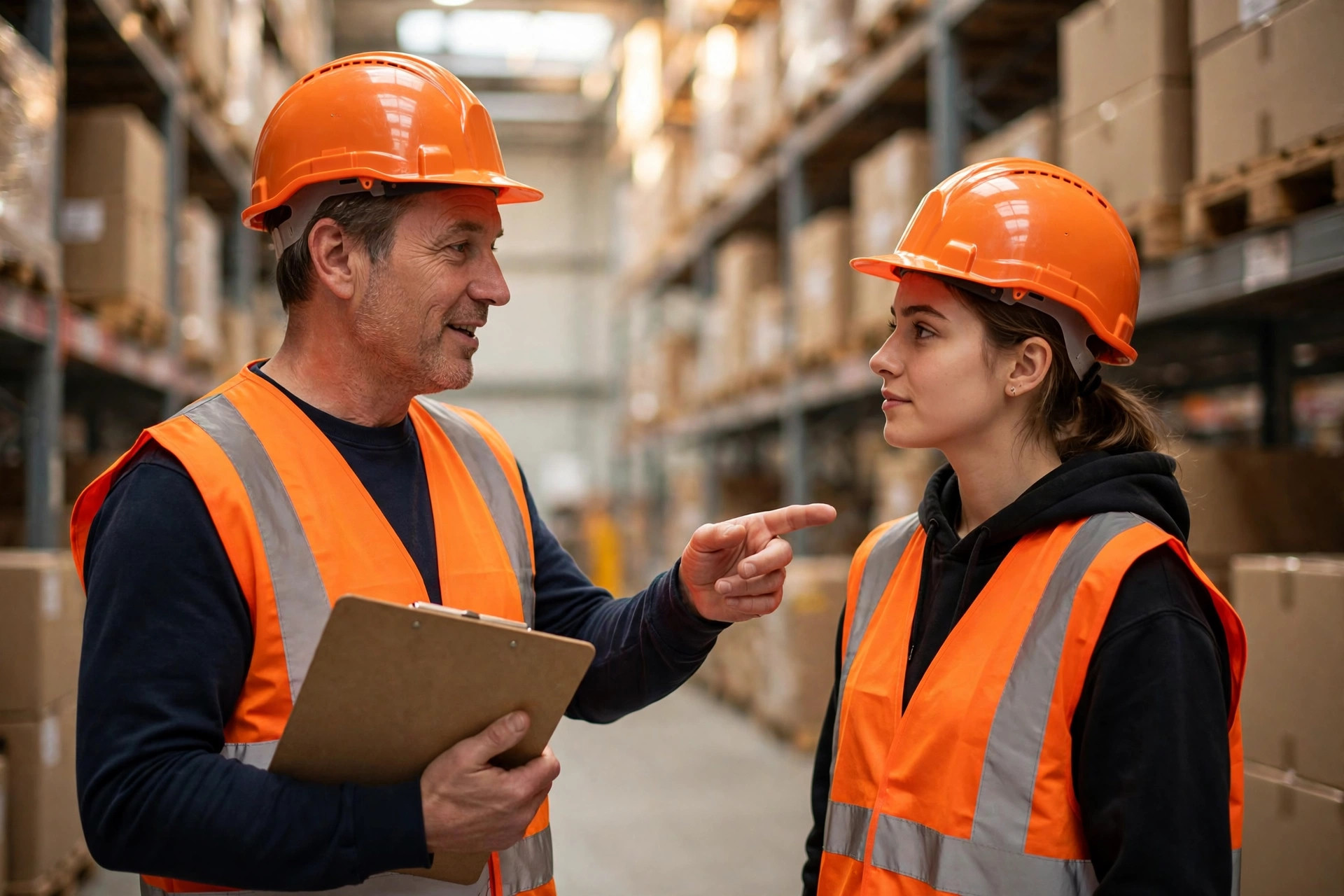
How much is a 17-year-old forklift operator worth per month? Run the numbers first.
Hourly wage: California minimum wage, same as an adult — not a cent less. Cost of getting caught: federal child-labor civil penalties, up to $16,035 per violation, assessed per violation (check the DOL's latest published figures). Three minors on forklifts on one night shift, and you're looking at a penalty in the tens of thousands of dollars — before California piles on its own fines.
You don't need a spreadsheet for this. The order of magnitude tells the story: one surprise inspection can wipe out half a year of your labor budget. Warehouse owners keep asking me, "Can I hire 16- and 17-year-olds?" My answer is always the same: the question isn't whether you can hire them. It's what you let them do, and when you schedule them. Two red lines — one federal, one Californian. Cross either one, and every dollar you "saved" was wasted.
Red Line #1: Federal Hazardous Order 7 — No Forklifts Under 18, Period
The federal Fair Labor Standards Act is actually lenient with 16- and 17-year-olds on one front: federally, there are no hour restrictions for this age group. Work them late, work them weekends — Washington doesn't care. But the leniency ends there. 29 CFR Part 570, Subpart E lists 17 Hazardous Occupations. Under 18, you're barred from all of them, no matter how flexible the hours are.
Number 7 on that list (HO 7, 29 CFR 570.58) is the warehouse killer: power-driven hoisting apparatus. The regulation names the high-lift truck — forklifts, high-reach trucks — explicitly. And the ban covers more than driving: operating, tending, riding on, repairing, or disassembling. Having a 17-year-old "just steady the pallet" counts as tending. Still a violation.
Here's the counterintuitive part: a forklift certification doesn't save you. 29 CFR 570.50(b) does grant student-learner and apprentice exemptions — but only for HOs 5, 8, 10, 12, 14, 16, and 17. HO 7 is not on the exemption list. A 17-year-old with a flawless forklift certificate and complete OSHA training is breaking the law the second they sit in that seat. Every dollar you spent training them was wasted.
One gray area, for your own judgment: a low-lift truck used only for horizontal transport — not tiering or stacking — may fall outside HO 7's definition. "May" is doing a lot of work in that sentence. If you're not sure, ask your local DOL Wage and Hour office, or just don't touch it.
Red Line #2: California's Hours and Work Permits — Stricter Than Federal
Where the feds don't care about hours, California cares a lot. For 16- and 17-year-olds in California:
- Work permit: everyone under 18 needs a work permit issued by their school, signed by the employer and the parent, before day one. You must also keep on file every under-19 employee's date of birth, daily start and quit times, daily and weekly hours, and occupation. When DOL or the California Labor Commissioner's office walks in, this file is the first thing they ask for.
- Hours: during the school year, a maximum of 4 hours on a school day, 8 hours on a non-school day, capped at 48 hours per week. Summer opens it to 8 hours a day, but the 48-hour weekly cap stays.
- Night work: on nights before a school day, no work after 10 p.m., and no start before 5 a.m. On nights before a non-school day, they can go until 12:30 a.m. The overnight picking shift that warehouses run on? Effectively off-limits to minors.
California Labor Code 1294.1 adopts the federal hazardous-occupation list into state law wholesale — so the forklift ban applies in California too. Federal penalties first, state penalties on top.
The Math: One Penalty vs. a Year of Compliance
Start with a published case. In February 2023, the DOL reached a settlement with Packer Sanitation Services: the company had employed minors in hazardous jobs at meatpacking plants. The penalty: $1.5 million, per the DOL's own press release. That was a slaughterhouse, not a warehouse — but the enforcement logic of "minors plus hazardous occupations" applies to your dock doors word for word.
Now model a warehouse scenario. A 3PL in California's Inland Empire, peak season, short-staffed. They bring on four 17-year-old high schoolers; two get assigned to forklift replenishment, and HR hasn't even collected their work permits yet. If inspected: federal penalties up to $16,035 per violation, multiplied across violations and minors — tens of thousands of dollars. California's hours and permit violations get their own separate bill. The compliant alternative: keep all four on labeling, scanning, and putaway; staff the forklift seats with two adults over 18. The cost difference is a few thousand dollars in scheduling and recruiting.
There's one more number most owners never run: hiring minors in California doesn't save you money. California has no youth subminimum wage — minors earn the same minimum wage as adults (Labor Code 1196). But during the school year they're capped at 4 hours a day and must be off by 10 p.m. — roughly half the usable hours of an adult. Same hourly rate, half the availability: the cost per usable hour is actually higher. If your plan was to cut labor costs with 16- and 17-year-olds, this math should kill it.
| Federal (FLSA) | California | |
|---|---|---|
| Hour limits, 16–17 | None | ≤4 hrs on school days, ≤48 hrs/week |
| Night work | None | No work after 10 p.m. on nights before school days |
| Work permit | Not required | Required for all under 18, issued by school |
| Forklifts / hoisting equipment | HO 7 bans all under 18 | Adopts federal list — same ban |
| Student-learner exemption | None for HO 7 | Same as federal |
| Penalties | Up to about $16,000 per violation (see DOL's latest) | Separate Class A/B schedule, assessed on top |
Three Moves to Hire 16- and 17-Year-Olds Legally
Stay inside the red lines and minors are a legitimate labor source. Three moves, none of them expensive:
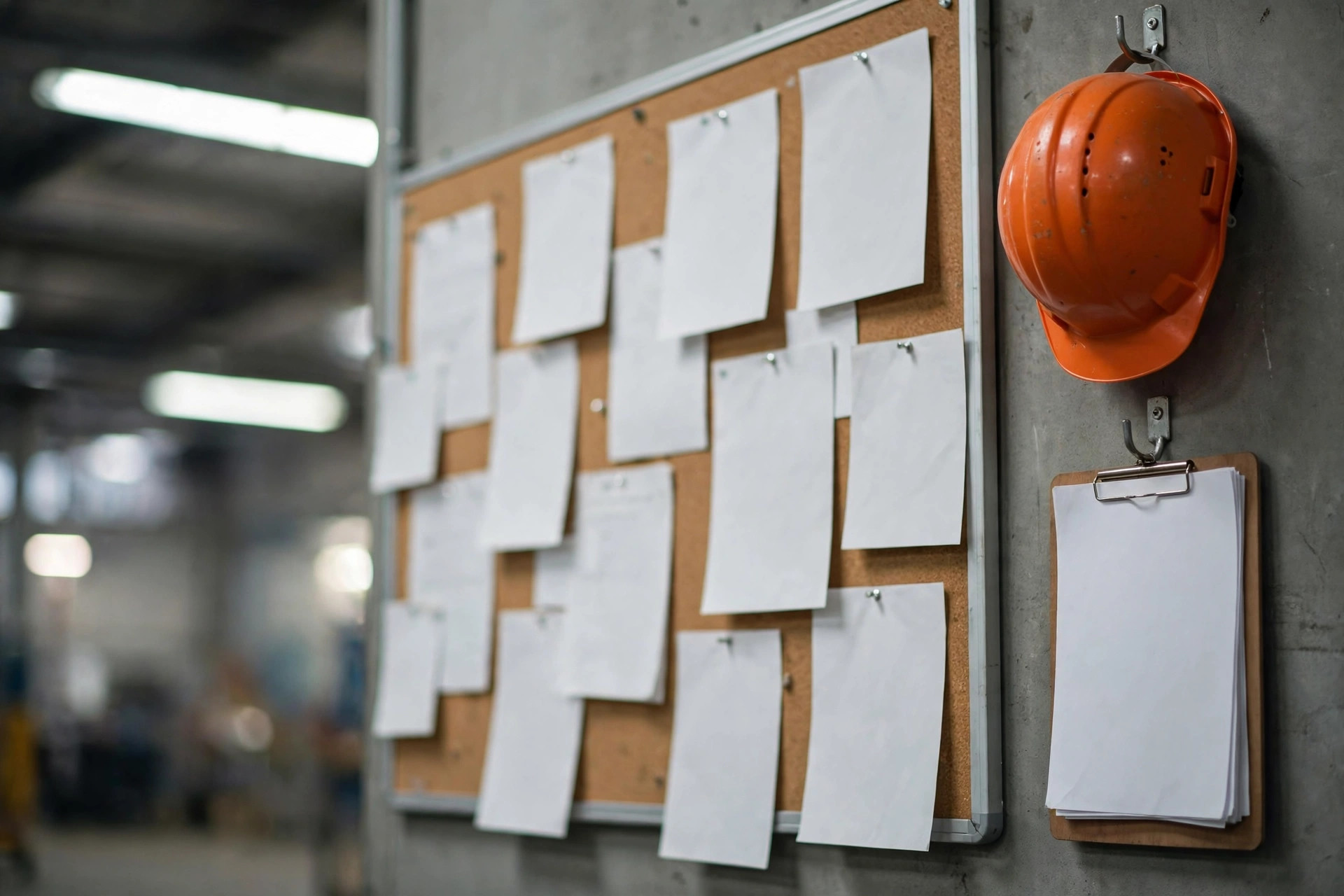
First, put the job whitelist in your SOP. Allowed: labeling, scanning, cycle counting, manual packing, office support. Banned: forklifts and high-lift trucks, all power-driven hoisting equipment, driving, meat-processing machines, balers and compactors. Post the list on the bulletin board and make it lesson one of onboarding.
Second, hard-code the hiring checklist. Copy of the work permit on file; anyone under 18 automatically routed through a minor track in your I-9/W-4 process with date-of-birth verification; and in your scheduling system, cap minors' hours and lock them out of night shifts entirely so a supervisor can't "just this once" them.
Third, audit quarterly. Pull 10% of minor employee files each quarter: are permits current (old ones expire five days after the new school year starts — renewals get missed), and did any school-day shift exceed 4 hours? Keep the audit records. If inspectors come, that's your evidence of good faith.
The Bottom Line: One Formula
Net value of hiring minors legally = (value of filling whitelist-role gaps) − (permit admin + scheduling-restriction opportunity cost).
If your gaps are in labeling, scanning, and counting — whitelist jobs — the number is positive. The moment someone touches a forklift, the expected penalty cost = inspection probability × $16,035 × violations, and the number flips negative fast.
Two red lines: hands off power equipment, shifts within the caps. Hold them, and 16- and 17-year-olds are a legal, usable workforce. Break them, and the fine costs an order of magnitude more than the wages you saved. Only do the deal when the math clears.
By Lao Zhou, Logistics Cost Analyst