Here is the conclusion first: gs1 128 label asn binding warehouse work lives or dies on one rule — every field printed on the label must match, character for character, the same field in the 856 ASN you send. A wrong SSCC, a transposed PO number, a quantity off by one case will not be treated as a minor defect at receiving. It is a reason to stop a pallet, or an entire truck. I have seen this pit three times, and in every case the system was fine. Someone simply decided one mismatched field did not matter.
Label problems have a nasty timing pattern. Nothing stops you at outbound. The failure shows up hours later, on someone else's dock, with the driver waiting and the ASN already transmitted. Ten minutes of checking before the truck leaves is worth more than a dozen phone calls from a receiving dock.
Why the gs1 label and asn have to match exactly
Start with the hierarchy, because most errors start here. A GS1-128 shipment has two label levels. The pallet label carries the SSCC, the unique number that gives that pallet its own identity. Each case label carries its own identifier, linked to the pallet SSCC as a child record. That parent-child link is the only thing tying cases, pallet, and order together.
The 856 ASN is the electronic version of the same shipment, sent before the truck arrives. It describes the load level by level: order, pallet, case, SKU, quantity. At receiving, the operator scans the pallet SSCC, the system looks it up in the ASN, and checks the cases underneath. If the number is missing, or the level below does not match, the scan stops.
That is why gs1 128 label asn binding warehouse discipline is not paperwork. The label is the physical key, the ASN is the data key, and receiving needs both to turn together. Change the shipment without updating the data, or the data without reprinting the label, and the binding breaks.
What happens when one gs1 label field breaks the asn binding
In the field, I see four recurring failure points.
The first is the SSCC. A reprinted label goes on, the old label stays underneath, and the scanner reads the old number. The ASN has no record of that pallet, so it moves to an exception area. Worse is a reused SSCC, printed again from a previous shipment. The receiving system flags a duplicate receipt and refuses it.
The second is the PO number. The template pulls the wrong order, or someone keys the PO with two digits swapped. The goods are correct, but the customer receives against the PO, so the load belongs to a different order in their system. Dock staff will not guess. The truck waits.
The third is SKU and quantity. The case label says item A while the case holds item B, or the label says 24 units while the case holds 20. If the ASN was built from label data, everything looks consistent until a spot check exposes it, which costs more to unwind than a dock rejection.
The fourth is a broken hierarchy. Cases moved to a different pallet, but the WMS parent-child record was never updated. The ASN describes the new structure, the labels the old one. The pallet scans clean, the cases fail, and receiving falls back to manual case-by-case handling.
The chain after any of these errors is predictable: scan failure, manual review, exception area, a wait for purchasing or compliance, then a relabel, a re-receipt, or a return. If a chargeback process follows, it follows the partner compliance manual and the supplier agreement. Never quote an amount from memory. Your job is narrower: do not let a bad label leave the building.
Two jobs show how small the error can be. In September 2024, at a 3PL warehouse in Ontario, California, a 26-pallet truckload was held because pallet 14 had been relabeled with the last two digits of the PO reversed. The WMS order and the ASN were right. Only the physical label was wrong. The distribution center passed the other 25 pallets and returned pallet 14, after the truck had waited most of the day. In November 2023, near Dallas, Texas, a clothing warehouse printed case labels with the quantity field set to the wrong unit. A case held 12 units, the label reflected cases, and the ASN carried units. Three opened cases failed the count, receiving treated it as a systematic error, and more than 800 cases were paused until the shipper reconciled a case-by-case list twice overnight.
The pre-ship routine: check the labels, then check the asn
On my go-live checklist, labels and the ASN are two separate gates. Never merge them into a single "checked" note.
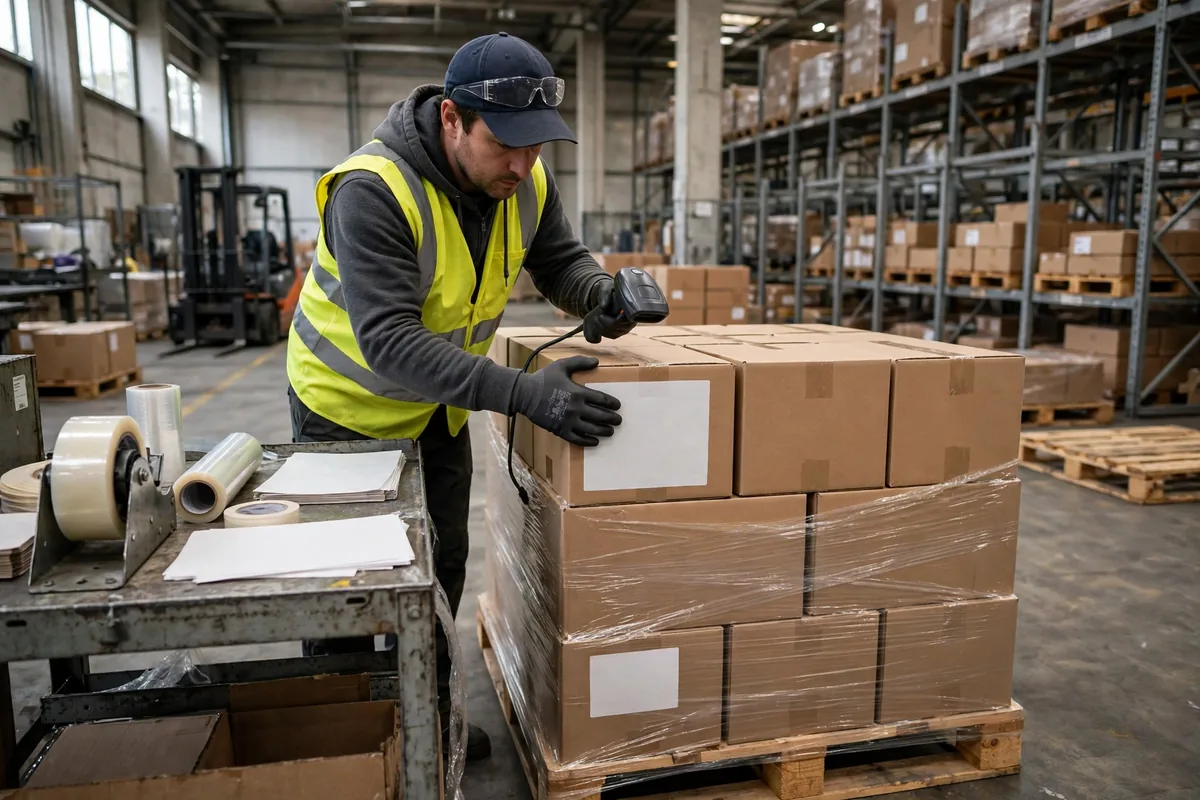
Gate one is label sampling, after labeling and before stretch wrap seals the pallet:
- Scan every pallet SSCC and confirm the system returns that pallet's case list.
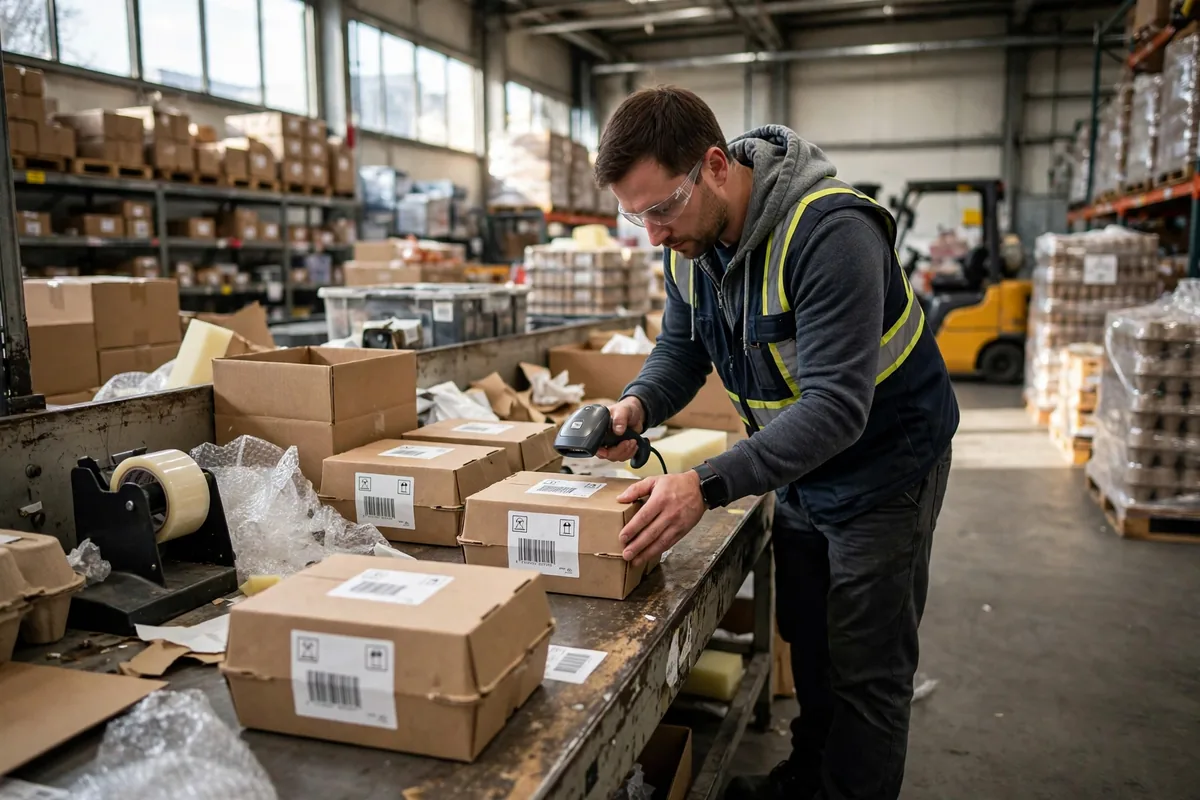
- Randomly scan two cases per pallet and compare SKU, quantity, and PO against the screen.
- Confirm old labels are fully removed. One pallet gets exactly one live SSCC label.
- Reject any barcode that looks faded, broken, or low contrast. Reprint on the spot.
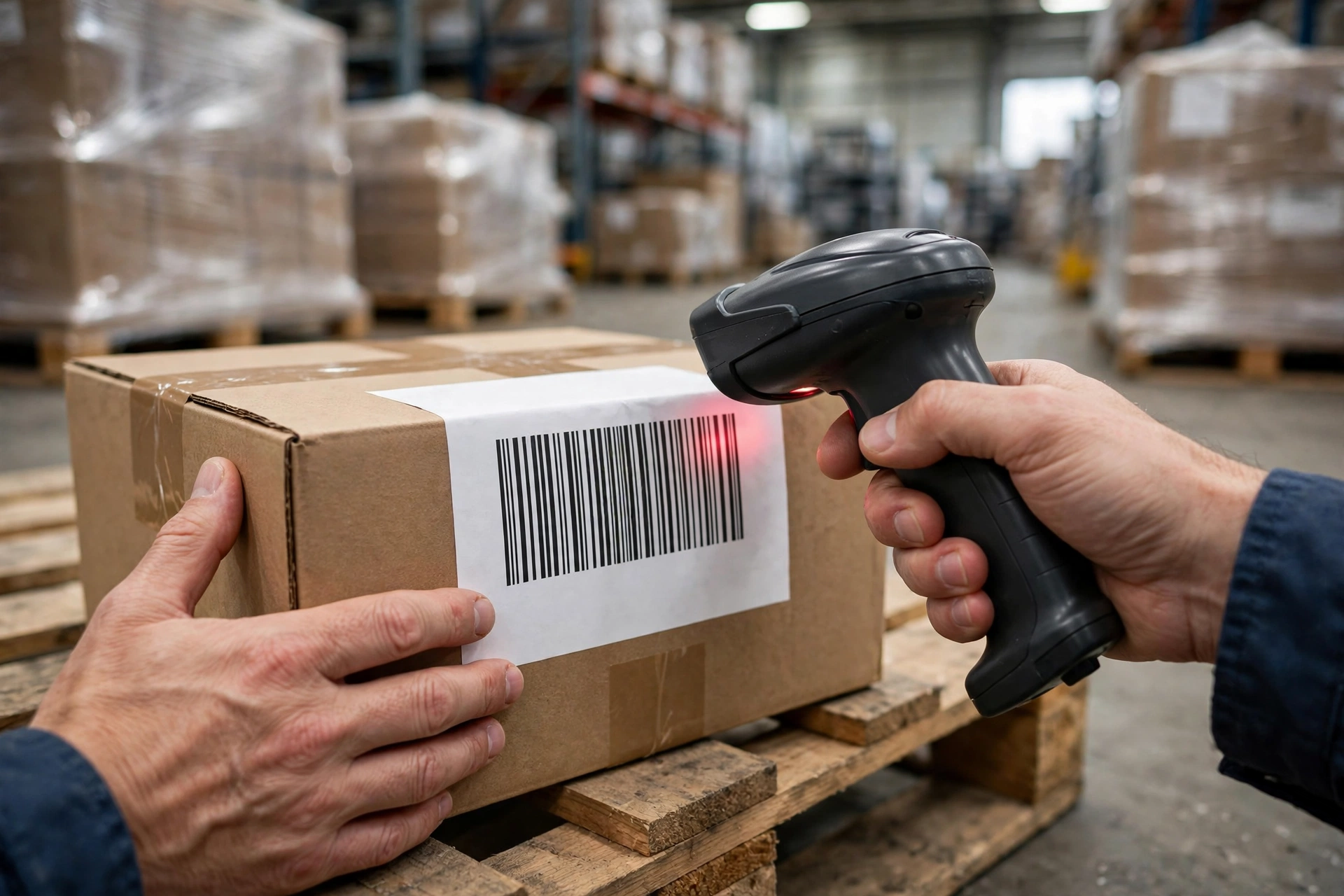
- Test-scan with a handheld similar to what receiving uses. Passing your fixed scan tunnel proves nothing about their handhelds.
Gate two is ASN reconciliation, after the ASN is generated and before anyone clicks send:
- Compare ASN pallet and case counts, SSCC by SSCC, against the final WMS outbound list.
- Total quantities by SKU against completed picking quantities. Any nonzero difference stops the send.
- Spot-check by PO, so each PO in the ASN matches the PO on the physical labels.
- Confirm every repalletizing, split, and short-pick change is already in the WMS, so the ASN describes the final load, not the original plan.
- Save the transmitted ASN and a snapshot of the outbound list. Reconcile from snapshots, not from memory.
The framework I give warehouse leads fits on one table next to the packing bench:
| Field | Label source | ASN source | Symptom if mismatched | Owner |
|---|---|---|---|---|
| SSCC | Generated and printed at pallet close | Pallet level of the ASN | Pallet not found, sent to exception | Pallet closer |
| PO number | Written to template at order allocation | Order level of the ASN | PO validation fails, truck held | Outbound lead |
| SKU | Printed from picking result | ASN detail lines | Spot check fails, load paused | Pick checker |
| Quantity | Printed from actual packed count | ASN shipped totals | Case counts fail, full recount required | Pack checker |
| Parent-child link | Case-to-pallet record in WMS | ASN hierarchy | Pallet passes, cases fail | WMS operator |
One judgment runs against instinct: do not send the ASN before labeling is finished just to secure a dock appointment earlier. Once cases are repacked or shorted after transmission, correcting the message is far slower than sending it thirty minutes later. The trade-off is real — speed on paper versus accuracy receiving can actually use — and I choose accuracy every time. Protect the appointment by sharing the shipment plan early, not by transmitting data that may still change.
Print quality deserves the same discipline. A worn print head produces labels that look readable while scan rates quietly drop, and the customer judges them on their equipment, not yours. Replace heads and ribbons on a schedule, scan a test label twenty times after every change, and require a perfect pass before the line restarts. Every reprint must run through the system reprint flow, so the old SSCC is voided when the new one is created. Hand-edited labels are how duplicate numbers are born.
Three failure patterns close out most of my reviews. Template changes ship without checking the partner's current label specification or the ASN mapping. Dock-side relabels are fixed on the pallet but never updated in the WMS. Short picks and pallet splits change on the floor but not in the system, so the ASN describes a load that no longer exists. The rule that prevents all three is absolute: if the physical structure changes, update the outbound record first, regenerate the label, and only then finalize the ASN.
That is the point of gs1 128 label asn binding warehouse control. The label is a promise handed over in person, and the ASN is the same promise sent ahead. When they disagree, receiving can honor neither one. Ten minutes of reconciliation before departure prevents a held truck and a returned pallet.
By Lin Xiao, WMS Implementation Consultant