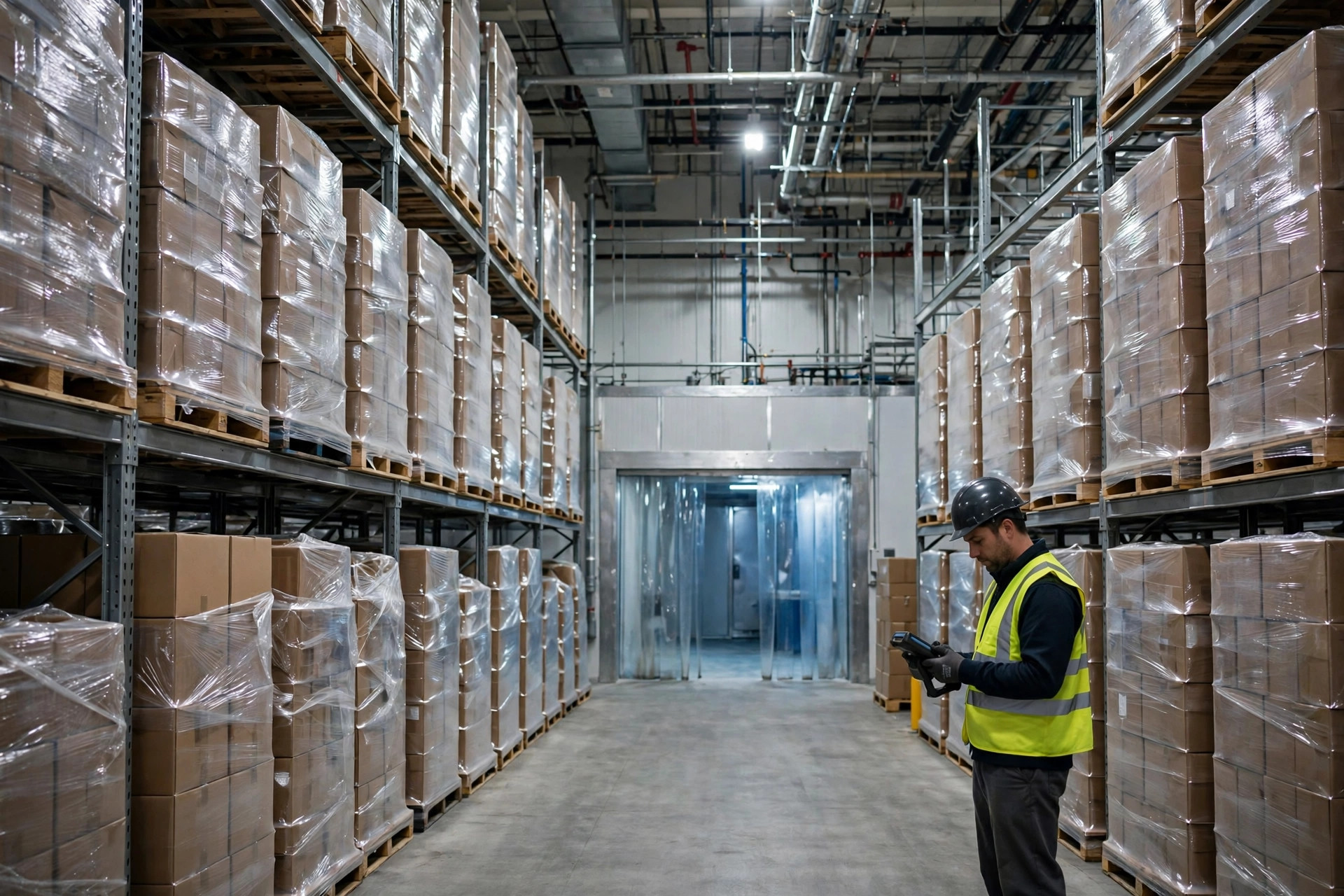
Here is my verdict up front: in a food warehouse, foreign material control is the last budget line you should ever cut. A metal shaving two millimeters across can get an entire pallet rejected by a retailer. I watched it happen to a frozen food warehouse in Fresno in 2023 — a fragment of wire fell off a conveyor, the metal detector missed it, and the retailer's DC caught it on receiving. Return freight, claims, re-sorting: just under a hundred thousand dollars. The owner now tells everyone who will listen that foreign material control is the cheapest money in the building.
The regulatory backdrop in one paragraph: the FDA's Food Safety Modernization Act requires preventive controls, and foreign material is one of the hazards you cannot dodge — it is in 21 CFR Part 117. Your customers audit against it too. GFSI, BRC, SQF — every major scheme checks your foreign material program. Without one, you fail the supplier audit before it starts.
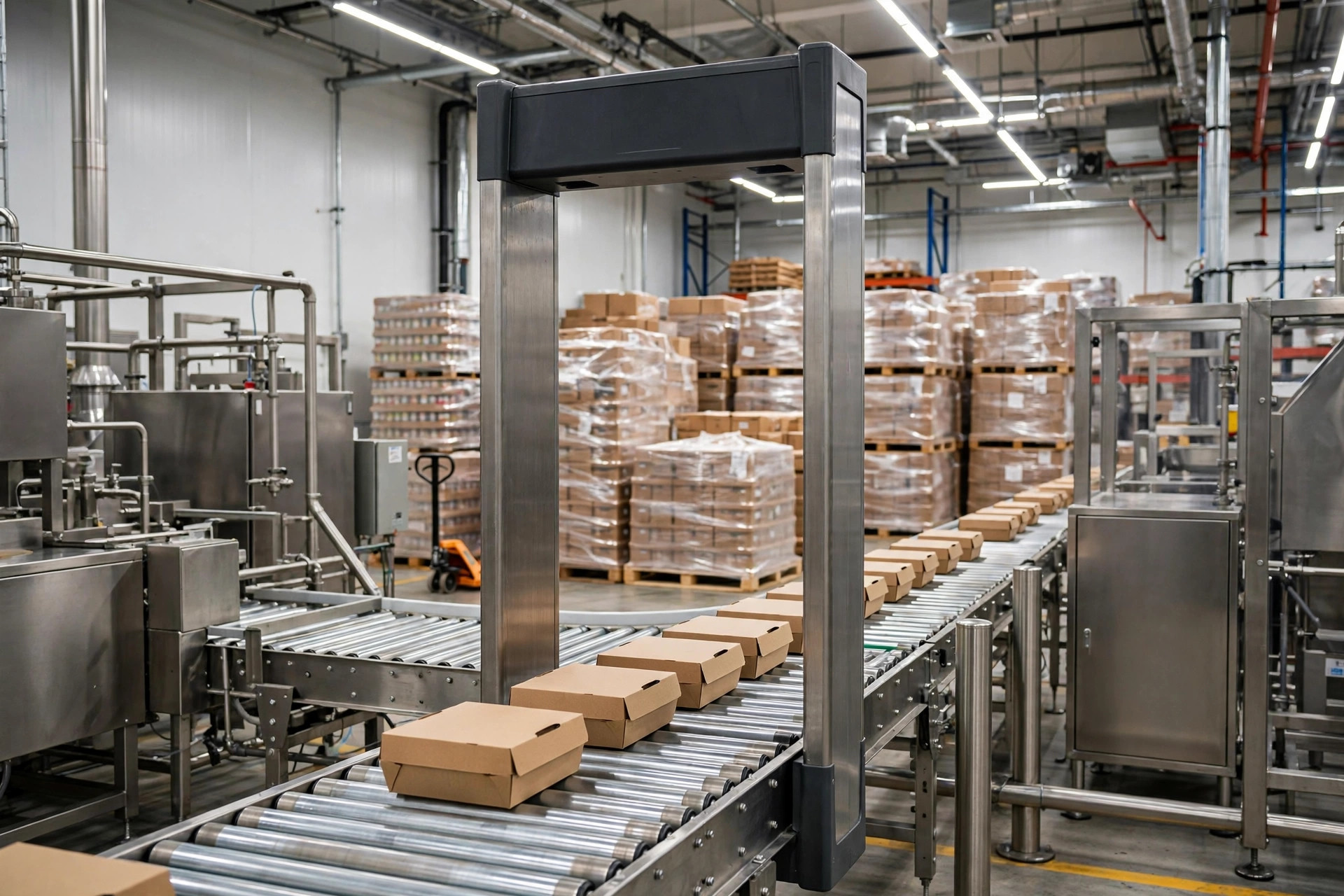
Metal detectors are the default, and they deserve both their popularity and their skepticism. A tunnel unit costs a few thousand to twenty thousand dollars, maintenance is simple, and for straightforward dry goods they do the job. But they have three built-in blind spots, and you should know all three before you buy.
First, they only see metal. Glass, stone, bone, hard plastic — invisible. Second, salty or high-moisture products like frozen meat or sauce pouches create a "product effect" that interferes with the signal, so you have to turn sensitivity down. Third, foil packaging shields the signal almost completely. If your product ships in foil, a metal detector is decoration.
When you evaluate a unit, ignore the brochure sensitivity for a minute — vendors love quoting numbers like a 1.0-millimeter ferrous ball or 1.5-millimeter stainless. What matters is the sensitivity on your product. Bury test cards in your actual product and run it. Your sensitivity spec is whatever your product achieves, not whatever the standard test piece achieves. That sentence is worth remembering.
X-ray inspection is the step up. It images by density, so it catches metal, glass, stone, bone, and some hard plastics, and as a bonus it flags missing components and broken product. The trade-off is real: a unit runs several times the cost of a metal detector — tens of thousands into six figures — takes more floor space, needs radiation safety protocols (the dose is tiny, far below regulatory limits, so do not panic), requires trained operators, and still struggles with very thin flexible plastics.
My selection advice is blunt. Ambient dry goods in simple packaging: a metal detector is enough. Frozen, fresh, baby food, or any contract where the customer has written foreign material requirements into the terms: go straight to X-ray. Do not save the money "for later." By the time a claim lands, the machine has paid for itself several times over.
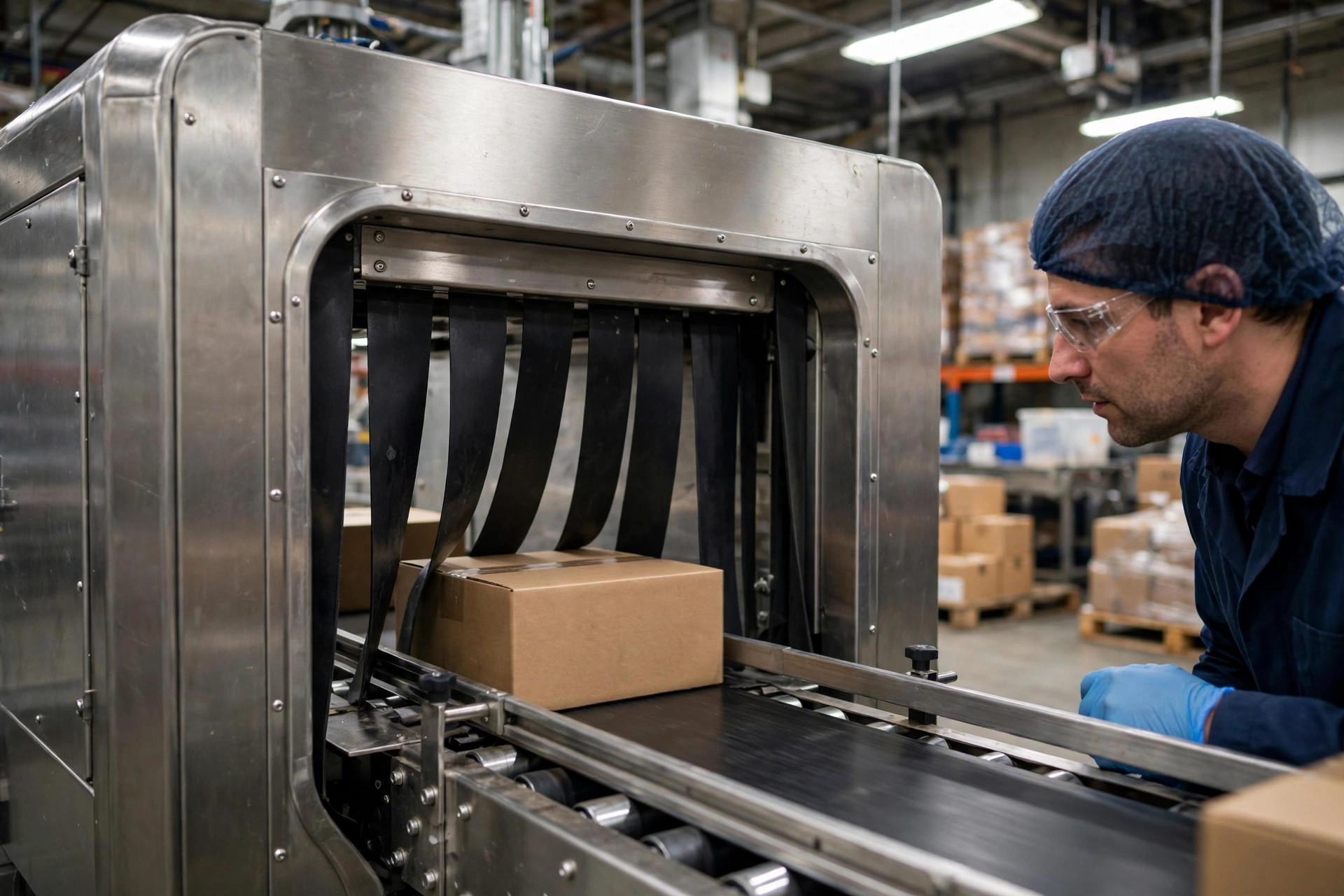
The small-warehouse playbook: offline sampling
The question I hear most from smaller operations: we move a few hundred cartons a day — we cannot justify a six-figure X-ray machine. What do we do? You sample offline instead of inspecting inline.
Pull samples by lot and run them through a benchtop X-ray or send them to a third-party lab. Set the sampling rate using AQL thinking — acceptable quality level — and anchor it in whatever your customer contract says. Offline sampling costs a fraction of inline inspection, but it has two preconditions: the sampling plan has to be a written document, because the auditor will ask for it; and a failed lot needs a traceability and quarantine procedure. Sampling on paper and shipping on hope does not count.
The most underrated link in the chain is inbound. A lot of foreign material does not enter at your warehouse — it arrives with the supplier's product. Write foreign material requirements into your supplier contracts, reject inbound lots that fail metal screening, and score the supplier on it. Pushing the pressure upstream is cheaper than inspecting every carton at outbound. I know a warehouse that added a magnetic grate at receiving; their outbound detection rate dropped by seventy percent in a year. Small money upstream, big money saved downstream.
Maintain the equipment, too. Metal detector heads hate large current spikes — keep welders away. A drifting conveyor belt grinds against the detector head, so check belt tension monthly. X-ray tubes have a rated life; stock the replacement before it fails, not after the line stops. Put all of this on the same preventive maintenance sheet as the forklifts and it just gets done.
The week before the audit: a self-check
Going into a BRC or SQF audit, walk through these: test-ball verification log with no gaps, sensitivity validation report current, reject-mechanism functional test records, operator training records, and foreign material incident records. Auditors love asking operators three questions: how often do you run the test balls, what is your first step when something is detected, and when was the last failed verification and what happened. If the operators can answer, that is worth more than a hundred pages of procedures.
Equipment is half the program. The other half is what happens on the floor every day, and it comes down to four practices.
Test-ball verification, on a schedule, no exceptions. At start of shift, at shift change, at product changeover — run certified test balls (ferrous, non-ferrous, stainless) through the unit and log the results. Auditors always ask for this log. Miss three days and it does not matter how expensive your equipment is; you are getting a non-conformance.
Validate sensitivity on your product. I said it above. I am saying it again because this is the step everyone skips.
Make sure the reject mechanism actually rejects. Air blast, pusher, flip-flap — whatever you use, rejected product goes into quarantine and through a review process. It does not get picked up off the floor and put back on the line by a well-meaning operator. That sounds absurd. I have seen it happen.
And align the acceptance standard with your customer in writing. Retailers define "foreign material" differently and tolerate different things. Put the standard in the contract before there is a dispute, not after.
An auditor once told me she can judge a whole foreign material program in five minutes: she looks at the verification log. Equipment gets you in the game. The daily log keeps you there.