Conclusion first: when you compare edi van vs as2 sftp cost warehouse options, do not pick on unit price alone. If you have fewer than five partners and none of them mandates a channel, SFTP is usually the calmest start. If you have more than fifteen partners, especially large retailers, a tiered hybrid almost always wins. I have watched warehouses choose a VAN on a per-kilocharacter quote, go live, and rebuild the whole setup three months later.
edi van cost and warehouse reality
This pitfall — I have seen it three times — starts with a clean pricing table and ends with a messy go-live. A VAN charges for volume. That can mean per-message or per-kilocharacter pricing, monthly minimums, and partner setup items, all of which you should check against the latest official and partner terms before you sign. There is no universal rate card I can quote you here, and any number in this article is a labeled illustrative example, not a real vendor quote.
AS2 looks free by comparison because there is no per-message toll. It is not free. You own the software, the server, the certificates, and the 2 a.m. phone call when a partner changes something on their side. SFTP looks cheapest of all, and for simple file drops it is. Its limit shows up when a partner needs a reliable receipt, non-repudiation, or tight error tracking. SFTP by itself gives you a folder, not a proof chain.
Here is an illustrative example only, to show how to do the math. Assume a mid-sized warehouse sends 8,000 documents a month, averaging about 2 kilocharacters each. Assume, purely for the exercise, a VAN bill in the low four figures per month once volume and partner fees are combined, AS2 infrastructure amortized at a few hundred per month before labor, and SFTP infrastructure at roughly a hundred per month before labor. Now add labor honestly. If AS2 needs four hours of specialist time a month and SFTP reconciliation needs six hours of operations time because receipts are manual, the cheapest transport on paper may not be the cheapest operation in practice. Run your own volumes through the same table, with your own partner terms, before you decide.
as2 sftp limits in a live warehouse
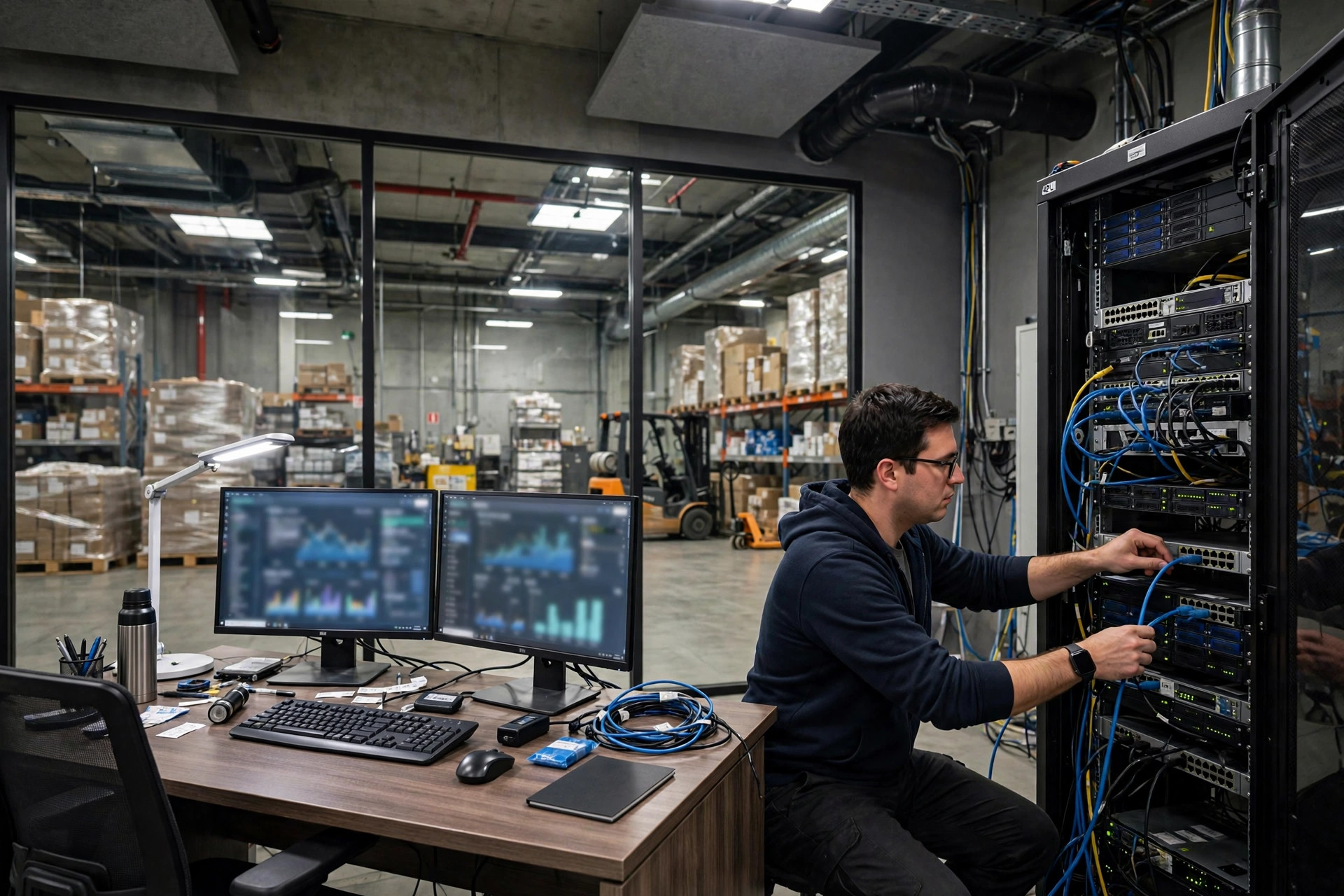
In 2023 I worked on a 3PL go-live in New Jersey with twelve partners. We started everything on SFTP. File naming was by convention, timing was by goodwill. In week two, a food distributor's 940 sat in a folder for two days. Our side believed it had been sent. Their side believed it had never arrived. Without a receipt, there was no evidence chain to settle the argument. The team stayed late building a control-number reconciliation sheet, and that sheet should have existed before go-live, not after the first dispute.
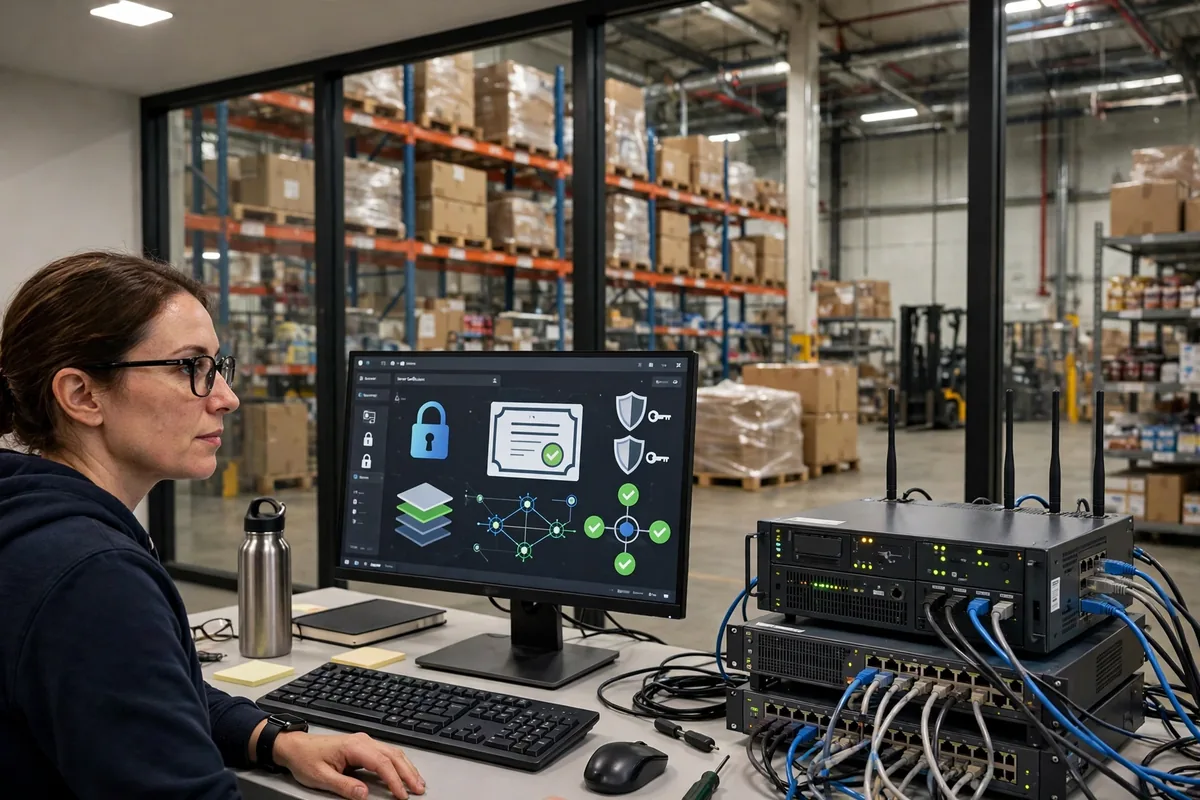
AS2 solves that specific problem with MDN receipts. You can prove receipt. The trade-off is operational burden. Expired certificates, a partner switching encryption settings, a firewall rule that was never opened — in my project history those three causes explain most AS2 incidents. If you have no dedicated IT coverage, do not promise AS2 to every partner who asks. You will be chased by a certificate calendar you are not staffed to manage.
Here is the counter-intuitive part. AS2 is not only for large warehouses, and SFTP is not automatically safe for small ones. The deciding factors are partner mandates and your out-of-hours capability. A small warehouse with six partners, two of them powerful retailers with strict manuals, may need AS2 plus a VAN from day one. A large warehouse with thirty small wholesalers who all accept SFTP, with disciplined logging, can run SFTP reliably for years. Headcount alone tells you almost nothing.
A tiered approach to edi van vs as2 choices
My default design now tiers partners, and this is where edi van vs as2 sftp cost warehouse thinking gets practical instead of theoretical.
Tier one: retailers and any partner with a compliance manual. Follow the manual. If they require AS2, do AS2. If they require a specific VAN, use it. Protect the orders first, argue about cost later.
Tier two: mid-volume partners. Route them through a VAN. The volume is too high to babysit and too low to justify dedicated AS2 operations for each connection. You are buying onboarding speed and a monitoring console, and that is a legitimate thing to buy.
Tier three: low-volume, stable partners. Use SFTP, but only with three safeguards. File names carry the control number. Every drop writes a log entry on arrival. A daily reconciliation report compares sent, acknowledged, and rejected counts. Without those three, SFTP is not a strategy, it is a hope.
In 2024, at a home-goods warehouse in Ohio, we applied this tiering to a rollout that had originally been planned as all-VAN. Nine small partners moved to SFTP with reconciliation, four core retailers stayed on VAN and AS2. In illustrative terms the monthly channel spend dropped noticeably, and onboarding finished about a week earlier than the original plan. Treat that as a method example, not a savings promise for your site. Your partner mix will produce your own number.
Migration checklist I use the night before go-live
Do not cut over in one big bang. Work through this list in order:
- Build the full partner list. For each partner record the mandated channel, document types, and a named test contact. If any field is blank, that partner is not scheduled.
- Split document volume by partner, using a peak month from the last quarter. Do not size the design on a quiet month.
- Start the new channel with low-risk traffic, such as 997 acknowledgments and inventory documents, before you move 940 and 945 flows that drive outbound work.
- Keep a separate register for certificates and keys, with expiry date, owner, and backup owner. Start renewal reminders thirty days out.
- After each partner cutover, keep the old channel in read-only observation for a week. A cutover without a rollback path is not finished.
- For the first week live, reconcile control numbers daily. Sent, receipted, and rejected must match, and any gap gets investigated the same day.
Three failure points deserve a final warning. First, teams test sending but never test duplicate handling, so a resend creates a duplicate receipt at the partner. Second, SFTP folders get overly broad permissions and test files leak into production. Third, during a VAN migration nobody verifies the partner ID mapping, so documents transmit cleanly and are rejected instantly on the other side. That third one — this pitfall I have seen three times — is always discovered on go-live day, and it takes thirty minutes to prevent with a checklist the week before.
Choosing a channel is really choosing what you pay with: money to a network, or attention from your own team. Put your partner tiers, your peak volumes, and your night coverage on one page. When those three are visible, the right answer for edi van vs as2 sftp cost warehouse decisions usually stops being a debate and becomes obvious.
By Lin Xiao, WMS Implementation Consultant