Last October, two weeks into peak season, a pet-supplies seller called me late at night, voice shaking. His Amazon Account Health page was a wall of red: Order Defect Rate at 1.27%. The email from Amazon was blunt — an ODR above the 1% threshold puts the account at risk of deactivation. Is there any way back from this, he asked.
The short answer: yes, but the window is narrow. ODR has a nasty property — it is calculated on a rolling 60-day basis, so a single defect sits on your record for two months. I have watched sellers panic and pay good money for appeal services, only to submit templated letters that make things worse. What follows is the playbook I walked through with that seller. His ODR came back under 0.6%, and the account survived.
What ODR actually penalizes
ODR — Order Defect Rate — must stay below 1%, per Amazon's Account Health policy (check Seller Central for the current wording, since thresholds and definitions can change). It tracks exactly three things: 1- and 2-star negative feedback, A-to-z Guarantee claims, and credit card chargebacks. Of the three, the A-to-z claim hurts most. A single granted claim carries far more weight than a handful of bad reviews, and a granted claim almost always means something genuinely broke in your fulfillment — there is not much to argue about.
The trap most sellers miss is the 60-day rolling window. A defect you rack up today stays on the books for two months. During peak season, high order volume dilutes a few defects; when volume drops after the holidays, the same defects suddenly loom large. That is why sellers often die in the slow season, not during peak — fewer orders make the historical defects a bigger share of the total.
Audit the warehouse before you touch the appeal letter
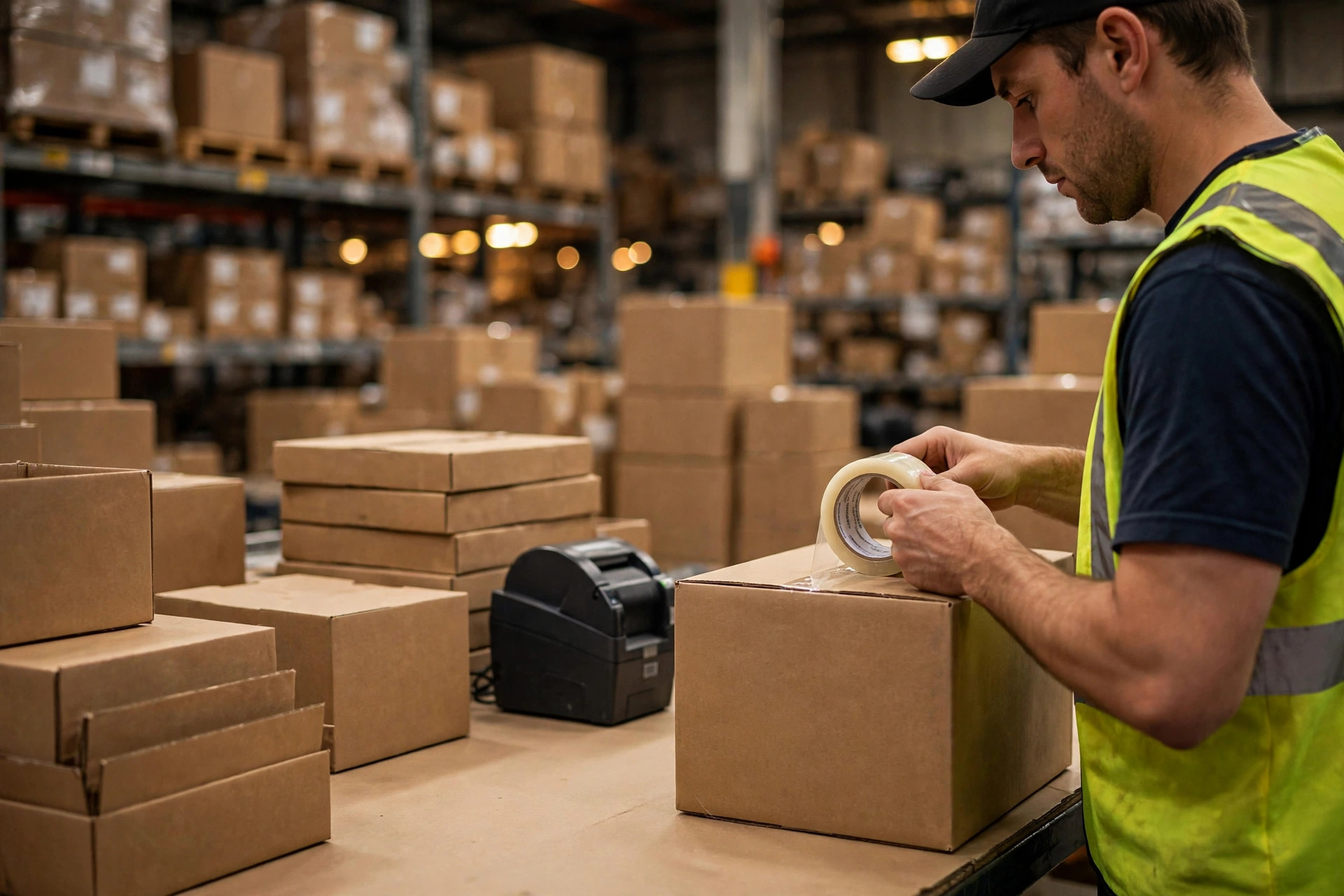
I told the pet-supplies seller to hold off on the appeal and pull 60 days of fulfillment data first. The picture was clear: late-shipped orders drew negative feedback at more than four times the rate of on-time orders, and damage claims clustered around two oversized SKUs still packed in the old cartons — a single strip of tape, corners collapsing on impact.
From a warehousing perspective, ODR problems almost always trace back to two things.
First, ship-on-time discipline. Amazon buyers assume fast delivery. If your warehouse promises to ship within 48 hours but tenders the parcel on day three, the experience falls off a cliff. Worse is the quiet habit of uploading tracking numbers before the goods move — the label is created, the box sits in the warehouse, and the buyer watches a tracking page that does not move for three days. Negative feedback and claims arrive together. The worst case I have seen: a 90,000-square-foot facility in Riverside, short-staffed during peak, uploading labels two days early. ODR hit 1.5% before the owner even knew what the warehouse was doing.
Second, packaging. Arrived damaged and not as described dominate A-to-z claims. Skimping on packaging for bulky items is the worst trade in the business — you save pennies on materials and buy yourself a claim that moves your ODR. My rule: for fragile and oversized items, budget 3% to 5% of the item's value for packaging. That money is cheaper than any appeal service.
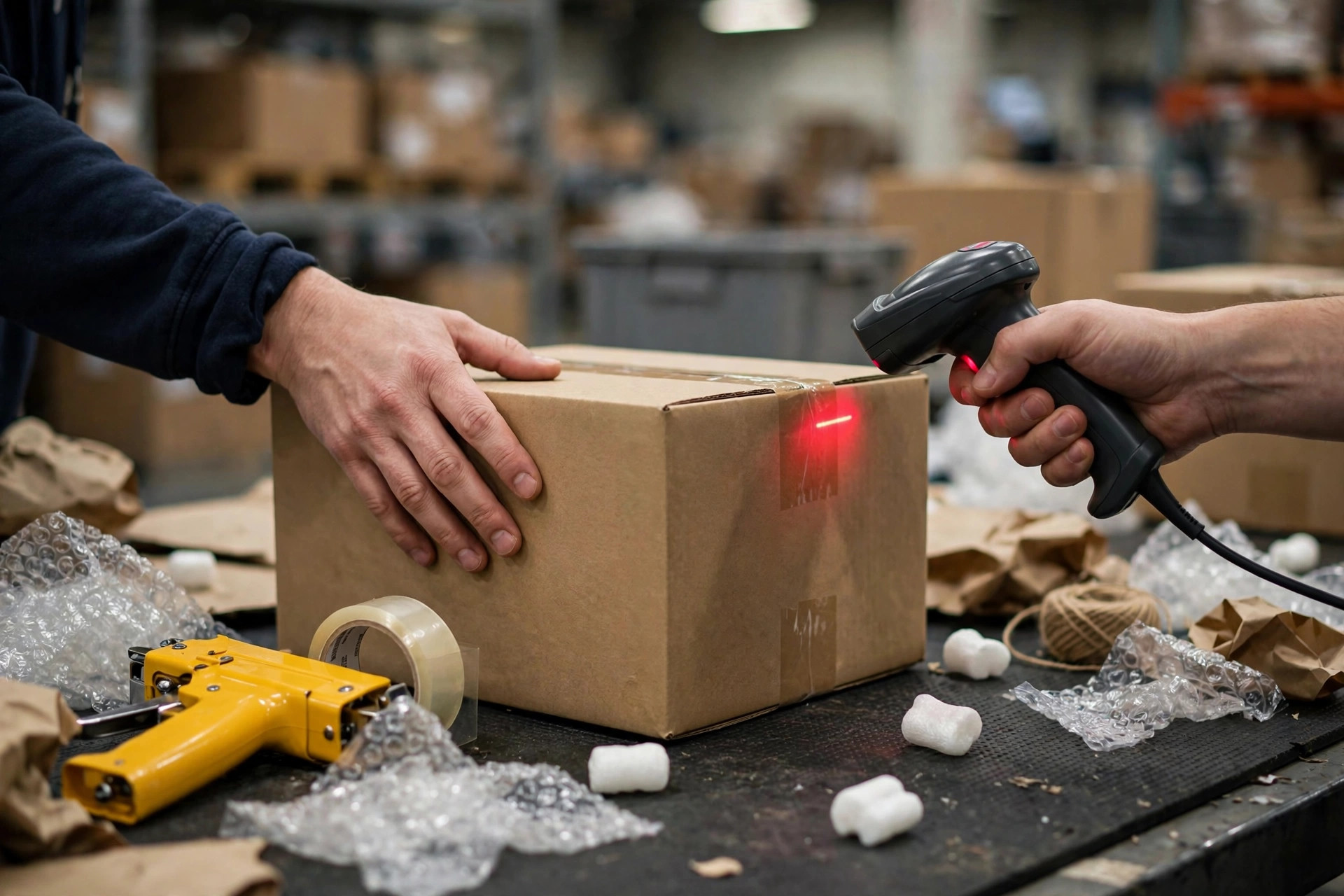
Third, pick accuracy. A mispick — the wrong item in the box — is an instant not-as-described claim, with no room for explanation. My bar for pick accuracy is 99.5%, and plenty of small warehouses cannot even measure theirs because there is no verification step. I toured a 50,000-square-foot facility in Fontana where the verification station sat idle through peak season, and the mispick rate showed it. After their ODR scare they brought back secondary verification: scan-verify every high-value order, spot-check the rest. One verifier costs a few thousand dollars a month in labor; their claim volume got cut roughly in half.
What Amazon actually wants to read in your appeal
The Plan of Action Amazon asks for comes down to three paragraphs: what the root cause was, what you have already done, and how you will prevent recurrence. Two things kill appeals: blaming others — it is the carrier's fault, the buyer is malicious — because reviewers read hundreds of these a day and spot it instantly; and templates. A letter opening with a generic apology signals that you never did the homework.
The letter I rewrote for the seller was simple: acknowledge the ODR breach without excuses, then root cause — we reviewed 60 days of orders; late shipments clustered in two specific weeks, damage in two specific SKUs, with numbers attached — then remediation: which steps in the shipping workflow changed, which SKUs got upgraded packaging, and who owns the weekly ODR review. No filler, only actions. Approved within 48 hours of the first submission.
Do not send words alone — attachments matter. Screenshots of the fulfillment data, photos of the upgraded packaging, the revised shipping workflow: three to five key exhibits. A reviewer reading hundreds of letters a day trusts a letter with evidence at a completely different level.
A few practical notes: submit through the Account Health page in Seller Central, following the current interface; you can revise and resubmit, but do not fire off three letters in one day — that reads as harassment; and keep shipping normally during the appeal. Stopping shipments freezes the denominator while old defects keep sitting on the books, which only makes the math uglier.
Three numbers to watch every day during recovery
Getting the appeal approved is only halftime — ODR still has to grind back under 1%. During recovery I had the seller watch three numbers daily: on-time shipment rate for the day, and investigate the same day it drops below 95%; every new piece of negative feedback or claim, responded to within 24 hours before it festers into a second one; and the distribution of return reasons — when damaged or not-as-described starts climbing, packaging or the listing has a problem again.
It took about three weeks to go from 1.27% to 0.88%, and another month to settle around 0.6%. The account survived. He told me those three weeks were harder than his first year in business.
If your ODR is still under 1%, do one thing tonight: pull the ODR trend in Seller Central and check whether the last 30 days slope up or down. If it slopes up — even at 0.5% — audit the warehouse against this checklist now. Once it crosses 1%, the price of fixing it is ten times what it costs today.