Ask a warehouse whether it does full pallet picking or piece picking, and you will often get a confident one-word answer. That confidence is usually the problem. Full pallet vs piece picking is not a contest with a winner; it is a line to draw, and drawing it in the wrong place costs money either way. A warehouse serving both wholesale buyers and small online orders cannot answer with one word, because its orders do not come in one shape. I have watched managers commit to a single mode, then spend the next six months firefighting while pickers shuttle between two kinds of orders the system was never designed to handle together.
Think of it this way. Full pallet picking is like buying water by the case: cheap per unit, but it takes up space whether you need it this week or not. Piece picking is like buying one bottle at a time from a corner store: flexible, but every bottle passes through someone's hands. Neither is better. Each fits a different order shape, and a warehouse with mixed orders needs both.
Full Pallet Picking: Move the Whole Pallet at Once
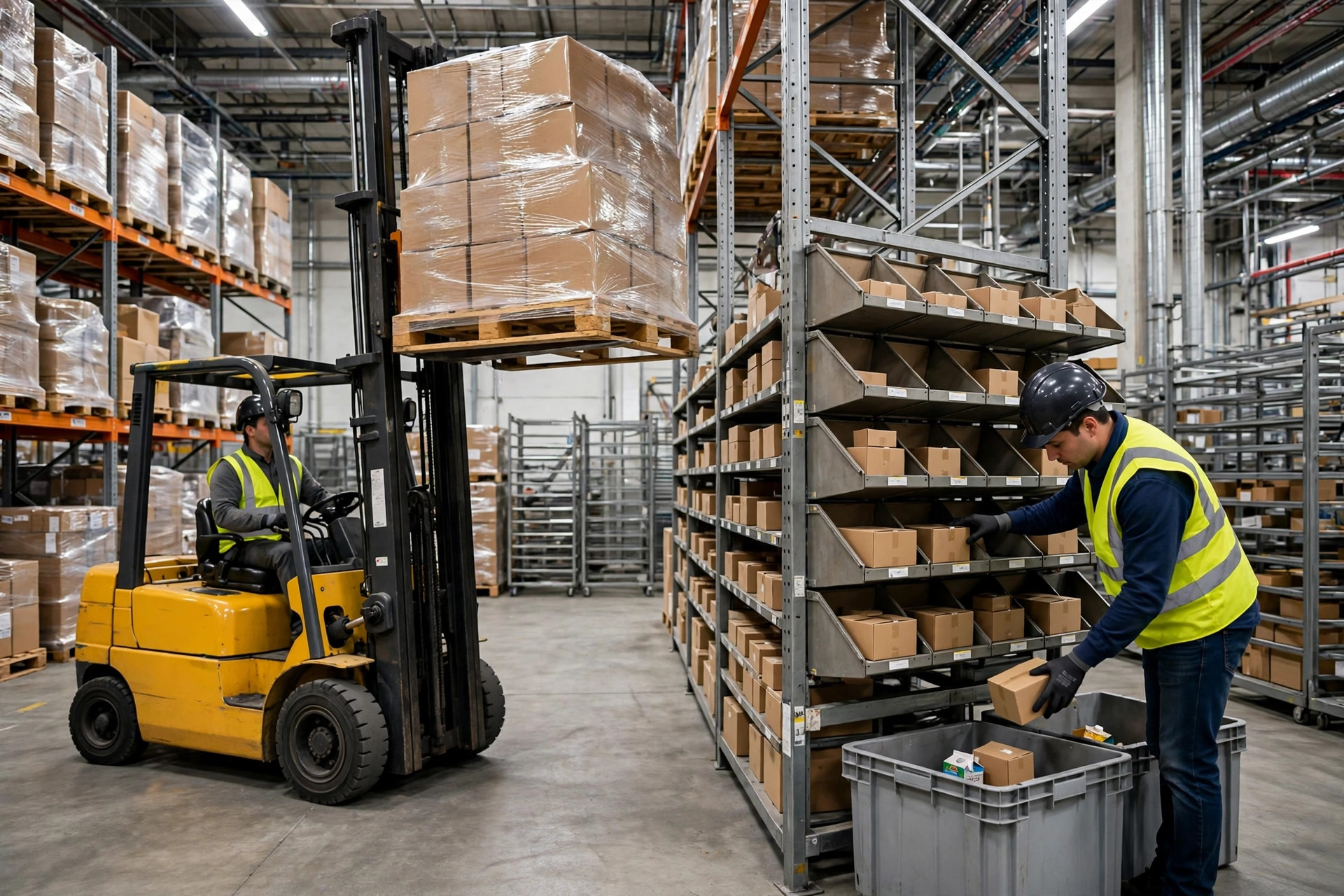
The logic of full pallet picking needs no explanation. A forklift pulls a full pallet from reserve storage, it gets checked and labeled, and one move clears one order line. Labor and equipment time are counted per pallet, not per unit, so the bigger the order line, the thinner the cost spreads.
The hidden cost catches first-time warehouse builders off guard: pallets eat locations. A pallet sitting in a slot occupies that slot whether it ships this week or next. Slow-moving SKUs on full pallets tie up prime locations for goods that barely move. Then there is the partial pallet. An order takes most of a pallet, the remainder goes back into storage, and the labor spent handling that leftover often wipes out whatever the full pallet saved.
Piece Picking: Splitting One Pallet Across Dozens of Orders
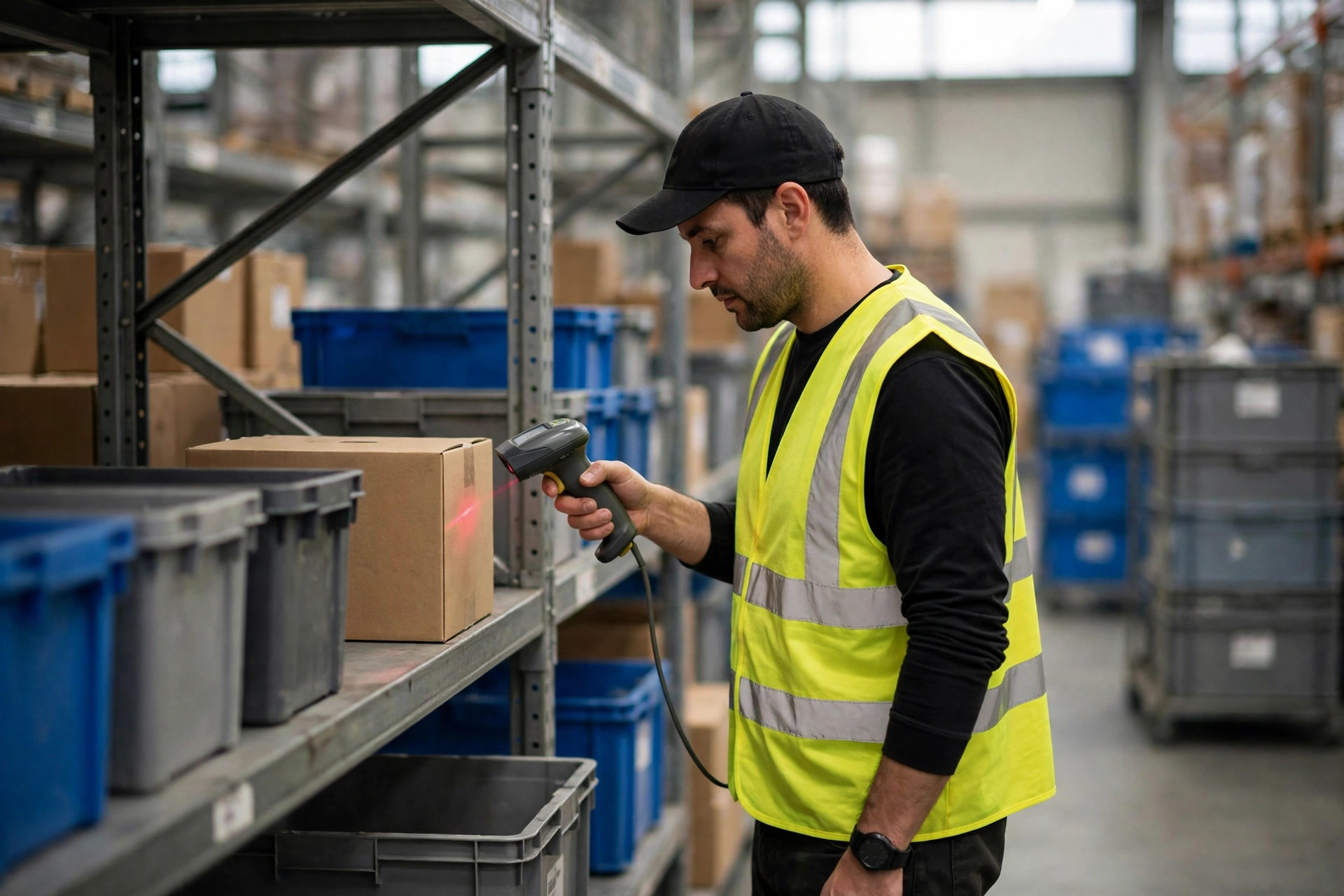
Piece picking works the other way around. Stock is replenished from reserve into a forward pick face, and pickers walk the flow racks assembling orders a few units at a time. Each move is small and the order count is high, so cost is counted per line rather than per pallet. The advantage is not cheapness. It is flexibility: the same SKU can appear in dozens of orders without moving a full pallet for each one.
A beverage distributor I worked with shows the split clearly. The warehouse supplied grocery chains and also took online orders. Chain replenishment moved pallet after pallet; a forklift could clear a whole row in half an hour. Online orders for the very same drink ran a few bottles at a time, dozens of orders a day. At first the warehouse only had full pallet locations, so every online order meant breaking down a pallet, and the leftover went back into storage. Locations got messier by the week and mispicks climbed. The fix was dual-track: full pallets stayed in reserve for the big orders, a forward pick face held broken-case stock for the small ones, and the same SKU lived in both places. Mispicks dropped the day the change went in.
Full Pallet vs Piece Picking: Draw the Line on Cost per Line
So where does the line go? Not to the equipment vendor, and not to whatever the warehouse next door bought. Run two calculations.
| Comparison | Full pallet picking | Piece picking |
|---|---|---|
| Best order shape | Large orders and replenishment, close to a full pallet | Small, multi-line orders, a few units each |
| Cost counted by | Per pallet; bigger lines get cheaper | Per line; more lines get pricier |
| Resources consumed | High-bay locations, forklift hours | Forward pick faces, picker labor |
| Biggest risk | Partial pallets returning to storage, slow stock hogging locations | Pick face running dry, stockouts mid-shift |
| Unit cost trend | Falls as line size grows | Rises as line size shrinks |
The method is straightforward. Take one SKU's recent orders, list the quantity on each order line, and cost each line twice: once as a full pallet move, once as a piece pick. The full pallet column is forklift time plus checking, spread across the line. The piece column is picking time plus replenishment, spread across the line. Plot both, and where the two cost curves cross is the dividing line. That crossing point is not a rule of thumb. It is that SKU's own order pattern doing the talking.
Switching triggers belong in the rules, not in a supervisor's head. My recommendation is three of them: a line quantity running above half a pallet for several days straight moves up to full pallet; a line quantity sitting below that line for a long stretch moves back to piece picking; and whenever a SKU's velocity class changes, the line gets recalculated. Write the triggers down and let the system push the switch, or people will drift between modes on gut feel.
Nor is the line drawn once and forgotten. Full pallet vs piece picking shifts as the channel mix shifts. Online share climbs, and a SKU that used to ship by the pallet may need a piece face. A new bulk contract lands, and a piece-picked SKU may graduate back to pallets. Recalculate on the same rhythm as the velocity review, not when pickers start complaining.
The Maintenance Trap: A Dry Pick Face Is No Pick Face
The biggest trap in dual-track picking is not picking at all. It is replenishment. When the forward pick face runs dry, pickers walk back to reserve and break down pallets by hand, and the dual-track system collapses into a single track on the spot. Every hour saved earlier in the day gets handed straight back. Set replenishment triggers a notch earlier than looks comfortable. One extra replenishment trip beats a pick face standing empty waiting for stock.
The second trap is the stock count. One SKU in two places means both places get counted together. Count only one, and the books never reconcile. Batch discipline has to run in both places too. First-expiry-first-out only enforced in reserve means short-dated stock quietly piles up in the pick face.
The third trap is measurement. Once both tracks are running, judging performance by lines per person punishes the piece team and flatters the pallet team every single shift. Measure both teams on cost per line, one yardstick for both tracks, or the teams will spend their energy fighting over the easy orders instead of moving freight.
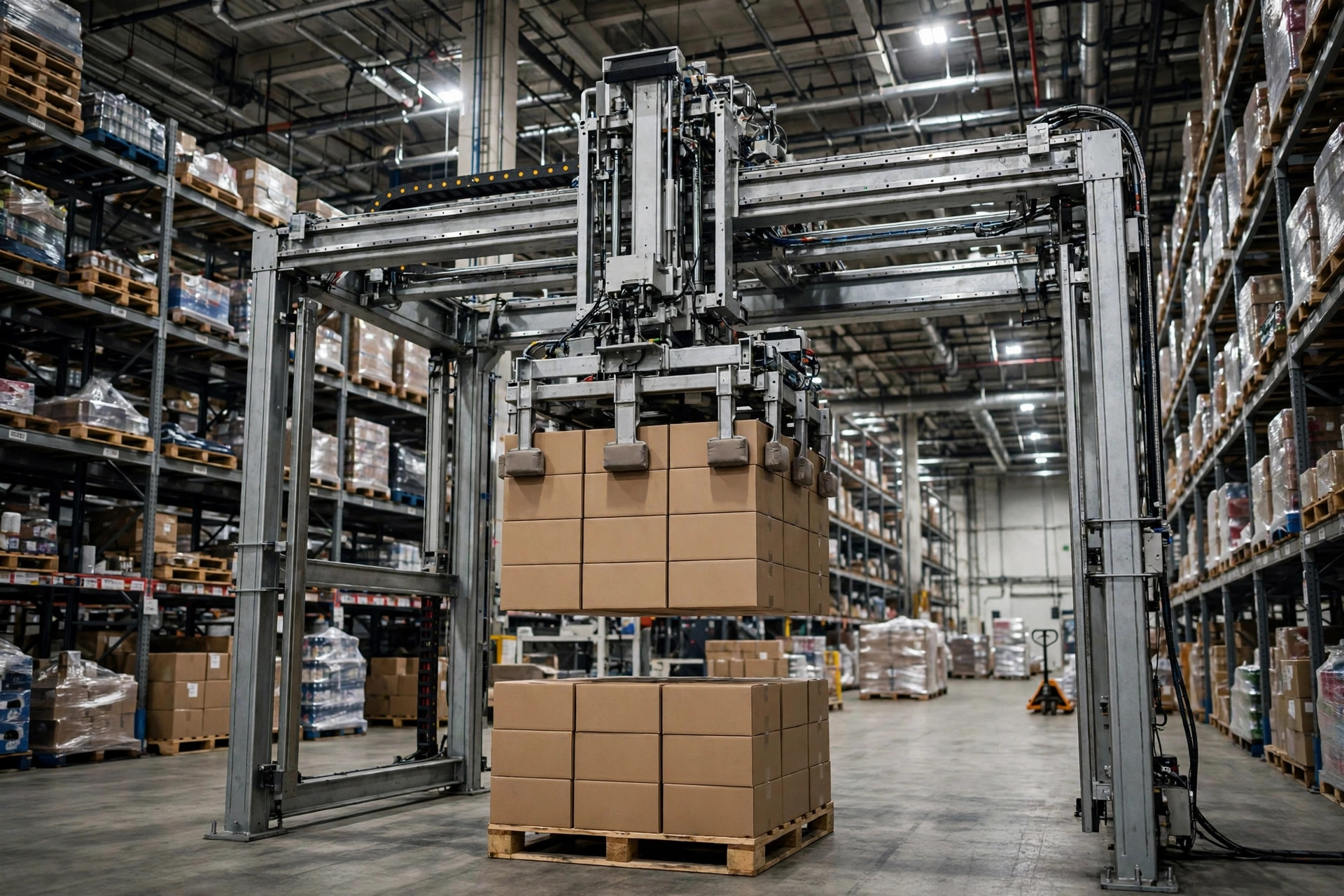
That brings me to a piece of false demand worth calling out. Plenty of warehouses rush to buy automated piece-picking equipment before their dual-track rules even work. A machine only runs the existing process faster. It does not fix a dividing line drawn in the wrong place. The line comes from order structure, not from equipment. Until the dual-track rules live in the system, automation spending is just paying to make confusion move quicker.
Here is the counterintuitive judgment worth keeping. People look at a piece pick face, see the labor, and want to cut it to save money. But for a slow-moving SKU, the pick face is often the cheapest arrangement available: a few slots up front instead of a full pallet location held for scattered orders. Force those small orders through the full pallet flow, and the labor saved on picking gets eaten by location occupancy and partial pallet handling. Cheap and expensive cannot be judged on the picking minute alone. They have to be judged on the whole time the goods sit in the building.
So is the money well spent? Look at one number: after dual-track is running, has the cost per line for that SKU come down compared with the single-track days? If yes, the line is drawn right. If not, do not blame the equipment. Go back and recalculate the crossing point.
By Da Liu, Automation Engineer