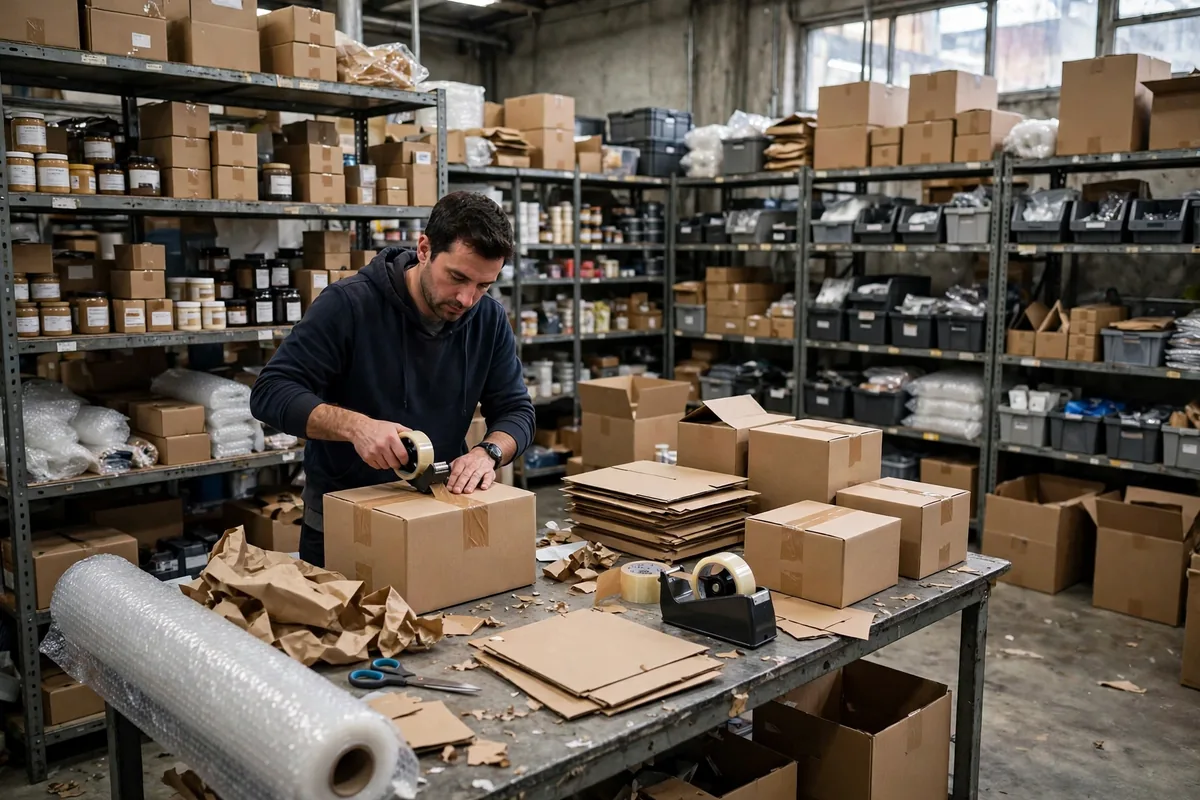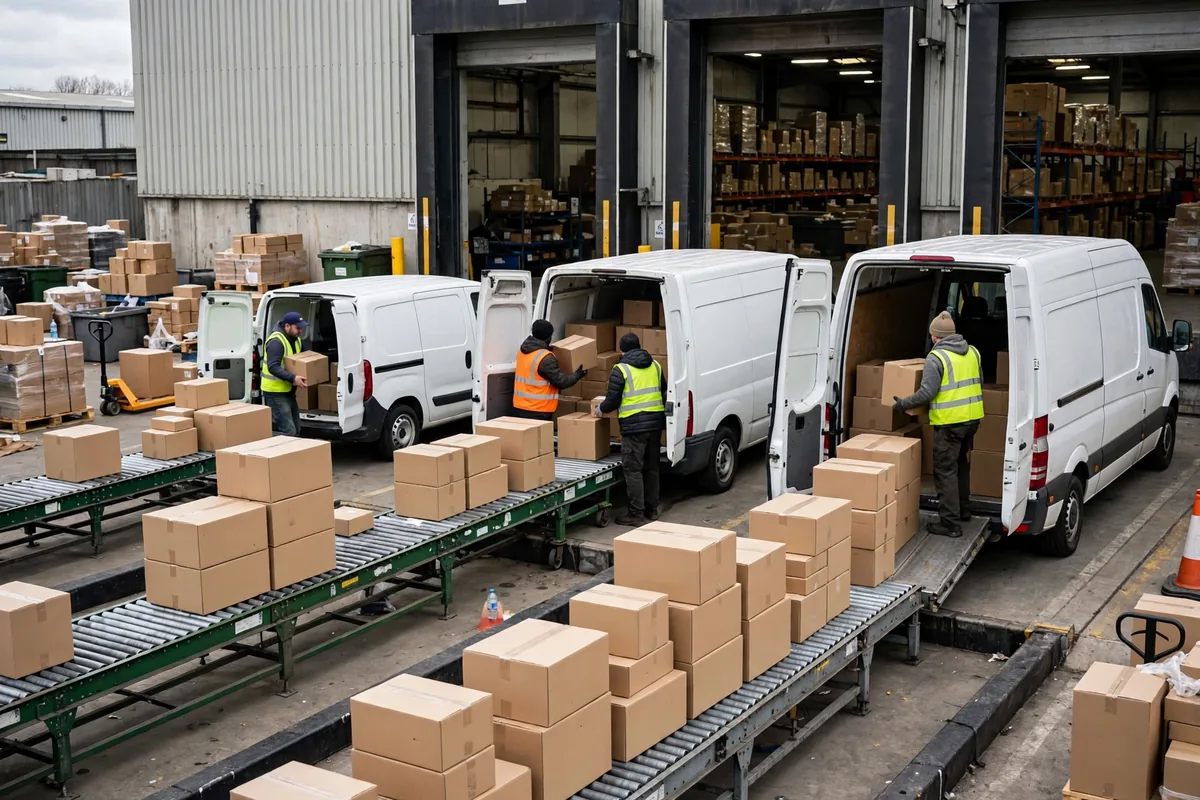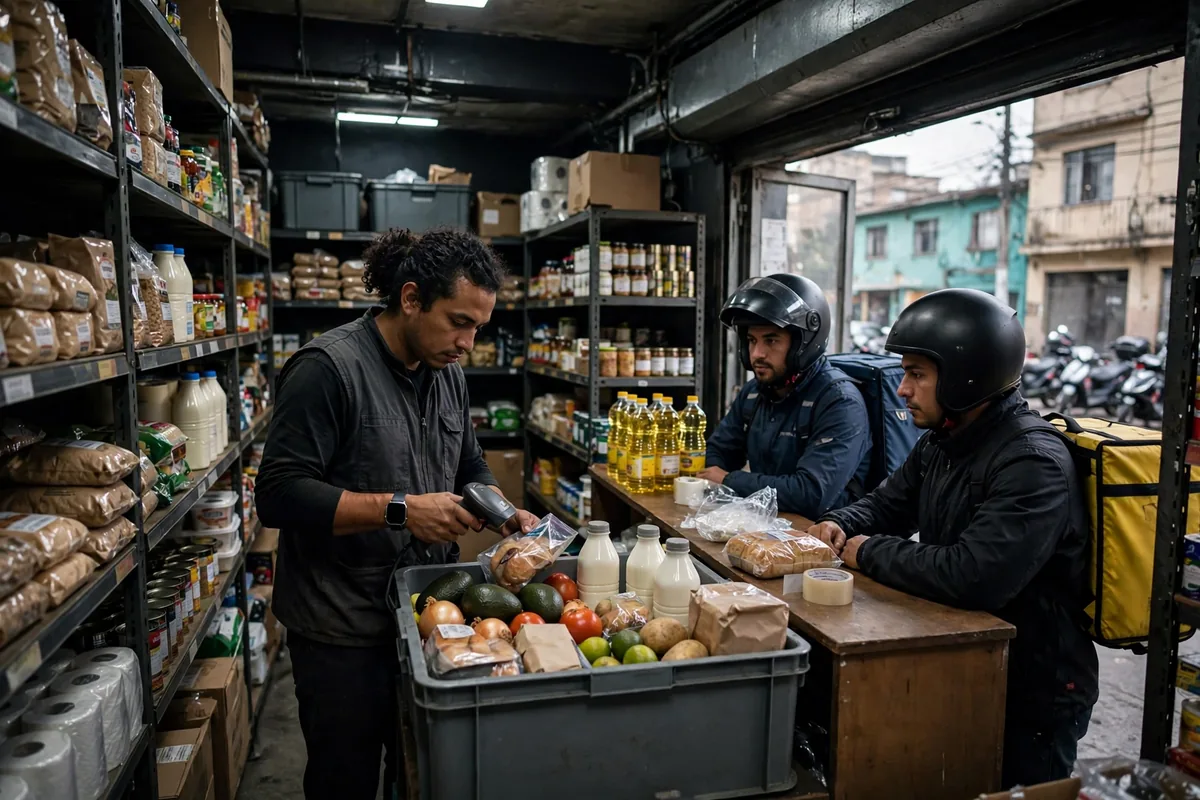
A dark store quick commerce warehouse latin america operation is not a small supermarket. That is the mistake I keep seeing. Founders rent a compact space in São Paulo, Mexico City, or Bogotá, line it with neat supermarket aisles, and then wonder why riders are shouting at the door while pickers are still walking.
I sell online for a living. I trust steps, seconds, and stock counts more than floor plans that look pretty in a pitch deck. A dark store has no browsing shoppers. It has orders, pickers, and a handover point. Design for those three, or do not open.
A dark store quick commerce warehouse latin america site is a relay station, not a shop
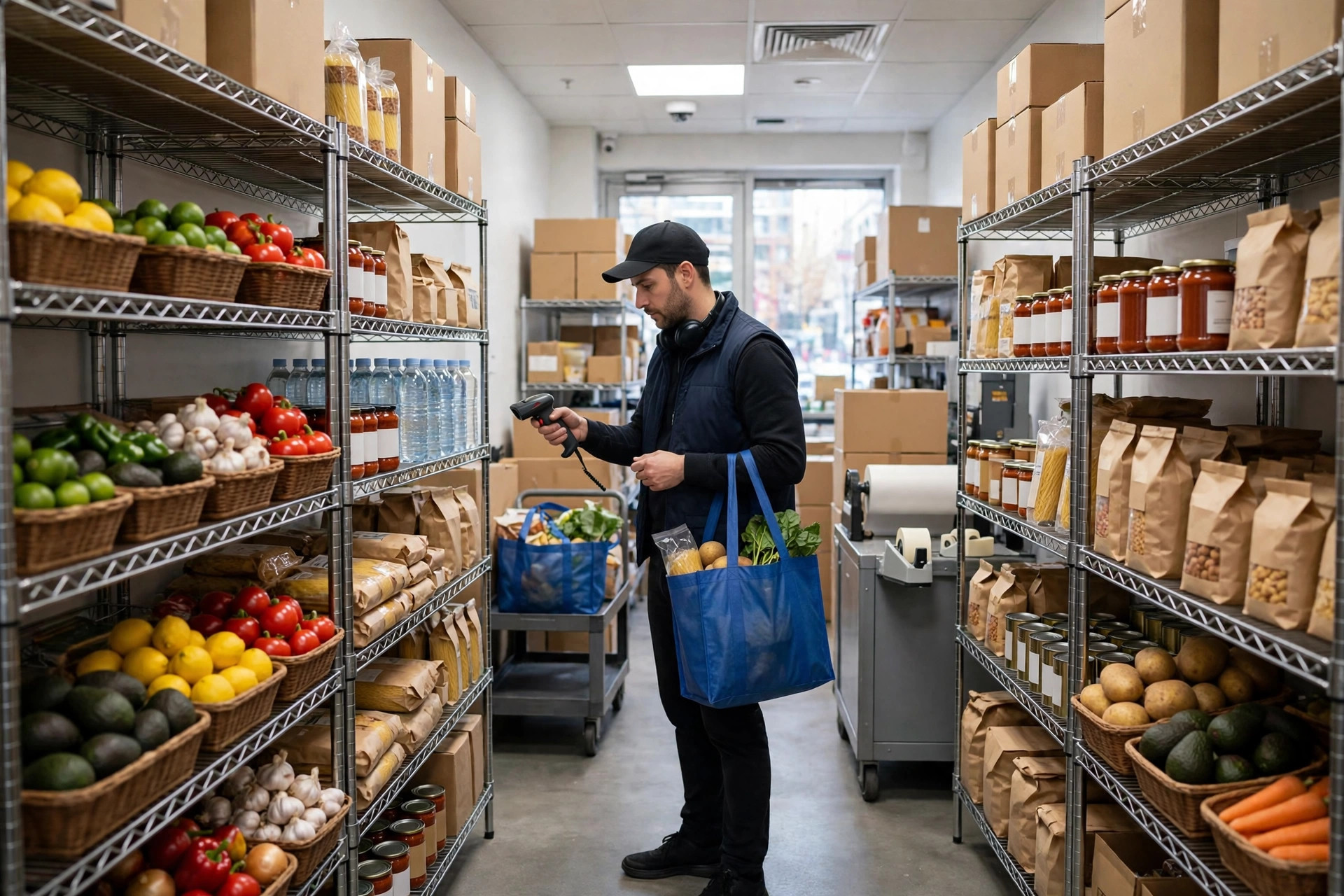
Take an illustrative example, with assumed numbers rather than any platform's official data: a neighbourhood dark store in São Paulo of about 180 square metres, receiving 260 orders in a two-hour evening peak, averaging four items per order. The manager first arranged it like a supermarket. Drinks at the back, snacks in the middle, fresh food along the wall.
Every order became a tour of the whole store. In this assumed case, pickers averaged roughly 110 steps per order, crossed each other's paths constantly, and finished bags piled up while riders waited outside. The fix was embarrassingly simple. The highest-frequency products moved into a U-shaped zone closest to the packing bench. Steps per order fell to roughly 55 in the example model. Test that on your own floor with a stopwatch; do not copy my numbers as a promise.
Here is the counter-intuitive part. Perfectly tidy, single locations for bestsellers can hurt you. If one drink has exactly one slot, two pickers collide there at peak. Splitting a fast seller across two small adjacent slots looks messy, but it removes the queue inside the aisle. Supermarkets fear mess. Dark stores should fear blockage.
Micro picking layout for a dark store quick commerce warehouse latin america operation
A second illustrative scene, this time in Mexico City: a store of about 120 square metres serving only nearby neighbourhoods. The owner spent almost nothing on systems and changed three things.
First, products were arranged by order combination, not category. Supermarkets group by category. Dark stores should group by what travels together in real baskets, so common combinations sit along one short picking route.
Second, aisles became one-way. In a tiny store, two pickers meeting head-on lose more time squeezing past each other than they save from a shorter route. One-way flow looks longer on paper and runs faster in practice.
Third, the packing bench became the control centre, placed nearest the door. Picking, checking, bagging, and labelling all end there. Riders stay outside, pickers stay inside, and the handover shelf is the only meeting point.
| Layout | Assumed steps per order | Main peak problem | Best fit |
|---|---|---|---|
| Supermarket category layout | About 110 | Crowding at popular slots | Stores with walk-in shoppers |
| U-shaped fast zone, one-way flow | About 55 | Packing bench needs a dedicated hand | Delivery-only dark stores |
| Even spread across the floor | About 85 | Slow everywhere, blocked nowhere | Very low-volume test sites |
Those figures are assumptions for comparison, not benchmarks. The method matters: take your own peak two hours, count steps and blockages, then choose.
Inventory accuracy is where tiny stores die quietly. A third illustrative case in Bogotá: the system showed eight cartons of a fresh milk line, but only two were on the shelf. Six short-dated cartons had been moved to a returns crate during the day with no record. At peak, orders were cancelled one after another.
In a big warehouse, an error of six units is noise. In a dark store, six units can be the entire sellable stock of that line for the evening. Small scale does not forgive sloppy stock; it amplifies it. My routine is deliberately boring. Count only the top fast sellers before opening, not the whole store. Record every removal — damage, expiry, returns — at the moment it happens, even if the formal entry comes later. Log every cancellation with a reason: truly out of stock, could not find it, or system said yes and shelf said no. Those are three different diseases with three different cures.
And cut your range. Every slow SKU steals a slot from a fast one and adds a chance to miscount. A smaller, faster range often completes more orders than a proud, full catalogue.
Finally, the rider handover. Bags hang in arrival order on a rack, order numbers facing out, never heaped on a bench. The rider calls the number, the handover person checks it and passes the bag — no route discussions at peak. Hot and cold items hang separately instead of ruining each other in one bag.
Do the small maths, again as an assumption: across 200 peak orders, cutting handover from 90 seconds to 45 saves enough combined minutes to equal an extra pair of hands during the peak, if those minutes are actually redeployed to picking. Many stores pick 30 seconds faster and then lose two minutes hunting for a bag at the door.
Do not start with a big site, a full range, and expensive software. Earn one neighbourhood's order density first. Control steps, stock accuracy, and handover. Then expand. That sequence, tested in the real world, is what keeps a small store alive.
One more routine decides more than most software purchases: when you replenish. In the São Paulo example, the store used to restock in the hour before the evening peak. Large cartons blocked the aisles, pickers walked around them, and riders were already gathering at the door. The shelves looked fullest in exactly the hour when orders moved slowest. The store split replenishment into two waves instead. Fast sellers were topped up during the quiet afternoon, and during the peak only one person carried small totes to fill gaps. No large carts entered the picking aisles while orders were live.
Keep replenishment and picking roles from blurring into each other, too. A worker who has just shelved drinks, then gets pulled into picking, then returns to the delivery, is exactly the person who forgets whether that delivery was ever recorded. In a small store that single forgotten entry becomes tonight's phantom stock.
Location deserves the same scepticism. The best dark store site is not automatically the most central address. It is the small patch of the city where order density is real, riders can reach the door without a detour, and a replenishment vehicle can actually stop. Cheap rent on a street riders hate reaching is not cheap. That saving gets collected back, order by order, in slower handovers and cancellations. Run the assumed-order maths before you sign the lease, not after opening day.
By Ah K, E-commerce Seller (5 yrs)