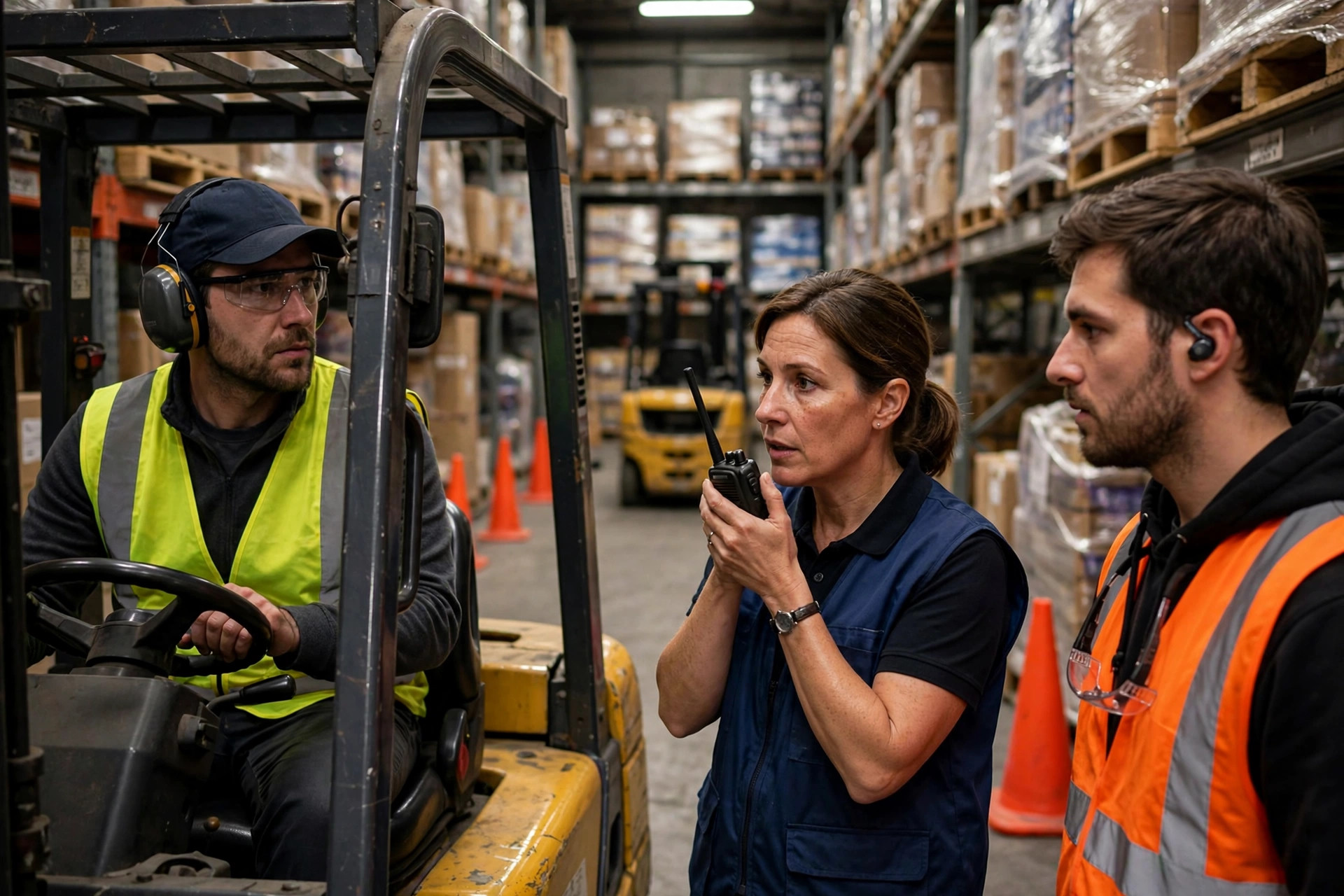
Walk into a mid-sized distribution center in the US and you will notice an open secret: on the pick line, more people speak Spanish than English. This is not one facility's quirk. Based on my field visits and industry reading over the past two years, my assessment is that in large US warehouses with over a hundred frontline workers, non-native English speakers routinely make up 30 to 40 percent of the floor. In Chinese companies' overseas warehouses across Southeast Asia, Vietnamese, Indonesian, and Thai local hires have likewise ended the era of "one Chinese SOP for everyone." Language is becoming infrastructure in warehouse management — a layer you cannot route around.
And AI translation has arrived at exactly the moment when the cost of producing multilingual SOPs collapsed.
The three problems AI translation solved first in warehouses
First, the "zero-to-one" problem of multilingual SOPs. The old workflow for a Spanish version of an SOP was: find a translation vendor, wait two weeks, pay a four-figure invoice — so many small and mid-sized warehouses simply never translated, relying on veteran workers to pass knowledge along verbally. Now a supervisor drops the source document into an AI translation tool and has a draft in a dozen minutes, posted on the wall the same day. What changed is existence, not perfection.
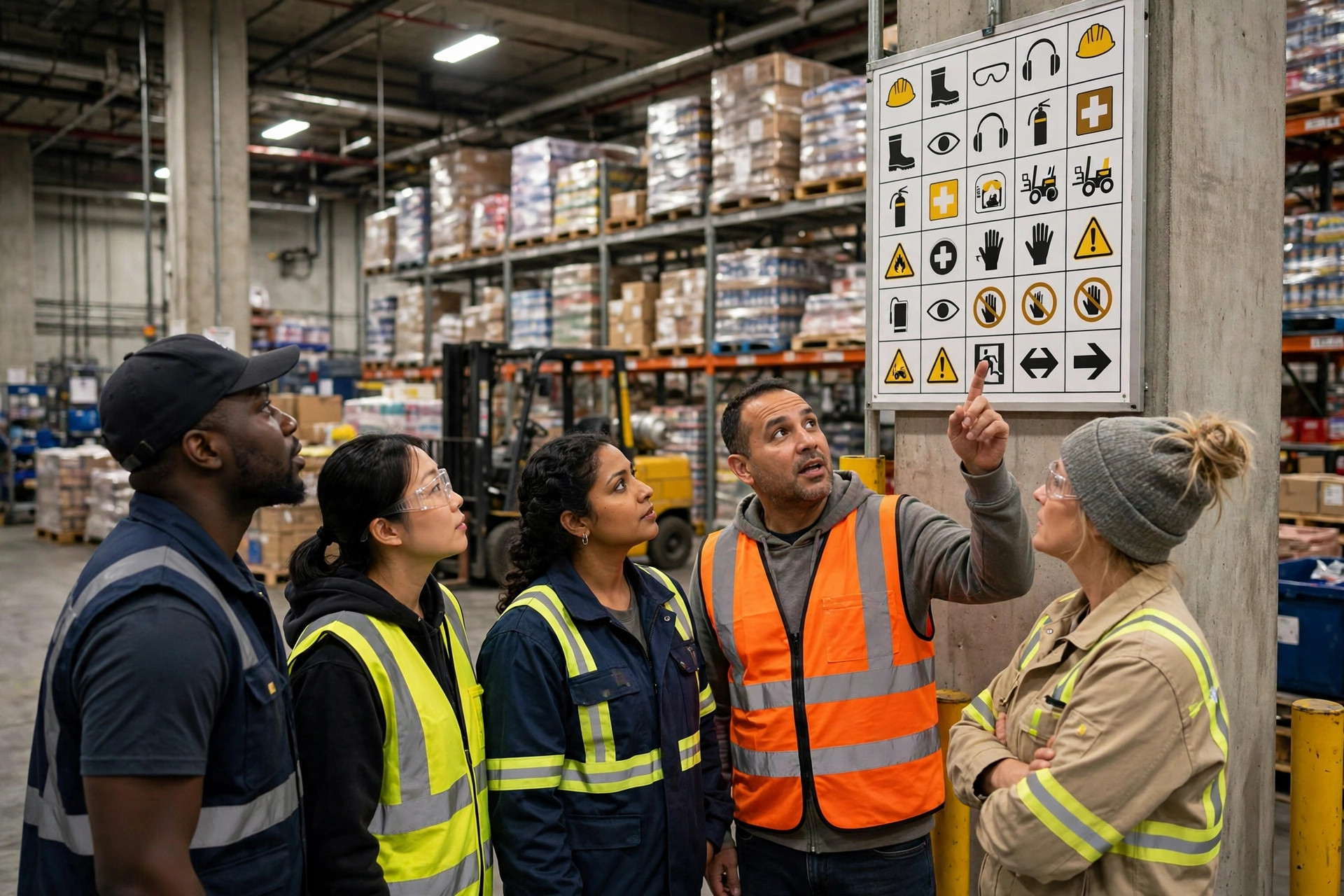
Second, safety labels and warning signs. Forklift aisles, charging areas, freezer doors — the warnings were often English-only. AI translation has turned "every safety board in two or three languages" from a luxury into a default. These texts are short with fixed sentence patterns, which happens to be exactly where machine translation makes the fewest mistakes.
Third, training materials. Onboarding decks, handbooks, quizzes — large in volume and constantly revised, a pace human translation can never match. The value of AI translation here is not accuracy; it is that versions never go stale. The SOP changes, and every language version changes the same day.
But before concluding that AI translation is a cure-all, the real dividing line lies in what comes next.
Multilingual SOPs: what deserves translation, and what does not
Here is a counterintuitive judgment up front: the document least worth translating in full is often that dozens-of-pages "standard operating procedures manual"; the most worth translating is the single sheet posted on the floor.
The reason is practical. The manual is rarely read and rarely updated; translated or not, few will open it. The single sheet on the floor — the pick process card, the putaway exception card, the forklift charging steps — is what workers look at a dozen times a day. I suggest three tiers.
Floor one-pagers must be multilingual: AI draft plus human proofread, and proofreading one page costs almost nothing. Training manuals go multilingual with AI in the lead and human review of safety-critical chapters. System documents such as quality manuals and master procedures keep the source text with translated executive summaries only — full translation has a poor return.
Translation resources should follow "how many times a day workers look at it," not "how thick the document is."
A division-of-labor framework: AI drafts, humans do three things
Machine and human translation are not either-or. My recommended framework:
| Stage | Recommended approach | Notes |
|---|---|---|
| First draft | AI translation | Draft in minutes, near-zero cost |
| Terminology | Human-built glossary, one-time investment, long-term reuse | Warehouse-specific terms are where machines fail most |
| Safety sentences | Human review, sentence by sentence | Highest cost of error |
| Floor one-pagers | Human read-through | Make sure floor workers truly understand |
| System documents | Summaries only | Full translation, low ROI |
The three things humans must do, in one sentence: set the terminology, review safety, read the floor postings. Everything else can go to the machine.
Hidden here is a second counterintuitive finding: the biggest trap in AI translation is not "inaccurate translation" but "one person, one process, translated three different ways." Take "staging area" — the same SOP might render it three ways across its pages. Workers see three places; there is only one. Not fatal, but it quietly erodes execution consistency. The fix is not a better engine; it is a glossary of dozens to a hundred terms, each allowed exactly one translation. The highest-ROI step there is, and many warehouses skip it.
Two cautionary tales
The first took place at a food distribution center in the US Midwest in 2024. The warehouse machine-translated its forklift battery charging SOP into Spanish and posted it straight on the wall. The failure was the safety term "lockout/tagout" — the machine produced a literal rendering that floor workers could not parse, so they skipped the step. A supervisor's walk-through caught nearly half a month of non-compliant charging operations. Luckily, no accident. The post-mortem: safety-action sentences from machine drafts need sentence-by-sentence human review, verbs especially.
The second took place at a Chinese-owned warehouse in Southeast Asia. After the Chinese SOP was translated into Vietnamese, verb-and-measure-word combinations in the "pick by order" section drifted — pickers read "ship full cases" as "break cases," and the error rate climbed for days. The warehouse then built a Chinese–Vietnamese terminology sheet, locking the translation of every key verb. Problem gone. The lesson: when translation quality breaks, check whether a glossary exists before blaming the engine.
Trend call: multilingual SOPs will become table stakes
Based on this causal chain, my judgment is that within two to three years, "multilingual SOPs" will move from nice-to-have to table stakes in 3PL bids and customer audits — the way "do you have a WMS" did a decade ago. The driver is not technology but workforce composition: the share of multilingual frontline workers keeps rising, while AI translation has pushed the compliance cost down to where "not doing it" is getting hard to justify.
The standard operating shape will also converge: AI drafts, a glossary keeps consistency, humans review only safety sentences and floor one-pagers. This combination will become the industry default within a year or two. Warehouses that move first save more than translation fees — they save new-hire ramp-up time.
One open question to close: when language is no longer a barrier — when any SOP can become five languages in a day — where does real differentiation in warehouse management go back to? My guess: back to "whether the person writing the SOP understands the floor." Translation solves the transmission problem; it cannot solve the source problem. A badly written English SOP translated into five languages is just bad in five languages. Once technology flattens the "have it or not," the gap in "how good it is" gets wider.
By Dr. Chen, Supply Chain Researcher